
Da Nang: Vietnam’s Most Livable Coastal City
Da Nang City
AM
20 Apr 2026 · 5 MIN READ · UPDATED 17 AUG 2026
Set along the central coast of Da Nang, where the mountains meet the sea in a seamless sweep of green and blue, lies a destination that quietly redefines what it means to live well. Often described as Vietnam’s most livable city, Da Nang offers a rare balance: modern infrastructure without chaos, natural beauty without overexposure, and a cultural rhythm that feels both grounded and forward-looking.
A City Framed by Nature
Few places deliver such immediate access to diverse landscapes. To the east, the soft sands of My Khe Beach stretch for miles, consistently ranked among Asia’s most beautiful shorelines. At sunrise, locals gather for tai chi and morning swims, while evenings bring a gentler pace - waves lapping quietly as the city lights begin to glow.
Beyond My Khe, the coastline unfolds into quieter stretches like Non Nuoc Beach, where luxury resorts blend discreetly into the landscape. Offshore, the waters remain relatively calm year-round, making Da Nang one of Vietnam’s most accessible beach destinations across seasons.
To the north, the forested peninsula of Son Tra Peninsula, often called Monkey Mountain, offers a striking contrast to the urban core. Here, winding coastal roads lead to hidden coves, Buddhist pagodas, and rare sightings of the red-shanked douc langur, one of the world’s most visually distinctive primates. The serene Linh Ung Pagoda, home to Vietnam’s tallest Lady Buddha statue, overlooks the sea in quiet grandeur.
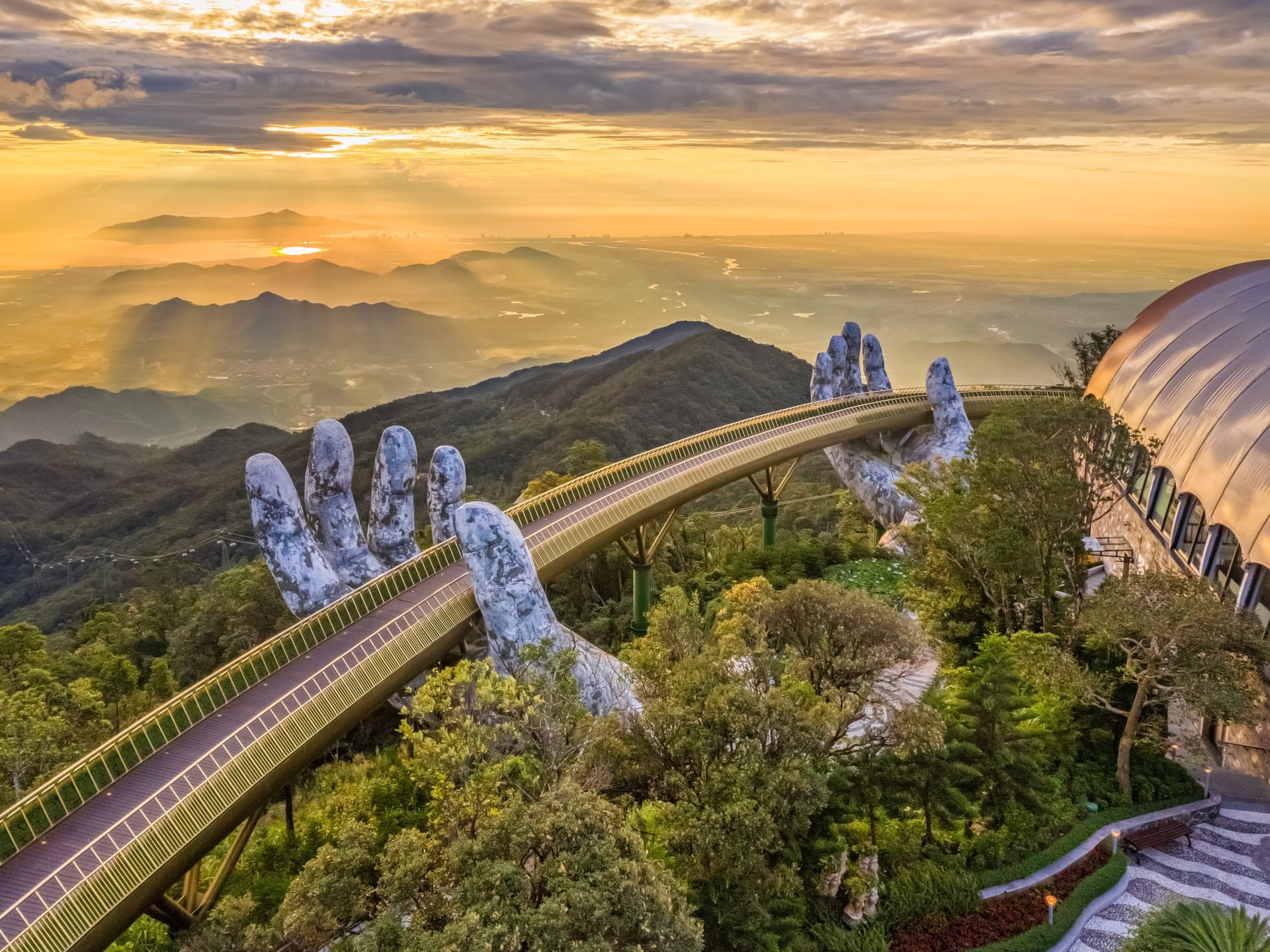
To the west, the lush hills of Ba Na Hills rise above the plains, offering cooler air and panoramic views. The iconic Golden Bridge, held aloft by giant stone hands, has become a global symbol of Vietnam’s contemporary tourism identity - both surreal and deeply photogenic.

A sweeping coastline of My Khe Beach, where turquoise waters meet vibrant urban edge, capturing the seamless balance of nature and city life in Da Nang
Photo Credit: Traveloka

A sweeping view of Son Tra Peninsula, where dense rainforest meets the open sea in quiet harmony
Photo Credit: Da Nang Tourism Promotion Center

The Golden Bridge emerges from the clouds, its sculptural hands redefining Vietnam’s contemporary landmarks
Photo Credit: Dezeen
Urban Ease, Human Scale
Unlike the intensity of Ho Chi Minh City or the layered complexity of Hanoi, Da Nang moves at a more measured pace. Wide boulevards, clean public spaces, and relatively light traffic create a sense of calm that is increasingly rare in fast-growing Asian cities.
The Han River cuts through the city like a central artery, shaping both its geography and its lifestyle. Riverside promenades have become social hubs, where joggers, families, and couples converge as the day cools.
Architecturally, the city embraces modernity without abandoning local identity. Bridges such as the Dragon Bridge and Han River Bridge are more than infrastructure, they are cultural landmarks. On weekend nights, the Dragon Bridge breathes fire and water in a choreographed display that draws both locals and visitors, reinforcing Da Nang’s flair for accessible spectacle.

Han River Bridge anchors Da Nang’s skyline, a symbol of connection in a city shaped by water and light
Photo Credit: Da Nang Tourism Promotion Center
Culinary Simplicity, Elevated
Da Nang’s culinary identity is rooted in central Vietnamese flavors: bold, balanced, and deeply satisfying. Local specialties like mì Quảng, bún chả cá, and bánh tráng cuốn thịt heo define everyday dining - dishes that emphasize freshness, herbs, and nuanced broths.
Seafood remains a cornerstone of the city’s food culture. Along the coastline, open-air restaurants serve just-caught fish, grilled shellfish, and hotpot feasts, often enjoyed communally. The experience is informal yet immersive - plastic chairs, ocean breeze, and flavors that speak for themselves.
In recent years, a new wave of cafés, bistros, and fine dining establishments has emerged, reflecting Da Nang’s growing cosmopolitan edge. From minimalist coffee spaces to chef-led tasting menus, the city’s culinary scene is evolving without losing its essential authenticity.

A quintessential Da Nang specialty - bánh tráng cuốn thịt heo, fresh, vibrant, and rooted in central Vietnamese flavors
Photo Credit: Da Nang Tourism Promotion Center

A new wave of dining in Da Nang - modern bistro spaces blending elegant design with a relaxed sensibility
Photo Credit: Phú Đào
A City Designed for Living
What distinguishes Da Nang is not only its beauty, but its functionality. The city consistently ranks high in Vietnam for urban planning, cleanliness, and public safety. Green spaces, pedestrian-friendly streets, and accessible public services contribute to a lifestyle that feels both efficient and humane.
Healthcare and education infrastructure have also seen significant development, attracting both domestic migrants and international residents. For digital nomads and long-stay travelers, Da Nang offers reliable connectivity, a growing co-working culture, and a cost of living that remains competitive within Southeast Asia.
The local government’s emphasis on sustainability and livability is visible in everyday details - from waste management initiatives to the preservation of natural zones like Son Tra Peninsula.

A masterclass in urban planning, Da Nang unfolds in clean grids, integrated waterways, and thoughtfully scaled high-rises
Photo Credit: Da Nang Tourism Promotion Center
Festivals, Culture, and Community
While Da Nang may not carry the historic density of older Vietnamese cities, it compensates with a vibrant calendar of cultural events. The annual Da Nang International Fireworks Festival transforms the Han River into a stage of light and sound, drawing international teams and global attention.
Traditional celebrations such as Tet Nguyen Dan bring the city into a more intimate cultural focus, with flower markets, family gatherings, and rituals that reflect Vietnam’s enduring heritage.
Art galleries, contemporary exhibitions, and music events are gradually shaping a more dynamic creative scene, signaling Da Nang’s transition from a transit hub to a destination in its own right.

The Da Nang International Fireworks Festival transforms the city into a stage of color and celebration
Photo Credit: DIFF
A Gateway to Heritage
Beyond its own appeal, Da Nang serves as a strategic base for exploring some of Vietnam’s most treasured cultural sites. The lantern-lit charm of Hoi An lies just a short drive south, offering preserved architecture and a UNESCO-recognized old town.
To the north, the imperial legacy of Hue unfolds through citadels, royal tombs, and poetic landscapes along the Huong River. En route, the scenic Hai Van Pass provides one of Vietnam’s most breathtaking coastal drives.
Closer still, the ancient Hindu sanctuary of My Son Sanctuary offers a glimpse into the region’s Cham heritage, adding historical depth to Da Nang’s modern appeal.

A timeless tableau of Hoi An, where preserved ochre facades and the lantern-lined Thu Bon River evoke the enduring charm of a UNESCO World Heritage Site
Photo Credit: iVIVU
The Essence of Livability
What ultimately defines Da Nang is not a single landmark or attraction, but a feeling of openness, of balance, of ease. It is a place where mornings begin with ocean air, afternoons unfold at a relaxed tempo, and evenings invite connection rather than congestion.
In a region where rapid urbanization often comes at a cost, Da Nang offers a compelling alternative: a city that grows without losing its soul, and welcomes without overwhelming. For travelers, and increasingly, for those who choose to stay longer, it is not just a destination, but a model for modern coastal living.
Spot something wrong? Email editors@globalchicvoyage.com. We log every correction publicly.
RELATED
SEE ALL →24 Apr 2026 / 5 min
25 Apr 2026 / 5 min
20 Apr 2026 / 5 min
16 Apr 2026 / 5 min