
Old Tower And The New Language Of Beijing Dining
Old Tower
AW
22 May 2026 · 5 MIN READ · UPDATED 17 AUG 2026
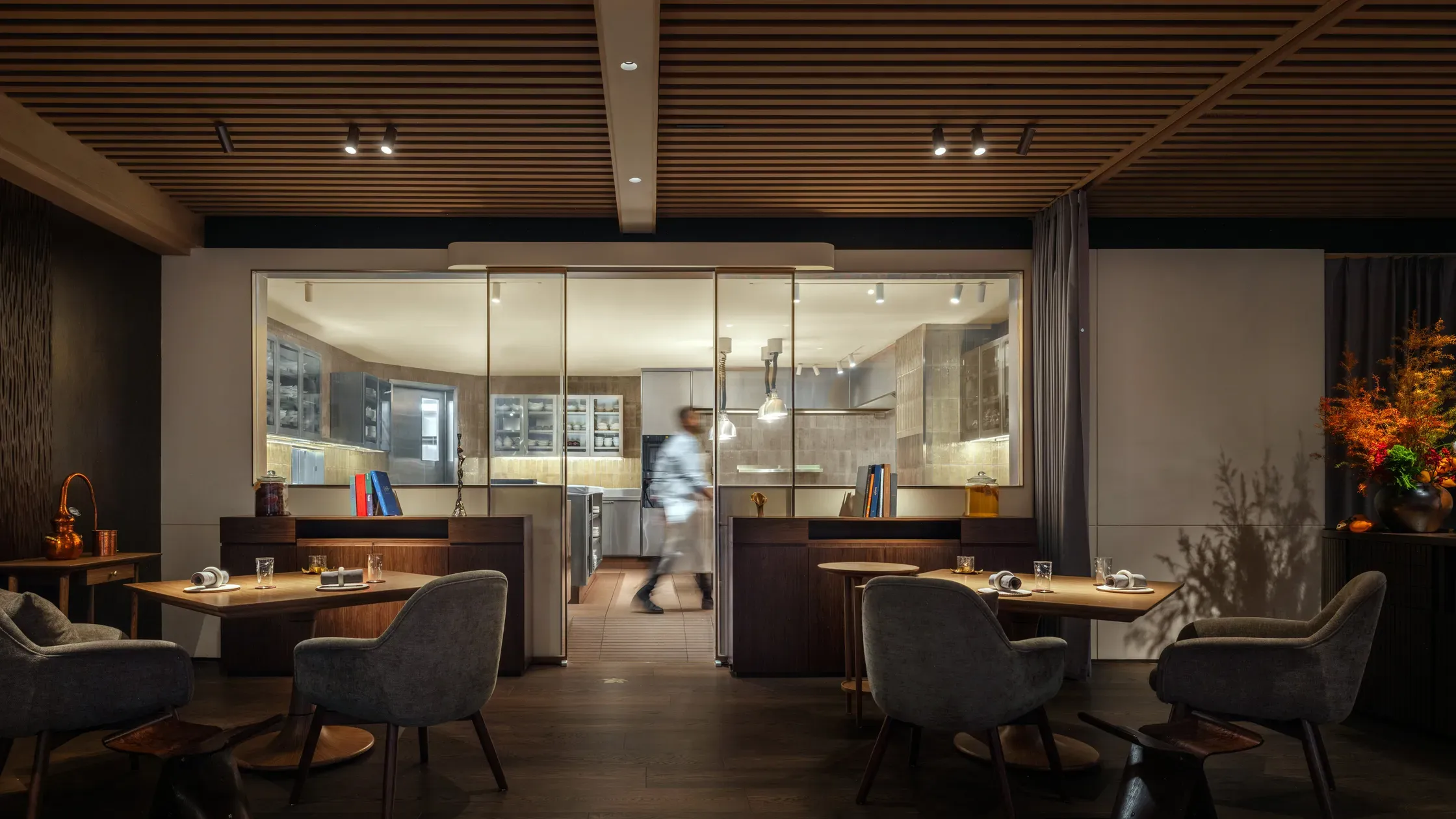
In a city where culinary traditions stretch back centuries, Old Tower is not interested in recreating the past. Instead, the restaurant transforms history into atmosphere, memory, and emotion - building a contemporary fine-dining experience that feels deeply rooted in China while refusing to be confined by geography.
Located in Beijing’s Sanlitun district, the restaurant takes its name from the ancient bell towers of the capital and the watchtowers that once lined the Great Wall. These structures were historically symbols of communication and protection, transmitting messages across vast distances while anchoring communities together. Old Tower reimagines that same idea through food: cuisine as a bridge between cultures, landscapes, and stories.

At the center of the concept is chef Talib Hudda, whose culinary identity has long existed between worlds. Canadian-born and classically trained in French cuisine, Hudda spent years immersing himself in Chinese culture and ingredients before opening his earlier restaurant, Refer, which became the first Beijing restaurant to enter Asia’s 50 Best Restaurants list. With Old Tower, his vision becomes quieter, more refined, and more architectural in spirit.
Rather than relying on spectacle, the restaurant builds intimacy through restraint. The interiors embrace warm minimalism, where handcrafted details matter as much as the tasting menu itself. Hudda personally designed many of the furniture pieces, serving trolleys, and cabinetry, while brass inlays inspired by ingredients such as chestnuts, eggs, and morels subtly appear throughout the space. The effect is cinematic without becoming theatrical - a dining room that feels contemplative rather than performative.


The menu follows a pescatarian philosophy, unusual within mainland China’s fine-dining scene, where luxury has traditionally been associated with meat-heavy tasting experiences. Here, seafood and plant-forward ingredients become the foundation for a more nuanced exploration of Chinese terroir. Seasonal ingredients sourced across China are interpreted through European techniques, yet the dishes remain emotionally tied to regional memory and local traditions.
One course may pair razor clams and chili crisp with delicate Japanese chawanmushi; another may reinterpret Shanxi’s rustic buckwheat pasta with contemporary finesse. French bread service arrives with a distinctly Tibetan touch through highland barley sourdough and clotted yak milk. Elsewhere, blue lobster is served alongside sticky rice and Northeastern Chinese sauerkraut, collapsing geographic borders into a single plate.


Yet what makes Old Tower compelling is not fusion for fusion’s sake. The restaurant approaches cultural exchange with unusual sensitivity, treating Chinese ingredients and culinary histories not as references to modernize, but as living narratives worthy of preservation and reinterpretation. Every course feels designed to hold memory - whether personal, regional, or collective.
That sensibility extends to pacing and atmosphere. Diners frequently describe the experience as calm, precise, and unexpectedly light despite the length of the tasting menu. Online discussions among fine-dining travelers praise the balance of flavors and the restaurant’s careful attention to detail, reinforcing its growing reputation among global gastronomic circles.
The restaurant captures the spirit of modern Beijing itself: historically layered, globally connected, and increasingly confident in expressing Chinese identity through contemporary creative language. Old Tower does not simply serve dinner. It constructs a dialogue between architecture, geography, and cuisine - where ancient towers become metaphors for human connection, and where every course quietly asks how food can carry culture forward without losing sight of where it came from.
PHOTO CREDIT: Old Tower
Spot something wrong? Email editors@globalchicvoyage.com. We log every correction publicly.
RELATED
SEE ALL →
13 May 2026 / 5 min
4 May 2026 / 5 min
20 Apr 2026 / 5 min
8 Feb 2026 / 5 min