
The Atlantic Archipelago That Rivals Hawaii Without the Crowds
In the middle of the Atlantic, nine volcanic islands offer cetacean encounters, thermal springs, and a slower pace that mass tourism has yet to overwhelm.
SI
30 Jul 2026 · 5 MIN READ · UPDATED 17 AUG 2026
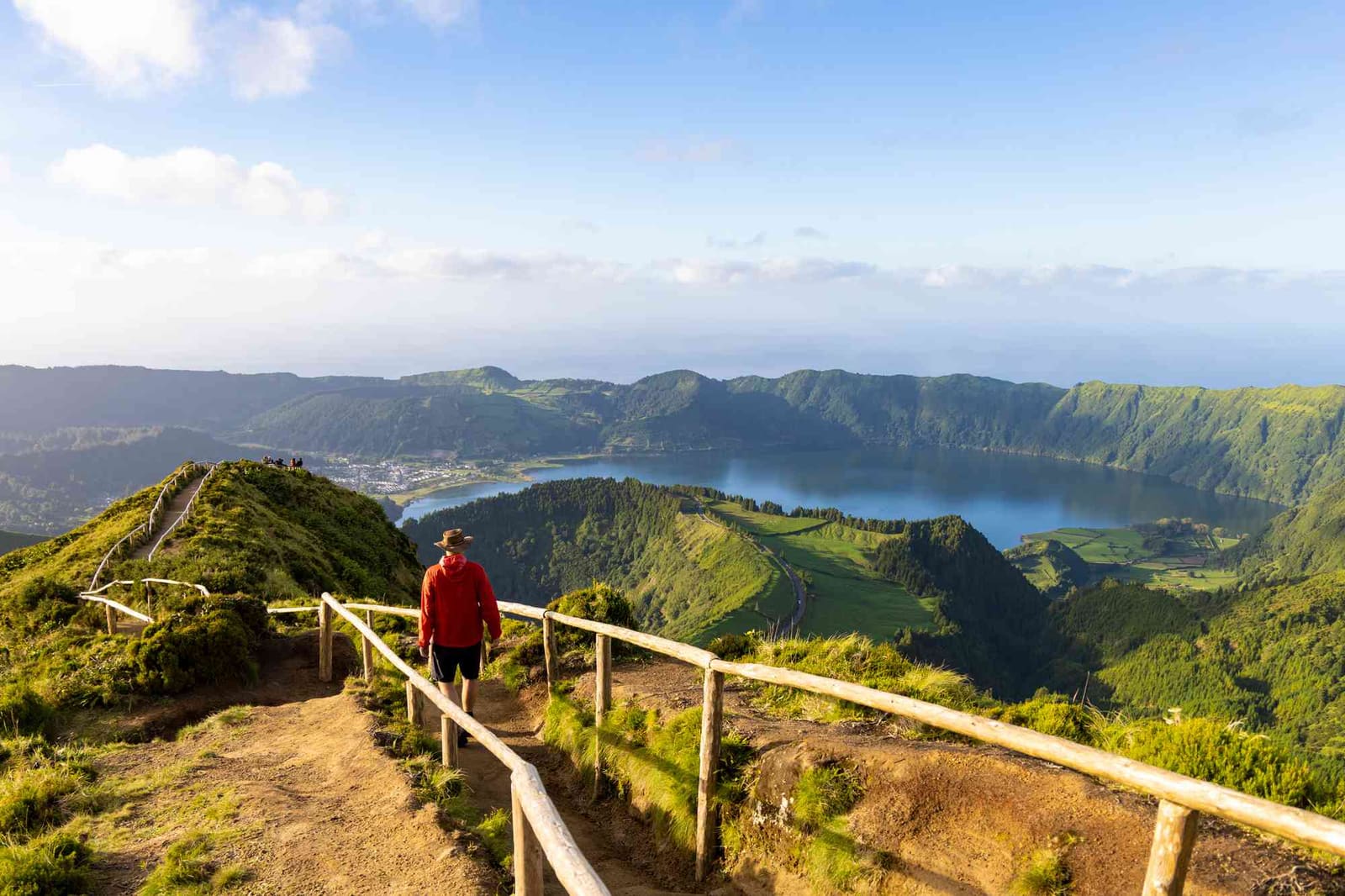
An Ocean Apart
The first spout appears half a mile off the bow, a sudden vertical plume that catches the morning light. Then another. Within minutes, the water around us is alive with sperm whales, their massive forms surfacing and diving in a rhythm as old as the ocean itself. We are floating in the mid-Atlantic, somewhere between continents, in an archipelago that most travelers still struggle to place on a map.
At Global Chic Voyage, we've watched the Azores evolve from a whispered secret among divers and cetacean researchers into a destination that now commands attention from travelers seeking substance over spectacle. Yet even as interest grows, these nine Portuguese islands remain refreshingly resistant to the tourism pressures that have transformed so many island paradises. The comparison to Hawaii is inevitable, given the volcanic origins, dramatic coastlines, and year-round temperate climate, but the Azores offer something Hawaii lost decades ago: a sense of discovery that feels earned rather than packaged.
The Geology of Isolation
The archipelago stretches across 370 miles of open Atlantic, positioned at the junction of three tectonic plates. This geological restlessness has shaped everything: the black sand beaches, the crater lakes that shimmer in shades of blue and green, the hot springs that bubble up through fractured rock. São Miguel, the largest island, wears its volcanic heritage openly. At Furnas, steam vents puncture the ground in neat rows, and locals still cook cozido das furnas by burying pots in the geothermal earth for hours, a culinary tradition born of necessity that has become ritual.
Pico Island rises from the sea in a near-perfect cone, its summit often lost in cloud. At 7,713 feet, Pico Mountain is Portugal's highest peak, and the climb to its crater is a pilgrimage that begins in darkness and ends, if the weather holds, with sunrise above a sea of clouds. The landscape here is lunar: ancient lava fields broken only by stone-walled vineyards that produce wine unlike any other in Europe, grown in soil so porous it drinks rainfall instantly.
What strikes us most about the Azorean landscape is its refusal to be tamed. Hydrangeas run wild along roadsides, their blooms so abundant they form blue corridors through the countryside. Coastal cliffs drop vertically into water so clear you can watch fish scatter as your shadow passes overhead. There are no sprawling resorts here, no beach clubs with rows of identical loungers. The islands remain stubbornly themselves.
Where Whales Outnumber Hotels
The waters surrounding the Azores host more than twenty cetacean species, from resident pods of bottlenose dolphins to migrating blue whales that pass through on their way to northern feeding grounds. Sperm whales, the giants we encountered that morning, are present year-round, and the tradition of whale watching here is rooted in a darker history. Former whalers, whose industry collapsed in the 1980s, retrained as guides, bringing an intimate knowledge of whale behavior and migration patterns to their new work.
The boats are small, rarely carrying more than a dozen passengers, and the approach is patient. Guides communicate with spotters stationed on clifftops, using the same lookout posts that once served whaling operations. When a whale is located, the engine cuts, and you wait. There is no guarantee of proximity, no promise of a breach or a tail slap. Sometimes the whale sounds and does not return. This restraint, this refusal to chase or harass, is what makes the experience feel less like entertainment and more like witness.
In spring, the migratory species arrive: fin whales, sei whales, and occasionally the immense blue whale, whose presence turns even experienced guides reverential. Dolphins are almost guaranteed, traveling in pods that number in the hundreds, their acrobatics a sharp contrast to the slow, deliberate movements of the larger cetaceans. For those of us who measure travel by the quality of encounters rather than the quantity of sights, the Azores deliver something increasingly rare: the chance to feel small in a way that is clarifying rather than diminishing.
The Architecture of Restraint
Azorean towns are studies in proportion and restraint. In Angra do Heroísmo, a UNESCO World Heritage site on Terceira Island, Renaissance architecture lines cobbled streets that climb gently from the harbor. The buildings are painted in muted tones, ochre and cream and faded rose, their facades punctuated by wrought-iron balconies and azulejo tilework. There is wealth here, quietly displayed, a legacy of the islands' strategic importance during the age of exploration when ships stopped to resupply on transatlantic voyages.
Ponta Delgada, the Azorean capital on São Miguel, balances its historic core with a modern waterfront that has been developed with unusual sensitivity. The new marina and promenade integrate rather than dominate, using local basalt and clean lines that defer to the older structures inland. Hotels remain modest in scale; the largest properties rarely exceed a hundred rooms, and many of the most compelling accommodations are converted quintas, traditional estates surrounded by gardens where camellias and azaleas bloom in succession through winter and spring.
What the Azores lack in luxury infrastructure, they compensate for in authenticity. Meals are taken in family-run tascas where the menu is verbal and the wine is local. Markets still function as community gathering places, their stalls piled with produce that reflects the islands' microclimates: pineapples grown in greenhouses on São Miguel, passion fruit from Terceira, cheese from Pico and São Jorge that rivals anything produced on the mainland.
The Question of Scale
Tourism to the Azores has grown steadily over the past decade, aided by increased airlift from European hubs and, more recently, direct flights from North America. The regional government has watched the trajectories of other Atlantic island destinations, Madeira and the Canaries among them, and has attempted to chart a different course. Legislation limits development in coastal zones, restricts building heights, and mandates environmental impact assessments for new tourism projects.
Whether these measures will prove sufficient remains to be seen. Already, some islands show signs of strain during high season: rental car shortages on São Miguel, overbooked whale watching tours, hiking trails that show erosion from increased foot traffic. The challenge facing the Azores is one familiar to emerging destinations: how to capture the economic benefits of tourism without surrendering the qualities that attracted visitors in the first place.
What gives us cautious optimism is the scale of the infrastructure and the temperament of the place. The islands are spread across hundreds of miles of ocean, which naturally disperses visitor pressure. Inter-island travel requires short flights or ferry rides, a friction that discourages the kind of frantic island-hopping that characterizes other archipelago destinations. The Azorean pace is slower by design and by necessity, and travelers who arrive expecting rapid gratification tend not to return.
The Seasons of the Atlantic
Winter in the Azores is mild and wet, with temperatures that rarely drop below fifty degrees Fahrenheit. The landscape turns impossibly green, and the whale watching shifts to species making their way south. Spring brings wildflowers and calmer seas, the period when the islands feel most generous. Summer is warm but not hot, the high season when ferry schedules expand and coastal towns fill with Portuguese families on holiday. Autumn is perhaps the most compelling season for those seeking solitude: the light turns golden, the ocean remains warm enough for swimming, and the summer crowds recede.
The weather is famously changeable, governed by the Gulf Stream and the Azores High, a semi-permanent atmospheric pressure system that influences weather patterns across Western Europe. It is not uncommon to experience sun, rain, and mist within a single hour. Locals advise dressing in layers and maintaining flexibility in plans, an approach that serves as metaphor for the Azorean experience more broadly.
Beyond the Comparison
The "Hawaii of Europe" label is both useful and limiting. Useful because it provides an immediate frame of reference, a way for travelers to conceptualize the destination. Limiting because it invites direct comparison and suggests that the Azores are derivative rather than distinct. The truth is more nuanced. The islands share certain attributes with Hawaii: volcanic origins, endemic flora, a culture shaped by isolation and maritime tradition. But the Azores are fundamentally Atlantic rather than Pacific, Portuguese rather than American, and the cultural and culinary influences reflect centuries of connection to Europe, Africa, and the Americas.
What the Azores offer now, in this moment before they become truly discovered, is a chance to experience island life at a human scale. To walk through towns where tourism is present but not dominant, to eat food that is grown for residents first and visitors second, to encounter wildlife in ways that prioritize the animal's well-being over the visitor's Instagram feed. These are not small things, and they are becoming increasingly rare.
At Global Chic Voyage, we counsel travelers to approach the Azores with patience and curiosity rather than a checklist. The islands reward those who linger, who accept that weather may alter plans, who understand that luxury here is measured in access to experience rather than thread count. The volcanic soil, the cetacean-rich waters, the architecture of restraint, these are the elements that define the archipelago. Whether it resembles Hawaii is, ultimately, beside the point.
Credit: photoschmidt / Getty Images
Spot something wrong? Email editors@globalchicvoyage.com. We log every correction publicly.
RELATED
SEE ALL →
15 Jul 2026 / 5 min
16 Jun 2026 / 5 min
24 Jun 2026 / 5 min
29 Jul 2026 / 5 min