
The Quiet Side of the Hamptons: A Weekend in Sag Harbor
Beyond the summer spectacle, this maritime village offers something rarer - a pocket of coastal life that still moves at the pace of tide charts and afternoon light.
CG
7 Jul 2026 · 5 MIN READ · UPDATED 17 AUG 2026
A Village That Refused the Script
There is a particular quality to the light in Sag Harbor just after dawn, when the sailboats sit motionless in the marina and the storefronts along Main Street haven't yet raised their awnings. It is not the luminous, high-definition shimmer that defines much of the Hamptons - the kind that seems engineered for magazine spreads and social feeds. Instead, it is softer, more diffuse, the sort of light that suggests a place still tethered to its working-waterfront past, even as million-dollar homes climb the bluffs above the bay.
At Global Chic Voyage, we have watched the Hamptons evolve over decades, each summer season layering new expectations onto old geographies. But Sag Harbor has managed a different negotiation with time. Where neighboring enclaves have leaned into spectacle, this former whaling port has preserved a measure of restraint - not as museum piece, but as lived practice. The result is a destination that rewards slower movement and closer attention, a place where the quality of a weekend is measured less by what you acquire than by what you notice.
The Architecture of Understatement
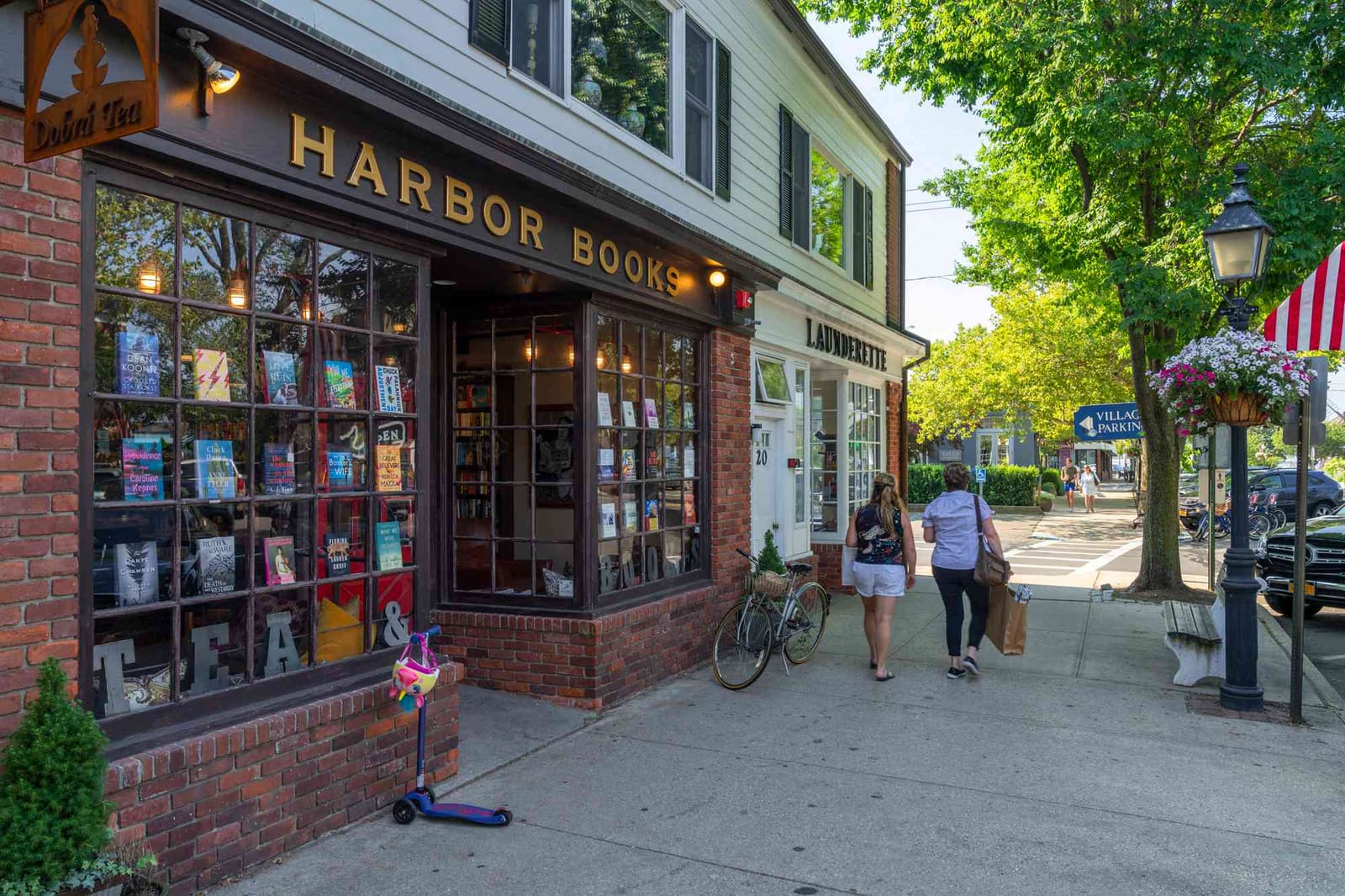
The village center unfolds in a compact grid, its scale determined by an era when most errands were conducted on foot. Nineteenth-century storefronts line Main Street, their façades painted in muted maritime tones - weathered blues, soft grays, the occasional stripe of maritime red. There is ornament here, but it is the restrained kind: bracketed cornices, transom windows, the careful proportions of Greek Revival doorways.
This is not the Hamptons of grand beach estates and celebrity compounds, though those exist minutes away. Sag Harbor's visual grammar speaks instead to New England fishing villages and Hudson River towns, places shaped by commerce and weather rather than leisure. The Whaling Museum, housed in a Greek Revival mansion built by a ship owner in 1845, anchors the historic district. Its collections - scrimshaw, logbooks, harpoons - are reminders that this was once a port of global reach, its ships traveling to the Pacific and returning with oil that lit lamps across the eastern seaboard.
Walking these streets, you sense the layering: the bones of maritime industry beneath the current economy of galleries, cafés, and design shops. It is a palimpsest that gives the village texture, a sense of continuity that feels increasingly rare in resort towns.
The Bay as Daily Companion
Sag Harbor sits at the head of a protected bay, its shoreline a mix of public beaches, private docks, and marshland. The water here is calmer than the open Atlantic - no dramatic surf, no wide stretches of sand where umbrellas march in regimented rows. Instead, you find narrow crescents of beach where families spread blankets, kayakers glide past moored sailboats, and the horizon is punctuated by the distant line of Shelter Island.
The bay imposes a rhythm. Mornings begin with coffee overlooking the marina, watching charter boats depart for fishing grounds. Afternoons are structured around tides - swimming when the water is high, exploring tidal flats when it recedes. Evenings settle into the ritual of sunset, best observed from the end of Long Wharf, where the light turns the water to copper and the sky cycles through shades of apricot and violet.
This is not landscape as backdrop but as participant, shaping how time is spent and how the day unfolds. The bay offers no singular marquee experience - no iconic beach club, no famous surf break - but rather a series of small, recurring pleasures that accumulate over a stay.
Where to Anchor Your Days
The village supports a modest but considered collection of places to stay, most occupying historic buildings that have been adapted with varying degrees of restraint. The American Hotel, a red-brick Victorian that has stood at the corner of Main Street since 1846, offers rooms that nod to maritime tradition without lapsing into theme-park nostalgia - white linens, simple furnishings, windows that open to catch the breeze.
Smaller inns and guesthouses occupy residential streets, their appeal lying less in amenities than in proximity: you can walk to breakfast, to the bookshop, to the water. The trade-off for staying in the village center is space; rooms tend toward the compact, designed for travelers who plan to spend their hours elsewhere.
For those seeking more seclusion, properties on the outskirts offer acreage and water views, though at the cost of the village's pedestrian ease. The choice, as with much in Sag Harbor, comes down to what you prioritize: immersion in the rhythm of the town, or retreat into private landscape.
Tables Worth Planning Around
Sag Harbor's dining culture reflects its in-between status - neither fishing village nor pure resort. You find both: the clam shack serving fried oysters at picnic tables, and the white-tablecloth restaurant where the wine list runs to Burgundy and the menu leans French.
What distinguishes the better tables is a certain directness, an absence of the elaborate plating and conceptual flourishes that have become standard in high-end resort dining. The seafood is local - bay scallops in winter, striped bass in summer - prepared with the confidence that good ingredients require little elaboration. Vegetables come from East End farms, their flavors shaped by sandy soil and maritime climate.
The rhythm of meals here follows an older pattern: leisurely lunches that stretch into mid-afternoon, dinners that begin late and unfold over multiple courses. There is an understanding that eating well is not merely about the food but about the time allowed for it, the conversation it enables, the way a good meal can structure and elevate an entire day.
The Pleasures of Small-Town Infrastructure
Much of what makes Sag Harbor compelling lies in the infrastructure of daily village life, the ordinary systems that still function at human scale. The independent bookshop where staff know the inventory and will guide you toward the right novel for a beach afternoon. The hardware store that sells fishing tackle alongside house paint. The weekly farmers' market where growers set up in the parking lot behind the post office.
These are not tourist attractions in the conventional sense, but they shape the texture of a stay. You begin to move through the village as a temporary resident rather than a visitor, developing preferences and routines: morning coffee at one café, afternoon ice cream at another, the habit of stopping by the marina to see what the fishing boats have brought in.
This is the luxury of small-scale urbanism - the ability to navigate a place on foot, to encounter the same faces, to develop a sense of orientation and belonging even in the span of a few days. It is a quality increasingly difficult to find in resort destinations, where the visitor economy has often displaced the local one, leaving a landscape of services that cater to transience rather than continuity.
Why Return Matters More Than Discovery
The measure of Sag Harbor is not what it offers on a first visit but what it reveals over repeated ones. This is a destination that rewards familiarity, where the pleasure lies not in checking boxes but in deepening acquaintance. You return to the same beach and notice how the light changes with the season. You revisit the same restaurant and discover what is best in July versus October. You walk the same streets and begin to read the layers - the plaque marking a historic event, the architectural detail you missed before, the conversation with a shopkeeper that opens a new dimension of understanding.
This is a different model of travel, one that values depth over breadth, return over novelty. It asks for patience and attention, qualities not always encouraged in contemporary tourism. But for those willing to meet Sag Harbor on its own terms, the rewards are substantial: a sense of place earned rather than purchased, a weekend that feels less like an escape than a recalibration, a reminder that luxury can lie in simplicity, and that the best destinations are those that reveal themselves slowly.
Credit: Discover Long Island
Spot something wrong? Email editors@globalchicvoyage.com. We log every correction publicly.
RELATED
SEE ALL →
3 Jul 2026 / 5 min
16 Jun 2026 / 5 min

20 Jul 2026 / 5 min
27 Jul 2026 / 5 min