
The Taj Mahal's Enduring Enigma
Centuries after its completion, India's most celebrated monument continues to guard secrets that resist even the most thorough scholarship.
ML
31 Jul 2026 · 5 MIN READ · UPDATED 17 AUG 2026
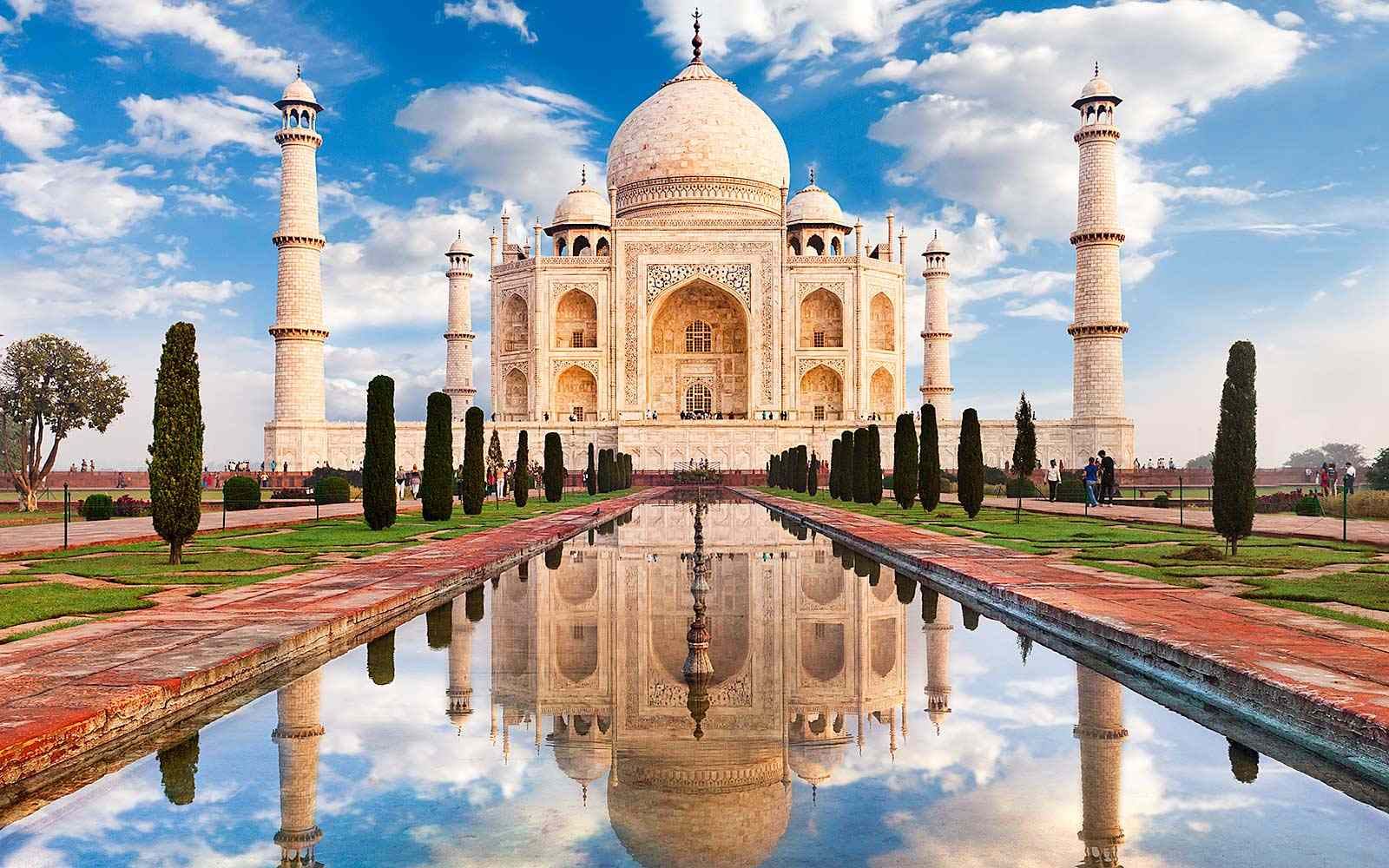
A Monument That Refuses to Be Fully Known
There is a particular quality to standing before the Taj Mahal at dawn, when the marble shifts from grey to pearl to rose, that makes you understand why this structure has provoked more questions than answers across four centuries. At Global Chic Voyage, we've returned to Agra season after season, and each visit reveals not clarity but deeper layers of uncertainty. The monument commissioned by Emperor Shah Jahan for his beloved wife Mumtaz Mahal is not simply a mausoleum. It is a riddle built in stone, one that continues to elude complete understanding despite exhaustive documentation and study.
The paradox of the Taj Mahal is this: it is among the most photographed, measured, and written-about buildings on Earth, yet fundamental questions about its creation remain unresolved. Who truly designed it? How were certain engineering feats accomplished with seventeenth-century tools? What symbolic meanings lie encoded in its proportions and decorative programs? These are not romantic mysteries invented for tourist brochures. They are genuine gaps in our knowledge, places where the historical record falls silent or contradicts itself.
The Question of Authorship
Walk through the complex and you will hear guides attribute the design to Ustad Ahmad Lahori, a Persian architect whose name appears in some Mughal-era texts. Yet other accounts credit different masters, and some scholars argue that the Taj Mahal emerged not from a single visionary but from a collaborative process involving multiple designers, engineers, and craftsmen drawn from across the empire and beyond. The Mughals did not practice architecture as we understand it today, with individual architects signing their work. Instead, the emperor himself often directed the overall vision, while specialist masters handled different elements: the stone carvers, the calligraphers, the garden designers, the structural engineers.
This collective approach means we may never be able to point to one person and say with certainty, "Here is the author." The monument belongs to an older model of creation, one that valued synthesis over singular genius. And yet the coherence of the design, the way every element speaks to every other, suggests a guiding intelligence of remarkable sophistication.
Engineering Puzzles That Persist
Stand beneath the central dome and look up. The interior dome soars to a height that creates an acoustic phenomenon: a whisper at one point can be heard clearly across the chamber. How was this effect calculated? The Mughals possessed advanced mathematical knowledge, but the precision required to achieve such acoustics, combined with the structural integrity to support the dome's weight, remains impressive by contemporary standards.
Then there is the matter of the foundation. The Taj Mahal sits on the banks of the Yamuna River, on ground that might seem unstable for a structure of such mass and ambition. The foundation consists of wells sunk deep into the riverbank and filled with rubble and mortar, creating a kind of cushioned base that can absorb shifts in the earth. This technique was sophisticated, but exactly how it was implemented, and how the builders ensured even distribution of weight across the entire platform, involves engineering principles that were not formally articulated until much later in architectural history.
We know the materials: white marble from Rajasthan, jade and crystal from China, turquoise from Tibet, lapis lazuli from Afghanistan, sapphires from Sri Lanka, carnelian from Arabia. We know that more than a thousand elephants transported these materials to the site. But the logistics of coordinating such an undertaking, the systems of measurement and quality control that ensured each inlaid stone fit perfectly into its designated place, these operational details have largely vanished from the record.
Symbolism and Coded Meaning
The Mughal emperors were deeply interested in numerology, astronomy, and sacred geometry. The Taj Mahal is aligned precisely with the cardinal directions. Its proportions follow mathematical ratios that some researchers believe encode cosmological or theological meanings. The gardens are laid out in the char bagh style, representing the four rivers of paradise described in Islamic texts. But beyond these broad symbolic gestures, there may be more specific meanings embedded in the monument's dimensions and decorative details.
Quranic verses are inlaid in calligraphy around the entrance and on the cenotaphs, selected passages that speak to themes of judgment, paradise, and divine mercy. Why were these particular verses chosen? Do they form a deliberate theological argument, a meditation on death and the afterlife tailored to Mumtaz Mahal's life and Shah Jahan's grief? Scholars have proposed interpretations, but certainty remains elusive.
Some researchers have noted that the monument's proportions shift depending on where you stand. From the main gateway, the Taj Mahal appears smaller than it does when you approach closely, an optical effect that may be intentional, designed to evoke a sense of transcendence as the visitor moves through the space. If this was deliberate, it represents a sophisticated understanding of visual perception, yet we have no written record explaining the intent.
The Unanswered Questions We Carry
At Global Chic Voyage, we have always believed that the most compelling destinations are those that resist easy consumption, that demand something of the traveler beyond the passive recording of images. The Taj Mahal rewards this kind of engagement. It invites you to look closely, to notice the way light plays across the carved marble screens, to wonder at the precision of the pietra dura inlay work, to ask questions for which there may be no definitive answers.
Why does the monument continue to inspire such inquiry? Perhaps because it occupies a threshold between what can be known and what must remain mysterious. We have the structure itself, a physical fact of extraordinary beauty and technical achievement. We have fragments of the historical record, enough to sketch the outlines of its creation but not enough to fill in every detail. And we have the enduring human impulse to understand, to decode, to make sense of what previous generations have left behind.
The Taj Mahal does not need our complete understanding to justify its existence. It stands as it has stood for centuries, indifferent to our questions, yet somehow made richer by them. Each unanswered question is an invitation to look again, to reconsider, to remain open to the possibility that a monument built in the seventeenth century still has something to teach us about ambition, love, craftsmanship, and the limits of what we can truly know about the past.
What Remains for the Traveler
For those planning a visit, the practical details matter. Early morning offers the softest light and the smallest crowds. The complex is closed on Fridays. Photography is permitted outside but not inside the mausoleum itself. But these logistics, while necessary, are secondary to the experience of simply being present before a structure that has outlasted empires, weathered monsoons and droughts, and continues to hold its secrets close.
We leave the Taj Mahal each time with more questions than we brought, and that seems exactly as it should be. Some monuments offer easy narratives. Others, like this one, offer something more valuable: the reminder that grandeur and mystery can coexist, that not everything needs to be explained to be appreciated, and that the spaces between what we know and what we wonder can be as rich as any definitive answer.
Credit: adamkaz / Getty Images
Spot something wrong? Email editors@globalchicvoyage.com. We log every correction publicly.
RELATED
SEE ALL →
29 Jul 2026 / 5 min

7 May 2026 / 5 min

14 Apr 2026 / 5 min
23 Jul 2026 / 5 min