
The Unspoken Etiquette of Flying First Class
From pre-boarding rituals to in-flight missteps, understanding the culture of premium cabins transforms comfort into true luxury.
SI
22 Jun 2026 · 5 MIN READ · UPDATED 17 AUG 2026
The Theater of Arrival
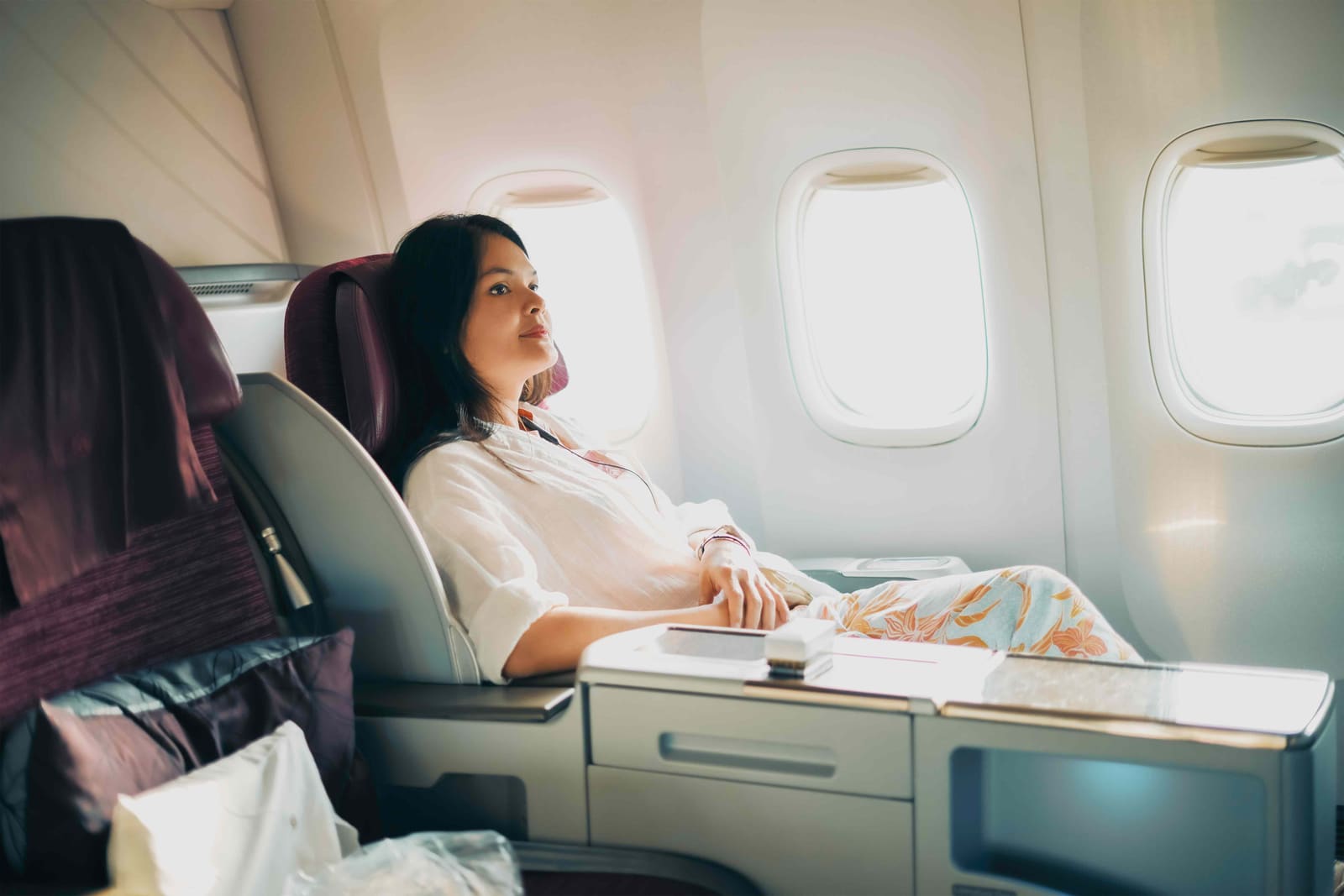
There is a particular choreography to boarding a first-class cabin. Watch closely on any long-haul route and you will see it: the way seasoned travelers pause at their seat, remove only what they need from their carry-on, then tuck the rest overhead in one fluid motion. No fumbling. No blocking the aisle while excavating a novel from the bottom of a roller bag. The theater of arrival, as one might call it, is an exercise in spatial awareness and respect for the thirty-odd people queuing behind you.
At Global Chic Voyage, we have spent years observing premium cabins from Singapore to São Paulo, and the gap between those who merely purchase a first-class ticket and those who understand its culture remains striking. The difference is rarely about wealth. It is about fluency in an unwritten code - one that flight attendants, those quiet orchestrators of airborne hospitality, know intimately.
The Mistake of Treating Service as Servitude
Perhaps the most common misstep we witness is the confusion between attentive service and on-demand servitude. First class promises a heightened level of care, certainly, but it does not promise a personal valet who materializes at every whim. The travelers who thrive in premium cabins understand this distinction instinctively. They make eye contact when requesting something. They say please and thank you as though these words cost nothing, which of course they do not.
There exists a particular tone some passengers adopt - imperious, clipped, devoid of warmth - that transforms a simple request into an uncomfortable transaction. Flight attendants notice this immediately. They fulfill the request, naturally, because professionalism demands it. But the small extras, the proactive gestures that elevate a journey from comfortable to memorable, tend to evaporate in the presence of entitlement.
The remedy is almost embarrassingly simple: treat cabin crew as collaborators in your comfort rather than instruments of it. Ask whether they have a moment before launching into a request. Acknowledge them by name if their uniform displays one. These gestures take seconds but recalibrate the entire dynamic of a flight.
The Fallacy of Maximizing Every Amenity
Another pattern we have observed, particularly among first-time premium flyers, is the compulsion to consume every available amenity as though the ticket price must be justified through sheer volume of consumption. The champagne before takeoff, the multi-course meal, the hot towel service, the endless beverage refills - all accepted not out of genuine desire but out of a vague sense that to decline would be wasteful.
Flight attendants recognize this behavior and understand its root. Yet the paradox remains: those who curate their in-flight experience selectively often enjoy it more than those who treat the cabin as an all-you-can-consume buffet of services. The traveler who declines the pre-departure beverage because they prefer to settle in quietly, or who opts for a simple meal because they plan to sleep, demonstrates a comfort with luxury that newcomers rarely possess.
True luxury, we have come to believe, is not about having everything available. It is about having the confidence to choose only what enhances your particular journey. This applies equally to the amenity kit you may never open, the slippers you do not need, and the third glass of wine that will guarantee you arrive dehydrated and groggy.
The Geography of Personal Space
Premium cabins offer more physical space than economy, but they do not offer infinite space. The armrest between seats, the galley area, the lavatories - these remain shared territories governed by invisible protocols. We have watched passengers colonize adjacent empty seats with their belongings, spread work documents across shared surfaces, or treat the aisle as an extension of their personal gym during stretching routines.
The most graceful premium travelers maintain what might be called a respectful footprint. They ask before reclining their seat fully if someone is dining behind them, even though the seat recline button is theirs to press. They keep their shoes on in shared spaces, reserving barefoot comfort for their own seat cocoon. They do not monopolize overhead bins with multiple bags when others are still boarding.
This geographical awareness extends to interactions with crew as well. The galley, for instance, is a working kitchen at thirty-five thousand feet, not a social club. Brief, friendly exchanges are welcome. Lingering conversations that interrupt meal preparation or service coordination are not. The distinction matters.
The Question of Documentation
In the age of social media, the impulse to document every experience has crept into premium cabins with mixed results. We have observed passengers photographing their seats, their meals, their champagne flutes, often with a frequency that suggests the experience is being collected rather than lived. Flight attendants tend to navigate these moments diplomatically, occasionally stepping out of frame or offering to take a photo so the passenger appears in it.
What many travelers miss is the discomfort this creates for fellow passengers who did not consent to appear in someone else's content. The unspoken rule among frequent premium flyers is to photograph discreetly and sparingly, ensuring no other passengers are identifiable in the frame. The seat and window view are fair game. The cabin panorama that captures three rows of fellow travelers is not.
There is also the matter of timing. Photographing one's meal as it is served, while the flight attendant waits to move on, introduces an awkward pause in the service flow. The more seasoned approach is to let the crew complete their choreography first, then document at your leisure.
The Architecture of Sleep
First-class cabins, particularly on long-haul routes, are designed as sleeping environments. The lie-flat seats, the bedding, the dimmed lighting - all of it signals that sleep is not merely permitted but encouraged. Yet some passengers resist this invitation, keeping their reading lights blazing at full brightness for hours, conducting loud phone conversations during boarding, or watching films without headphones at volumes audible three rows away.
Flight attendants can offer headphones, suggest dimming lights, or provide gentle reminders about quiet hours. But they cannot enforce a culture of consideration if passengers refuse to participate in it. The travelers who understand premium cabin culture dim their screens during designated rest periods, use headphones even when they believe their volume is low, and speak in modulated tones that do not carry across the cabin.
We have also noticed a reluctance among some passengers to actually use the bed-mode configuration of their seats, as though reclining fully might somehow be impolite or excessive. This is misplaced modesty. The seat was engineered for sleeping. Use it. The flight attendants would far prefer you rest comfortably than sit upright for nine hours out of some confused sense of propriety.
The Ritual of Arrival and Departure
How one enters and exits a premium cabin speaks volumes. The rushed boarding, the frantic gathering of belongings as soon as the seatbelt sign chimes off, the shoving toward the exit door - these behaviors belong to a different travel philosophy entirely. In first class, there is time. There is space. There is no prize for being first off the aircraft if it means elbowing past the crew who just spent twelve hours attending to your comfort.
The graceful departure involves waiting until your row is naturally ready to deplane, thanking the crew by name if possible, and leaving the seat area tidy. The blanket need not be folded with military precision, but neither should it be balled up and thrown on the floor. The amenity kit and headphones, if unwanted, can be left neatly on the seat rather than stuffed into seat pockets already crammed with refuse.
We have watched passengers exit without a word to the crew standing at the door, as though the flight attendants were furniture rather than professionals who orchestrated an entire airborne hospitality experience. A simple thank you costs nothing and means more than most travelers realize.
The Preparation Paradox
Finally, there is the matter of preparation - or the lack of it. Some passengers board premium cabins seemingly unaware of what these cabins offer or how to use the seat controls, the entertainment system, or the meal ordering process. They press buttons at random, summon crew to ask questions answered in the literature provided, or attempt to force seat mechanisms that require a gentler touch.
Flight attendants expect some learning curve, particularly on newer aircraft with more complex seat designs. What they do not expect is passengers who refuse to read any instructions or watch any demonstrations, then grow frustrated when things do not work as they imagined. The solution is modest preparation: a quick review of the airline's website before departure, attention during the crew's explanation of seat features, or a simple question posed politely rather than a demand issued impatiently.
At the same time, some travelers over-prepare, arriving with elaborate lists of requests, special meal requirements announced mid-flight despite advance ordering systems, or expectations shaped by a different airline's service standards. The balance lies in understanding that first class is a curated experience, not a bespoke one. There is room for personalization, but within the parameters of what the crew can reasonably provide at altitude.
The Culture Beneath the Comfort
What emerges from these observations is a portrait not of rules but of culture. First class, at its best, is a shared space where elevated comfort meets mutual respect. The passengers who flourish in this environment understand that their ticket purchases access to superior amenities, but it does not purchase exemption from basic courtesy. The crew is there to serve, but service is a collaboration, not a one-way transaction.
We return often to the same routes, the same carriers, the same premium cabins, and the patterns remain consistent. The travelers who understand this culture - who board calmly, treat crew warmly, respect shared space, and depart gracefully - are the ones who seem to arrive not just rested but genuinely renewed. They have participated in a temporary community at altitude, one that functioned because everyone involved understood their role in sustaining it.
The missteps we have outlined here are neither unforgivable nor uncommon. They are simply the markings of unfamiliarity, the rough edges that smooth with experience. But they need not require dozens of flights to correct. Observation, consideration, and a willingness to see the cabin as a shared ecosystem rather than a personal luxury suite will carry you most of the way. The rest is simply a matter of remembering that even at forty thousand feet, we remain bound by the small civilities that make any community, however temporary, worth belonging to.
Spot something wrong? Email editors@globalchicvoyage.com. We log every correction publicly.
RELATED
SEE ALL →
30 Jul 2026 / 5 min

27 Jul 2026 / 5 min

27 Jul 2026 / 5 min

25 Jul 2026 / 5 min