
Two By The Water: Banyan Tree Samui's New Invitation To Reconnect
Banyan Tree Samui
SL
6 May 2026 · 5 MIN READ · UPDATED 17 AUG 2026
The First Morning
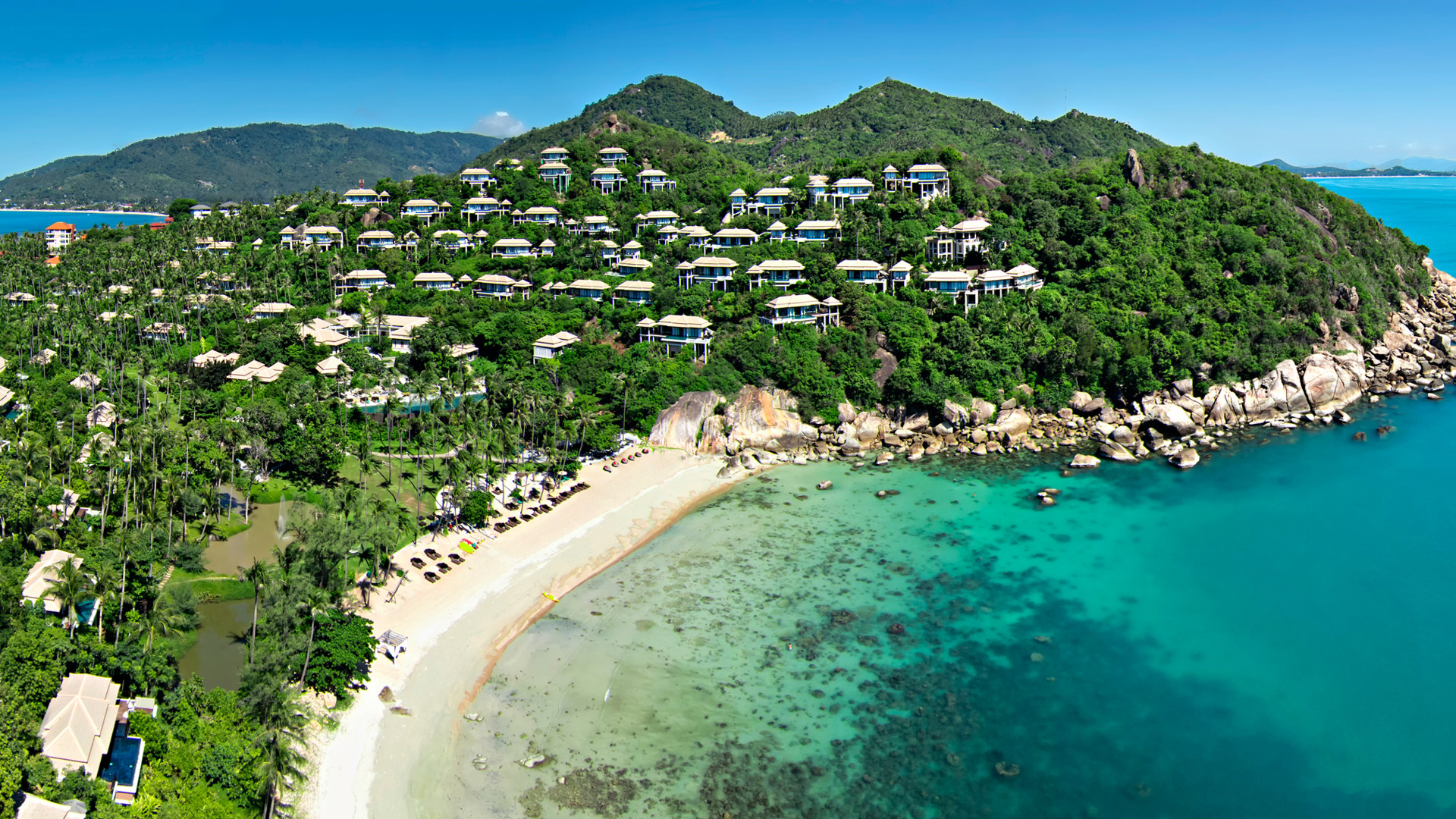
You wake before the alarm—not from restlessness, but from the absence of noise. Outside the villa, the Gulf of Thailand breathes against the shore in long, unhurried intervals. Your companion is still asleep. You step onto the terrace, where the infinity pool blurs into the horizon, and for a moment you forget which body of water you're looking at. This is Koh Samui at its most elemental: salt air, stone, light.
It is here, in this liminal space between sleep and waking, that Banyan Tree Samui has introduced something quietly radical—a wellness programme designed not for the solitary seeker, but for two. Banyan Tree Connections is not a couples' retreat in the champagne-and-rose-petals sense. It is something more deliberate: a structured invitation to be present, together, in a world that rarely asks us to slow down at the same pace as another person.

A Programme Built on Eight Pillars
The architecture of Banyan Tree Connections rests on Banyan Group's eight pillars of well-being—a framework that spans physical vitality, mental clarity, emotional balance, and social harmony. The programme does not announce itself with fanfare. Instead, it begins with a thirty-minute consultation, a conversation that feels less like intake and more like cartography. What are you seeking? What do you need to release? How do you move through the world, and how does your partner?
From this dialogue, a bespoke itinerary emerges. Private yoga sessions unfold on open-air platforms, where breath and movement sync not only with the body but with the sea's cadence. Sound healing meditation—Tibetan bowls, gongs, the hum of frequency—anchors the mind. There is a workshop on herbal massage oils and reflexology, taught by practitioners who understand that touch is a language, and that learning it together deepens fluency.
Two sixty-minute spa treatments are woven into the schedule, each tailored to the body's particular tensions. These are not indulgences; they are recalibrations. The body holds what the mind cannot speak, and here, under skilled hands, it begins to let go.


Beyond the Treatment Room
But Banyan Tree Connections does not confine itself to the spa pavilion. Wellness, the programme suggests, is not only stillness—it is also play, curiosity, the willingness to try something unfamiliar. Guests are invited to kayak across the Gulf's turquoise expanse, paddles cutting through water that feels less like liquid and more like light. There is an introduction to Thai boxing, where the body learns discipline and release in equal measure. A culinary workshop demystifies the alchemy of Thai cuisine—lemongrass, galangal, the sharp brightness of lime leaf.
And then, as the sun dips below the waterline, a private beach dinner. The table is set on sand still warm from the day. Lanterns flicker. The meal—prepared by the resort's culinary team, which includes Saffron, recognised in the 2025 Michelin Guide—is a meditation in itself. Each dish arrives as a small ceremony, a reminder that nourishment is both physical and relational.


The Setting: Beachfront Sanctuary
Banyan Tree Samui comprises eighty-eight pool villas, each a discrete universe of teak, stone, and water. The infinity pools are not mere amenities; they are thresholds, places where the boundary between private and infinite dissolves. The resort's facilities extend beyond the villa: three restaurants, a fitness centre, a kids' club for families, a library for those who seek solitude in words, and flexible spaces for meetings and events.
Yet the true luxury here is spatial—the sense that you are held, but not crowded. The beachfront location offers unobstructed views of the Gulf of Thailand, a body of water that has witnessed centuries of trade, migration, and myth. To sit here is to be in conversation with that history, even if you never speak of it aloud.

Why It Matters
In an era when wellness has become both ubiquitous and atomised—tracked by apps, quantified by wearables, pursued in isolation—Banyan Tree Connections offers a corrective. It asks: what if well-being is not a solitary climb, but a shared journey? What if the goal is not perfection, but presence?
The programme's genius lies in its structure. By anchoring activities in ritual and rhythm, it creates a container within which two people can meet—not as they are in daily life, but as they might be when the noise falls away. This is not therapy, though it may be therapeutic. It is not romance, though it may deepen intimacy. It is, instead, an experiment in co-regulation: the idea that we are most ourselves when witnessed by another.
For the modern traveller—particularly those from Asia's megacities, where speed is currency and silence is scarce—this model resonates. It borrows from Buddhist traditions of mindfulness and the Confucian emphasis on relational harmony, yet packages them in a way that feels contemporary, not didactic. The programme does not demand belief; it asks only for participation.
The Last Evening
On your final night, you return to the villa's terrace. The pool glows faintly in the dark. Your companion is beside you, and for once, neither of you reaches for a phone. The Gulf murmurs its endless conversation with the shore. You realise that the programme has not given you answers—it has given you a question: what does it mean to be together, not in transit, but in stillness?
You do not answer it aloud. But in the morning, when you wake again before the alarm, you understand that something has shifted. The world has not changed. You have.
Spot something wrong? Email editors@globalchicvoyage.com. We log every correction publicly.
RELATED
SEE ALL →
29 Apr 2026 / 5 min
31 Mar 2026 / 5 min

1 May 2026 / 5 min
25 Apr 2026 / 5 min