
When a Private Home Becomes a Hotel Worth Checking Into
Christopher and Suzanne Sharp spent fifteen years restoring an 18th-century Maltese estate, first as a family refuge, then as Casa Bonavita, a seventeen-room retreat that blurs the line between residence and hospitality.
SI
27 Jul 2026 · 5 MIN READ · UPDATED 17 AUG 2026
The Dream That Took Decades to Ripen
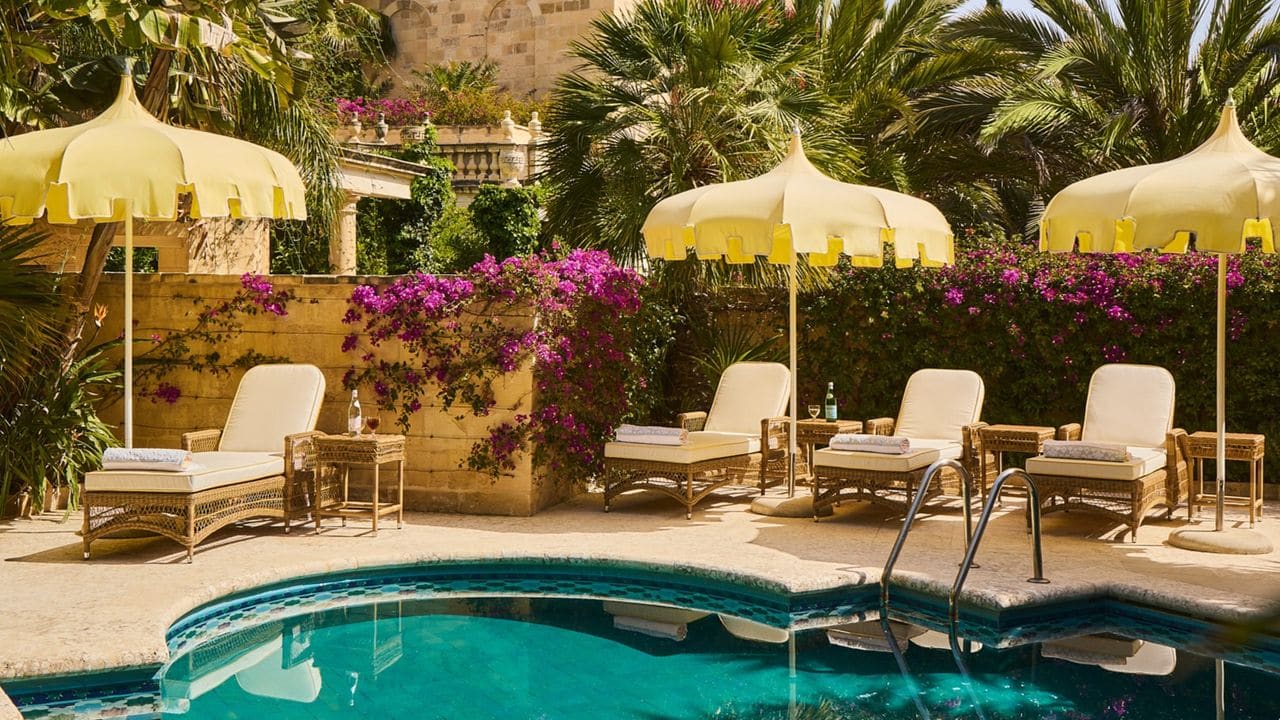
There is a particular kind of hotel that feels as though it has always existed, where the line between hospitality and home dissolves so completely that you forget anyone is paid to be there. Casa Bonavita, which opened its doors in late spring 2026, is one such place. Set within an 18th-century limestone manor in Attard, one of Malta's quieter historic villages, it is the work of Christopher and Suzanne Sharp, who spent fifteen years coaxing the building back from ruin. At Global Chic Voyage, we've watched a growing number of entrepreneurs attempt the private-home-as-hotel model, but few manage the alchemy that the Sharps have achieved here: a place that reads as deeply personal yet welcomes strangers with ease.
The Sharps are no strangers to building brands from instinct. As the founders of The Rug Company, they spent years cultivating an aesthetic rooted in craftsmanship and quiet luxury. When they first encountered the dilapidated house in 2010, they were bewitched not by its grandeur but by its bones, the way light pooled in certain corners, the scent of jasmine threading through the overgrown gardens. They bought it, moved in with their family, and began the slow work of restoration. Only later did the idea of opening it as a hotel resurface, a dream they'd first entertained in their twenties when they fantasized about a small inn in Tuscany. Back then, they lacked the resources and experience. Now, with the right property and decades of accumulated knowledge, the vision finally had room to breathe.
A House That Teaches You How to Live
Living in a building before transforming it into a hotel is an uncommon luxury, and one that shaped nearly every decision the Sharps made. They learned how sunlight traveled across the garden throughout the year, which rooms grew too humid in winter, where a ceiling fan mattered more than air conditioning on a warm evening. These are the kinds of insights that architectural plans cannot convey, the subtle intelligence that comes only from inhabiting a space through all its moods and seasons.
The result is a seventeen-room hotel that feels calibrated for comfort rather than spectacle. Almost every bedroom opens onto a private terrace or garden, and even the shared spaces, two pools, a restaurant wrapped in terraces, a subterranean spa, are arranged to allow for solitude. The restaurant centers on a working kitchen clad in Sicilian tile, with a Lacanche range that guests can glimpse throughout the day. In the mornings, pastries appear. In the afternoons, tea and cake. In the evenings, the space opens to outside diners, serving pan-roasted sea bass, buffalo mozzarella, and verdura mista. The effect is less hotel dining room and more the kitchen of a friend who happens to cook very well.
Memory as a Design Principle
Suzanne Sharp, who grew up in Malta, has spoken about designing not from a particular style but from memory. She remembers houses where shutters stayed closed against the afternoon heat, where furniture accumulated over generations rather than arriving in a single delivery, where gardens grew a little wild. Her London-based practice, Suzanne Sharp Studio, channeled that sensibility into Casa Bonavita's interiors, layering antique furniture, Murano glass lighting, and hand-painted murals across walls and ceilings.
The most arresting of these murals unfolds in the restaurant, where artists Alfonso Orombelli and Luna Aulehla Greppi painted a leafy scene that extends the garden indoors. In the bar, a bespoke de Gournay wallpaper depicts 17th-century Valletta, while lampshades were hand-painted by artists from Villa Bologna Pottery, the ceramics studio owned by the Sharps' daughter, Sophie Edwards, just five minutes away on foot. Every surface has been considered, yet nothing feels overly curated. The interiors suggest a family that has lived here for decades, collecting objects as they went.
Suzanne worked alongside her son, antiques dealer Jamie Sharp, to source much of the furniture. She has said she never collects according to period or fashion, only character and craftsmanship. The pieces carry imperfections and a sense of scale that contemporary furnishings often lack, making rooms feel as though they evolved naturally rather than being installed all at once. She prefers not to highlight individual objects, hoping instead that guests will discover paintings, ceramics, and small sculptures tucked throughout the hotel on their own, noticing something new each time they wander through.
The Architecture of Belonging
Casa Bonavita occupies what was once the countryside estate of the distinguished Bonavita family, a 19th-century house built from golden limestone. Original architectural details have been carefully restored, preserving the character of the family's former residence. The house sits in Attard, around twenty minutes from Valletta, in a village that still moves at a slower pace. The Sharps lived here long enough to become part of the local community, and that sense of belonging, of being rooted in a place rather than simply occupying it, is something they hope guests will feel as well.
The hotel's best room is a matter of debate among staff and guests, but Room Five, the only suite in the main house, has a strong claim. Its bathroom is set within the estate's former chapel, crowned by a domed ceiling, and the suite opens onto a private terrace overlooking the gardens. Soft colors, handcrafted furnishings, and attention to detail lend it the feel of a private sanctuary. Other rooms feature hand-painted frescoes and decorative murals, each designed specifically for its space, so that no two feel alike yet together they form a narrative that runs throughout the house.
The Garden as a Sequence of Discoveries
While Suzanne shaped the interiors, Christopher revived the gardens. He has spoken about wanting to create a sequence of spaces, a sense of journey where each turn offers something new. Palm trees frame the pool. Orange trees punctuate a flagstone courtyard. Jasmine and orange blossom scent the air. The gardens are not manicured in the formal sense; they retain a quality of having been lived in, of evolving over time rather than being imposed all at once.
The subterranean spa extends this layered aesthetic below ground. It encompasses a hammam, sauna, cold plunge, and gym, with blousy floral fabrics and deep-green zellige tiles creating a meeting of English and Moorish pattern. Here, as elsewhere in the hotel, the design draws on southern Mediterranean heritage without replicating it. The aim was never to recreate a specific historical moment but to continue the story of the building in a way that feels natural.
The Virtue of Waiting
The Sharps have joked that their philosophy is to do everything once and leave while still enjoying it. Over the course of their lives, they have had several careers, and Casa Bonavita represents a return to a dream they first entertained decades ago. Christopher has said the hotel was never conceived as a commercial exercise but as an opportunity to fulfill that early ambition. Sometimes the best ideas simply need time before they are ready to be realized.
At Global Chic Voyage, we've long believed that the most compelling hotels are those that reflect a singular vision rather than a formula, and Casa Bonavita is a case in point. It is a place shaped by instinct, memory, and the accumulated knowledge that comes from living in a house long enough to understand how it wants to be inhabited. The Sharps did not set out to create a hotel that looks like a home; they created a home and then, slowly and carefully, opened it to others. That distinction is everything.
Credit: Boz Gagovski
Spot something wrong? Email editors@globalchicvoyage.com. We log every correction publicly.
RELATED
SEE ALL →
31 Jul 2026 / 5 min
14 Jul 2026 / 5 min
28 Jul 2026 / 5 min
28 Jul 2026 / 5 min