
When Singapore Turns Red and White: An August of Fireworks, Lilies, and Sunsets by the Marina
From waterfront regattas to disco tributes, the Lion City's most celebratory month offers travelers a rare glimpse into national pride woven through culture, sustainability, and nostalgia.
SI
31 Jul 2026 · 5 MIN READ · UPDATED 17 AUG 2026
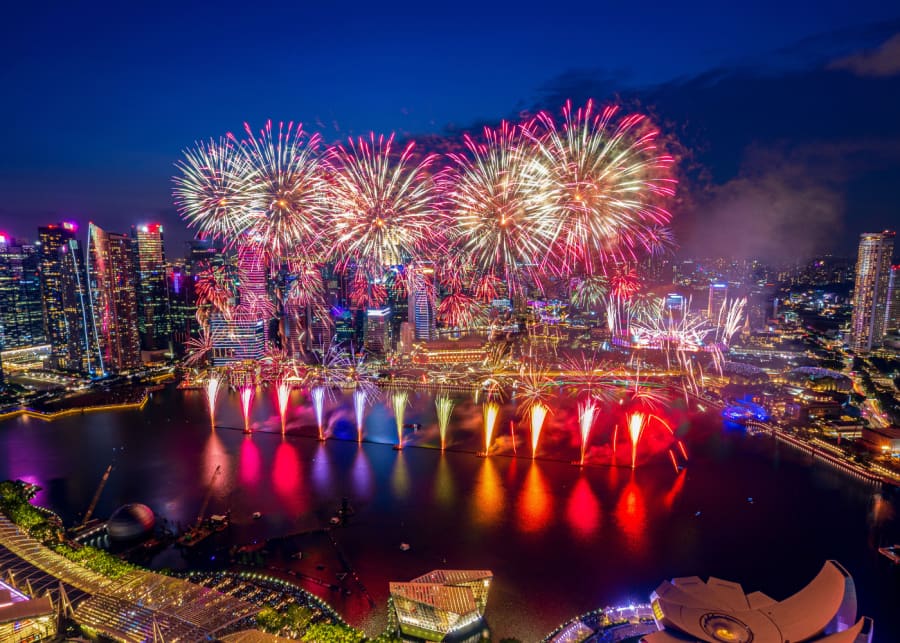
The Sky Above Marina Bay
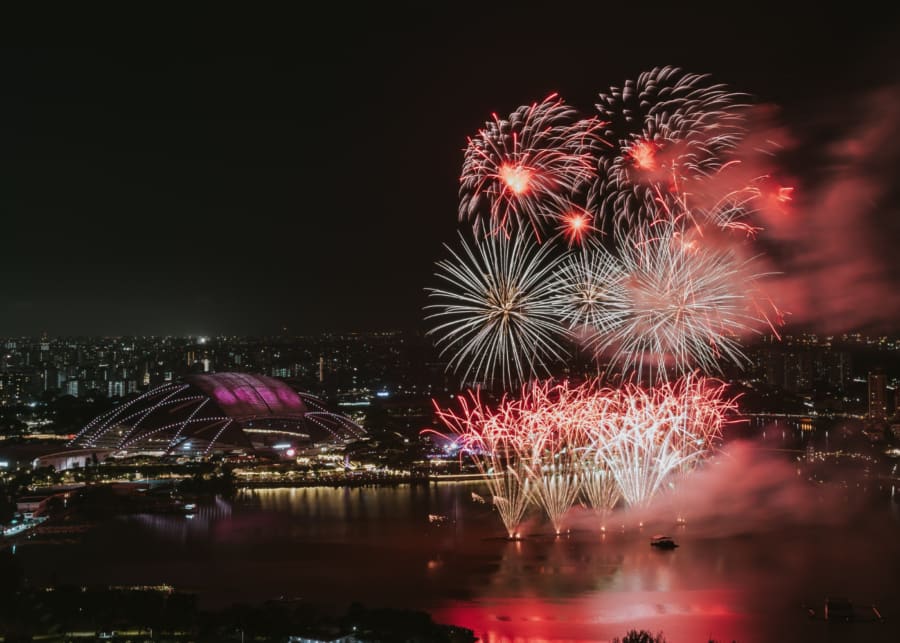
There is a particular hush that falls over Marina Bay just before the fireworks begin. The crowd thickens along the Helix Bridge, cameras tilt upward, and the humid night air seems to hold its breath. August in Singapore is defined by these moments: when the sky erupts in color, when the nation pauses to celebrate its independence, and when travelers fortunate enough to be present witness something both intimate and grand.
At Global Chic Voyage, we've watched cities mark their milestones in countless ways, but Singapore's approach to its National Day feels distinct. The celebrations are meticulously planned yet genuinely felt, blending state ceremony with neighborhood block parties, rooftop cocktails with hawker center camaraderie. The fireworks displays scheduled for both the first and ninth of August this year offer multiple vantage points: from the iconic Merlion Park to elevated restaurant terraces where champagne glasses clink against a backdrop of pyrotechnics. Arrive early, the seasoned observers advise, because prime spots along the waterfront fill hours before the first spark ignites.
Where Water Meets Celebration
Far from the central spectacle, at the western edge of the island near Tuas Link, another kind of gathering takes shape. Raffles Marina transforms mid-month into a hub for those who find their peace on the water. The Marine & Fishing Expo arrives on the fifteenth and sixteenth, bringing together vendors of fishing tackle, marine technology, and watersports equipment alongside the Singapore Western Regatta. Sailors race across the strait while visitors browse booths and watch the sun descend toward the horizon in shades of amber and rose.
This juxtaposition defines much of what makes Singapore compelling in August: the grand and the niche coexist. A visitor might spend their morning watching competitive sailing, then return to the city center for an evening of national celebration. The marina itself, often overlooked by tourists fixated on Sentosa or Orchard Road, offers one of the city's most serene sunset experiences, a fact known primarily to residents who make the journey west.
Patriotism as Performance and Practice
National Day in Singapore is not confined to a single parade route. The commemoration spills across neighborhoods, into museums, onto restaurant menus, and through public programming at venues like the Esplanade and Gardens by the Bay. The official parade may require tickets, but the spirit of the occasion permeates the entire island. Streets are lined with flags, building facades glow red and white, and even the most understated hawker stalls might offer themed dishes for the long weekend.
What strikes us about these celebrations is their lack of cynicism. In an era when national pride often carries complicated undertones, Singapore's approach feels earnest without being exclusionary. Visitors are welcomed into the festivities, encouraged to don the national colors, invited to understand what this small nation has built in the decades since independence. It is performative, certainly, but the performance feels rooted in genuine collective memory rather than manufactured nostalgia.
Sustainability Dressed as Festival
By the final week of August, attention shifts to Temasek Shophouse on Orchard Road, where the Green-House Festival returns for its fifth edition. The theme this year, Don't Waste A Good Time, signals an intentional reframing: sustainability not as sacrifice but as creativity, not as deprivation but as ingenuity. The highlight, a six-course tasting experience called Eat Your Scraps, challenges diners to reconsider what constitutes waste. Vegetable peels, prawn shells, banana skins, ingredients typically discarded without thought, are transformed into courses that are both conceptually bold and reportedly delicious.
Nottofu, the collaborating kitchen behind the tasting, exemplifies a growing movement within Singapore's culinary scene: chefs who view constraints as inspiration, who treat sustainability as an aesthetic challenge rather than a moral obligation. Beyond the food, more than seventy brands showcase products and practices aligned with conscious consumption, from zero-waste personal care to upcycled fashion. Workshops offer hands-on learning, installations provoke reflection, and the atmosphere, according to those who attended previous years, manages to feel celebratory rather than preachy.
This is where Singapore's approach to luxury travel intersects with its pragmatic ethos. The city has never romanticized scarcity, yet it increasingly celebrates efficiency and innovation. For travelers accustomed to sustainability initiatives that feel performative or superficial, the Green-House Festival offers substance alongside style.
Galleries Open Their Doors
Mid-August also marks the beginning of Singapore Gallery Month, a sprawling initiative that spans nearly a month and encompasses over a hundred exhibitions, artist talks, workshops, and collector experiences. For those who have felt intimidated by the art world's opacity, this presents an accessible entry point. Gillman Barracks, the converted military complex turned contemporary art enclave, hosts evening gatherings. Tanjong Pagar Distripark extends its hours for Art After Hours sessions. Guided walks connect galleries across neighborhoods, while workshops range from collage-making to sound walks that reframe familiar streets through auditory attention.
The structure of Gallery Month reflects Singapore's broader cultural strategy: make access easy, remove barriers to entry, then let the work speak for itself. Speed-dating sessions pair collectors with artists, demystifying the acquisition process. Talks are scheduled at times when working professionals can attend. The message is clear: art is not the exclusive province of the initiated; it is part of the city's fabric, available to anyone willing to look.
Nostalgia as Currency
August's concert calendar leans heavily on nostalgia, with two tribute acts commanding significant attention. David Byrne arrives early in the month with his latest album tour, bringing thirteen musicians, singers, and dancers for a performance that blurs boundaries between concert, theater, and installation. Those familiar with Byrne's work, from his Talking Heads era through his various solo and collaborative projects, know to expect visual invention alongside sonic experimentation. The show at The Star Theatre promises immersive staging and the kind of conceptual ambition that has defined his decades-long career.
Later in the month, Björn Again, the internationally recognized ABBA tribute ensemble, takes over Sands Theatre for multiple performances across a single weekend. The appeal here is unabashed: sequins, harmonies, and the collective joy of singing along to Dancing Queen. There is no irony in the audience's enthusiasm, no postmodern distance. The pleasure is direct and shared, a reminder that nostalgia, when embraced without cynicism, can create genuine connection among strangers.
For a different strain of early-2000s nostalgia, The Click Five returns to Singapore Expo at month's end, following a previous sold-out performance. The pop-rock sound that defined a particular moment in adolescent bedrooms and school dances now fills arenas, the audience older but no less enthusiastic.
Lilies and Lotus in the Flower Dome
Toward the end of August, Gardens by the Bay unveils Lilytopia, its latest Flower Dome showcase. The theme draws from Ancient Egypt, transforming the climate-controlled conservatory into Nile-inspired gardens filled with vibrant lilies and the rare Egyptian Blue Lotus, a flower steeped in symbolism and historical significance. The installation runs through late September, offering a respite from both the tropical heat and the city's relentless pace.
What Gardens by the Bay accomplishes consistently is the elevation of horticulture to spectacle without diminishing botanical integrity. The displays are theatrical, yes, but they also educate, contextualizing plants within cultural and ecological narratives. Lilytopia, with its temple-inspired scenes and carefully curated blooms, invites contemplation of how civilizations have always sought meaning in flowers, how beauty and symbolism intertwine across millennia.
Community as Destination
The inaugural RWS Cares Festival at Resorts World Sentosa combines leisure with purpose. The Steps of Hope charity walk on the twenty-second winds through Universal Studios Singapore, the Singapore Oceanarium, and Adventure Cove Waterpark, with all ticket proceeds directed to the President's Challenge. The route itself, 1.4 kilometers through spaces typically experienced as entertainment venues, reframes these environments as sites of community gathering. Character appearances add levity; the charitable purpose adds weight.
The accompanying Green Living Fair extends across two days, featuring sustainable brands, social enterprises, workshops, and inclusive performances. It is yet another iteration of Singapore's ongoing negotiation between consumption and conscience, between tourism infrastructure and social responsibility. Resorts World Sentosa, a complex built explicitly for leisure and indulgence, hosts an event that asks visitors to consider their impact, their choices, their role in systems larger than a single vacation.
The Rhythm of a City in Celebration
August in Singapore reveals a city comfortable with multiplicity. Grand national celebrations coexist with niche maritime expos. Sustainability festivals unfold alongside ABBA tribute concerts. Art gallery openings share the calendar with fireworks displays. This is not contradiction but rather the natural expression of a place that has always balanced competing imperatives: tradition and innovation, local identity and international aspiration, efficiency and joy.
For travelers, the month offers unusual density. A long weekend could encompass National Day fireworks, a gallery walk through Gillman Barracks, dinner at a rooftop venue overlooking the illuminated skyline, and a morning at the Flower Dome among Egyptian lilies. The city's compact geography makes such range feasible; its cultural programming makes it rewarding.
What lingers after August passes is not any single event but rather the cumulative impression of a nation that takes celebration seriously, that views its birthday not as a single day but as an extended invitation to reflect, gather, and look forward. The fireworks eventually fade, the flags come down, and the city returns to its usual rhythm, but something of that collective energy remains, woven into the stories visitors carry home and the memories that draw them back.
Credit: NDPeeps
Spot something wrong? Email editors@globalchicvoyage.com. We log every correction publicly.
RELATED
SEE ALL →
22 Jul 2026 / 5 min
9 Jun 2026 / 5 min
9 May 2026 / 5 min
2 Jul 2026 / 5 min