
When Speed Meets Altitude: Private Aviation Finds Its Racing Line
As Formula 1 circles the globe and private fliers grow younger, one aviation house is rewriting the playbook on what it means to travel in tandem with the world's fastest sport.
VJ
8 Jul 2026 · 5 MIN READ · UPDATED 17 AUG 2026
The Shift From Logos to Access
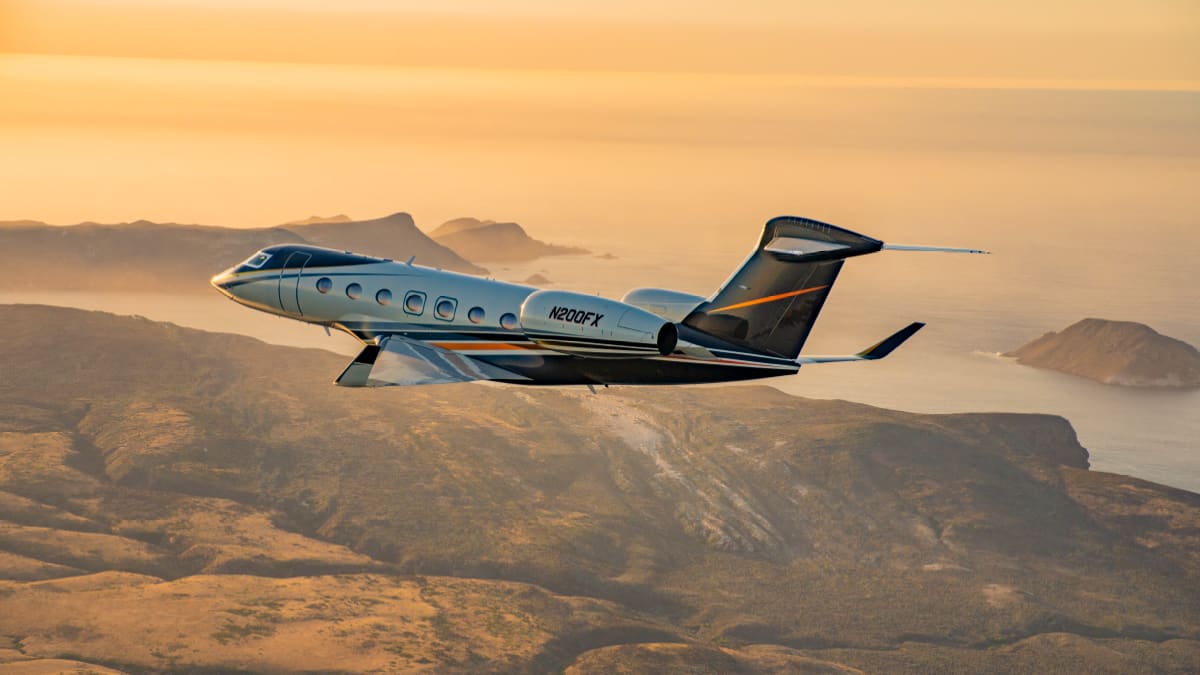
There is a moment, just before the lights go out on a Formula 1 grid, when anticipation compresses into a single breath. For decades, brands have tried to bottle that electricity through billboards and tire walls plastered with logos. But a different kind of partnership is emerging, one that trades visibility for intimacy. Flexjet's multi-year agreement with Formula 1, unveiled at Silverstone during the British Grand Prix, marks a departure from the old playbook. No honking digital signs. No sprawling banners jostling for eyeline real estate. Instead, the private aviation firm becomes the Official Private Aviation Supplier, a title that sounds corporate until you understand what it actually unlocks: paddock passes, grid walks, and hospitality suites perched directly above the nerve centers of racing teams.
At Global Chic Voyage, we've watched luxury brands pivot from product placement toward curated access, and this alliance feels like the natural evolution. Formula 1 has always been a theater of speed, but its hospitality architecture has grown into a parallel spectacle. Flexjet's fractional owners will step into venues like House 44, the collaboration between Lewis Hamilton, the F1 Paddock Club, and Soho House, positioned just above Ferrari's race headquarters. It is travel not as a means to arrive, but as a layer of the event itself.
A Fleet That Mirrors the Calendar
The numbers tell part of the story. According to Flexjet, the company now operates more than 340 aircraft, with an additional 50 slated to join the fleet this year. Transatlantic flying has surged by 60 percent over the past year, a trajectory that mirrors Formula 1's own expansion across continents. The sport now races in more than 20 countries, threading circuits from Monaco to Singapore, Miami to São Paulo. For a private aviation operator, that calendar presents both a logistical puzzle and a commercial opportunity.
Global CEO Andrew Collins frames the partnership as synergy between two entities chasing the same horizon. Formula 1's executive travel will be handled by Flexjet, flights operating on Sustainable Aviation Fuel through the company's existing environmental program. It is a detail that matters less for its green credentials, perhaps, than for what it signals about the clientele: a generation that expects sustainability to be woven into the fabric of luxury, not appended as an afterthought.
The demographic shift is striking. The average age of private fliers has dropped by a full decade since 2020, according to Flexjet. Younger clients gravitate toward experiences that feel kinetic rather than static, and Formula 1, with its blend of engineering precision and visceral speed, fits that appetite. Flexjet has spent the past five years courting this sensibility, aligning itself with the Ferretti Group in yachting and LVMH in fashion. The racing partnership is the logical next step, a move into a domain where adrenaline and elegance coexist without contradiction.
The Choreography of a Season
What makes this alliance particularly intriguing is the content dimension. Flexjet and Formula 1 will co-produce a behind-the-scenes digital series exploring the operational choreography required to run both a global racing season and an international aviation network. The parallel is not immediately obvious until you consider the scale: coordinating pit stops across time zones, managing crew rotations, anticipating weather windows, ensuring that every flight or race weekend unfolds with the appearance of effortless precision.
At Silverstone, Ferrari's Lewis Hamilton finished third, trailing Charles Leclerc in first and George Russell in second. For Flexjet's guests watching from House 44, the race was framed not just by the track but by the proximity to the machinery and minds orchestrating it. That kind of vantage point, where the boundary between spectator and insider blurs, is increasingly what defines luxury. It is not about being seen; it is about seeing what others cannot.
Chairman Kenn Ricci describes the goal as delivering "unparalleled, ultra-luxury experiences, both on the ground and in the air." The phrasing is corporate, but the ambition is clear: Flexjet wants to position itself as integral to the entire arc of a race weekend, from departure lounge to checkered flag. Private aviation has always sold convenience; now it is selling narrative.
Racing as a Proxy for Aspiration
Formula 1 has undergone its own transformation in recent years, broadening its appeal beyond the traditional European heartland. Races in Austin, Las Vegas, and Miami have introduced the sport to American audiences weaned on different rhythms. The Netflix series Drive to Survive turned team principals and engineers into characters, making the off-track drama as compelling as the on-track battles. In this context, Flexjet's partnership is less about aviation and more about adjacency to a cultural moment.
There is something almost circular about the relationship between private travel and elite sport. Both are expressions of mobility, freedom, and the compression of distance. Both promise that the world is smaller than it appears, that you can be in Monaco for breakfast and Silverstone by afternoon. Formula 1 offers the spectacle; Flexjet offers the means. Together, they construct an ecosystem where luxury is not a static state but a continuous loop of movement and arrival.
Several Formula 1 drivers are already Flexjet clients, a detail that underscores the overlap between the two worlds. Racing drivers, after all, are professional travelers, their lives measured in circuits and time zones. That they choose private aviation is unsurprising; that their aviation provider now sponsors their sport creates a feedback loop of endorsement and access.
Beyond the Grandstand
The traditional model of sports sponsorship has always been transactional: brands pay for exposure, hoping that logos translate into awareness. But as audiences fragment and attention becomes harder to capture, the logic shifts. What Flexjet is buying is not visibility but proximity. Its clients will not see the Flexjet name emblazoned across a car; they will experience the brand through the quality of the journey and the exclusivity of the access.
At selected races, fractional owners will gain entry to the paddock and starting grid, spaces typically reserved for team personnel and accredited media. It is the difference between watching a ballet from the balcony and standing in the wings. The intimacy changes the experience, and the experience, in turn, changes the perception of the brand that facilitated it.
This approach reflects a broader trend in luxury: the migration from objects to moments. A watch or a handbag is a possession; a weekend at Silverstone, with grid access and paddock hospitality, is a memory. The former can be replicated; the latter is singular. Flexjet is betting that its clients value the latter more highly, and that the association with Formula 1 will become a shorthand for a certain kind of life, one lived at speed and altitude.
The Long Game
Partnerships like this are rarely about immediate return. They are about positioning, about embedding a brand into the cultural landscape in a way that feels organic rather than imposed. Flexjet's expansion, both in fleet size and geographic reach, suggests a company preparing for a future where private aviation is no longer the preserve of a narrow elite but a broader, younger cohort that views travel as part of a larger lifestyle mosaic.
Formula 1, for its part, continues to refine its hospitality offerings, understanding that the paddock experience is as valuable as the race itself. The sport has become a platform, a stage on which brands can perform their identities. Flexjet's role in that performance is quiet but strategic: the invisible infrastructure that makes everything else possible.
As the season unfolds across continents, the partnership will test whether this model, access over advertising, resonates with the audiences both entities are courting. If it succeeds, expect other luxury sectors to follow suit, trading billboards for backstage passes, logos for lived experience. The finish line, it turns out, is only the beginning.
Photo: Flexjet
Spot something wrong? Email editors@globalchicvoyage.com. We log every correction publicly.
RELATED
SEE ALL →
30 Jul 2026 / 5 min

27 Jul 2026 / 5 min
27 Jul 2026 / 5 min
25 Jul 2026 / 5 min