
Where Earth Meets Water: A Meditation on the World's Most Compelling Shorelines
From volcanic cliffs shaped by myth to windswept peninsulas lit by the aurora, certain coastlines possess the power to reorient our sense of scale and beauty.
SI
2 Jul 2026 · 5 MIN READ · UPDATED 17 AUG 2026
The Horizon as Portal
There is a particular quality of light that exists only where land surrenders to water. Not the glare of midday sun on pavement, nor the diffuse glow of forest canopy, but something else entirely: a clarity that seems to strip away pretense. At Global Chic Voyage, we have spent years returning to certain shorelines, not because they offer easy comfort, but because they refuse to let us look away.
These are not beaches in the conventional sense, places where one might spread a towel and doze. They are edges, thresholds, sites of perpetual negotiation between stone and wave. To encounter them is to stand witness to geology in conversation with time.
California's Serpentine Ribbon
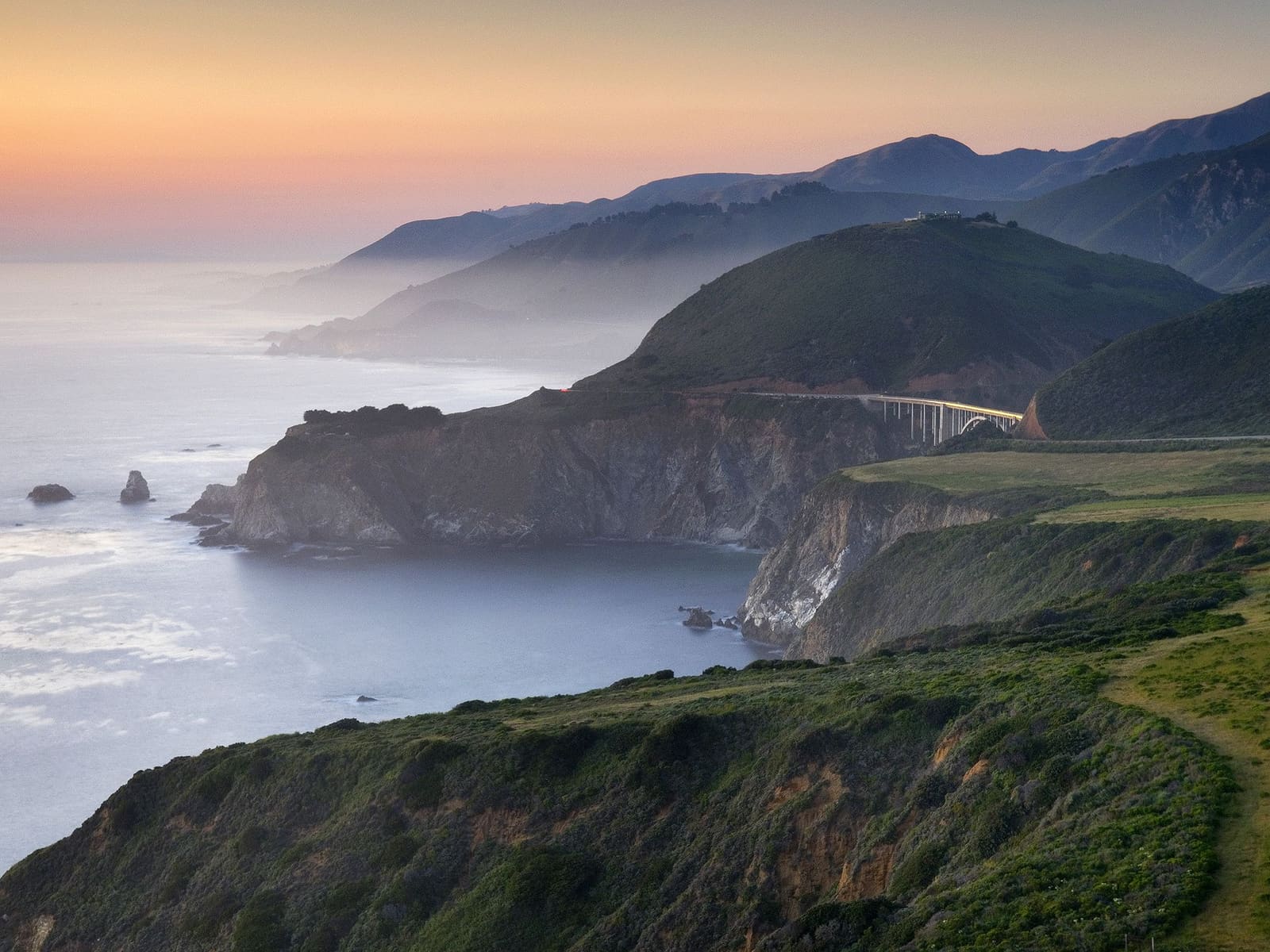
The stretch of Highway One that threads through Big Sur remains one of the planet's most kinetic driving experiences. Here, the road itself becomes a kind of meditation, each hairpin turn revealing another frame of Pacific drama. Cliffs plunge hundreds of feet into churning water; redwood groves cling to canyon walls; fog rolls in like a living thing.
What makes this coastline compelling is not its accessibility but its refusal to be tamed. The highway has closed and reopened multiple times over the decades, victim to the same tectonic restlessness that created the landscape in the first place. Between Los Padres National Forest and the Ventana Wilderness, nearly seven miles of asphalt trace a line between stability and collapse. Restaurants like Nepenthe, perched on cliffsides, feel less like destinations than philosophical statements: we will build here anyway, in defiance of gravity and good sense.
When Myth Hardens Into Stone
Along Northern Ireland's Causeway Coastal Route, the boundary between legend and landscape grows porous. The Giant's Causeway presents some 40,000 hexagonal basalt columns, each a product of ancient volcanic activity, yet their geometric precision suggests intelligent design. The medieval ruins of Dunluce Castle cling to cliff edges near Portrush, half-dissolved by centuries of Atlantic storms.
This 130-mile corridor through wooded valleys and coastal glens operates on a different temporal scale. Lighthouses mark distances not in miles but in shipwrecks prevented. The land itself seems to remember things: Viking raids, monastic settlements, the grinding passage of glaciers. To drive this route is to move through layers of human presence, each one humbled by the constancy of wind and wave.
Where Continents Exhaust Themselves
At the southern terminus of Argentina's RN-3 highway lies Ushuaia, a city that exists largely because it is the last place one can exist before Antarctica. The road south passes through Península Valdés, where Welsh settlers once tried to recreate their homeland in Patagonian soil, and where penguin colonies now outnumber humans by orders of magnitude.
Within Tierra del Fuego National Park, the highway simply ends. What lies beyond requires a different kind of vessel entirely: the boats that cross the Drake Passage, arguably the most treacherous stretch of open ocean on Earth. This is a coastline defined by what it precedes, by the knowledge that beyond this edge lies only ice and the indifferent geometry of the southern polar cap.
The Italian Marriage of Chaos and Order
The Amalfi Coast has been photographed to the point of cliché, yet it retains its capacity to astonish. Perhaps because the experience of actually navigating its vertiginous roads differs so profoundly from the postcard version. Here, villages cling to near-vertical slopes, their pastel facades tumbling toward the Tyrrhenian Sea in a controlled avalanche of color.
What appears chaotic from a distance reveals itself as deeply ordered upon closer examination. Terraced lemon groves, ancient footpaths, stone staircases that predate the automobile by centuries. The marriage of human ambition and natural topography has produced something neither purely wild nor fully domesticated. You drive with your heart in your throat, and somehow the beauty justifies the terror.
Outposts at the Edge of Endurance
Cape Point, the southwestern extremity of Africa, is not a place that welcomes visitors so much as tolerates them. To follow the narrow lighthouse keeper's path to the farthest accessible point is to understand why this beacon was built to withstand forces that would flatten conventional structures. Gale winds arrive with meteorological fury; cormorant colonies wheel overhead like fragments of a storm given avian form.
This is a coastline that makes no concessions to comfort. It exists in a state of permanent confrontation between ocean and continent, each pushing against the other with undiminished force. The lighthouse stands as testament to human stubbornness, our insistence on marking even the most inhospitable thresholds with our presence.
Limestone Teeth and Dragon Tales
Halong Bay emerges from the mist like a memory half-remembered. According to Vietnamese legend, the thousands of limestone karsts and islands that punctuate this emerald basin were created by a celestial dragon, its thrashing tail carving valleys that later filled with seawater. The geological explanation involves tectonic uplift and millennia of erosion, but neither account fully captures the otherworldly quality of the place.
Boarding a traditional junk boat here means entering a landscape that operates by its own logic. Islands appear and dissolve in the fog; caves open onto hidden lagoons; fishermen work waters that still carry whispers of naval mines from conflicts decades past. The uncertainty becomes part of the experience, a reminder that not all coastlines yield their secrets easily.
Florida's Quieter Gulf
Naples and the broader Paradise Coast along Florida's Gulf of Mexico present a different proposition entirely. This is not drama but refinement: nine miles of powder-white quartz sand, mangrove tunnels navigable by kayak, nature reserves where the state's original character persists beneath the overlay of development.
One-third of Florida's Paradise Coast, the region encompasses Marco Island and portions of the Everglades, offering a counterpoint to the state's more frenetic Atlantic side. The luxury here is space, silence, the ability to encounter shoreline without the mediation of crowds. Hidden beaches reveal themselves to those willing to walk beyond the obvious access points.
Iceland's Compressed Sublime
The Snæfellsnes Peninsula distills Iceland into a single westward thrust of land. Black pebble beaches meet craggy rock formations; a glacier rises over 4,700 feet, its mass visible from distant Reykjavik on clear days. What might take weeks to experience across the full island reveals itself here in concentrated form.
This is a landscape that rewards slow observation. Sea stacks carved by millennia of wave action; lava fields still raw-looking despite centuries of weathering; coastal villages that seem to exist in productive tension with their surroundings. The peninsula's name, nearly unpronounceable to non-Icelandic speakers, serves as a useful filter: those who make the effort to reach it are generally prepared for what they will find.
Hawaii's Inaccessible Majesty
The Na Pali Coast along Kauai's northwest edge lives up to its Hawaiian name: high cliffs. But the translation barely hints at the reality. Sea caves penetrate deep into ancient volcanic rock; waterfalls plunge hundreds of feet into valleys accessible only by helicopter, catamaran, or a hiking trail that separates the casual visitor from the committed.
This inaccessibility is the point. The coastline's drama exists precisely because it has resisted easy development, remained largely as it was when Polynesian navigators first encountered these islands. Crescent beaches nestle between headlands; ridges sharp as blades divide the interior from the sea. To experience Na Pali is to accept that some beauty requires effort, even discomfort, to witness.
Arctic Light on Jurassic Peaks
Norway's Lofoten Islands scatter across the Norwegian Sea like a broken necklace, six main islands and hundreds of smaller ones arranged beneath the shimmer of the aurora borealis. Their mountains rise with improbable steepness from clear blue water, the highest peak, Higravtindan, soaring nearly 3,800 feet.
At the turn of the twentieth century, Norwegian artists made pilgrimages here, attempting to capture light that seemed to operate by different physical laws than elsewhere in Europe. The challenge persists. Photographs flatten what is essentially a four-dimensional experience: the mountains, the water, the light, and the quality of silence that exists at latitudes where human presence remains provisional.
Spain's Final Promontory
Cap de Formentor extends from Mallorca's eastern extreme like a geological afterthought, a jagged spine of pale limestone pushing into the Mediterranean. The Faro de Formentor lighthouse occupies the final accessible point, perched where mountain meets sea with a kind of architectural defiance.
The Balearic Islands, Mallorca, Menorca, Ibiza, and Formentera, offer countless pleasures: culture, cuisine, the particular quality of Spanish light. But at Cap de Formentor, all that falls away. What remains is stone, water, sky, and the lighthouse standing witness to their endless negotiation. It is a place that makes human concerns feel suddenly very small, and in that diminishment, paradoxically, we find a kind of expansion.
The Return
We travel to coastlines not to conquer them but to be recalibrated by them. They offer a perspective unavailable in landlocked places, a reminder that the Earth's surface is not fixed but fluid, that what appears permanent is merely slow in its transformation. The shores we return to year after year do not change, exactly, but neither do they remain the same. Or perhaps it is we who change, carrying back from each encounter a slightly altered sense of scale, of what matters and what does not.
These eleven coastlines represent only a fragment of the world's edges, yet they share certain qualities: a refusal of the ordinary, a capacity to make us feel simultaneously insignificant and vital, a beauty that exists independent of human witness yet somehow requires it to become fully real. They are, in the end, not destinations but provocations, questions the Earth poses to those willing to stand at its margins and listen.
Photo: Getty
Spot something wrong? Email editors@globalchicvoyage.com. We log every correction publicly.
RELATED
SEE ALL →
25 Jul 2026 / 5 min
21 Jul 2026 / 5 min
20 Jul 2026 / 5 min
10 Jul 2026 / 5 min