
Where Safety Meets Freedom: The Countries That Offer Both Tranquility and Open Borders
A new analysis reveals the nations where peace and passport strength converge, creating ideal conditions for global citizens seeking both security and mobility.
ML
22 Jul 2026 · 5 MIN READ · UPDATED 17 AUG 2026
A New Geography of Privilege
There's a certain irony to the modern condition of global mobility: the freedom to move across borders often correlates with the comfort of staying put. At Global Chic Voyage, we've watched travelers increasingly weigh not just where they can go, but where they might want to remain. The latest research from Henley & Partners, which mapped passport strength against the Global Peace Index published by the Institute of Economics and Peace, illuminates a striking pattern across twelve nations where safety and access to the world exist in rare harmony.
The data, comparing visa-free travel privileges with metrics of societal stability, military engagement, and domestic security, suggests that the countries offering the widest doors outward are often those with the most peaceful thresholds at home. It's a finding that speaks to deeper questions about what we seek when we travel, and what we hope to find when we arrive.
Singapore's Quiet Dominance
Singapore holds both distinctions: the world's most powerful passport and a position as the eighth most peaceful nation on earth. According to Henley & Partners, Singaporean citizens enjoy visa-free access to 192 countries, an extraordinary degree of mobility for a city-state of fewer than six million people. The achievement reflects decades of diplomatic cultivation and economic integration, positioning Singapore not as a regional player but as a genuinely global one.
The city-state's peace ranking, meanwhile, speaks to internal coherence rather than insularity. Low crime rates, minimal military conflict, and robust civil institutions create an environment where residents can build lives with a degree of predictability rare in our volatile era. For those considering second residency or citizenship, Singapore represents the convergence of outward reach and inward calm.
Japan's Enduring Appeal
Japan follows closely, holding the second position on the passport index with visa-free access to 188 countries, while rising to tenth place on the peace rankings, an improvement from the previous year. The Japanese passport has long been among the world's most respected travel documents, but the country's simultaneous rise in peace metrics suggests something more fundamental: a society managing the tensions of modernity with unusual grace.
We've returned to Japan often enough to recognize that its tranquility is not the absence of complexity but the product of careful negotiation with it. The country balances technological advancement with cultural preservation, urban density with natural reverence, global economic participation with distinct national identity. For travelers, this duality translates into experiences that feel both familiar and profoundly foreign, a quality that distinguishes genuine discovery from mere tourism.
Europe's Collective Strength
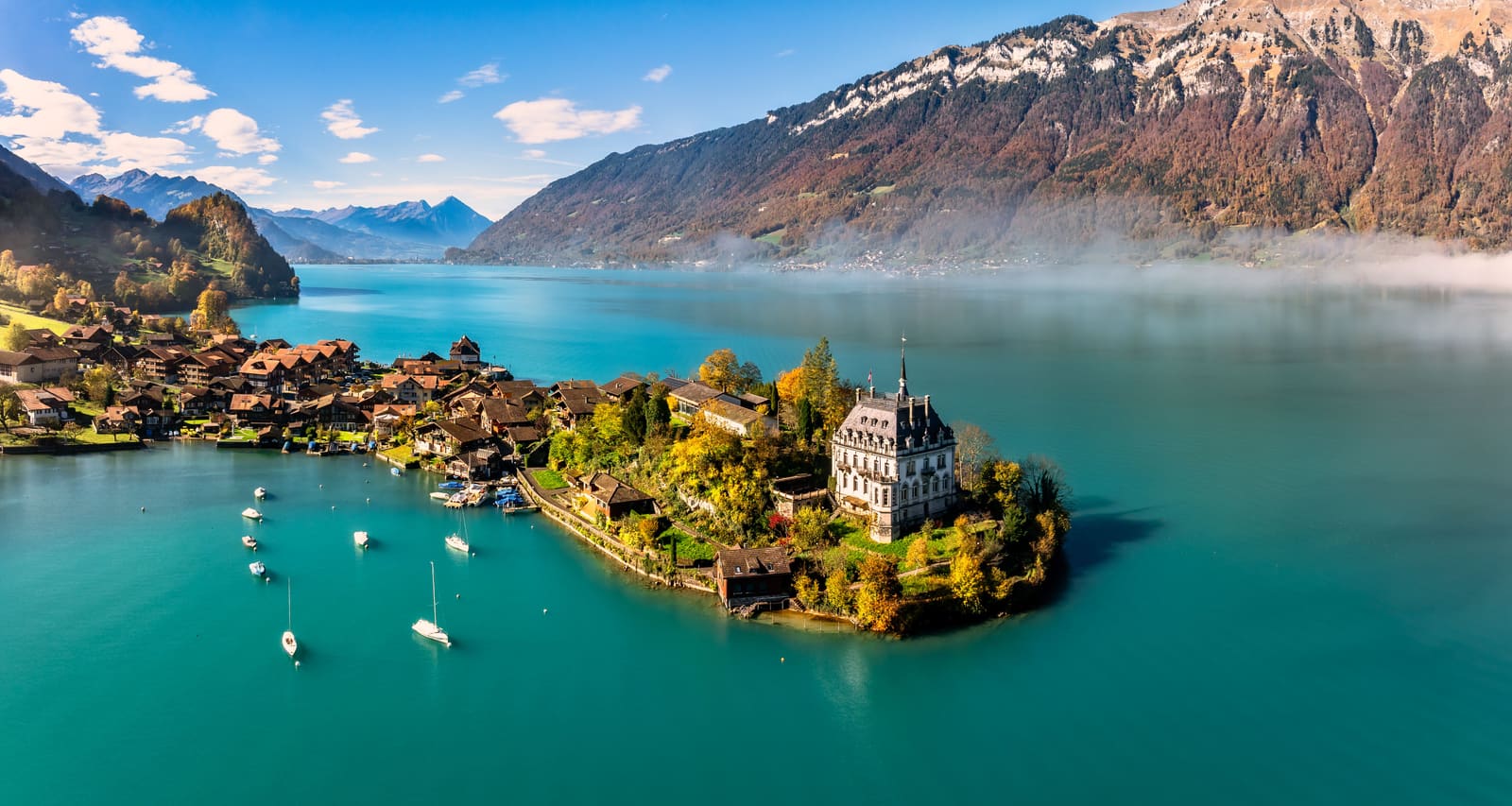
Seven European nations appear on the list, benefiting not only from individual diplomatic relationships but from the Schengen Area's collective framework. Switzerland ranks third on the peace index and fifth on the passport measure, with access to 185 countries. Its legendary neutrality remains more than historical posture; it's an active policy that has allowed the country to maintain relationships across geopolitical divides.
Ireland and Austria share fourth place on the passport rankings, while Portugal ties with Switzerland at fifth. Finland and Denmark also feature prominently. The pattern reveals how the European project, despite its political strains, has created a zone where mobility and stability reinforce each other. The Schengen arrangement grants similar passport strength to 29 member countries, effectively pooling diplomatic capital.
For travelers considering European residency, the calculation extends beyond any single nation's appeal. Citizenship in Portugal or Finland offers not just access to those countries but to a broader European identity, with all the movement and opportunity that entails.
The Outliers That Prove the Rule
Not all powerful passports belong to peaceful nations. Henley & Partners notes that the United States and Israel represent clear exceptions to the trend. The US ranks 134th on the peace index while holding tenth place on the passport measure, with visa-free access to 180 countries. Israel, among the five least peaceful nations globally, maintains exceptionally strong passport privileges.
These outliers illuminate the different sources of passport power. For some nations, it flows from peace and partnership; for others, from economic might or strategic alliances. The distinction matters to travelers who understand that the strength of a travel document says little about what awaits on the ground.
Global Mobility's Expanding Horizon
The average passport in 2026 offers visa-free access to 108 countries, according to Henley & Partners, a remarkable increase from just 58 countries two decades earlier when the firm first began tracking the metric. This expansion of global mobility has occurred even as the number of state-based conflicts has reached its highest point since World War II, creating a paradox where borders have become simultaneously more porous and more contested.
The divergence suggests that while diplomatic and economic integration continues to ease movement for privileged passport holders, the underlying conditions that create refugees and restrict movement for the world's most vulnerable populations have intensified. It's a reality that complicates any celebration of increased mobility, reminding us that passport power remains one of the most arbitrary and consequential accidents of birth.
Beyond Rankings to Reality
New Zealand claims second place on the peace index and ties for seventh on passport strength, with visa-free access to 183 countries. Canada shares that seventh-place passport ranking and sits at twelfth in peace metrics, making it the only North American nation with strong showings on both lists. Malaysia and Czechia round out the dozen, each offering distinct combinations of regional stability and global access.
Yet rankings tell only part of the story. At Global Chic Voyage, we've learned that the lived experience of a place rarely correlates neatly with its position on any index. The most peaceful country may not feel peaceful to everyone; the most powerful passport means little if you have nowhere you wish to go. These measures offer frameworks for understanding global patterns, but the decision of where to travel or where to build a life remains profoundly personal.
What the convergence of peace and passport power does suggest is that certain nations have managed to create conditions where their citizens can move through the world with unusual freedom while maintaining societies worth returning to. In an era of displacement and instability, that combination represents a form of privilege so complete it can be difficult to see. For those who hold these passports, the world opens in ways that remain unimaginable to billions of others. For those who don't, the rankings serve as a reminder of how much geography still determines destiny.
The Privilege of Choice
Iceland, the world's most peaceful country in 2026 according to the Institute of Economics and Peace, narrowly missed inclusion on the combined list, tying for tenth on the passport index alongside the United States. The near-miss highlights how even among the world's most privileged nations, gradations of access persist. One or two visa agreements can separate a passport ranked fourth from one ranked tenth, differences that seem trivial until you're the traveler turned away at a border.
Four nations in Asia and Oceania made both lists, evidence that the concentration of peace and mobility is not purely a Western phenomenon, even if European countries dominate the rankings. The geographic distribution matters because it shapes not just where people can go but how they understand their place in the world. A powerful passport from a peaceful country offers not just practical advantages but psychological ones: the security of knowing you can leave, combined with the comfort of knowing you can stay.
The travelers we encounter who hold these documents often take their privileges for granted, unaware of the diplomatic architecture and historical accidents that grant them such ease of movement. Perhaps that's the ultimate luxury: the freedom to never think about freedom, to move through the world as though borders were merely administrative inconveniences rather than the rigid barriers they remain for most of humanity.
Photo: Getty Images
Spot something wrong? Email editors@globalchicvoyage.com. We log every correction publicly.
RELATED
SEE ALL →
9 Jul 2026 / 5 min
9 Jul 2026 / 5 min

3 Jul 2026 / 5 min
25 Jun 2026 / 5 min