
Where to Stay When the Skyline Meets the Lake
Chicago's hotel landscape reflects a city that has never stopped reinventing itself - from residential suites in Uptown to art-filled towers on Michigan Avenue, each property offers a distinct lens through which to understand the Midwestern capital.
ML
18 Jun 2026 · 5 MIN READ · UPDATED 17 AUG 2026
A City of Rooms and Rooftops
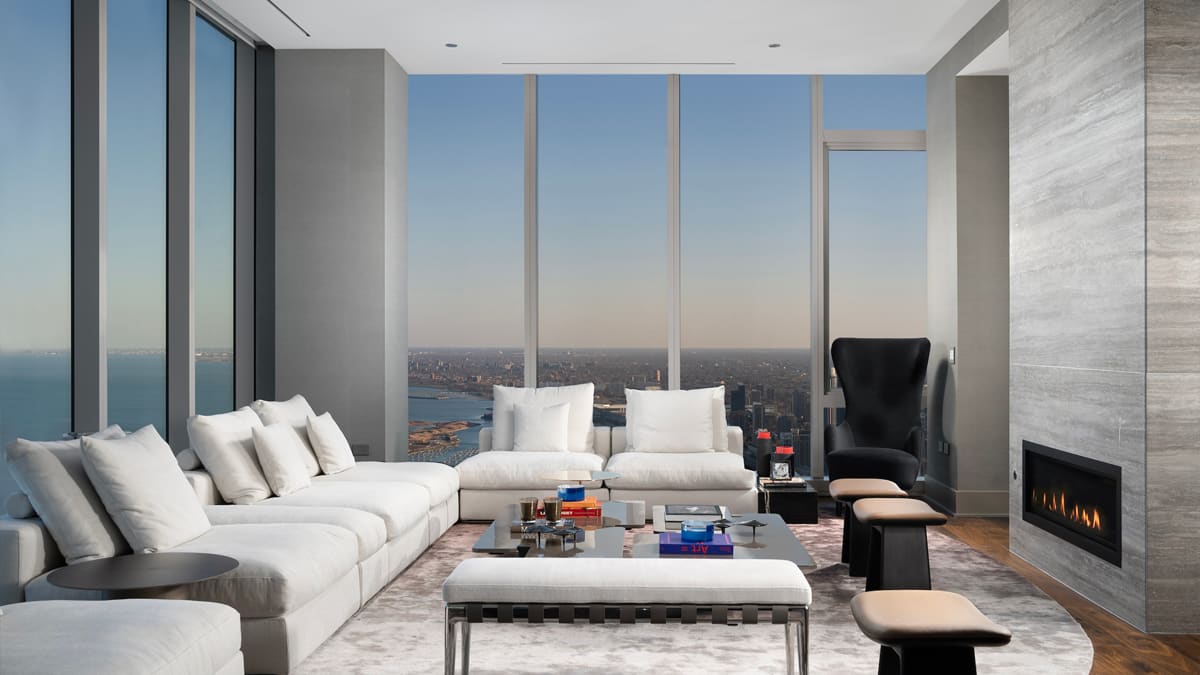
There is a particular quality to late afternoon light in Chicago, the way it slants between towers and spreads across the surface of Lake Michigan like hammered bronze. You notice it from certain hotel windows - the ones that frame not just a view but a narrative of place. At Global Chic Voyage, we've watched this city's hospitality landscape evolve over the past decade, and what strikes us most is not the proliferation of properties but the specificity of vision each one brings. Chicago's hotels do not simply shelter travelers; they interpret the city, each offering a different dialect of welcome.
The question is not whether Chicago knows how to host - its Midwestern hospitality is well-documented - but rather how that hospitality manifests across neighborhoods, architectural styles, and philosophies of comfort. The answer, as we discovered during recent visits, lies in a collection of properties that refuse to follow a single template.
The Neighborhood Lens
Some hotels anchor themselves in districts that tourists rarely penetrate, and in doing so, they offer something more valuable than convenience: context. The Guesthouse Hotel in Uptown exemplifies this approach. With twenty-five suites beginning at six hundred square feet, the property reads less like a hotel and more like a series of private residences temporarily made available. Each suite includes a full kitchen with stainless appliances and granite counters, a private balcony, and ceilings that stretch to ten feet - proportions that allow you to exhale.
What distinguishes this property is its integration into the fabric of Uptown, a neighborhood thick with independent restaurants, record shops, and performance venues. The hotel provides washers and dryers on-site, locally sourced snacks for purchase, and a team that seems to understand the difference between service and intrusion. You stay here not to visit Chicago but to inhabit a corner of it, to move through your day as a temporary resident rather than a perpetual guest.
This residential model - spacious layouts, full kitchens, balconies that invite morning coffee rituals - appeals to travelers who measure luxury not in thread count but in square footage and autonomy. It is a philosophy that prioritizes living over lodging, and in a city as sprawling as Chicago, that distinction matters.
When Design Becomes Dialogue
Other properties use design as a form of conversation, layering references and textures until the hotel itself becomes a subject worth studying. Hotel EMC2, part of the Autograph Collection, takes science and art as its twin muses, filling corridors and guest rooms with curiosities that reward attention. Books line shelves and surfaces, gramophones reimagined as digital speakers sit on nightstands, and two robots - Cleo and Leo - deliver fresh towels with a efficiency that borders on the theatrical.
The onsite restaurant, The Albert, extends this theme with laboratory-style distillery fixtures suspended above the bar and shelves stocked with science fiction novels. The menu moves across culinary traditions with ambition, and the plating suggests that presentation matters as much as flavor. For a property situated in a shopping district, the emphasis on intellectual curiosity feels both unexpected and necessary, a reminder that not all hospitality is about relaxation - some of it is about stimulation.
L7 Chicago by Lotte brings a different kind of cultural reference to the city's hotel landscape. Housed in a former hat factory from the early nineteen hundreds, the property retains high ceilings and generous proportions while introducing design elements rooted in South Korean textile traditions. The jogakbo technique - a patchwork method historically used to create quilts from fabric scraps - appears in carpet motifs and lamp shades, a quiet nod to craft and resourcefulness.
Guest rooms balance restraint with comfort: Apotheke bath amenities, Mediheal sheet masks, and wellness baskets stocked with yoga mats and resistance bands. The design does not announce itself loudly but accumulates through details - the quality of the task desk, the presence of a Bodum kettle and Nespresso machine, the way light filters through tall windows. It is a hotel that understands travelers arrive with different needs, and that true hospitality means anticipating them.
The Lakefront Proposition
Location, of course, shapes experience in ways that no amount of design can replicate. Sable at Navy Pier occupies one of the most distinctive sites in the city, anchored at the far end of the thirty-three-hundred-foot pier with unobstructed views back toward the skyline. The glass exterior quotes nautical design without veering into kitsch, and the two hundred twenty-three rooms employ a marine palette - blues and whites, pale driftwood tones, brass accents - that echoes the Great Lake just beyond the windows.
Navy Pier has long been criticized as a tourist hub lacking culinary substance, but Sable works to shift that perception. Lirica, the ground-floor restaurant, serves pan-Latin cuisine that includes Venezuelan snapper with summer squash and heirloom tomato, and Spanish fried chicken accompanied by mole and papas bravas. The rooftop space, Offshore, sprawls across twenty thousand square feet and offers a menu that ranges from sushi to steak, a breadth that can feel scattered but also democratic, accommodating the varied appetites of pier visitors.
The location is both an asset and a limitation. You are steps from Lake Michigan, from summer fireworks and winter ice formations, but you are also tethered to a site that attracts crowds. The hotel succeeds when it frames that proximity as access rather than inconvenience, when it positions itself as a gateway to the waterfront rather than merely adjacent to it.
The Question of Heritage
Several properties in Chicago occupy buildings with architectural pedigrees, and the most successful navigate the tension between preservation and reinvention. The Gwen, a Luxury Collection Hotel, resides in the McGraw-Hill building on Michigan Avenue, its nineteen twenty-eight facade intact and gleaming. Named for Gwen Lux, a Chicago-born sculptor whose work challenged conventions in the early twentieth century, the hotel attempts to embody both artistic ambition and local character.
Guest rooms employ a palette of ivory, grey, soft pink, and deep green, with custom murals adorning upholstered headboards. Marble bathrooms include walk-in showers, Molton Brown toiletries, and Frette robes. The five Terrace Suites offer private balconies overlooking Michigan Avenue, a vantage point that transforms the street below into a moving tableau of city life. The property provides complimentary Wi-Fi, bottled water, and Bluetooth speakers - small gestures that smooth the transition from one's own home to temporary quarters.
What makes The Gwen compelling is its refusal to treat history as a constraint. The preserved facade signals respect for the past, but the interiors look forward, balancing classic proportions with contemporary comfort. It is a hotel that understands heritage not as something to be replicated but as a foundation upon which to build.
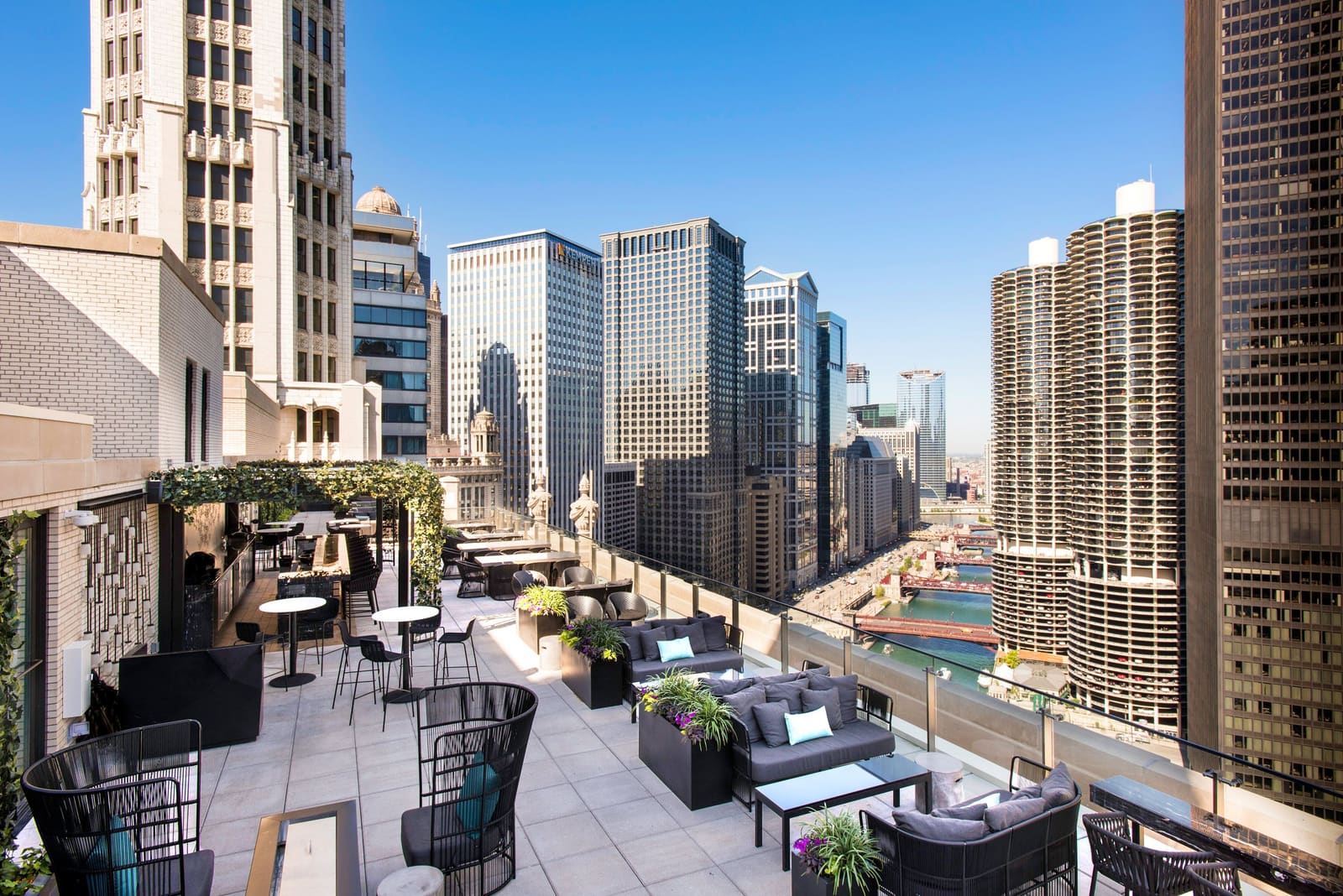
Pendry Chicago takes a similar approach, occupying a building from nineteen twenty-nine that was reportedly designed in the shape of a champagne bottle - a relic of pre-Crash exuberance. The property revitalized the structure while maintaining its gilded interiors, creating spaces that channel celebration without slipping into excess. The ground-floor brasserie hums with energy, and the rooftop bar offers sight lines to some of the city's most recognizable towers. The location, on Michigan Avenue south of the Chicago River, places guests within walking distance of the Riverwalk, Millennium Park, and the Art Institute, a convergence of cultural and recreational options that few properties can match.
The hotel provides loaner bikes for guests, a gesture that acknowledges the city's growing network of lakefront trails while wisely advising against navigating Loop traffic on two wheels. It is a small detail, but one that reflects an understanding of how people actually move through Chicago.
The Downtown Proposition
For travelers prioritizing convenience and proximity to major attractions, downtown options offer a different calculus. Arlo Chicago on Michigan Avenue places guests steps from Millennium Park, Lake Michigan, and the theater district. Rooms are compact - a concession to location - but thoughtfully appointed with Nespresso machines, plush robes, smart refrigerators, and Pharmacopeia bath products. Premium Millennium King rooms feature floor-to-ceiling windows that frame panoramic views of the park and lake, turning the room itself into a viewing platform.
The hotel programs cultural and wellness offerings, including weekend afternoon tea service, rotating art exhibitions, and in-room workouts through Alo Wellness Club. These amenities acknowledge that modern travelers seek more than a bed and a bathroom; they want access to experiences that enrich their stay without requiring them to leave the building.
Loews Chicago Hotel follows a similar logic, positioning four hundred guest rooms and twenty-five suites across thirteen floors near some of downtown's most frequented sites. Recently updated interiors reflect a polished aesthetic inspired by Chicago architecture, with a neutral palette punctuated by Lake Michigan blues. Floor-to-ceiling windows, spacious bathrooms, and Julien Farel bath amenities establish a baseline of comfort, while high-floor corner rooms deliver dual views of the Chicago River and skyline. Certain lake-facing accommodations overlook Navy Pier, a perspective that becomes particularly rewarding during summer months when weekly fireworks illuminate the water.
Dining options include the Lobby Restaurant and Bar, where grilled branzino, glazed maitake mushrooms, and New York strip steak anchor the menu, and ETA Restaurant, a breakfast spot popular with both guests and locals for its hearty selections and house-made pastries. In warmer months, Streeterville Social - a rooftop venue serving seasonal cocktails and shareable plates - becomes the social hub, a place where the boundary between hotel guest and city resident blurs.
What We Return To
At Global Chic Voyage, we measure hotels not by amenities lists but by the clarity of their vision. Chicago's strongest properties understand that hospitality is an act of translation - they interpret the city for visitors while remaining legible to residents. They balance the competing demands of location, design, service, and atmosphere without collapsing into formula.
The residential suites in Uptown offer space and neighborhood integration. The science-themed property near the shopping district stimulates curiosity. The lakefront hotel on Navy Pier frames water and skyline as co-equal attractions. The heritage buildings on Michigan Avenue honor the past while serving the present. The downtown options compress convenience into compact, well-appointed rooms that function as base camps for urban exploration.
Each property reflects a choice - about what matters most, about how to allocate space and resources, about which aspects of Chicago to amplify. Taken together, they form a portrait of a city that refuses to be reduced to a single narrative, a place where hospitality manifests in many dialects, all of them fluent, all of them sincere.
The light still slants between towers in late afternoon, still spreads across the lake like hammered bronze. The question is simply which window you choose to watch it from, and what that choice reveals about the kind of traveler you are.
Spot something wrong? Email editors@globalchicvoyage.com. We log every correction publicly.
RELATED
SEE ALL →
17 Jul 2026 / 5 min
15 Jul 2026 / 5 min
9 Jul 2026 / 5 min
15 Jul 2026 / 5 min