
Why One Hotel Loyalty Program Rewards the Restless Traveler
Inside the quiet appeal of a points ecosystem that prizes frequency over flash, and how its recent overhaul might reshape your next stay.
SI
14 Jul 2026 · 5 MIN READ · UPDATED 17 AUG 2026
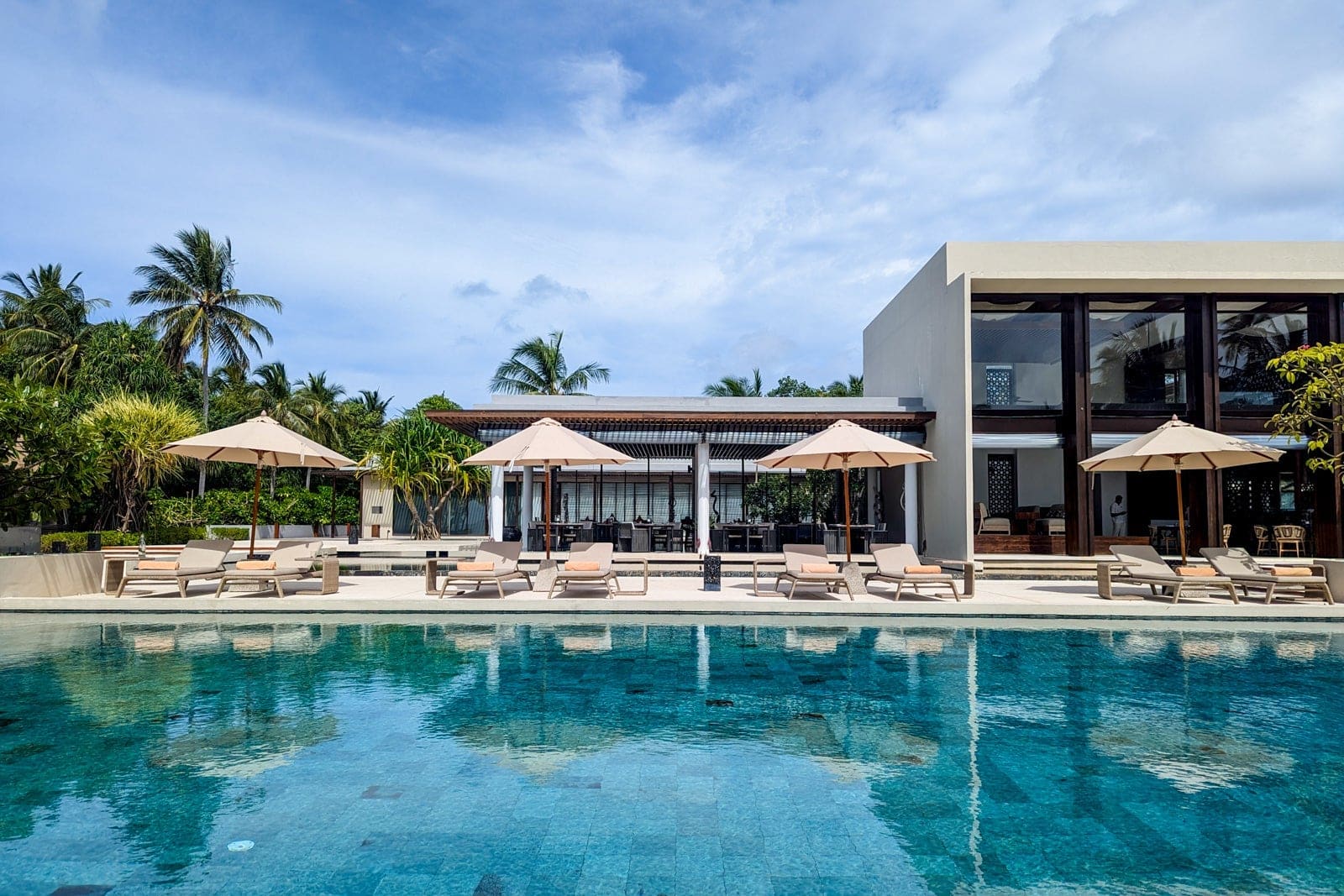
The Architecture of Belonging
There is a particular kind of quiet satisfaction that comes from arriving at a hotel where your preferences are already known, where the desk clerk nods before you've finished your name, where the room waiting for you is not the one you booked but the one you hoped for. At Global Chic Voyage, we've watched hotel loyalty programs evolve from simple punch-card logic into intricate ecosystems of recognition, and few have done so with as much deliberate care as the program that now spans 38 distinct brands across luxury, lifestyle, and all-inclusive categories.
What makes a loyalty program genuinely valuable is not merely the promise of future rewards, but the quality of the journey it enables today. The traveler who returns again and again to a family of properties is not chasing points for their own sake; she is chasing the cumulative experience of being known, of incremental comforts that compound over time, of a travel life that feels less transactional and more like an ongoing conversation.
This spring brought significant changes to one of the industry's most quietly respected programs, shifting its award structure from a three-tier pricing model to a five-tier spectrum. The implications ripple outward in ways both subtle and consequential.
Five Shades of Flexibility
The move from three pricing tiers to five represents more than a mathematical expansion. Where travelers once navigated off-peak, standard, and peak categories, they now encounter a gradient labeled Lowest, Low, Moderate, Upper, and Top. The nomenclature itself signals a philosophical shift toward granularity, a recognition that demand and value exist along a continuum rather than in discrete buckets.
For the strategic traveler, this recalibration introduces both opportunity and complexity. Award rates within a single property category can now swing more widely depending on timing, event calendars, and regional demand patterns. A Category 4 property in shoulder season might deliver exceptional value at the Lowest tier, while that same property during a city-wide conference could command Top-tier redemption rates.
The annual category adjustments that accompanied this pricing overhaul have shuffled individual properties up and down the ladder. Some beloved boutique hotels have migrated to lower categories, making them newly accessible; others have climbed higher, reflecting their growing cachet or market repositioning. The lesson here is one of vigilance. The points required for that beachfront escape you've been planning may have shifted since you last checked, and assumptions made even six months ago may no longer hold.
The Privilege of Early Access
Among the more intriguing developments is the introduction of early award inventory access for select members. Elite-tier guests and holders of cobranded credit cards now enjoy a head start when booking award nights, a seemingly modest perk that can prove decisive for high-demand properties during festival seasons, holidays, or shoulder periods when inventory is constrained.
This tiered access model borrows from airline loyalty playbooks, where premium status unlocks not just better seats but earlier opportunities to claim them. In the hotel context, it transforms elite status from a collection of in-stay perks into a strategic planning advantage. The traveler who books nine months out for Art Basel or cherry blossom season now has a structural edge, provided she holds the right card or tier.
It is a quiet form of differentiation, one that rewards not spontaneity but foresight and commitment to the ecosystem.
The All-Inclusive Expansion
The addition of Bahia Principe resorts to the portfolio marks a meaningful expansion of the program's all-inclusive footprint. With properties now spanning the Dominican Republic, Mexico, Jamaica, and Spain, the program has deepened its presence in the segment where North American and European travelers increasingly seek value and simplicity.
All-inclusive resorts occupy a curious space in the luxury travel conversation. Purists sometimes dismiss them as reductive, as places where choice is surrendered for convenience. But the reality is more nuanced. For families navigating the logistical ballet of multi-generational trips, for couples seeking respite without the cognitive load of daily dining decisions, the all-inclusive model offers a different kind of luxury: the luxury of not having to think.
The integration of these properties into a points-earning and redemption framework allows travelers to toggle between modes, spending points on a boutique city hotel one month and a beachfront all-inclusive the next, all within the same loyalty universe. It is an acknowledgment that travel appetites are not monolithic, that the same person who seeks a minimalist urban loft in Tokyo might also crave a poolside cabana in Tulum.
The Taxonomy of Brands
The program's 38 brands are organized into a taxonomy that reveals much about how the industry now thinks about guest segmentation. Five luxury brands anchor the top tier, names synonymous with design pedigree and bespoke service. Nine lifestyle brands occupy the territory where boutique sensibility meets scalable operations. Nine inclusive brands cater to the all-in traveler. Six classics brands represent the dependable center, the properties that serve business travelers and conventiongoers with practiced efficiency. Seven essentials brands target the extended-stay and budget-conscious segments. And two "more to explore" brands, including a storied Las Vegas resort, round out the portfolio.
This breadth is both the program's strength and its challenge. A loyalty ecosystem that encompasses everything from wellness retreats to casino resorts, from urban studios to Caribbean mega-properties, must work harder to maintain coherence. The connective tissue is the points currency itself, and the promise that a night earned in one context can be redeemed in another, vastly different one.
The Brand Explorer promotion, which awards a free night for every five unique brands a traveler experiences, gamifies this diversity. It nudges members toward experimentation, toward stepping outside their default preferences to discover a business hotel in Sydney or a lifestyle property in Nashville they might never have considered otherwise.
The Tiers of Recognition
Elite status within this program operates on a four-tier ladder: Member, Discoverist, Explorist, and Globalist. The thresholds are measured in qualifying nights or base points, with Discoverist unlocking at 10 nights, Explorist at 30, and Globalist at 60.
What distinguishes this program from some competitors is the durability of status. Earn a tier in any given year, and you retain it through the end of February two years later. This extended runway reduces the annual scramble to requalify, allowing travelers to plan with greater confidence and to ride out years when work or life circumstances curtail their travel tempo.
Discoverist status brings the foundational perks: late checkout, premium internet, a 10 percent points bonus. Explorist adds a 20 percent bonus and room upgrades to better rooms within the category booked. Globalist, the pinnacle, unlocks a 30 percent points bonus, suite upgrades, club lounge access, complimentary breakfast for two adults and two children, and waived resort fees on standard rates.
The breakfast benefit alone can offset hundreds of dollars on a week-long stay, particularly at properties where morning dining carries a premium price. Club lounge access, where available, extends this value into the evening hours, with hors d'oeuvres that can approximate a light dinner.
For travelers who concentrate their stays within this ecosystem, the math of Globalist status often pencils out. Sixty nights is a high bar, certainly, but not insurmountable for those who travel frequently for work or who make a deliberate choice to route personal trips through the portfolio. Cobranded credit cards can accelerate the path, offering qualifying night credits as both a signup bonus and an ongoing earn mechanism tied to spending thresholds.
Milestone Rewards Along the Way
Beyond the formal status tiers, the Milestone Rewards program creates intermediate goalposts. Starting at 20 qualifying nights, and then every 10 nights thereafter up to 150, travelers unlock choices: bonus points, suite upgrade certificates, club lounge passes, experience credits, or even airline seat upgrades on a partner carrier.
At 60 nights, the rewards expand significantly, with multiple free night certificates and access to a concierge service. At 100 nights, the program offers either a free night at any property or a Miraval wellness resort extension. At 150 nights, an "ultimate" free night award opens the door to the portfolio's most exclusive addresses.
These milestones serve a dual purpose. They reward the hyper-frequent traveler, the consultant or executive who logs triple-digit nights annually. But they also create psychological waypoints, small celebrations that punctuate the accumulation of status and make the journey toward the next tier feel less abstract.
Earning Beyond the Room
Points accumulate not only through nights slept but through dollars spent. Most properties award five base points per dollar on eligible charges; extended-stay studios offer 2.5 points per dollar. Elite members earn bonus multipliers atop this base rate, pushing effective earn rates to 6.5 points per dollar for Globalists.
Periodic promotions layer additional earning opportunities: double points for stays at newly opened properties, bonus points for booking consecutive nights, seasonal campaigns tied to specific regions or travel periods. These promotions require enrollment and attention, but for the engaged member, they can meaningfully accelerate points balances.
Cobranded credit cards extend earning into everyday life. Grocery runs, gas station fill-ups, restaurant meals, all can funnel points back into the travel account. The cards themselves confer automatic Discoverist status, and spending thresholds unlock additional qualifying night credits, creating a pathway to higher tiers even for those who travel less frequently.
The ecosystem also includes a forthcoming digital points-sharing feature, which will allow members to pool balances for joint redemptions. This addresses a longstanding friction point: couples or families who travel together but accumulate points in separate accounts, unable to combine them for a larger redemption. When the feature launches, it will bring the program into closer alignment with airline loyalty norms, where transferring points between household members has long been standard.
The Calculus of Commitment
What we observe, across years of watching travelers navigate loyalty programs, is that the most successful relationships between guest and brand are built on alignment of values and patterns. A program is only as valuable as the properties it offers in the places you actually want to go, at the times you actually want to travel, with the service standards you actually require.
This particular program's strength lies in its urban and resort footprint, its penetration in Asia-Pacific and the Americas, and its relatively generous suite upgrade policies for top-tier members. Its weakness, for some, will be gaps in certain European markets or the absence of ultra-luxury flagships in every major city.
The recent pricing changes introduce a new variable into the redemption calculus. Where once a traveler could predict with reasonable confidence the points cost of a Category 4 property, she now must account for five possible price points. This dynamism mirrors the revenue management strategies that have long governed cash rates, bringing award pricing into closer conversation with market realities.
For those who prize predictability, this shift may feel like a loss. For those who prize optionality and who maintain the flexibility to travel during softer demand periods, it may unlock new value. The outcome depends less on the program's design than on the traveler's own rhythms and constraints.
The Long View
Loyalty programs are, at their core, a bet on the future. You accumulate points today in the belief that they will retain value tomorrow, that the properties you wish to visit will remain bookable, that the perks you've grown accustomed to will not erode through devaluation or policy shifts.
No program is static. Award charts shift, categories adjust, benefits are added and occasionally pruned. The question is not whether change will come, but whether the program's stewards manage that change with transparency and a sense of reciprocity with their most committed members.
What we appreciate about this ecosystem is its clarity. The earning structure is straightforward. The elite benefits are published and, by most accounts, consistently delivered. The portfolio is broad enough to support diverse travel styles without becoming so diffuse that brand identity dissolves entirely.
For the restless traveler who returns home only to begin planning the next departure, who finds as much pleasure in the anticipation of a trip as in the trip itself, a well-designed loyalty program becomes a kind of companion. It shapes itineraries, influences choices, and over time, weaves itself into the fabric of how one moves through the world.
The recent changes ask members to recalibrate, to approach redemptions with fresh eyes and perhaps a bit more strategic forethought. But the underlying proposition remains: concentrate your stays, climb the tiers, and the program will meet you with recognition, with tangible comforts, and with access to a portfolio of properties that span the spectrum from bustling city center to remote island shore.
In an age when travel can feel increasingly commodified, when algorithms serve up the cheapest flight and the highest-rated listing with little regard for continuity or context, there is something quietly radical about building a relationship with a family of hotels. It is a choice to value the known over the novel, the cumulative over the one-off, the long game over the short-term deal.
And for those who make that choice, the rewards extend beyond points balances and suite upgrades. They live in the ease of arrival, the comfort of familiar rituals, and the deep satisfaction of being, in some small but meaningful way, home.
Photo: Katie Genter / The Points Guy
Spot something wrong? Email editors@globalchicvoyage.com. We log every correction publicly.
RELATED
SEE ALL →
6 Jul 2026 / 5 min
9 Jul 2026 / 5 min

13 Jul 2026 / 5 min

30 Jul 2026 / 5 min