
A Horse Country Retreat Where Virginia's Old Money Meets New Luxury
Middleburg's cobblestone charm and five-star hospitality have quietly made it one of the Mid-Atlantic's most elegant escapes.
SI
29 Jul 2026 · 5 MIN READ · UPDATED 17 AUG 2026
The Road Out of the Capital
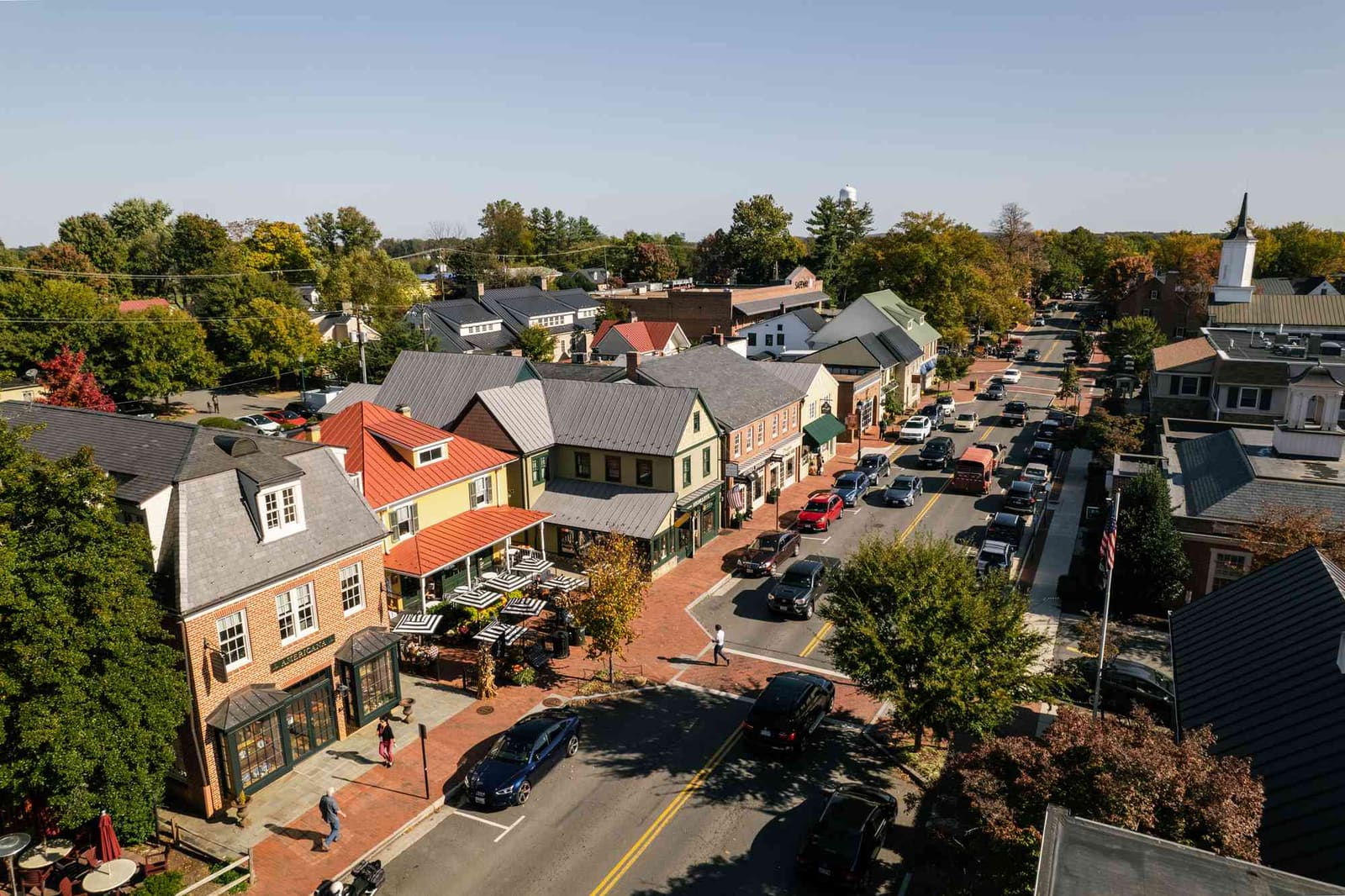
The light changes somewhere past Dulles. The highway gives way to two-lane blacktop, and the billboards thin out, replaced by white-rail fencing that runs for miles without interruption. An hour west of Washington, D.C., the landscape opens into something older and quieter: horse pastures, stone walls, vineyards climbing gentle slopes. This is Middleburg, Virginia, a town that has managed to preserve its 18th-century bones while quietly assembling the amenities of a world-class destination.
At Global Chic Voyage, we've watched a certain kind of traveler discover Middleburg over the past few years - guests who want luxury without the crowds, history without the theme-park gloss, and wine country that doesn't require a cross-country flight. What they find is a place that feels like it shouldn't exist so close to a major city: a town with a five-star hotel, a walkable main street lined with independent shops, and a culture shaped as much by foxhunting tradition as by the vintners who've arrived more recently.
A Main Street That Moves at Its Own Pace
Washington Street, Middleburg's commercial spine, stretches for just a few blocks, but those blocks contain more texture than many towns manage in square miles. The storefronts are Federal-style brick, most dating to the 1800s, housing boutiques that sell handmade leather goods, English riding boots, and estate jewelry. There's a saddlery that has been operating since 1967, a French bakery that opens early, and a wine shop with a selection that reflects the region's growing reputation.
The pace here is deliberate. Locals tie their dogs outside the coffee shop and linger over conversation. On Saturday mornings, the farmers' market sets up in the municipal lot, and you'll find heirloom tomatoes, raw honey, and cut flowers alongside vendors selling grass-fed beef from nearby farms. It's the kind of downtown that invites you to slow down, to notice the cast-iron lampposts and the window boxes planted with seasonal blooms.
What strikes us most is the absence of chain stores. Middleburg has resisted the homogenization that has flattened so many American small towns. The result is a streetscape that feels specific to this place, shaped by local taste and protected by a community that values continuity over convenience.
Five-Star Hospitality in Horse Country
Middleburg's luxury accommodation scene centers on Salamander Resort & Spa, a property that opened in 2013 and quickly set a new standard for the region. The resort occupies 340 acres of rolling countryside and offers 168 rooms, an equestrian center, a full-service spa, and multiple dining venues. The property was developed by Sheila Johnson, a businesswoman and philanthropist whose vision was to create a destination that honored the area's heritage while delivering modern comfort.
The architecture nods to Virginia's colonial tradition without mimicking it - think clean lines, local stone, and expansive windows that frame views of the Blue Ridge foothills. Inside, the design leans toward understated elegance: custom furnishings, regional artwork, and a color palette drawn from the surrounding landscape. The spa incorporates equestrian-inspired treatments, a playful reference to the town's identity, and the equestrian center offers everything from trail rides to polo clinics.
Beyond Salamander, Middleburg has cultivated a small collection of historic inns and bed-and-breakfasts, many housed in buildings that predate the Civil War. These properties offer a different kind of luxury - antique four-poster beds, fireplaces, and the sort of quiet that comes from thick walls and small guest counts. The town's lodging landscape, in other words, offers choice: you can have the full-service resort experience or the intimacy of a historic inn, depending on what the moment requires.
Vineyards and the Terroir of Northern Virginia
Wine has become central to Middleburg's identity, though the industry here is still young. Northern Virginia's wine country has grown rapidly over the past two decades, and Middleburg sits near the heart of it. The region's terroir - clay and limestone soils, moderate elevation, and a climate influenced by the Blue Ridge - has proven well-suited to a range of varietals, particularly Cabernet Franc, Viognier, and Petit Verdot.
The wineries here tend to be small, family-run operations rather than corporate estates. Many occupy historic properties: barns converted into tasting rooms, manor houses surrounded by vines, farmland that has been in the same family for generations. The tasting experience reflects this scale - intimate, unhurried, often guided by the winemaker or owner themselves.
We've found that Middleburg's wine scene rewards curiosity. The region is still defining its style, experimenting with blends and techniques, and that sense of discovery is part of the appeal. You're not visiting a wine country with centuries of tradition behind it; you're witnessing one in the process of becoming. There's an energy to that, a willingness to take risks and learn in real time.
Several wineries offer food pairings, and a few have opened restaurants on-site, creating destinations that blend viticulture with culinary ambition. The quality varies, as it does in any emerging region, but the best producers are making wines that hold their own against more established American appellations.
The Hunt Country Legacy
Middleburg's character has been shaped, more than anything else, by its foxhunting tradition. The sport arrived with English settlers in the 18th century and took root in the rolling terrain west of the capital. By the 20th century, the area had become synonymous with equestrian life, attracting families who built estates here and participated in the social rituals of the hunt.
That legacy is still visible. The town is home to multiple hunt clubs, including some of the oldest in the country. On autumn mornings, you might see riders in traditional attire - scarlet coats, velvet caps - gathering for a meet. The landscape itself has been preserved, in part, by the needs of the hunt: open fields, maintained trails, and the absence of suburban sprawl.
This history has given Middleburg a particular aesthetic and social texture. The town has long attracted a certain kind of wealth - old money, or at least money that aspires to old-money values: discretion, tradition, a preference for quality over flash. That sensibility permeates the local culture, from the way businesses present themselves to the unspoken dress code that prevails in certain establishments.
For visitors, the hunt country legacy means access to experiences that are rare elsewhere: steeplechase races in the spring, polo matches in the summer, and a network of bridle paths that crisscross the countryside. It also means a community that takes land conservation seriously, which has kept development in check and preserved the rural character that makes the region appealing in the first place.
The Proximity Paradox
Middleburg's greatest asset may be its location. An hour from Washington, D.C., it occupies a sweet spot: close enough for a spontaneous weekend, far enough to feel like a genuine escape. For travelers based on the East Coast, it offers an alternative to the usual weekend circuits - the Hamptons, the Berkshires, the Outer Banks - without requiring a flight or a day-long drive.
This proximity has its complications. The town has had to navigate the tension between accessibility and preservation, between welcoming visitors and protecting the qualities that make it worth visiting. So far, Middleburg has managed that balance better than many places. Development has been slow and deliberate, zoning has remained strict, and the town has resisted the temptation to scale up too quickly.
At Global Chic Voyage, we've seen too many destinations lose themselves in the rush to accommodate growth. Middleburg's restraint feels intentional, even countercultural. The town seems to understand that its appeal lies not in offering more, but in maintaining what it already has: a sense of place, a coherent identity, and the kind of unhurried atmosphere that has become increasingly difficult to find.
Where Virginia's Past Meets Its Present
What makes Middleburg compelling is the way it holds multiple identities at once. It's a historic town that hasn't become a museum. It's a luxury destination that hasn't sacrificed authenticity. It's rooted in tradition - foxhunting, colonial architecture, agrarian rhythms - while also embracing newer industries like wine and hospitality.
This balance is delicate, and there's no guarantee it will hold. The pressures facing small towns near major metropolitan areas are well-documented: rising property values, changing demographics, the pull of development dollars. But for now, Middleburg offers something rare: a place where you can experience both refinement and rootedness, where the past informs the present without dominating it.
The town's appeal, we think, lies less in any single attraction than in the coherence of the whole. The vineyards make sense here because the landscape supports them. The five-star resort works because it respects the local vernacular. The downtown thrives because it serves both residents and visitors without pandering to either. It's a destination that feels like a place, not a product - and that distinction matters more than ever.
Credit: Virginia Tourism Corporation
Spot something wrong? Email editors@globalchicvoyage.com. We log every correction publicly.
RELATED
SEE ALL →
21 Jun 2026 / 5 min
27 Jul 2026 / 5 min
7 Jul 2026 / 5 min
22 Jul 2026 / 5 min