
Beyond the Crowds: Mexico's Quieter Coastal Enclaves
Away from the resort corridors, a constellation of lesser-known beach towns offers diving, craft, and the unhurried rhythms that first drew travelers south.
SI
14 Jul 2026 · 5 MIN READ · UPDATED 17 AUG 2026
The Quiet Shore
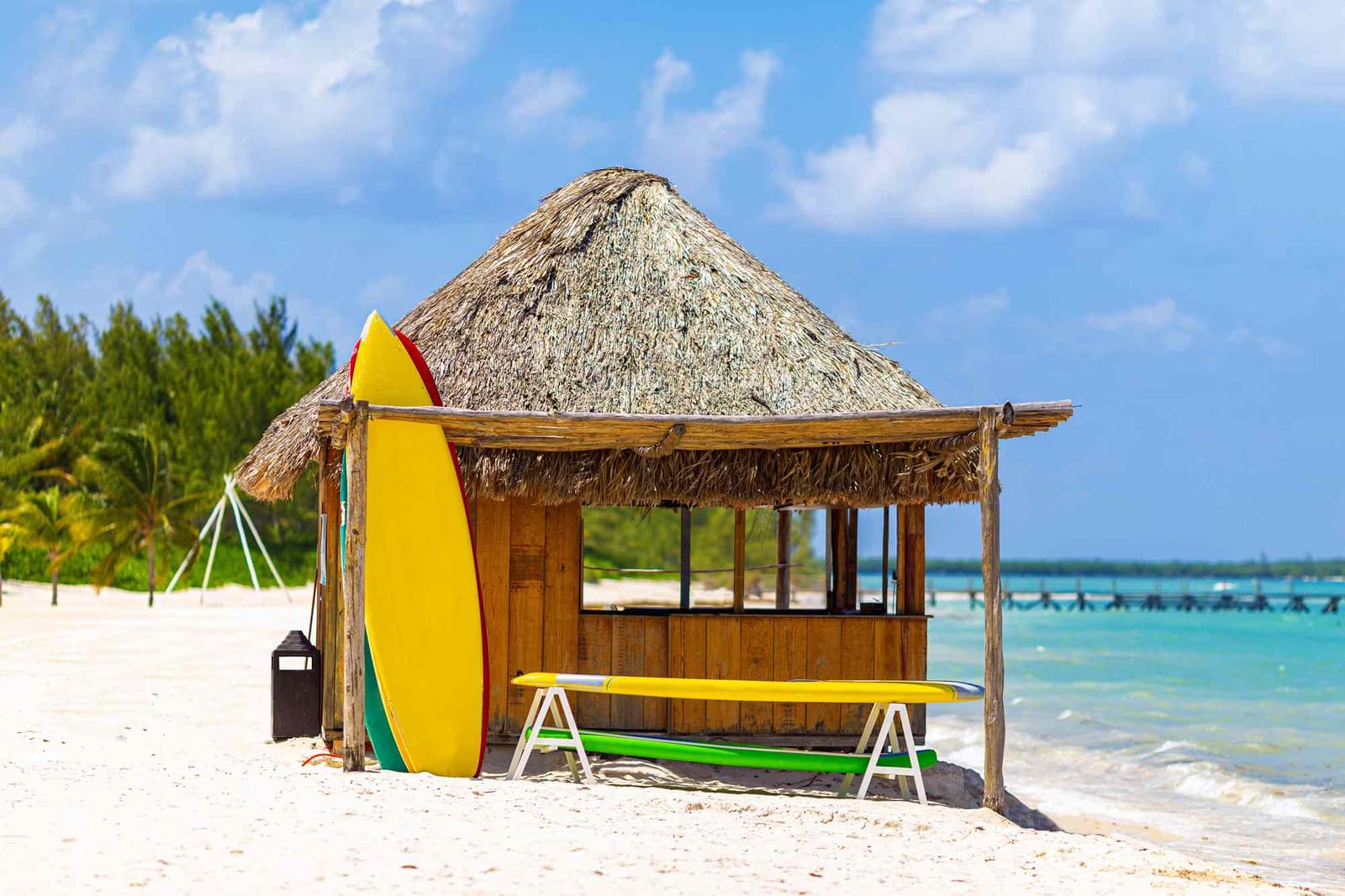
There is a moment, usually mid-afternoon, when the light over Mexico's Pacific and Caribbean coasts turns amber and the small-town plazas empty out. Vendors fold their umbrellas. Dogs sleep in the shade of bougainvillea. The handful of travelers who have made it this far sit with cold drinks at tin-roofed palapas, listening to waves and wondering why they waited so long to leave the all-inclusive strip behind.
At Global Chic Voyage, we have watched the familiar rhythm: first the big resorts arrive, then the infrastructure, then the crowds. But scattered between the marquee names remain pockets of coast where the pace is slower, the dive sites are pristine, and the hotels are small enough that the owner still greets guests at breakfast. These are not secret anymore, exactly. But they remain blissfully under the radar.
What Draws Us Back
The appeal is not novelty. It is continuity. In towns where fishing boats still outnumber jet skis, where the taco stand has been run by the same family for three decades, the traveler finds something increasingly rare: a sense of place that has not been engineered for tourism but has simply accommodated it.
The diving is part of the equation. Reefs that see fewer fins per day recover faster, and the marine life grows bold. Hawksbill turtles cruise past without alarm. Octopuses hunt in the open. But equally compelling is what happens on land after the dive: the walk back through town, the conversation with the woman selling mole, the realization that you have slowed to the tempo of the place rather than imposing your own.
The Architecture of Low-Key Luxury
The hotels we return to in these towns share a vocabulary. Walls of whitewashed stucco or pale concrete. Terraces open to the breeze. Furniture made locally, often by hand. Kitchens that source from the morning market. They are rarely large. A dozen rooms is common; twenty is pushing it. The absence of a lobby atrium or nightclub is not a compromise but a choice, a decision to let the ocean do the work.
What these properties understand, and what the mega-resorts sometimes miss, is that luxury at the beach is not about amenities. It is about removing the barriers between guest and place. The best rooms have doors that fold away entirely. Showers open to the sky. Hammocks strung where you can hear the surf. It is a kind of edited simplicity that requires more thought, not less.
The Diving Equation
We return to the question of why the diving is better in these places. Part of it is volume. Fewer boats mean less disruption. But part of it is also stewardship. In towns where tourism has arrived gradually, the local dive operators have often been diving the same sites for decades. They know the currents, the seasons, the individual rays that patrol the sand channels. They limit group sizes not because regulation forces them to but because they have seen what happens when reefs are loved to death.
The result is a kind of intimacy underwater that is hard to find on the busier coasts. You descend not as part of a convoy but as a small group, sometimes just two or three divers. The guide points out nudibranchs, cleaning stations, the places where sharks rest in the afternoons. You surface and talk about what you saw, and the conversation continues over dinner, because the guide is also the owner, and his cousin runs the hotel, and everyone has known each other long enough that the boundaries between host and guest blur.
The Rhythm of a Day
Mornings start early. Coffee on the terrace. Gear loaded into a panga. Two tanks, maybe three if the site is close. Back by noon, when the light is high and flat. Lunch under a palapa, ceviche made from the morning catch. An afternoon spent reading, swimming, doing very little. Sunset from the same terrace where the day began. Dinner at a place with no sign, just a few tables and a woman making tlayudas to order.
It is not a rhythm you can replicate in a place designed for constant activity. It requires a town small enough that there is no pressure to be elsewhere, no fear of missing something. The quiet becomes the point. The lack of options becomes a kind of freedom.
Who These Places Are For
Not everyone. If you want a swim-up bar and a full activities roster, these towns will disappoint. If you need a concierge to arrange everything, you will be frustrated. But if you are comfortable making your own plans, if you can appreciate a place that does not announce itself, if you find more pleasure in a well-made fish taco than in a tasting menu, these quieter stretches of coast offer something increasingly difficult to find: a version of Mexico that feels less like a destination and more like a place where people live, and where you are welcome to join them for a while.
The Fragility of the Quiet
We are careful when we write about these places. Not because they are fragile in the environmental sense, though some are, but because the qualities that make them appealing can be undone by attention. A town that is "discovered" can change quickly. Prices rise. Buildings go up. The fishing families sell their beachfront plots, and the new owners have different priorities.
But silence is not a solution either. The towns that have managed to grow thoughtfully, that have preserved what made them special in the first place, are often the ones that found advocates early. Travelers who returned year after year. Writers who described them with enough detail to attract the right kind of visitor and enough discretion to keep away the wrong kind. It is a delicate balance, and it does not always hold. But it is worth attempting.
The Long View
At Global Chic Voyage, we measure a place not by what it offers in a weekend but by whether we would return. The towns that pass that test are rarely the ones with the longest list of amenities. They are the ones that feel, after a few days, like a place you could imagine living. Where the days blur together in the best way. Where you stop checking the time and start noticing the tides.
Mexico's quieter coasts offer that. Not everywhere. Not all the time. But in enough places, and with enough consistency, that it is worth seeking them out. The diving will be excellent. The hotels will be small and thoughtful. The towns will feel like towns. And when you leave, you will already be planning to come back.
Photo: Pola Damonte / Getty Images
Spot something wrong? Email editors@globalchicvoyage.com. We log every correction publicly.
RELATED
SEE ALL →
8 Aug 2026 / 5 min
20 Jul 2026 / 5 min

16 Jun 2026 / 5 min

13 Jul 2026 / 5 min