
Conrad Tulum Recalibrates the All-Inclusive Model With a Design-First Lens
The Riviera Maya property introduces a new tier that favors curation over abundance—chef-led menus, in-room dining around the clock, and watersports that don't feel like filler.
SI
11 Jun 2026 · 5 MIN READ · UPDATED 17 AUG 2026
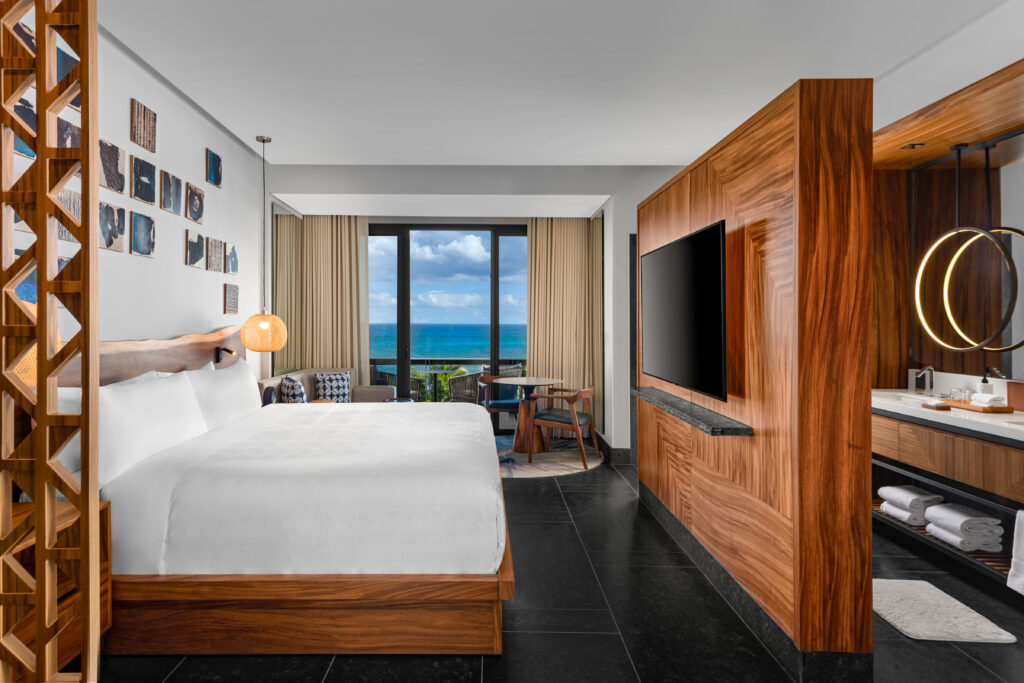
The Minibar Tells You Everything
Walk into a Conrad Tulum suite under the new all-inclusive offer and the minibar isn't the usual lineup of miniature Pringles and warm Heineken. It's stocked, yes—but with intention. The same logic runs through the rest of the package: chef-driven dining across most outlets, 24-hour in-room service, watersports that don't feel like an afterthought, wellness programming woven into the rhythm of the day. At Global Chic Voyage, we've watched the all-inclusive category splinter over the past five years—some properties leaning into volume, others into curation. Conrad Tulum has chosen the latter, and the difference is legible from the moment you arrive.
This isn't a pivot born of scarcity. It's a recalibration—one that acknowledges that today's luxury traveler often values editorial restraint over buffet abundance. The offer launched quietly in early June, and while Conrad Tulum has not disclosed pricing tiers publicly, the structure signals a broader shift within Hilton's luxury portfolio: all-inclusive no longer means all things to all people. It means a tighter edit, a clearer point of view.
What's Included—and What Isn't
The new package covers dining at most of the property's restaurants, with three notable carve-outs: Autor, the signature fine-dining venue; tasting menus across the board; and the teppanyaki experience at Kengai. Bottle service at Cafetal—the property's all-day café—is also excluded, as are packaged candies and snacks. These omissions aren't arbitrary. They preserve the optionality that defines luxury: the ability to upgrade, to add on, to treat an evening as something more than default.
Elsewhere, the inclusions are generous without feeling excessive. In-room dining operates around the clock. The minibar is refreshed daily. Watersports—kayaking, paddleboarding, snorkeling—are bundled in, as are wellness experiences that range from guided meditation to movement classes. Live music appears nightly, programmed to complement rather than dominate the evening. The offer doesn't attempt to anticipate every whim; it anticipates the rhythms of a multi-day stay and builds around those.
What Conrad Tulum has effectively done is draw a line between baseline and bespoke. The baseline is thoughtful, well-executed, and sufficient for most guests. The bespoke remains available—at Autor, at Kengai's teppanyaki counter, in the tasting menus—but it's opt-in, not opt-out. The psychological shift is subtle but significant.
Why This Matters Beyond Tulum
The Riviera Maya has long been the laboratory for all-inclusive innovation in the Americas. It's where brands test new models, where guest expectations are both formed and challenged. Conrad Tulum's approach—design-forward, editorially tight, chef-led—suggests that the next phase of the category may be less about adding amenities and more about refining the ones already in play.
This matters particularly in markets where all-inclusive has historically skewed toward volume: the Caribbean, parts of Southeast Asia, coastal Mexico. If Conrad's model gains traction, we're likely to see other luxury operators adopt similar frameworks—packages that feel less like insurance policies and more like curated itineraries. The risk, of course, is that guests accustomed to true everything-included models may balk at the exclusions. But the upside is a guest experience that feels less transactional, more considered.
There's also a sustainability angle here, though Conrad Tulum hasn't foregrounded it in messaging. Tighter curation often means less waste—fewer untouched buffet platters, fewer single-serve bottles opened and abandoned. It's not a certified green initiative, but it's aligned with the broader industry move toward conscious luxury, where abundance is no longer the default signal of value.
The Regional Context
Mexico's luxury hospitality market has matured rapidly over the past decade, particularly along the Caribbean coast. Tulum itself has evolved from bohemian beach town to high-design destination, with properties like Azulik, Habitas, and now Conrad staking out distinct positions within the luxury spectrum. What distinguishes Conrad's offer is its willingness to operate within the all-inclusive category while refusing its traditional grammar. This isn't Secrets or Dreams; it's not even Rosewood Mayakoba's ultra-premium take. It's something quieter, more architectural—an offer built around the logic of the property's design rather than inherited category conventions.
That design, for context, is Modernist with regional inflections: clean lines, natural materials, interiors that read as galleries rather than resorts. The all-inclusive package mirrors that aesthetic—edited, intentional, confident enough to leave space rather than fill it. It's an approach that works particularly well in a market like Tulum, where guests increasingly expect properties to reflect a sense of place rather than replicate a familiar resort template.
What We're Watching
The question now is whether this model scales—and whether other Conrad properties adopt similar frameworks. The brand has historically positioned itself as the design-conscious arm of Hilton's luxury tier, but it hasn't been especially vocal about redefining hospitality categories. This offer suggests that may be changing.
We're also watching how Conrad Tulum communicates the exclusions. All-inclusive marketing has long been about abundance messaging—"unlimited," "endless," "everything included." To sell a package that explicitly carves out certain experiences requires a different vocabulary, one that frames curation as value rather than restriction. If Conrad can make that case persuasively, it may open the door for other luxury operators to follow.
For now, the offer is live and bookable directly through Conrad. No promotional windows, no introductory rates—just a standing package that integrates into the property's broader offering. It's a confident move, and one that suggests Conrad Tulum believes the market is ready for a different kind of all-inclusive. We'll know within the next twelve months whether that confidence was justified.
Spot something wrong? Email editors@globalchicvoyage.com. We log every correction publicly.
RELATED
SEE ALL →
27 Jul 2026 / 5 min
30 Jul 2026 / 5 min
7 Jul 2026 / 5 min
22 Jun 2026 / 5 min