
Forest Immersion: Destinations Rooted In Nature And Stillness
c
EA
14 Apr 2026 · 5 MIN READ · UPDATED 17 AUG 2026
In an era defined by acceleration, forests remain among the last places where time softens. They are not merely landscapes, but living atmospheres - dense with memory, biodiversity, and a quiet that feels almost architectural. Across the world, protected forest destinations invite travelers to step into slower rhythms, where mist, canopy, and earth recalibrate the senses.
Forests are also among the planet’s most vital ecosystems - home to over 80% of terrestrial biodiversity, and essential in regulating climate, water cycles, and air quality. But beyond their ecological significance lies something more intangible: a psychological refuge. The Japanese practice of shinrin-yoku, or forest bathing, recognizes what many travelers instinctively feel - that immersion in woodland environments can lower stress, sharpen focus, and restore emotional balance. In these spaces, stillness is not empty, it is deeply inhabited.
Below, a curated selection of the world’s most immersive, visitable forest destinations - each offering a distinct expression of nature, alongside considered travel insights for a slower, more meaningful encounter.
Black Forest (Germany)
There is a mythic density to the Black Forest - its shadowed trails, moss-covered roots, and deep green silence shaped centuries of folklore, from the Brothers Grimm to enduring regional legends. But beyond its fairytale imagery lies a landscape of extraordinary ecological nuance. Dense spruce and fir forests stretch across rolling hills, punctuated by glassy lakes, thermal springs, and timber-framed villages that feel gently suspended in time.
Walking here is a sensory experience: the soft compression of pine needles underfoot, the cool humidity of shaded paths, the distant echo of church bells from unseen valleys. Even in more visited areas, solitude is easy to find - just a few turns off the main trail and the forest closes in, enveloping you in its quiet.
Travel Tip:
Visit in early autumn when golden light filters through the canopy and fog lingers low between the trees. Base yourself in Baden-Baden for a seamless blend of forest immersion and restorative spa culture.

Photo Credit: Borders Of Adventure
Redwood National and State Parks (USA)
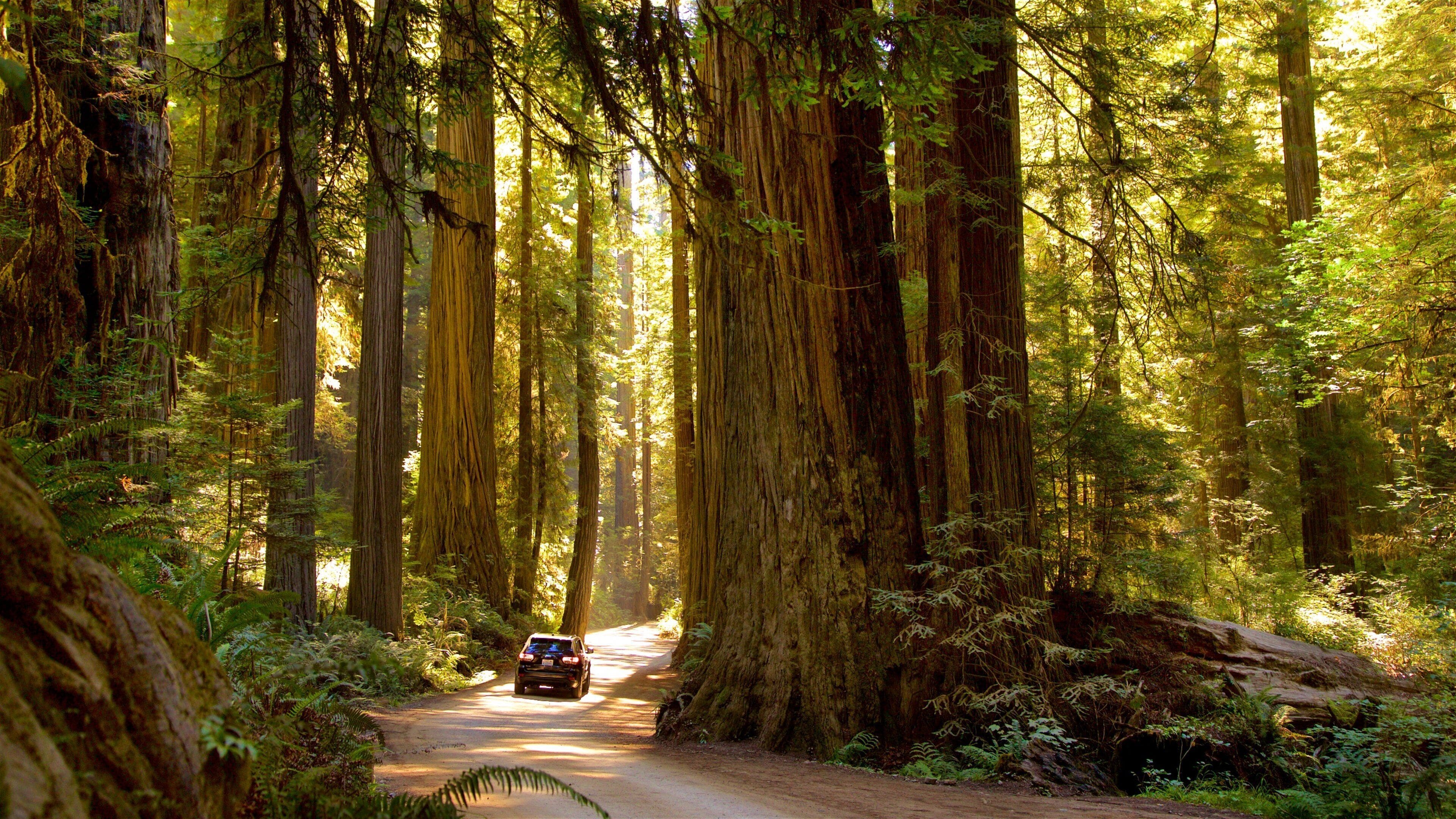
To enter a redwood forest is to experience scale in its most humbling form. Some of these trees have stood for over two millennia, their towering trunks rising like living columns into a canopy that feels almost celestial. Light filters through in diffused beams, shifting with the coastal fog that drifts inland, softening edges and sound alike.
What is most striking here is not just height, but age - the quiet persistence of life across centuries. The forest floor is lush with ferns and fallen logs, each element part of a slow, continuous cycle of growth and decay.
Travel Tip:
Arrive at first light when the fog is thickest and the trails nearly empty. Walk slowly - this is not a place for distance, but for presence. Stay on designated paths to protect the delicate root systems beneath your feet.

Photo Credit: More Than Just Parks
Amazon Rainforest (Brazil)
The Amazon resists simplification. It is not a single forest but an ever-evolving system that stretches across countries and cultures, dense with life at every level. Here, silence is replaced by a layered soundscape - buzzing insects, distant bird calls, the rhythmic pulse of rainfall, and the subtle movement of water beneath dense vegetation.
Humidity clings to the skin, and the air feels almost textured. Light struggles to penetrate the canopy, creating an environment where everything grows upward, outward, and around itself. The experience is immersive in the truest sense, there is no distance between traveler and environment.
Travel Tip:
Choose eco-lodges that prioritize conservation and work with local communities. Guided excursions are essential - not only for navigation, but for decoding the forest’s intricate systems, from medicinal plants to wildlife patterns.

Photo Credit: Getty Images
Yakushima Island (Japan)
Yakushima feels suspended between reality and reverie. This subtropical island is known for its ancient cedar trees - yakusugi - some of which are estimated to be thousands of years old. The forest is perpetually veiled in mist, with rain falling softly for much of the year, feeding a dense carpet of moss that seems to glow under filtered light.
There is a quiet mysticism here. Twisted roots, hollow trunks, and soft green textures create an almost dreamlike terrain that famously inspired the visual world of Princess Mononoke. Walking through Yakushima is less about reaching a destination and more about drifting through atmosphere.
Travel Tip:
Expect rain, embrace it rather than resist it. Waterproof gear is essential, but so is a willingness to move slowly. Trails can be slippery, and the forest reveals its beauty in layers, not all at once.

Photo Credit: Japan National Tourism Organization
Daintree Rainforest (Australia)
Estimated to be over 180 million years old, the Daintree is one of the oldest continuously surviving rainforests on Earth. Its ecosystem feels primordial - thick with tangled vegetation, ancient ferns, and species that have evolved in isolation for millennia. Here, the rainforest meets the reef, creating a rare convergence of two UNESCO-listed environments.
The density is palpable. Leaves are broader, colors deeper, and life more visibly intertwined. The air carries the scent of earth and salt, and the boundary between land and water feels fluid.
Travel Tip:
Engage with Indigenous-led tours to understand the cultural and spiritual dimensions of the landscape. Combine forest exploration with coastal experiences for a fuller sense of the region’s ecological richness.

Photo Credit: Daintree Experience
Nuuksio National Park (Finland)
In contrast to tropical density, Nuuksio offers a quieter, more spacious form of immersion. Pine forests stretch between pristine lakes, their surfaces reflecting sky and tree in near-perfect symmetry. The palette is restrained - greens, blues, soft browns - but the effect is deeply calming.
Silence here is expansive rather than enclosed. Even the air feels lighter, carrying the faint scent of resin and water. It is a place that invites pause: to sit, to listen, to simply exist without urgency.
Travel Tip:
Try forest bathing, walk without a fixed goal, focusing on breath and sensation. Visit in late summer for lush greenery, or early winter when snow transforms the forest into a monochrome landscape of profound quiet.

Photo Credit: Getty Images
Bwindi Impenetrable Forest (Uganda)
Dense, ancient, and biologically rich, Bwindi is one of Africa’s most extraordinary forest ecosystems. Its steep terrain and thick vegetation create a sense of true wilderness that feels both challenging and sacred. It is also home to nearly half of the world’s remaining mountain gorillas.
The experience of trekking here is physical and emotional. Paths are carved through dense undergrowth, guided by trackers who read the forest with remarkable precision. And then, suddenly, the encounter - quiet, respectful, and deeply moving.
Travel Tip:
Permits are limited and should be secured months in advance. Prepare for demanding hikes, but trust the process, the journey through the forest is as meaningful as the destination.

Photo Credit: andBeyond
Phong Nha - Kẻ Bàng National Park (Vietnam)
A landscape of dualities, Phong Nha - Kẻ Bàng is where dense tropical forest conceals vast subterranean worlds. Above ground, the jungle is thick and vibrant; below, some of the largest caves on Earth unfold in cathedral-like chambers.
The interplay between surface and depth defines the experience. Trekking through humid forest trails, then descending into cool, echoing caverns, creates a rhythm of contrast - light and shadow, heat and stillness.
Travel Tip:
Plan a combination of jungle trekking and cave exploration, such as Hang Én or Sơn Đoòng (permit-dependent). Always travel with licensed operators to ensure safety and conservation.

Photo Credit: VNA
Great Bear Rainforest (Canada)
Vast, remote, and largely untouched, the Great Bear Rainforest offers one of the purest expressions of wilderness left on Earth. Towering cedars and spruce trees line mist-covered fjords, while wildlife moves quietly through the landscape - most famously the rare white “spirit bear”.
Here, human presence feels minimal. Access is limited, and that distance preserves the integrity of the environment. The silence is profound, broken only by water, wind, and the subtle movement of life.
Travel Tip:
Visit between late summer and early autumn for optimal wildlife viewing. Expeditions are typically guided and require advance planning, but the reward is an experience of rare, unfiltered stillness.

Photo Credit: Nature United
A New Definition of Luxury
Forest immersion reframes the idea of travel luxury. It is no longer defined by excess, but by absence of noise, of urgency, of distraction. These destinations, protected yet accessible, offer something increasingly rare: the space to slow down, to listen, and to reconnect.
To step into a forest is to enter a different tempo of existence where time expands, senses sharpen, and the boundaries between self and landscape begin to dissolve.
Spot something wrong? Email editors@globalchicvoyage.com. We log every correction publicly.
RELATED
SEE ALL →24 Apr 2026 / 5 min

21 May 2026 / 5 min
20 May 2026 / 5 min
20 Apr 2026 / 5 min