
Hillside Voco Arrival Signals IHG's Deepening Bet on Phuket's Premium Mid-Market
As Patong reclaims pre-pandemic momentum, the new 307-room voco—set within a lifestyle-anchored mixed-use—aims to thread the needle between independent spirit and resort-scale amenity.
SI
30 May 2026 · 5 MIN READ · UPDATED 17 AUG 2026
The View from 150 Metres Back
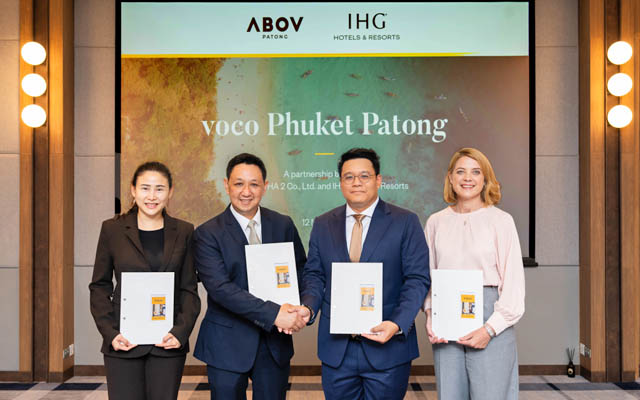
Stand on the hillside above Patong and you can still hear the surf—faint, persistent—but the chaos of the beachfront recedes into a middle distance of palm crowns and terracotta roofs. It is here, at that deliberate remove, that IHG Hotels & Resorts and local developer Phuket HA 2 Co. have chosen to plant the next flag in the voco brand's Thai expansion: a 307-room property that will open in 2028 as part of the Abov Patong mixed-use precinct. The location is telling. Close enough to Patong's nightlife, shopping arcades and beach clubs to claim proximity; far enough to offer ocean sightlines and a buffer of elevation. For IHG, the signing is less about filling a white space on the map—Phuket already hosts seven of the group's properties, spanning InterContinental down to Holiday Inn Express—and more about staking a claim in the premium mid-market, the zone where branded reliability meets boutique aspiration and where voco, with its looser, more locally inflected playbook, is designed to thrive.
A Brand Built for the In-Between
Voco made its Thai debut in Bangkok only last year, yet the pipeline already includes multiple properties across the capital and Phuket. The brand occupies a curious, carefully calibrated niche: upmarket enough to command higher average rates than a Holiday Inn, informal enough to avoid the operational weight—and guest expectations—of a full-service luxury flag. At Global Chic Voyage, we have watched this segment mature across Southeast Asia as developers seek brands that can animate mixed-use precincts without requiring the square-metre footprint or staffing ratios of a grand resort. Voco's promise is operational flexibility married to design individuality—each property is encouraged to reflect its locale, yet all share a common thread of approachable sophistication.
The Abov Patong development, which will eventually encompass hotels, branded residences, a clubhouse, theatre, swimming pools and a Kids Club, represents the kind of lifestyle-anchored real estate that has proliferated across Thailand's resort islands in the past five years. The mixed-use model allows developers to hedge: residential sales fund infrastructure, hospitality delivers recurring revenue, and shared amenities justify premium pricing across both. For hotel operators, it offers built-in F&B and leisure facilities that can be shared with residents, reducing per-key capital expenditure. The trade-off is complexity—managing guest expectations when pool decks and restaurants are also accessed by apartment owners—but for a brand like voco, which positions itself as unpretentious and community-oriented, the friction may be minimal.
Phuket's High-Season Resurgence and What It Signals
IHG's timing hinges on a data point that has galvanised developers and operators alike: Phuket's 2025 high season—the October-to-April window that accounts for the bulk of annual room revenue—was the island's strongest in five years, surpassing even pre-pandemic benchmarks according to IHG. That performance reflects a confluence of factors: the return of Chinese tour groups, albeit in smaller, higher-spending cohorts; sustained demand from European long-haulers seeking winter sun; and the emergence of Indian travellers as a year-round segment. The island's hotel supply, meanwhile, has not kept pace with demand in the premium mid-tier. Legacy three-star properties have aged without reinvestment, and while ultra-luxury resorts continue to proliferate on secluded headlands, the segment between budget guesthouses and five-star compounds remains underserved.
Voco Phuket Patong will offer a restaurant, two bars, a spa, swimming pool and fitness centre—a configuration that reads as resort-lite, sufficient to justify multi-night stays without the sprawl of a beachfront compound. The hillside location, approximately 150 metres from the sand, positions it as a base camp rather than a destination unto itself, a model that aligns with how younger travellers—particularly those booking via OTAs and metasearch—approach Phuket: as a hub from which to explore beaches, islands and nightlife rather than a place to remain sequestered within resort walls.
The Broader IHG Playbook in Thailand
The voco signing is one move within a larger strategy. IHG now operates or has under contract seven hotels across Phuket, a portfolio that spans the full rate spectrum and allows the group to capture demand at every price point and occasion: InterContinental and Vignette Collection for celebratory stays and incentive groups, Hotel Indigo for design-conscious independents, Holiday Inn for families and conferences, Holiday Inn Express for budget-conscious transients. In this context, voco functions as the bridge brand—premium enough to attract couples and small groups willing to pay for style and service, flexible enough to absorb midweek corporate demand and weekend leisure without diluting positioning.
Across Thailand, the voco pipeline reflects a focus on urban gateways and established resort markets. Bangkok properties will likely target the MICE segment and long-stay business travellers; Phuket hotels, like the Patong signing, are pitched at leisure demand with sufficient amenity to justify rates above the Holiday Inn tier. The brand's growth mirrors a broader shift in Thai hospitality: away from the extremes of backpacker guesthouses and exclusionary luxury, toward a middle ground where design, service and price align with the expectations of a professionalised, digitally native traveller base.
Why This Signing Matters Beyond the Room Count
The voco Phuket Patong agreement is significant not because it adds 307 rooms to an island that already counts thousands, but because it signals where capital and operator confidence are converging. Mixed-use developments anchored by lifestyle amenities are becoming the default model for new resort real estate in Thailand, and brands that can operate within that framework—sharing facilities, accommodating resident access, maintaining service standards without resort-level staffing—will capture a disproportionate share of new signings. Voco, with its emphasis on localism and operational leanness, is purpose-built for this environment.
For Phuket, the signing also reflects a maturation of the market. The island is no longer simply absorbing demand; it is segmenting it, and developers are responding with product tailored to specific traveller profiles. The hillside location, the mixed-use integration, the premium-but-not-precious positioning—all suggest a market that has moved past the boom-and-bust cycle of speculative hotel construction and toward a more considered alignment of supply, brand and guest expectation.
What Comes Next
By the time voco Phuket Patong opens in 2028, the Thai hospitality landscape will have shifted further. Sustainability certifications will likely be table stakes for new builds; OTA commission structures may have evolved in response to direct-booking incentives; and the definition of "premium" will have been redrawn by a generation of travellers for whom design, values alignment and digital-native service matter as much as thread count. The voco brand, if it is to justify its rapid expansion, will need to remain responsive to those shifts—not merely replicating a formula, but allowing each property to reflect the specificities of place and moment.
For now, the hillside site above Patong offers a vantage point in both the literal and strategic sense: close enough to the action to capture demand, elevated enough to suggest a different experience. Whether that balance holds will depend not on the signing itself, but on the thousand small decisions—about design, staffing, pricing, partnerships—that follow. In a market as competitive and dynamic as Phuket, the view from 150 metres back is only as valuable as what you choose to do with it.
Spot something wrong? Email editors@globalchicvoyage.com. We log every correction publicly.
RELATED
SEE ALL →
8 Aug 2026 / 5 min
8 Aug 2026 / 5 min
8 Aug 2026 / 5 min
7 Aug 2026 / 5 min