
How Coastal Hotels Are Turning Oyster Cultivation Into the Season's Most Intimate Ritual
From volcanic ponds in Hawaii to Chesapeake tributaries, a new wave of resort experiences invites guests to trace the bivalve's journey—seed to shell, hand to mouth.
SI
13 Jun 2026 · 5 MIN READ · UPDATED 17 AUG 2026
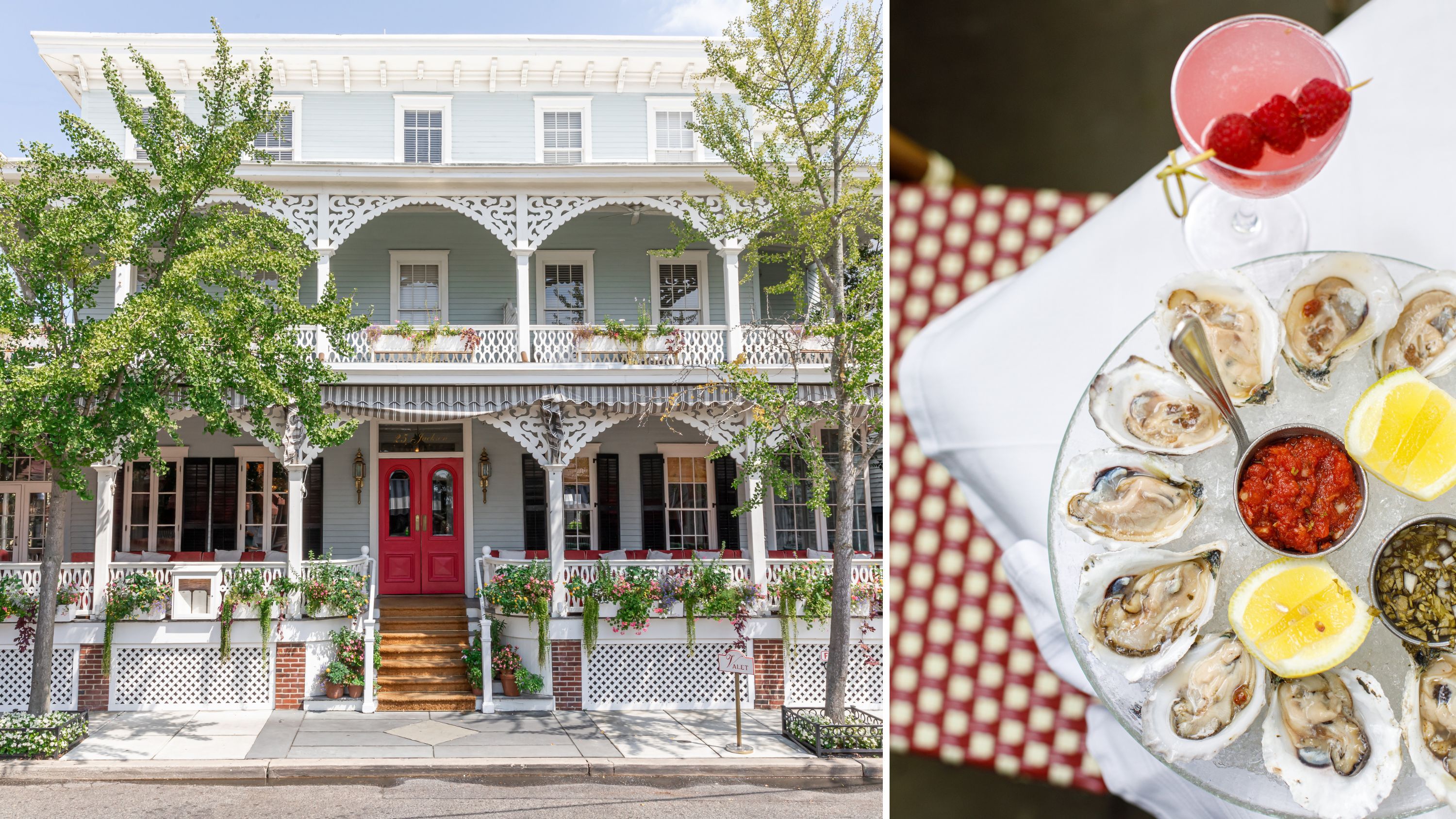
The Ritual Begins at Water's Edge
There's a particular intimacy to standing knee-deep in tidal flats at dawn, salt wind in your hair, learning to distinguish a two-month seed from a market-ready bivalve by weight alone. The oyster farmer beside you doesn't rush. She lifts a mesh bag from the rack, fingers working with the practiced rhythm of someone who knows every ridge and hollow of this estuary, and you realize: this is what luxury has quietly become. Not the thing itself—though the oyster, when it arrives on ice an hour later, will be impeccable—but the access to its entire biography.
Across the American coastline, a handful of hotels have begun to offer something that sits outside the traditional taxonomy of resort programming. Not quite agritourism, not quite gastronomy, these experiences occupy the liminal space between education and ritual. At their center: the oyster, that ancient filter-feeder whose life story happens to double as a masterclass in terroir—or, as marine ecologists prefer, merroir. The flavor of place, rendered in brine and mineral and the faint metallic kiss of cold water.
At Global Chic Voyage, we've watched this shift unfold over the past two seasons. Where wine country once monopolized the language of cultivation and craft, coastal properties are now scripting experiences around aquaculture with the same narrative care. The difference, perhaps, is that oysters demand you get closer. There's no tasting room with polished stemware here—just mudflats, mesh gloves, and the sharp smell of low tide.
What Merroir Tastes Like, Region by Region
The old adage—eat oysters only in months containing the letter R—has long since been debunked by year-round farming and refrigeration technology. But the saying hints at something true: oysters are creatures of season and geography, shaped entirely by the waters that cradle them. A Chesapeake Bay oyster arrives mild and buttery, its sweetness a reflection of brackish estuaries where rivers meet the Atlantic. Thirty miles north, a Long Island oyster from Peconic Bay carries a crisper salinity, its shell thinner, its finish bright and mineral.
In the Lowcountry of South Carolina, oysters are less about raw delicacy than communal theater. They're roasted over open hardwood fires, their shells cracking from steam and smoke, then dumped onto high-top tables where guests shuck with gloved hands and toss empties into a center hole. It's a tradition that predates resort culture by generations, but one that several properties have carefully preserved—not as performance, but as living practice.
What these regional variations share is an ecological fact often overlooked in the rush to consumption: oysters are among the ocean's most efficient purifiers. A single adult oyster filters up to 50 gallons of water per day, removing nitrogen, algae, and particulates. In estuaries where populations have rebounded—often through deliberate restoration efforts—water clarity improves, seagrass returns, and entire food webs stabilize. To eat an oyster, then, is to participate in a system that cleans as it grows.
Several hotels have woven this environmental narrative directly into their programming, recognizing that today's travelers—particularly those drawn to remote, ecologically sensitive coastlines—want more than a plate. They want provenance, yes, but also implication. They want to understand what their presence makes possible.
Six Properties Where the Story Begins Upstream
On the shores of Pleasant Bay in Harwich, Massachusetts, Wequassett Resort & Golf Club offers what it calls the Coastal Hatchery Tour—a behind-the-scenes visit to ARC Hatchery, the largest and longest-running shellfish facility on the East Coast. Guests walk through salt flats at Chapin Beach, observing oysters at every life stage: from spawn barely visible to the naked eye, through juvenile seed, to market size. The tour includes a primer on grading and sorting, the kind of technical knowledge that transforms the oyster from commodity to craftwork. This summer, the resort has partnered with the Mass Oyster Project to install an upweller on-site, a cylindrical system that allows guests—including children enrolled in the resort's Adventure Club—to monitor growth rates and learn how shellfish restoration directly impacts coastal ecosystems.
At Four Seasons Resort Hualalai on the Big Island, the provenance loop is even tighter: the property cultivates its own oysters within Punawai, a brackish pond fed by a subterranean seawater aquifer that rises through volcanic lava. Director of Natural Resources David Chai spent years testing salinity levels and species compatibility before settling on Crassostrea virginica, the Eastern oyster, which thrives in the pond's unique mineral profile. Resort staff adjust salinity daily, ensuring each shell reaches the table in optimal condition. The Private Oyster Experience brings guests to the pond's edge, where a marine biologist shucks a dozen oysters on the bank and pours Champagne—a moment that collapses the distance between harvest and consumption to zero.
In Cape May, New Jersey, The Virginia Hotel partners with Sweet Amalia Oyster Farm, which uses rack-and-bag methods on the Cape Shore Flats. The Sweet Amalia Oyster Getaway, offered in early autumn, includes a farm tour along the Delaware Bay, a shucking lesson, and a tasting. Guests return to the hotel's private Richmond Room for a themed menu designed by chef Jason Hanin, each course riffing on the oyster's versatility—from raw to roasted to incorporated into sauces and broths. It's a format that treats the bivalve not as garnish but as protagonist.
Further south, The Tides Inn in Irvington, Virginia, sits on Carter's Creek, a tributary of the Chesapeake Bay where Eastern oysters have been harvested for centuries. After years of population collapse due to overharvesting and pollution, the resort completed a Waterfront Restoration Project in 2022, installing 18,000 square feet of natural shoreline and a new oyster reef. The Chesapeake Gold ecology tour, led by resident ecologist Will Smiley, walks guests through the harvest-shuck-cook cycle while explaining how those reefs filter nitrogen and stabilize sediment. This summer, the resort will debut the Widgeon, its proprietary oyster grown on Carter's Creek and served at Salt & Meadow, the on-site restaurant.
On Long Island's North Fork, The Menhaden in Greenport collaborates with Founders Oyster Farm to offer three oyster-centric experiences. The private charter takes guests aboard On the Half Shell, a restored 1936 Chris Craft yacht, for a tour of Peconic Bay's shellfish beds, oysters and regional wines included. The dockside experience offers a more grounded introduction to North Fork aquaculture, while the rooftop happy hour pairs oysters with rosé from McCall Wines, the harbor spread below. It's a tiered approach that acknowledges not every guest wants to wade into estuaries—but all can appreciate the care that precedes the plate.
At Kiawah Island Golf Resort in South Carolina, the Mingo Point Oyster Roast has been a fixture for 47 of the property's 50 years. Designed by MC Heyward, a St. Johns Island native and one of the resort's longest-tenured staff, the roast follows the method his grandfather used: oysters cooked on a steel plate over hardwood fire, topped with a water-soaked burlap sack to steam from above while smoke infuses from below. When the shells crack slightly, the roaster dumps them onto communal tables where guests shuck, eat, and discard shells into a center hole. The resort collects those shells, cures them, and returns them to the Kiawah River's banks to support new oyster beds—a closed-loop system that honors both tradition and ecology.
Why This Moment, Why Oysters
The rise of oyster-focused programming at coastal hotels mirrors a broader shift in how travelers define value. In an era when information is frictionless and images instantaneous, scarcity has migrated from the visual to the experiential. It's no longer enough to photograph a perfect plate; the question now is whether you understand the hands that raised it, the water that shaped it, the system that sustains it.
Oysters, by their nature, resist commodification. They can't be grown at industrial scale without sacrificing quality. They demand clean water, patient tending, and site-specific knowledge. They are, in other words, the opposite of globalized luxury—they are radically local, radically slow, radically tied to place.
For hotels, this creates an opportunity to offer something that can't be replicated elsewhere. A Hualalai oyster grown in volcanic aquifer water tastes like nowhere else on earth. A Lowcountry roast performed the way MC Heyward's grandfather did it carries cultural weight no Michelin star can confer. These are experiences that resist Instagram's flattening effect, that insist on presence, on participation, on the willingness to get your hands wet.
There's also a quieter appeal: oyster farming, done right, is regenerative. It improves the environment it inhabits. In a hospitality landscape increasingly scrutinized for its extractive tendencies, that narrative matters. Guests who spend a morning learning to sort seed oysters or monitoring an upweller leave with a story that positions their presence as contributory, not merely consumptive.
The Closing Shell
Late afternoon on a Chesapeake tributary, the water goes amber in slanting light. You've spent the past two hours wading through shallows, learning to distinguish market-ready oysters by the heft of the bag, the way they settle in your palm. Your hands smell like salt and silt. The ecologist who's been guiding you points to a cluster of juvenile oysters clinging to a recycled shell, their growth visible week over week. This, she says, is what restoration looks like at ground level: patient, incremental, tied to tidal rhythms no resort calendar can dictate.
Back at the hotel, you'll shower, dress, and sit down to a dozen oysters on ice, each one a distillation of the afternoon's work. The first oyster tastes different now—not better, necessarily, but denser with meaning. You know where it came from. You know who sorted it, at what stage, under what conditions. You know the reef it came from is cleaner for its absence, and will be cleaner still when the shells return.
This is the luxury the coastal hotels are selling now: not the oyster itself, but the integrity of its story. The knowledge that between seed and plate, nothing was hidden, nothing was rushed, and the water—always the water—was left better than it was found.
Spot something wrong? Email editors@globalchicvoyage.com. We log every correction publicly.
RELATED
SEE ALL →
8 Aug 2026 / 5 min
8 Aug 2026 / 5 min
8 Aug 2026 / 5 min
7 Aug 2026 / 5 min