
The Apartment Hotel Arrives in Waikiki
Hilton's LXR brand reimagines a Honolulu tower with residential grace, full kitchens, and a loyalty-points proposition that upends the luxury-condo stay
SI
13 Jul 2026 · 5 MIN READ · UPDATED 17 AUG 2026
A Residential Vocabulary in the Heart of the Beach District
The elevator opens onto a corridor that feels less like a hotel hallway and more like a well-appointed condominium floor. No brass cart, no turndown tag swinging from a handle. Instead, a sense of quiet, the kind that belongs to buildings where people live rather than pass through. This is Ka La'i Waikiki Beach, the first LXR Hotels & Resorts property in Hawaii, and it speaks a different language than the resort towers that crowd the western edge of Waikiki.
Hilton opened the reimagined property after a complete transformation that left a nearly three-decade-old building with a new identity. The former incarnation is gone; in its place stands a hotel built around privately owned apartments, most of which enter the rental pool when their owners are away. The result is a hybrid that offers travelers full kitchens, washers and dryers, multiple bedrooms, and lanais that catch the trade winds, all bookable with loyalty points. It is an unusual proposition in a neighborhood dense with conventional luxury, and it works.
At Global Chic Voyage, we have watched the apartment-hotel model gain traction in cities where travelers seek autonomy and space, particularly families and extended-stay guests who tire of room service menus and mini-fridges. Ka La'i brings that ethos to a beach destination, threading the needle between the serviced condominium and the full-service resort.
Interiors That Root Themselves in Place
The design vocabulary throughout the property draws from the island landscape without tipping into cliché. Soft greens echo the ridgelines of the Ko'olau Range; dark woods and lava stone anchor public spaces; coral-toned ceramics and textured linens in guest rooms nod to reef and sand. The open-air ground-floor reception area sets the tone immediately, with high ceilings, cross-ventilation, and a staff whose warmth feels less rehearsed than genuinely rooted in island hospitality culture.
The apartments themselves vary widely in configuration. Studios offer kitchenettes; one-bedroom units unfold into full kitchens, separate living rooms, dens, and walk-in closets; larger two- and three-bedroom residences accommodate extended families or groups. The one-bedroom configuration we toured measured easily over 800 square feet, with a full kitchen complete with stovetop, oven, dishwasher, and a bar sink, a dining table for six, and a living room furnished with a sectional sofa, armchairs, and an entertainment center that doubles as a display for Hawaiian pottery and woven baskets.
The bedroom, behind a solid door that grants acoustic privacy rare in hotel suites, featured floor-to-ceiling windows framing a slice of ocean, a king bed with exceptional pillows, and blackout curtains drawn each evening during turndown service. The attached bathroom leaned into spa aesthetics: stone surfaces, adjustable lighting, a Japanese-style heated toilet seat, and Byredo Mojave Ghost amenities. Water pressure was ideal. A walk-in closet held an in-unit washer and dryer, stocked with detergent and dryer sheets, a detail that transforms a week-long stay from a laundry logistics puzzle into simple domesticity.
Two private lanais extended the living space outdoors. One faced the city; the other angled toward the water. We found ourselves returning to them at different hours, morning coffee in hand or evening drink, watching the rhythm of Waikiki unfold below.
A Dining Program Anchored by Executive Chef Yoshi Ohata
The property offers three distinct dining venues, each calibrated to a different moment in the day. Bloom Cafe & Restaurant handles breakfast and lunch in an open-air setting on the ground level. The breakfast program includes an a la carte menu as well as the Ohana Breakfast package, which layers a buffet spread with a choice of small plate and full entree. The miso catch-of-the-day bento, served with pickled vegetables, white rice, and soft-boiled eggs, demonstrated a kitchen comfortable with both precision and restraint.
The Kini Room, the property's signature restaurant, occupies a partially open-air space and serves modern Hawaiian cuisine with global inflections. A lunch bento box featured chicken katsu with a light, crisp panko crust alongside Hawaiian-style ahi poke, butter mochi, and miso soup. Dinner offerings leaned more ambitious: edamame and mushroom dumplings with truffle ponzu, crab miso soup dense with claw meat, and a yuzu miso cod with swiss chard, finger limes, watermelon radish, and ginger-scallion pesto. The kitchen's signature dessert, the Kini Kini pie, layers Kona coffee, ube, and vanilla ice cream over a butter cracker crust, finished with candied macadamia nuts, salted caramel, and chocolate sauce. It is a maximalist construction that somehow avoids collapsing under its own ambition.
Muse Lounge, the lobby bar, serves cocktails and small plates with views toward the sunset. The cocktail menu includes tropical standards and drinks inspired by other LXR properties globally. A mezcal-based cocktail featuring Italicus, lemon, yuzu, blueberries, and Tajin demonstrated the bar team's willingness to layer flavors without muddying them. The lounge offers a daily happy hour from 4 p.m. to 6 p.m., and the open-air seating makes it a natural gathering point in the early evening.
Room service, available until 10 p.m., rounds out the dining program. The menu skews toward comfort, including a keiki tempura shrimp plate with rice, vegetables, and a salty dipping sauce that pairs well with the in-room entertainment setup.
The Mechanics of a Residential-Hotel Hybrid
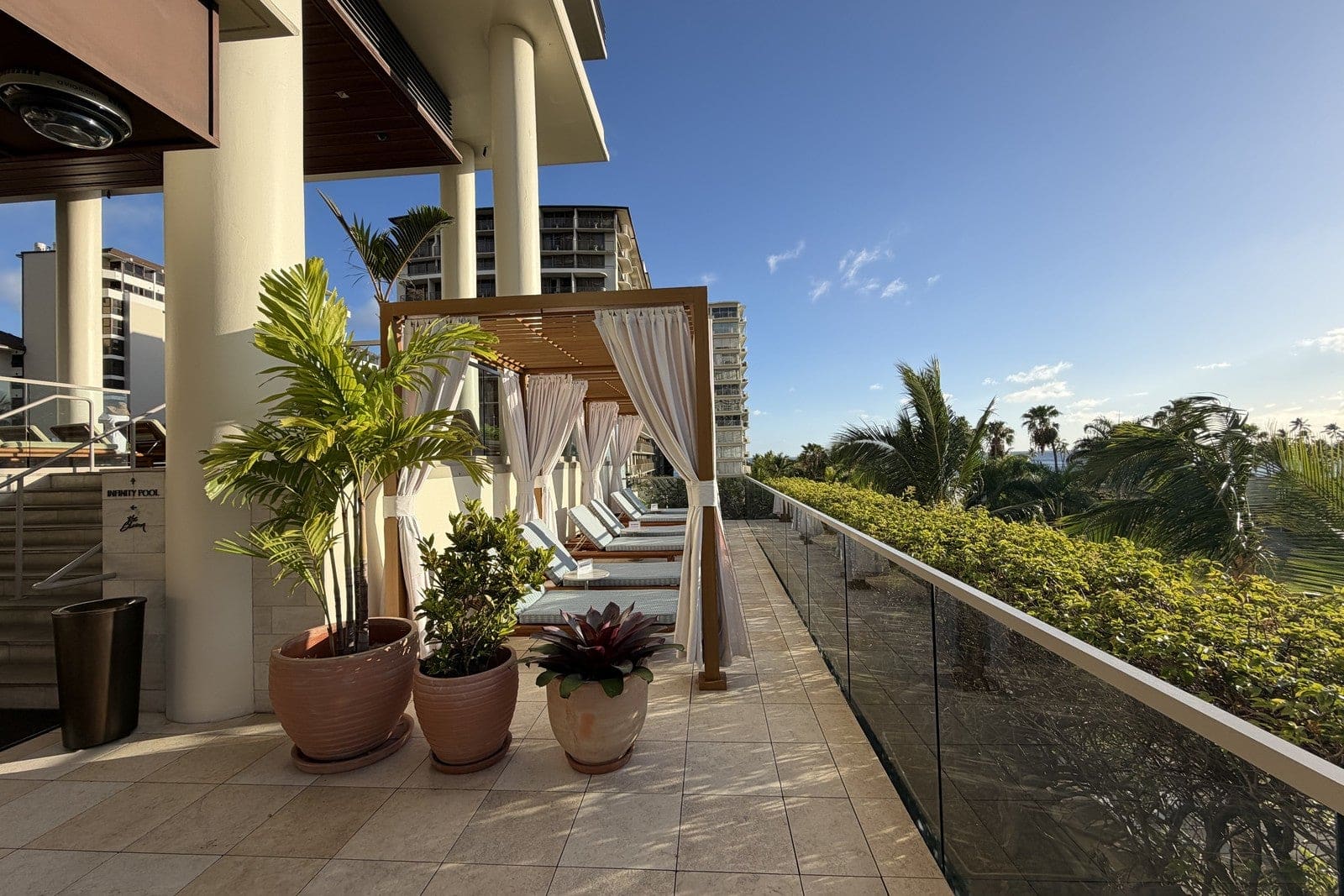
The infinity pool and hot tub occupy the fifth floor, offering partial ocean views and a first-come, first-served lounger system. Servers circulate with food and drink menus, and staff pass out complimentary smoothies and ice cream throughout the day. While the hotel does not sit directly on the beach, the walk takes roughly five minutes, and the property provides lightweight chairs, umbrellas, and beach bags with towels. This arrangement reflects the reality of Waikiki's public beach access laws; no hotel owns the sand, and the experience involves navigating a brief stretch of sidewalk before reaching the water.
A 24-hour fitness center offers standard cardio and weight equipment. Spa Ka La'i, open Wednesday through Sunday, provides Hawaii-inspired treatments, from lomilomi massage to full-body rituals incorporating local botanicals. Event and meeting spaces are available for groups, and the concierge can arrange grocery deliveries or private chef services for guests who wish to cook in their apartments or host a catered dinner.
For families or groups settling in for longer stays, the hotel offers in-room poke kits starting at $60 and movie-night packages with popcorn, candy, and local treats from $55. The property is still transitioning to Hilton's Connected Room streaming technology, so on-demand movies currently cost $24.99, a pricing relic that feels out of step with the apartment ethos.
The Points Equation and the Long-Stay Calculus
Ka La'i Waikiki Beach operates within the Hilton Honors ecosystem, which distinguishes it from the privately owned vacation-rental condos that populate Waikiki. Cash rates begin around $514 per night for entry-level studios, while Hilton Honors redemptions start at 100,000 points per night. For a property offering full-kitchen apartments, in-unit laundry, and multiple rooms, the value proposition sharpens considerably for families or groups who would otherwise book multiple hotel rooms or navigate the fragmented vacation-rental market.
The integration of a loyalty program into what is essentially a condominium-hotel model represents a broader shift in how travelers approach extended stays. The ability to earn and redeem points on a residential-style accommodation blurs the line between hotel and apartment, offering the service layer of the former and the autonomy of the latter. As the property gains visibility, we expect both cash and points rates to climb, but for now, the pricing reflects a soft opening phase.
Waikiki's Western Edge and the Five-Minute Walk
The hotel sits on the western boundary of Waikiki, approximately 20 minutes by car from Daniel K. Inouye International Airport, traffic permitting. Rideshare fares typically start around $40 each way. The neighborhood is highly walkable, with the beach, dining, and retail all accessible on foot. The property's position slightly removed from the densest cluster of beachfront resorts grants it a measure of quiet while keeping the core of Waikiki within easy reach.
The accessible-room inventory includes units with roll-in showers and visual alert systems. As with any property, travelers with specific accessibility needs should contact the hotel directly during the booking process to confirm configurations.
What the Apartment Hotel Means for Waikiki
The arrival of Ka La'i Waikiki Beach signals a maturation of the apartment-hotel model in leisure markets. For years, this hybrid format has thrived in urban centers, where business travelers and relocating professionals value the kitchen, the washer-dryer, and the ability to host a colleague for dinner without retreating to a lobby lounge. Translating that model to a beach destination required recalibrating expectations: guests arrive seeking both the autonomy of a rental and the services of a hotel, the privacy of a residence and the social infrastructure of a resort.
Hilton's decision to anchor its first Hawaiian LXR property in this format reflects a broader industry bet that travelers, particularly families and multi-generational groups, increasingly prioritize space and flexibility over the traditional resort package. The full kitchen becomes not a novelty but a necessity for parents managing dietary restrictions or budgets stretched by multiple resort meals per day. The in-unit laundry transforms a ten-day stay from a packing ordeal into a manageable proposition. The separate bedroom allows children to sleep while adults linger over wine on the lanai.
At the same time, the property retains the service layer that distinguishes a hotel from a vacation rental: daily housekeeping, turndown service, a staffed concierge, on-site dining, and the operational consistency that comes with a global brand. This is not a condo rented through a third-party platform, with all the attendant uncertainties of key handoff and appliance function. It is a hotel that happens to feel like a well-appointed apartment, and that distinction matters.
The model also addresses a gap in the Waikiki accommodations landscape. The neighborhood offers no shortage of luxury resorts with sprawling pools and beachfront cabanas, nor does it lack budget hotels catering to backpackers and surfers. But the middle ground, where families and extended-stay travelers seek both comfort and value, has historically been served by an inconsistent patchwork of vacation rentals and older condo-hotels. Ka La'i enters that space with a clear value proposition: residential scale, hotel service, and a loyalty currency that makes the math work for frequent travelers.
The Dust Still Settling
The property remains in a transitional phase, with minor finishing touches still underway following the comprehensive renovation. The lobby occasionally hums with the low-frequency energy of a hotel still finding its rhythm. But these are the small frictions of a property in its opening months, not structural flaws. The staff, many of whom have deep roots in Honolulu's hospitality community, have already developed the kind of institutional memory that turns a new hotel into a neighborhood fixture.
For travelers accustomed to the traditional Waikiki resort experience, Ka La'i will feel different. There is no sprawling beach club, no infinity-edge pool cantilevered over the sand, no luau grounds or torch-lighting ceremony. What it offers instead is space, autonomy, and the quiet pleasure of living, rather than simply vacationing, in one of the world's most storied beach neighborhoods. That trade-off will not appeal to everyone. But for those who seek it, Ka La'i Waikiki Beach has carved out a compelling niche in a crowded market.
Photo: Tanner Saunders / The Points Guy
Spot something wrong? Email editors@globalchicvoyage.com. We log every correction publicly.
RELATED
SEE ALL →
14 Jul 2026 / 5 min

8 Aug 2026 / 5 min
8 Aug 2026 / 5 min
8 Aug 2026 / 5 min