
The Calculus of Hospitality: When a New Brand Becomes a Promise
As one of the world's largest hotel companies signals a return to brand creation, the industry watches to see whether invention still outpaces saturation.
SI
22 Jun 2026 · 5 MIN READ · UPDATED 17 AUG 2026
The Allure of the Blank Canvas
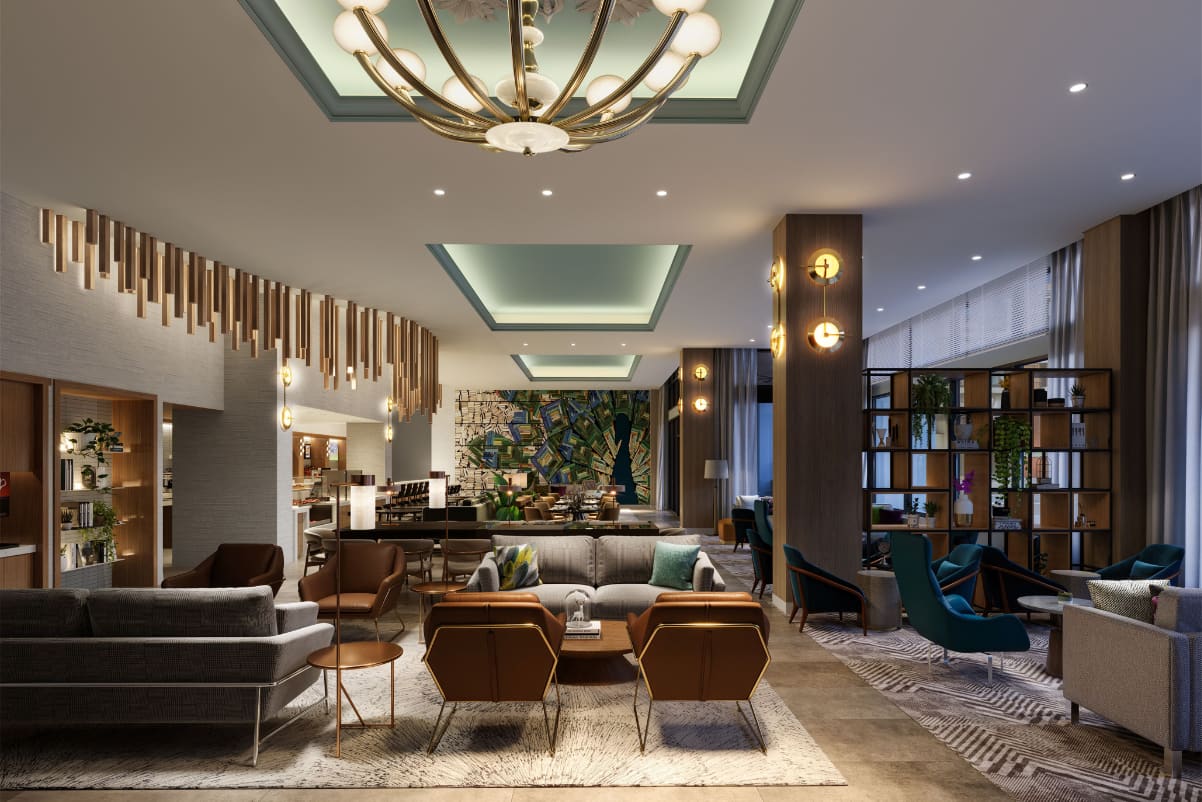
There is something seductive about a new brand in hospitality - the blank canvas, the promise of a category not yet claimed, the possibility that this particular combination of design language, service ethos, and market positioning will unlock a segment no one else thought to pursue. For decades, the major hotel companies have grown not only by franchising existing flags but by inventing new ones, each calibrated to a micro-niche within the traveler's psyche: the business nomad, the wellness seeker, the weekend escapist, the digital nomad with a taste for mid-century modernism.
At Global Chic Voyage, we have watched this proliferation with a mixture of admiration and skepticism. Admiration, because genuine innovation in hospitality is rare and valuable. Skepticism, because the distance between a trademark filing and a transformative guest experience is often vast, and the landscape is already dense with brands that differ from one another in name more than in substance.
Recent signals suggest that Hilton, one of the industry's most prolific brand architects, is preparing to resume the work of invention. Trademark filings and domain registrations point to the possibility of a new lifestyle-oriented concept, one that may carry the name Tortoise - a curious choice in an era when speed and convenience dominate the traveler's vocabulary. Whether this represents a genuine strategic shift or simply another incremental addition to an already sprawling portfolio remains to be seen. But the move arrives at a moment when the fundamental economics of brand multiplication are under fresh scrutiny, not least from the property owners whose capital underwrites every new flag.
The Economics of Multiplication
For much of the past two decades, the logic of brand expansion was self-evident. A hotel company with a diversified portfolio could offer franchisees a range of options calibrated to different markets, price points, and guest expectations. A developer in a secondary city could choose a midscale select-service flag; a resort operator could opt for a luxury soft brand that preserved operational independence while unlocking distribution and loyalty benefits. The model was elegant: the franchisor assumed minimal capital risk, the franchisee gained access to systems and customers, and the guest enjoyed a degree of predictability.
But elegance in theory does not always translate to performance in practice. As portfolios have grown - some companies now operate more than a dozen distinct brands - the differentiation between them has become harder to discern. The guest who checks into a lifestyle brand in one city and a soft brand in another may struggle to articulate what distinguishes them beyond the lobby playlist and the typeface on the room directory. For owners, the question is sharper: does this new brand generate incremental revenue, or does it merely redistribute demand that would have flowed to an existing flag?
The answer depends on execution, and execution depends on resources. A new brand requires investment in design standards, operational protocols, marketing infrastructure, and talent development. It requires a clear value proposition that resonates with both guests and developers. And it requires time - often years - to build the critical mass necessary for the brand to function as a meaningful choice rather than a marginal experiment.
The Developer's Dilemma
From the perspective of a property owner, the appeal of a new brand is not intrinsic. It is contingent on a set of financial assumptions: that the brand will command a rate premium over unaffiliated competitors, that it will drive higher occupancy through distribution channels and loyalty programs, that it will reduce operating costs through economies of scale in procurement and technology, and that it will ultimately deliver a superior return on investment.
These assumptions are not guaranteed. In markets where supply has outpaced demand, or where online travel agencies have commoditized the booking experience, brand affiliation offers diminishing advantages. A well-located independent hotel with strong design and service can often outperform a franchised property hamstrung by outdated brand standards or misaligned incentives. The rise of soft brands and lifestyle collections was, in part, a response to this reality - a way to offer operators the benefits of affiliation without imposing the constraints of rigid prototypes.
But soft brands and lifestyle collections are themselves subject to dilution. When a portfolio includes multiple lifestyle flags, each ostensibly tailored to a different sensibility, the risk is that none achieves the critical mass or clarity of identity necessary to command loyalty. The guest who might once have sought out a specific brand for its distinctive point of view now encounters a menu of options that blur together, each promising authenticity, each delivering a version of the same curated experience.
For developers evaluating a new brand launch, the calculus is therefore more complex than it once was. They must weigh not only the projected performance of the new flag but also the opportunity cost of choosing it over an established brand with a proven track record, or over independence. They must consider whether the parent company has the discipline to support the new brand with sustained investment, or whether it will be left to languish as attention shifts to the next launch.
The Lifestyle Question
The term "lifestyle brand" has become one of the most overused in hospitality, applied to any concept that incorporates exposed brick, house-made cocktails, and a lobby that doubles as a co-working space. But the best lifestyle brands - those that have achieved genuine resonance - are built on a coherent thesis about how a particular type of traveler wants to experience a place.
They do not simply offer amenities; they offer a lens through which to see the destination. They curate not only the guest room but the surrounding neighborhood, the programming, the partnerships with local makers and artists. They understand that the contemporary traveler, particularly the affluent contemporary traveler, is seeking not standardization but a form of localized discovery that feels both authentic and effortless.
If Hilton is indeed preparing to introduce a new lifestyle brand, the challenge will be to articulate what that brand offers that the company's existing lifestyle flags - and the dozens of lifestyle concepts operated by competitors - do not. The name Tortoise, if it proves accurate, suggests a counterpoint to the frenetic pace of modern travel, a proposition centered on slowness, intention, perhaps even sustainability. It is an intriguing premise, one that could resonate in an era when travelers are increasingly conscious of the carbon cost of their journeys and the cultural impact of tourism.
But a name is not a strategy, and a strategy is not a guest experience. The question is whether the company can translate the concept into a physical and operational reality that justifies the investment, both for the franchisee and for the guest.
The Discipline of Restraint
There is an alternative to endless multiplication, though it is one that few large hotel companies have embraced: the discipline of restraint. Instead of launching new brands, a company might deepen the value of its existing portfolio, investing in the continuous evolution of its flagship concepts, ensuring that each occupies a distinct and defensible position, and resisting the temptation to chase every emerging trend with a new trademark.
This approach requires patience, and it requires confidence that quality and differentiation will ultimately outperform quantity. It also requires a willingness to say no - to developers who want a custom solution, to internal teams who see opportunity in every white space, to investors who equate growth with brand count.
The hotel industry has historically favored expansion over refinement, and there are good reasons for that. Scale drives network effects, and network effects drive value for both guests and owners. But there are diminishing returns to scale, and there is a point at which the proliferation of brands begins to erode rather than enhance the parent company's ability to deliver on its promises.
Whether Hilton has reached that point is a question best answered by the owners who must decide whether to sign franchise agreements, and by the guests who must decide whether the new brand offers something they cannot find elsewhere. The company's chief development officer, a role that sits at the intersection of ambition and pragmatism, will need to make the case not only that a new brand is possible but that it is necessary, and that it will generate returns that justify the complexity it introduces.
A Market in Flux
The broader context for any new brand launch is a hospitality market in flux. Post-pandemic travel has returned with force, but the patterns are different: more domestic trips, more drive-to destinations, more demand for privacy and outdoor space. The traditional urban business hotel, once a reliable cash generator, faces structural headwinds as remote work reduces the frequency of corporate travel. Meanwhile, resort and leisure markets have seen unprecedented demand, though whether that demand will persist as economic conditions shift remains uncertain.
In this environment, the brands that thrive will be those that align with durable trends rather than transient enthusiasms. Sustainability, wellness, and experiential travel are not fads; they are increasingly central to how affluent travelers make decisions. A new brand that embeds these values in its design, operations, and storytelling has the potential to capture meaningful share. A new brand that merely applies a fresh coat of paint to a familiar formula is likely to struggle.
The difference lies in the integrity of the concept and the commitment of the organization to see it through. Brand launches are easy; brand building is hard. It requires not only capital but also cultural alignment, operational excellence, and a willingness to iterate based on feedback from both guests and owners.
The Long View
If the new brand materializes, it will enter a market that is both hungry for innovation and wary of gimmickry. Developers will scrutinize the pro forma projections, the brand standards, the fee structure, and the company's track record in supporting nascent concepts. Guests will evaluate the experience against both their expectations and the alternatives available to them. And the industry will watch to see whether Hilton's return to brand creation signals renewed confidence in the model or simply another chapter in the long history of hospitality companies overestimating the appetite for novelty.
At Global Chic Voyage, we remain cautiously optimistic. The hotel industry is at its best when it takes risks, when it pushes beyond the familiar to explore new ways of creating value and delight. But we also know that the best brands are not born from trademark filings and press releases. They are built over time, through the cumulative choices of designers, operators, and guests who believe in the idea and bring it to life.
The calculus of hospitality is ultimately human. It is about whether a brand can earn trust, deliver on its promises, and create moments that linger in memory long after checkout. The math will matter, of course - it always does. But the magic, when it happens, comes from something that cannot be reduced to a spreadsheet: the feeling that you have discovered something worth returning to, something that could only exist in this place, under this name, in this particular moment.
Whether Tortoise - or whatever name the new brand ultimately carries - can achieve that remains an open question. But it is a question worth asking, and a story worth following.
Spot something wrong? Email editors@globalchicvoyage.com. We log every correction publicly.
RELATED
SEE ALL →
14 Jul 2026 / 5 min

14 Jul 2026 / 5 min

13 Jul 2026 / 5 min
8 Aug 2026 / 5 min