
The Delicate Art of Eating Your Way Through an Invasion
In the jade waters off Destin, divers hunt lionfish by the thousands - and chefs transform them into sushi, scampi, and fajitas that might just save the reef
SI
25 Jun 2026 · 5 MIN READ · UPDATED 17 AUG 2026
A Different Kind of Quarry
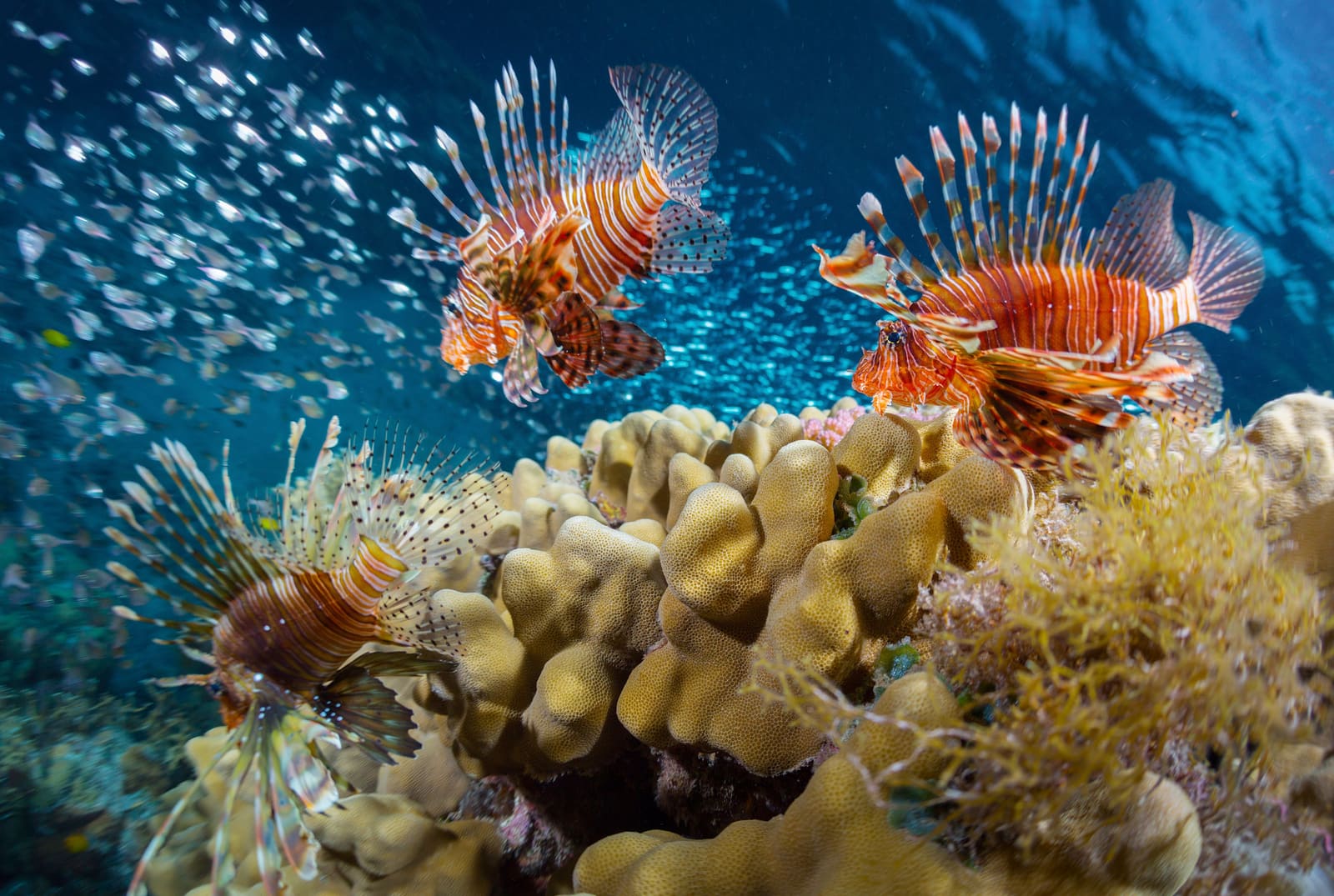
Eighty feet beneath the surface, the water carries that particular quality of light found only in the Gulf - soft jade shot through with columns of sun. A lionfish drifts above a coral ledge, its banded fins spread wide, utterly unbothered. It possesses the calm of an animal that has never known fear, eighteen venomous spines ensuring most neighbors keep their distance.
Somewhere above, on the surface, the Emerald Coast Open is underway. This annual gathering brings divers from across the country to these waters each May, all of them armed with sling spears and purpose. By the time the weekend concludes, more than fifteen thousand lionfish will have been pulled from the reefs around Destin - a staggering haul that represents both ecological urgency and a peculiar form of hospitality. Because in this corner of northwest Florida, invasive species management has evolved into something closer to a festival, complete with cooking competitions, live music, and the kind of community energy that usually accompanies harvest celebrations rather than eradication efforts.
At Global Chic Voyage, we've watched culinary tourism take many forms over the years, but few marry pleasure and purpose quite so deliberately. The lionfish phenomenon in Destin offers a template for what happens when a region decides to transform an environmental crisis into a drawcard - when the thing threatening your ecosystem becomes, improbably, the thing people travel to taste.
The Mechanics of an Underwater Hunt
Holding steady in current while trying to impale a palm-sized fish with a three-pronged spear is harder than it sounds. The yellow pole wobbles, the rubber band releases, and the weapon shoots harmlessly past its target. Within seconds, though, a more experienced hand takes over - the divemaster's spear flies true, and the lionfish, mouth frozen in a perfect circle of surprise, disappears into a cylindrical containment unit designed specifically for this work.
Dana Christy, who works with a family-run dive operation in the area, has perfected the rhythm. She and her teammates pulled their share of the weekend's total, part of a collective effort that, according to Destin-Fort Walton Beach tourism officials, has removed over one hundred twenty-five thousand lionfish since the tournament began in 2019. The winning team alone brought in more than twenty-six hundred specimens, an astounding number that speaks to just how thoroughly these Indo-Pacific natives have colonized Gulf waters.
The invasion began quietly, most likely in the mid-1980s when aquarium owners released their ornamental pets into Florida's coastal waters. What followed was a textbook case of unchecked proliferation. Female lionfish spawn roughly twenty-seven thousand eggs every three days. Within decades, the species had spread throughout the Caribbean, up the Atlantic seaboard, across to the Bahamas, and finally into the Gulf around 2010.
Their appetite is legendary. Lionfish consume more than thirty species of native Gulf fish - red snapper, triggerfish, grouper - and can take down prey half their own size. Research in the Bahamas documented reductions of young fish survival by seventy-nine percent over just five weeks in areas with lionfish presence. A separate study in the southeastern Atlantic found that one native species declined by forty-five percent, with researchers noting that similar impacts likely extend to other economically important populations.
Alex Fogg, now the natural resources chief for the region's tourism bureau, was a graduate student studying coastal science when lionfish first arrived in significant numbers. His early research documented reef densities higher than anywhere else in the species' invaded range - dive sites yielding three hundred individuals were not uncommon. It became clear quickly that eradication was impossible. What remained was the question of management, and whether an ecological problem might be reframed as an opportunity.
From Pest to Plate
The misconception persists that lionfish are dangerous to eat, their venom rendering the flesh toxic. In truth, the toxin resides only in specialized spines; once removed, the fish is entirely safe for consumption. More than safe, in fact. The flavor proves surprisingly delicate, absent the fishiness that can overwhelm other species, with a texture that falls somewhere between flounder's tenderness and monkfish's satisfying heft.
At AJ's Seafood and Oyster Bar, a boardwalk institution in Destin, the kitchen serves whole fried lionfish during tournament weekend. The preparation leaves nothing to waste - even the fins, crisped to translucence, crunch like well-made chips. It is a showpiece dish, the kind that draws cameras and conversation, but also a quiet assertion: this fish, so destructive below the waterline, can be rendered harmless and delicious on a plate.
Restaurant Week, a tournament offshoot, ensures that the thousands of captured lionfish find culinary homes rather than waste bins. Local chefs receive the catch at no cost, courtesy of divers who participate in pre-tournament hunts, then compete to create the most compelling preparation. The format has revealed just how versatile lionfish can be, adaptable to techniques and flavor profiles that span continents.
At Harbor Docks, a waterfront spot whose walls chronicle nearly fifty years of local history, chef David Douglas constructs a "reef raider" sushi roll - raw lionfish layered inside, lightly torched slabs draped across the top. Wasabi tobiko provides bursts of salt and heat; a drizzle of eel sauce offers sweetness and smoke. The fish's clean flavor holds its own against bold accompaniments without disappearing.
The Deck at Destin Brewery takes a more maximalist approach, serving a three-course "invasive experience" menu. Bruschetta topped with citrus-cured lionfish and capers delivers bright, umami punch. The main course, a bronzed lionfish scampi, arrives with generous fillets over house-made pasta - noodles that required two days of work, the kitchen proudly notes. Even dessert gets the theme treatment: panna cotta crowned with a hand-stenciled chocolate lionfish, paired with a specially brewed lionfish lager.
For the fourth consecutive year, though, La Paz claimed top honors in the cooking competition. Chef Felipe Isidoro's Acapulco lionfish fajita, topped with his grandmother's mango salsa, arrives at the table still sizzling. The restaurant commits fully to the educational mission, displaying informational materials about the invasion while a singer-songwriter performs a parody tailored to the species. An assistant manager circulates in a wetsuit, carrying a plush lionfish impaled on a toy spear. "It's not just about serving the fish," explains owner Chatham Morgan, "but educating the customer about it."
The Economics of Appetite
Morgan's larger ambition extends beyond weekend festivals. He envisions a sustainable commercial market for lionfish in Destin and throughout the region. The challenge lies in harvesting methods - lionfish ignore bait, which means they can only be caught by spear diving, a labor-intensive process that doesn't scale easily. Most local spearfishers remain hobbyists, though one fishmonger, Sea Market, has begun carrying lionfish regularly. Morgan believes sufficient demand could encourage others to follow.
This "eat them to beat them" strategy has been applied to various invasive species, from feral hogs to nutria, with mixed results. Early evidence suggests appetite may genuinely help. Researchers studying Atlantic habitats before and after lionfish tournaments documented fifty-two percent reductions in the invaders, with corresponding increases in native fish populations in some areas. The effect proves temporary - lionfish repopulate quickly - but officials believe consistent pressure can keep local populations manageable for months at a time.
At the tournament weigh-in station, volunteers in protective gloves measure and record each entry. Some specimens stretch over eighteen inches, dwarfing the juveniles pulled from shallower reefs. Teams arrive with coolers overflowing, dumping cascades of black, red, and white bodies onto processing tables while tourists photograph the spectacle.
One team from Niceville, DeFuniak Springs, and Fort Walton Beach spent their morning combing deep federal waters before finishing in coastal shallows. Wes Ratliff, one of the divers, estimates his group's haul in the hundreds - difficult to count when buckets fill faster than you can tally. The team planned to donate smaller specimens and sell larger ones to local buyers for six dollars per pound, enough to cover fuel costs for the weekend. Regular participants, they return each year for reasons that blend environmental stewardship with straightforward enjoyment.
What the Reefs Remember
The question of whether tourism can genuinely serve conservation remains open, context-dependent, often fraught. In Destin, though, the model feels unusually coherent. The lionfish invasion created a problem with no permanent solution - these fish are here to stay, breeding too quickly and eating too voraciously to ever be fully eliminated. What the tournament offers instead is managed impact, a way to suppress local populations while generating economic activity and raising awareness.
The culinary dimension proves essential. Without the cooking competitions, the restaurant partnerships, the festival atmosphere that draws visitors from across the country, this would be just another wildlife management program - necessary, perhaps effective, but invisible to most people. By centering food, Destin has created something more durable: a reason for people to care, to participate, to return year after year.
We've seen similar efforts elsewhere - regions attempting to turn ecological liabilities into attractions, problems into products. Most struggle to find the right balance, tipping too far toward spectacle or remaining too earnest to capture imagination. The Emerald Coast Open succeeds, we think, because it never loses sight of the underlying stakes. The educational materials are everywhere, the messaging consistent, the conservation goals explicit. But the festival also understands that pleasure matters, that people engage more deeply with causes they can taste, touch, experience directly.
Beneath the surface, the reefs continue their slow recovery, native fish populations rebounding in the temporary absence of their voracious predators. The effect won't last - within weeks, months at most, lionfish will drift back in, reclaiming territory, resuming their relentless consumption. But for a brief window, the ecosystem breathes easier, and that breathing room exists because people traveled here, dove here, ate here.
It is an imperfect solution to an intractable problem, but imperfect solutions may be all we have. And if those solutions happen to involve torched sushi, hand-made scampi, and fajitas topped with a grandmother's salsa, served to travelers who leave with fuller bellies and sharper awareness of what thrives - and what threatens - beneath these jade waters, then perhaps that is enough. For now, at least, the lionfish have reason to fear, and the reefs have reason to hope.
Photo: Getty Images
Spot something wrong? Email editors@globalchicvoyage.com. We log every correction publicly.
RELATED
SEE ALL →
7 Aug 2026 / 5 min
30 Jul 2026 / 5 min
30 Jul 2026 / 5 min
29 Jul 2026 / 5 min