
The End Of Perfect Travel Imagery: Why Imperfection, Grain, And Realism Are Trending
c
CM
15 Feb 2026 · 5 MIN READ · UPDATED 17 AUG 2026
By the time your thumb has flicked past a hundred flawless sunsets, infinity pools, and surgically smooth beaches, something subtle has shifted inside you. The images are stunning. The colors are unreal. The people look like they’ve never sweated in their lives. And yet, somehow it all feels a little unreal.
For years, travel imagery chased perfection. Hyper-saturated blues. Golden-hour skin. Skylines without crowds. Hotels without wrinkles in the sheets. The visual language of wanderlust became aspirational to the point of fantasy. But lately, a quiet rebellion is happening across travel magazines, social feeds, and photo essays: grain is back. Motion blur is welcome. Imperfect framing is celebrated. Real life is trending.
Platforms like Instagram trained us to see destinations as visual trophies. The Amalfi Coast looked like a movie set. Desert landscapes felt airbrushed into abstraction. Even chaotic cities appeared eerily calm once filtered, cropped, and color-graded into the same familiar palette. But somewhere along the way, the fantasy began to feel thin. The more perfect the images became, the less believable they felt.

The view that made the myth - still stunning, still imperfect
Photo Credit: Citalia
Lately, a different kind of travel image has started to circulate. A handheld photo of a ferry crossing at dusk in Istanbul, slightly blurred from the photographer’s shivering hands. A rainy street in Kyoto, neon signs bleeding into wet pavement, reflections warped and uneven. A cheap hotel room in Lisbon, the morning light hitting peeling paint and wrinkled sheets just right. These images don’t promise perfection. They promise presence. They say: this is what it felt like to be here.

When the weather refuses perfection, the city becomes more honest
Photo Credit: Catalin Marin
This shift is partly aesthetic and partly emotional. Grain and blur carry the texture of memory. They remind us of family photos tucked into albums, of disposable cameras pulled from backpacks, of images that weren’t meant to perform for anyone. The renewed interest in film photography, and in photographers who embraced rawness, like Nan Goldin - has helped reframe imperfection as intimacy. A slightly underexposed frame feels closer to how travel lives in our minds: incomplete, subjective, emotionally charged.
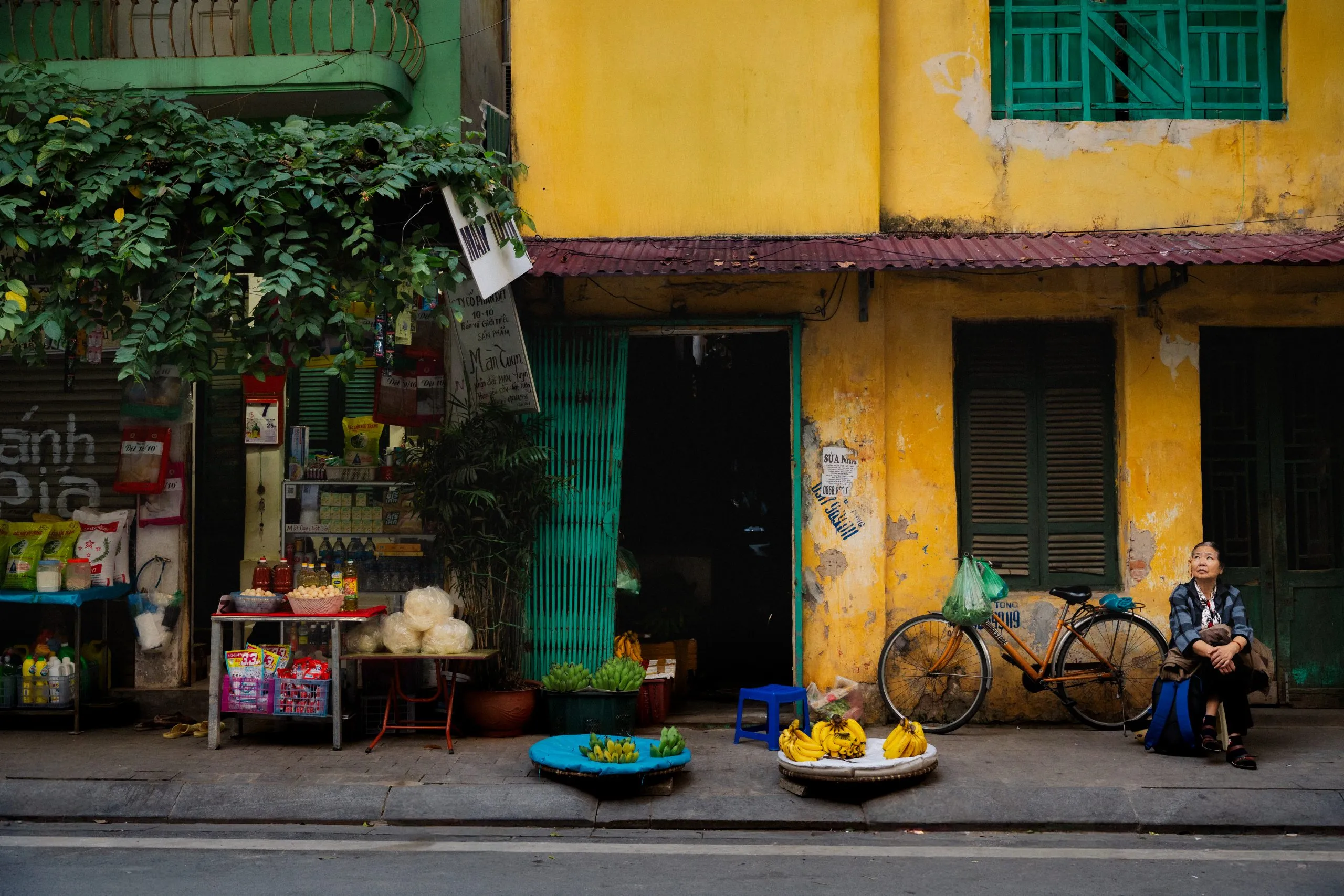
The new travel image isn’t asking you to admire how perfect a place is. It’s asking you to remember what it felt like to stand there. You can see it in the way photographers linger on in-between moments now: steam rising from street food carts in Hanoi, commuters packed shoulder-to-shoulder on a late train in Berlin, tourists waiting in line under brutal midday sun in Rome. These scenes used to be edited out. Now they’re the story.

Not a postcard, just Hanoi breathing between waves of movement
Photo Credit: Scott Campbell
There’s also a growing rejection of the copy-paste travel aesthetic. The same poses in front of the same viewpoints have started to feel like visual fast food - instantly gratifying, instantly forgettable. In contrast, a crookedly framed photo of a tiny bar in Mexico City, lit by a single flickering bulb, sticks in the mind. It feels personal. It feels specific. It feels unrepeatable.
Even the fashion and luxury worlds are leaning into this visual language. Brands once obsessed with gloss and control are experimenting with raw textures, uneven lighting, and imperfect compositions. The recent campaigns from Loewe, for example, have leaned into a kind of artful roughness that feels closer to a travel diary than a traditional advertisement. The message is subtle but clear: authenticity now signals taste more powerfully than polish.
This move toward realism also reflects how travelers are choosing destinations. Instead of only chasing postcard-famous locations, more people are drawn to overlooked neighborhoods and “unpretty” places. An industrial port in Marseille at dawn. A half-abandoned mining town in northern Spain. A noisy night market on the outskirts of Bangkok. These places don’t photograph “perfectly,” but they tell deeper stories. They reveal the rhythms of daily life - the labor, the mess, the contradictions that glossy travel imagery used to erase.

Bangkok after dark: heat, noise, and movement - the city alive beyond the frame
Photo Credit: Gabrielle Chua
There’s even a quiet form of resistance in these imperfect images. Perfect travel photos often remove crowds, hide pollution, and smooth over the realities of local life. Realistic imagery brings those elements back into frame. A beach with plastic tangled in seaweed. A historic square filled with scaffolding and tour groups. A mountain trail crowded with hikers stopping to catch their breath. These images don’t kill the romance of travel; they complicate it. They remind us that places are not just destinations, they are lived environments.
In a moment when AI-generated landscapes and hyper-real edits are becoming harder to distinguish from reality, imperfection becomes a signal of truth. Grain becomes proof of touch. Blur becomes proof of motion. Awkward framing becomes proof of a human behind the camera, reacting in real time to a fleeting moment.
The future of travel imagery, then, isn’t about lowering standards. It’s about changing what we value. Less spectacle. More story. Less performance. More presence.
The age of perfect travel imagery isn’t ending because perfection is undesirable. It’s ending because imperfection finally feels real - and real, right now, is what we trust.
Spot something wrong? Email editors@globalchicvoyage.com. We log every correction publicly.
RELATED
SEE ALL →
27 Apr 2026 / 5 min
25 Mar 2026 / 5 min
11 Mar 2026 / 5 min
25 Feb 2026 / 5 min