
The Quiet Power of Andros: Where the Bahamas Still Feels Untouched
Beyond Nassau's cruise terminals lies the archipelago's largest island - a realm of blue holes, bonefishing flats, and hotels that understand the luxury of solitude.
ML
27 Jul 2026 · 5 MIN READ · UPDATED 17 AUG 2026
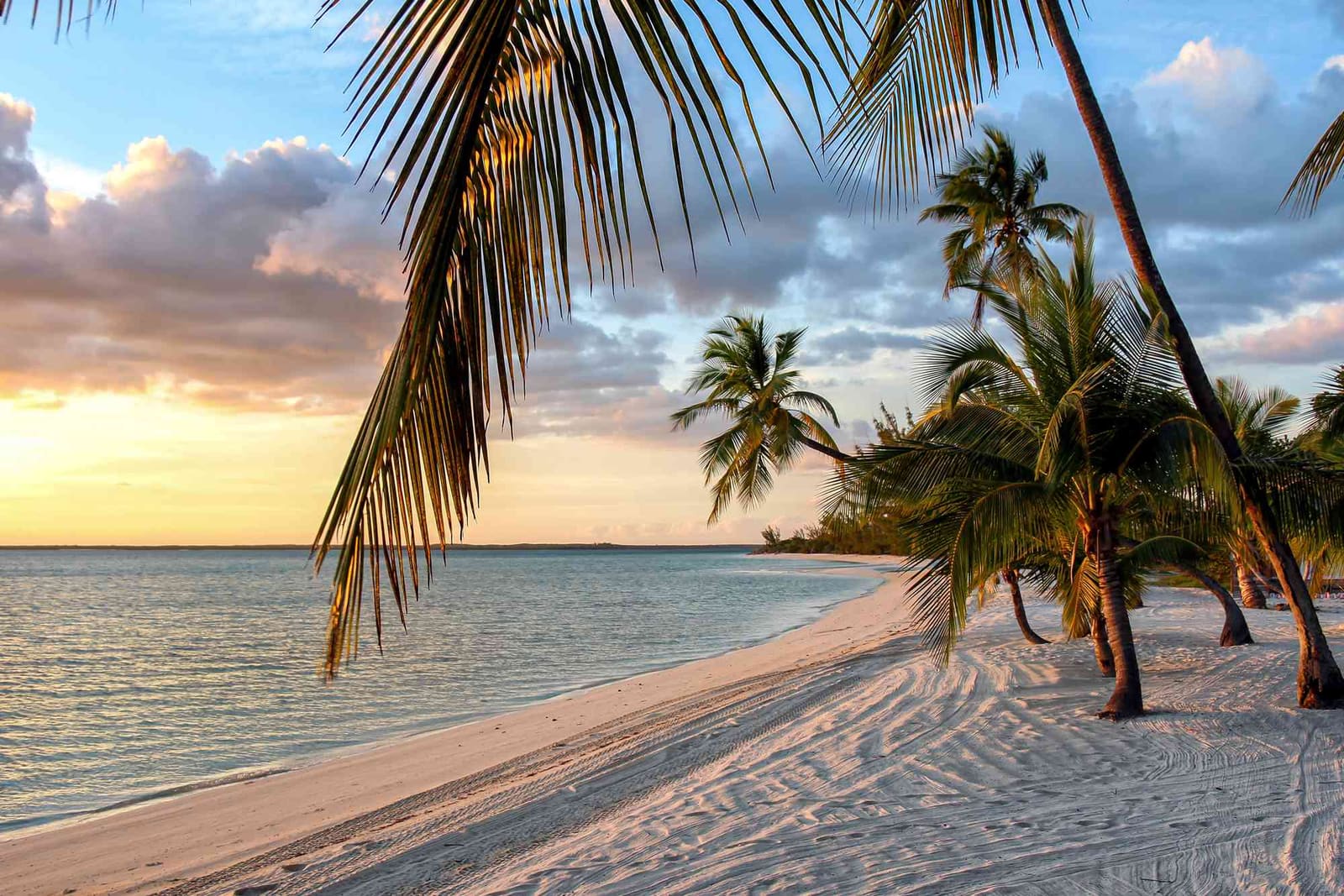
The Island That Refuses to Shout
There is a particular quality to the light on Andros in the late afternoon - soft, amber, the kind that makes mangrove roots look like calligraphy against shallow water. At Global Chic Voyage, we have long believed that the most compelling destinations are not those that announce themselves with fanfare, but those that reveal their character slowly, to travelers willing to meet them on their own terms. Andros, the largest landmass in the Bahamian archipelago, is precisely such a place.
While Nassau and Paradise Island have long courted the mega-resort crowd, Andros has remained comparatively untouched, its 2,300 square miles a mosaic of pine forests, tidal flats, and submerged limestone caves. The island does not want for natural drama - its blue holes plunge hundreds of feet into the earth, its barrier reef ranks among the world's third longest, its bonefishing flats are spoken of in hushed tones among anglers. Yet it attracts a fraction of the visitors that crowd Cable Beach or Harbour Island. This is not an oversight. It is, in many ways, the point.
A Geography of Seclusion
Andros is not a single island but an archipelago in miniature: North Andros, Mangrove Cay, and South Andros, divided by tidal channels and connected by ferries and a handful of narrow bridges. The interior is laced with creeks - locally called "bights" - that wind through dense mangrove and hardwood coppice. Much of the western coastline remains roadless, accessible only by boat or on foot.
This geography has shaped both the island's ecology and its tourism infrastructure. Development here is not contiguous; it clusters in pockets, leaving vast stretches of coastline and interior forest to herons, land crabs, and the occasional wild boar. For travelers accustomed to the manicured accessibility of more developed islands, Andros can feel disorienting at first. There are no boardwalks, no signposted scenic overlooks, no ice cream vendors at the trailhead. The island asks you to bring your own curiosity.
The Blue Holes: Portals to Another World
Andros is home to more than 200 blue holes - vertical limestone caves filled with fresh, brackish, or salt water, depending on their depth and connection to the sea. Some open onto the ocean floor just offshore; others punctuate the pine barrens inland, dark circles in the pale rock, fringed with ferns.
We descended into one such hole on a bright morning in March, the water so clear we could see the limestone walls drop away into cobalt shadow. Blue holes are more than geological curiosities; they are living archives. Scientists have found fossilized crocodile bones, evidence of Lucayan settlements, and microbial communities that may offer clues to life in extreme environments. For divers, they are among the most technically demanding and visually surreal sites in the Caribbean.
But you need not be a cave diver to appreciate their presence. Even from the surface, blue holes exert a gravitational pull - literal and metaphorical. They remind you that the land you stand on is porous, that beneath the forest floor lies an entire hidden topography of water and stone.
Where the Fish Still Run
Andros has earned a reputation as the bonefishing capital of the world, a title it wears quietly. The flats here - vast, shallow expanses of sand and turtle grass - are ideal habitat for bonefish, permit, and tarpon. Local guides, many of them third-generation flats fishermen, pole their skiffs through water so translucent it feels less like fishing than hunting with light.
We spent an afternoon with a guide who grew up on Mangrove Cay, learning to read the flats by the movement of shadows and the ripple of feeding fish. He spoke about the island's ecology with the precision of someone whose livelihood depends on its health: the importance of mangrove nurseries, the threats posed by coastal development elsewhere in the Bahamas, the quiet satisfaction of seeing bonefish populations remain stable here while they decline on more heavily fished islands.
Sport fishing is often framed as a luxury pursuit, and in some contexts it is. But on Andros, it also functions as a form of ecological stewardship. Catch-and-release practices are standard, and the guides themselves are often the most vocal advocates for marine protection. It is a model worth paying attention to - one in which tourism revenue directly incentivizes conservation.
Hotels That Understand Restraint
Andros is not home to sprawling all-inclusive resorts or glass-towered casinos. Its accommodations tend toward the intimate: small lodges, eco-resorts, and boutique properties that blend into the landscape rather than dominate it. These are places where the architecture defers to the environment, where meals are taken family-style, and where the nightly entertainment is the sound of waves and tree frogs.
One property we returned to sits on a stretch of beach accessible only by boat or a rutted dirt road. The rooms are simple - ceiling fans, louvers for cross-breeze, locally milled wood - but the attention to detail is evident in the hand-tied fishing flies displayed in shadow boxes, the library stocked with field guides and maritime history, the way the dining pavilion opens entirely to the sea. The staff knows your name by the second morning. The kitchen sources conch and grouper from fishermen who moor their boats a few hundred yards down the beach.
This is not luxury defined by thread count or turndown service, but by a deeper form of attentiveness: to place, to seasonality, to the rhythms of the island itself. It is the kind of hospitality that does not announce itself but accumulates quietly over the course of a stay.
The Kitchen of the Sea
Andros cuisine is rooted in the ocean and the land. Conch - served cracked, in fritters, or raw in salad - is a staple, as is rock lobster, snapper, and grouper. The island's interior yields wild guava, tamarind, and sapodilla, while small farms produce okra, pigeon peas, and sweet potato.
We ate lunch one afternoon at a roadside shack where the menu was written in chalk on a piece of driftwood: conch salad, peas and rice, johnnycake. The conch had been pulled from the water that morning, diced with onion, bell pepper, and sour orange, and served in a plastic bowl. It was, without exaggeration, one of the most vivid meals we have had in the Caribbean - bright, briny, alive with citrus and heat.
There is a directness to the food here, a lack of mediation between ocean and plate, that feels increasingly rare. In an era when "farm-to-table" has become a marketing term, Andros offers something more elemental: a food system still largely intact, still rooted in local knowledge and seasonal availability.
When to Go, and Why It Matters
Andros enjoys a tropical climate, with warm temperatures year-round. The high season runs from December through April, when North American and European travelers seek refuge from winter. During these months, the weather is dry, the seas calm, and the flats ideal for fishing.
Summer and early fall bring higher humidity and the possibility of tropical storms, but also fewer visitors and lower rates. We have found that traveling in the shoulder seasons - late spring or early winter - offers a balance: pleasant weather, relative solitude, and the chance to see the island in transition, when migratory birds pass through and the light shifts from the hard clarity of winter to the softer tones of the rainy season.
Timing a visit to Andros is less about chasing perfect weather than about aligning with your own tolerance for heat, insects, and the occasional downpour. The island does not change its character to suit the calendar. It simply is, and you adjust accordingly.
The Case for Going Now
Andros will not remain unknown forever. Infrastructure is improving; a new marina opened recently, and there is talk of expanded air service. These developments will make the island more accessible, which is not inherently a bad thing. But they will also, inevitably, change it.
We do not advocate for keeping places frozen in amber, inaccessible to all but the most intrepid. But we do believe that certain destinations - those defined by their remoteness, their ecological integrity, their quiet - deserve to be approached with care. Andros is one of them.
The island's appeal lies not in what has been built there, but in what has been preserved: the blue holes, the flats, the stretches of coast where the only footprints are your own. It is a place that rewards patience, curiosity, and a willingness to move at a different pace. For travelers seeking that increasingly elusive commodity - true seclusion - Andros remains one of the Caribbean's most compelling answers.
Practical Notes
Andros is accessible by daily flights from Nassau or by ferry from Potter's Cay. The island has limited public transportation; renting a car or arranging transfers through your hotel is advisable. Cell service can be spotty outside the main settlements. Bring cash; not all establishments accept cards. And pack light - the island calls for swimsuits, sun protection, and sturdy shoes, little else.
This is not a destination for those who need constant stimulation or curated experiences. But for those who find luxury in space, in silence, in the slow revelation of a place that does not give itself away all at once, Andros offers something increasingly rare: the chance to disappear, even briefly, into a landscape that still feels larger than you.
Credit: SHansche / Getty Images
Spot something wrong? Email editors@globalchicvoyage.com. We log every correction publicly.
RELATED
SEE ALL →
29 Jul 2026 / 5 min
22 Jun 2026 / 5 min
27 Jul 2026 / 5 min
24 Jul 2026 / 5 min