
Where the Sand Meets the Story: A Private Island in the Bahamas
Half Moon Cay has quietly shaped the modern cruise industry's relationship with exclusivity, offering a glimpse into how tourism remakes paradise.
ML
29 Jul 2026 · 5 MIN READ · UPDATED 17 AUG 2026
An Island Apart
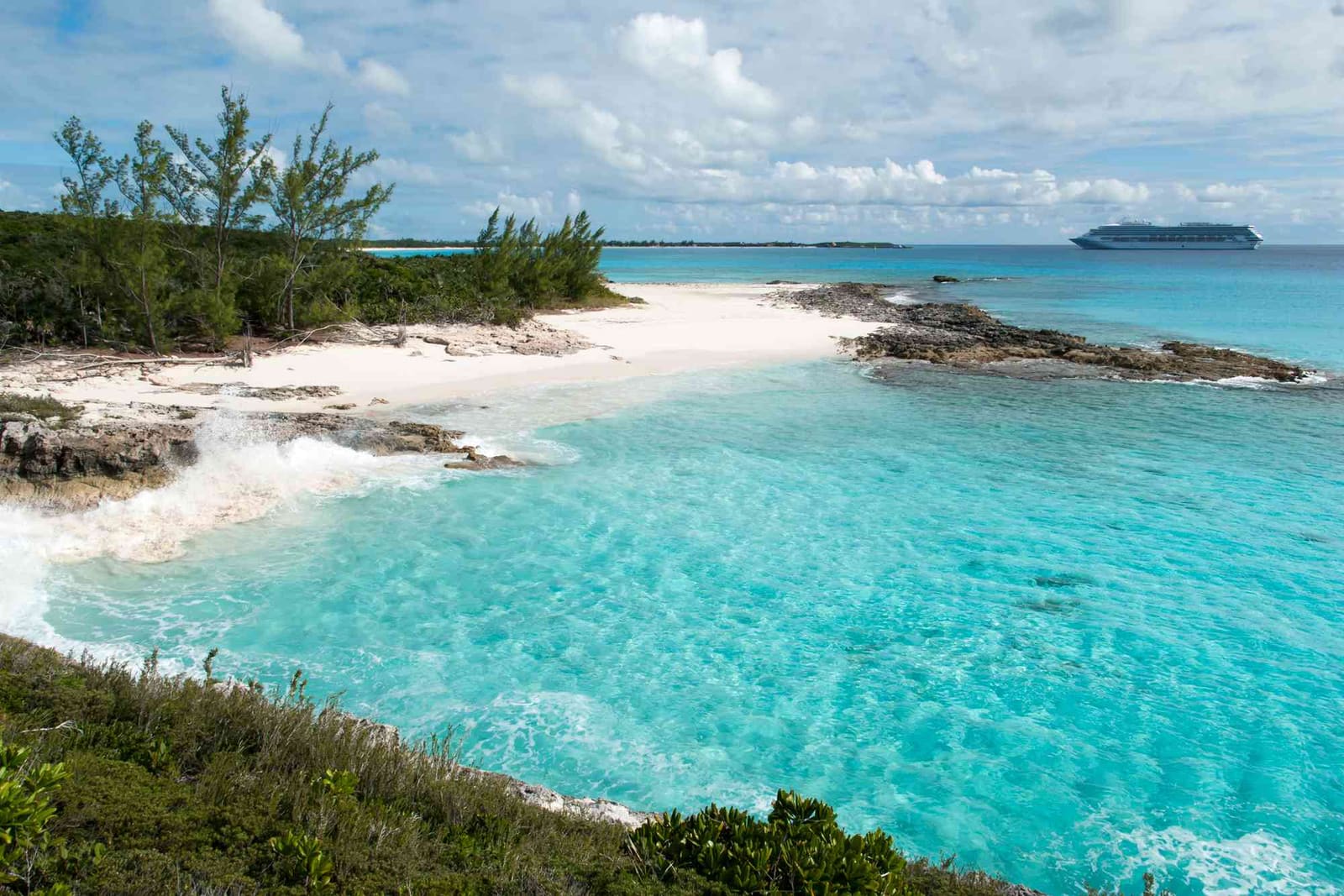
The morning ferry from the anchored ship approaches a crescent of white sand that curves for nearly two miles, uninterrupted except for the occasional palm shadow. Half Moon Cay occupies a peculiar position in the Caribbean's constellation of islands: owned entirely by a single cruise line, accessible only to its passengers, and shaped entirely by the logic of controlled experience. At Global Chic Voyage, we've watched the rise of these private island destinations with curiosity, noting how they've become laboratories for a particular vision of tropical leisure.
Carnival acquired the island in 1996, transforming what was once known as Little San Salvador into a purpose-built port of call. The name change itself signals intent: Half Moon Cay suggests something romantic and discovered, though every element here has been deliberately orchestrated. The island spans approximately 2,400 acres, though only a fraction opens to visitors. The rest remains undeveloped, a calculated buffer that preserves the illusion of remoteness while protecting nesting habitats for indigenous wildlife.
The Architecture of Leisure
Unlike traditional port towns where cruise passengers navigate local infrastructure, Half Moon Cay presents a self-contained ecosystem. The beach stretches in a gentle arc, backed by facilities that include barbecue pavilions, bars serving frozen cocktails, and a fleet of rental equipment ranging from snorkel gear to floating mats. Cabanas line portions of the shore, available for advance reservation at premium rates, offering shade and privacy within the broader choreography of arrival and departure.
The island operates on a tender system. Ships anchor offshore, and passengers board smaller boats that ferry them to the beach. This logistical arrangement shapes the rhythm of each visit: staggered arrivals, designated zones for different activities, and a fixed window of time before the last tender departs. The experience unfolds within parameters, a kind of temporal geography as defining as the physical one.
We've observed that this model appeals to travelers seeking simplicity. There are no hawkers, no currency exchanges, no negotiations over taxi fares. Everything charges back to the cruise account. For some, this removal of friction represents vacation at its purest. For others, it erases the very encounters that give travel its texture.
What Fills the Hours
The island's activities cluster around water and relaxation. Snorkeling excursions depart regularly, guiding participants to nearby reefs where visibility reaches depths of coral gardens and tropical fish. Stingray encounters operate in shallow lagoons, supervised interactions that have become standard offerings across Caribbean cruise ports. Kayaks and paddleboards launch from designated areas, while jet ski rentals and parasailing add motorized options for those seeking velocity.
On land, horseback riding trails wind through interior paths, and beach volleyball nets punctuate the sand. A chapel stands at one edge of the developed area, available for shipboard weddings and vow renewals. The food service operates cafeteria-style: buffet stations under open-air pavilions serving grilled items, salads, and tropical fruit. Complimentary for cruise passengers, the meal offerings mirror shipboard dining in their approach to volume and variety.
What the island does not offer proves equally telling. There are no museums, no historical markers, no sense of the human communities that have inhabited these archipelagos for centuries. The Bahamas carries a complex history of indigenous populations, colonial extraction, and post-independence development, but none of that narrative surfaces here. Half Moon Cay exists in a kind of temporal suspension, a place designed to feel timeless precisely because it has been emptied of time.
The Mechanics of Exclusivity
Private island destinations represent a significant investment for cruise lines, and their proliferation reflects shifting industry priorities. By controlling the entire port experience, companies eliminate the unpredictability of local infrastructure and capture all onshore revenue. Shore excursions, cabana rentals, and souvenir purchases flow directly back to the operator rather than dispersing into local economies.
Carnival positions Half Moon Cay as a highlight of Bahamas itineraries, a differentiator in a competitive market. The island appears on routes ranging from short weekend sailings to longer Caribbean loops. Its presence allows marketing language that emphasizes exclusivity and curation, terms that resonate with contemporary luxury travel rhetoric even in the context of mass-market cruising.
The environmental management of such islands presents ongoing questions. Carnival has implemented measures including wastewater treatment systems and wildlife protection zones, responding to increasing scrutiny of cruise industry environmental practices. The island hosts populations of iguanas and seabirds, and portions remain designated as conservation areas. Yet the fundamental tension persists: how does one preserve ecological integrity while accommodating thousands of visitors on peak days?
The Broader Canvas
Half Moon Cay exists within a larger trend of privatized tourism infrastructure across the Caribbean. Royal Caribbean operates Perfect Day at CocoCay. Disney maintains Castaway Cay. Norwegian owns Great Stirrup Cay. These islands form an archipelago of a different kind, linked not by geology but by corporate ownership and operational philosophy.
The model raises questions about tourism's relationship to place. When a destination is entirely manufactured for visitor consumption, what gets lost? The absence of local interaction means travelers never encounter Bahamian culture beyond the choreographed performances occasionally staged for entertainment. There are no conversations with fishermen, no visits to family-run restaurants, no glimpses of daily life beyond the tourism apparatus.
Yet it would be reductive to dismiss the appeal entirely. For families with young children, elderly travelers, or those uncomfortable navigating unfamiliar environments, private islands offer accessibility and ease. The controlled setting provides a kind of permission to relax that some find elusive in more complex destinations. The question becomes not whether such places should exist, but what they reveal about our collective desires when we seek escape.
What Remains Unspoken
Standing at the edge of Half Moon Cay's developed zone, where the maintained beach gives way to mangrove and scrub, the constructed nature of the experience becomes visible. The transition is abrupt: manicured sand ends, and wilderness begins, though even that wilderness has been shaped by decisions about access and preservation.
We return repeatedly to the paradox at the heart of private island tourism. It promises authenticity through natural beauty while delivering an experience fundamentally mediated by corporate design. It sells exclusivity to thousands of passengers at once. It markets paradise through the very mechanisms that, scaled globally, place paradise itself at risk.
For travelers considering a cruise that includes Half Moon Cay, the island will likely deliver what it promises: a day of sun, sand, and simplified leisure. The water will be clear, the beach will be clean, and the logistics will be seamless. Whether that constitutes a meaningful encounter with the Bahamas depends on what one seeks from travel in the first place. The island offers one answer to that question, polished and purposeful, awaiting each new tender that brings passengers ashore.
Credit: virsuziglis / Getty Images
Spot something wrong? Email editors@globalchicvoyage.com. We log every correction publicly.
RELATED
SEE ALL →
27 Jul 2026 / 5 min
22 Jun 2026 / 5 min
27 Jul 2026 / 5 min
24 Jul 2026 / 5 min