
The Volcanic Soil and Ancient Recipes That Define Ischia's Table
Beyond the ferry ride from Naples lies an island where rabbit has reigned longer than seafood, and every aubergine tastes of the mountain.
SI
25 Jul 2026 · 5 MIN READ · UPDATED 17 AUG 2026
The Scent That Greets You
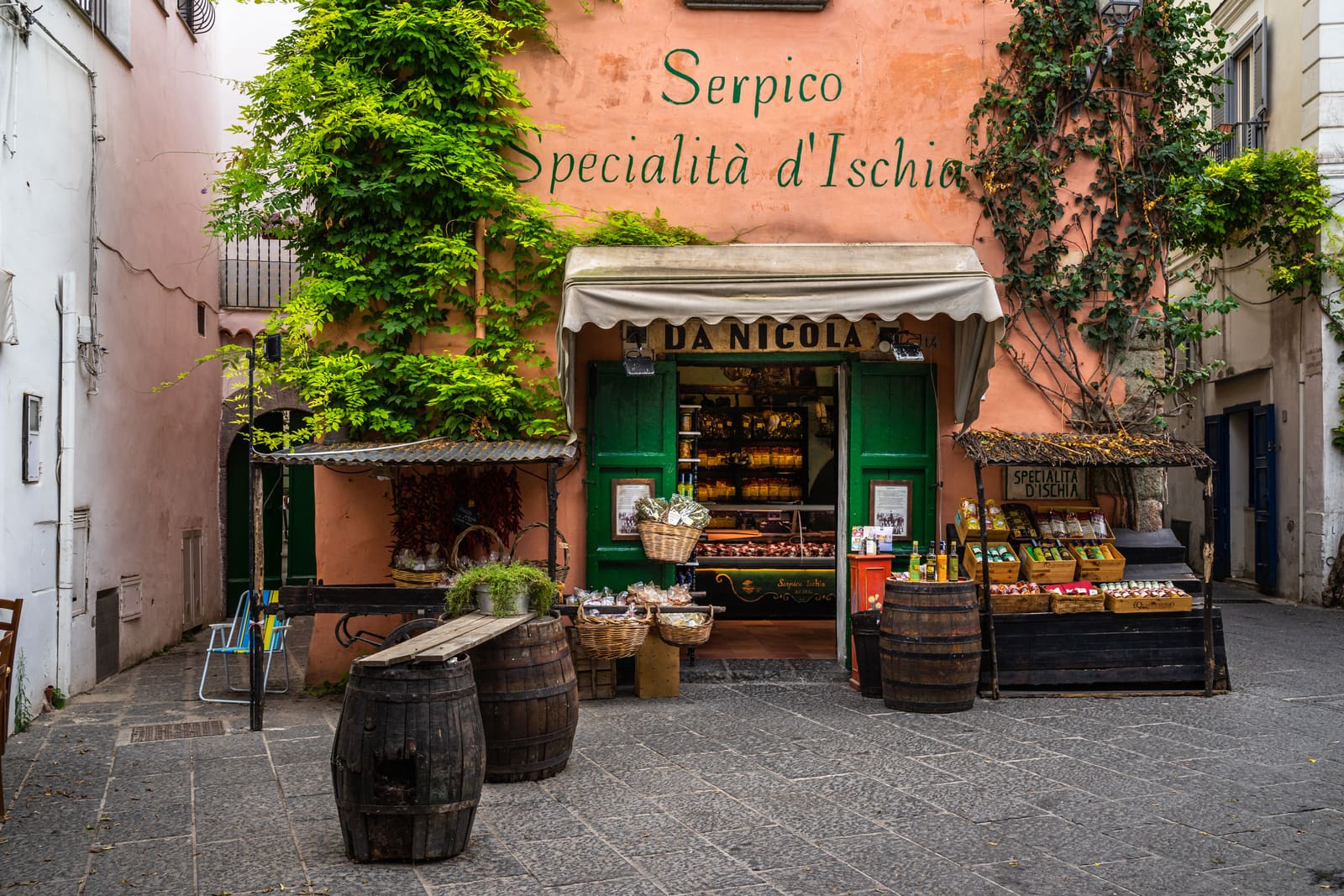
Step off the hydrofoil at Ischia Porto and the first thing that registers is not the crowd or the harbor's bustle but the air itself. It carries something unmistakable: citrus peel warmed by afternoon sun, salt lifted from the Tyrrhenian, herbs climbing the hillsides in wild abandon. At Global Chic Voyage, we've learned to read an island by its opening notes, and here the perfume is a promise. This is a place where the land dictates the menu, where volcanic soil has shaped appetites for millennia, and where the ritual of eating remains as central to daily life as the thermal springs that dot the coastline.
Ischia sits in the Bay of Naples, often overshadowed by Capri's glitter and Procida's pastel charm. Yet for those who seek substance over spectacle, the island offers something rarer: a culinary identity still tethered to its agricultural past, still shaped by what grows underfoot rather than what sells on Instagram.
A Rabbit, Not a Fish
The signature dish of Ischia is not what you might expect. Despite being surrounded by some of the Mediterranean's most abundant fishing grounds, the island's culinary heart beats for rabbit. Coniglio all'Ischitana, a slow-cooked preparation that dates to Roman times, remains the measure by which local kitchens are judged. The ancient Romans introduced rabbits to the island, and the animals thrived, burrowing into the soft tufa, feeding on wild grasses, fava stems, and the tendrils of grapevines. For centuries, they were hunted rather than farmed, and their meat became the island's protein of choice.
Today, most rabbits are raised in controlled environments, though a handful of producers maintain the traditional "da fossa" method, allowing the animals to live in burrow-like conditions that mimic their natural habitat. Restaurants bearing the Slow Food emblem are the ones to seek if you want to taste this older approach. The dish itself is elemental: rabbit jointed and cooked in a clay tegame with whole garlic cloves, handfuls of wild herbs, and tomatoes so sweet they verge on jammy. Local white wine is added generously, and the pot is left to simmer until the meat falls from the bone and the sauce thickens into something that tastes of the island itself.
The choice of rabbit over fish speaks to a deeper logic. Historically, the sea was a source of trade and transit, not sustenance. The interior, with its terraced farms and hidden valleys, was where families built their larders.
The Aubergine in Four Acts
For those who don't eat meat, Italian islands can present a challenge. But Ischia is different. Nearly every trattoria we visited offered multiple vegetarian antipasti, and the aubergine, grown in that mineral-dark soil, appeared in various guises. Parmigiana di melanzane is ubiquitous here, but no two versions are identical. One kitchen layers in smoked mozzarella; another leans on oregano and wild thyme. The aubergines themselves, deep purple and glossy, grow alongside the citrus groves that line the island's winding roads.
We sampled four parmigianas over the course of a week, each a meditation on the same theme. The best balanced richness with restraint: enough tomato to carry acidity, enough cheese to bind, but never so much that the aubergine itself disappeared beneath the weight. Another preparation, melanzane alla funghetto, takes a more rustic turn. Here the vegetable is cubed and pan-fried with garlic, tomatoes, and basil, the flavors bright and immediate. It is the kind of dish that tastes best eaten standing at a kitchen counter, warm from the stove.
The tomatoes deserve their own mention. Grown in volcanic soil and ripened under a relentless southern sun, they possess a sweetness that borders on floral. The basil, too, is more aromatic than its greenhouse cousins, each leaf releasing its scent at the slightest touch. Walking past a farmhouse garden, we often stopped simply to breathe it in.
Sweets and the Ritual of Gelato
Dessert on Ischia tends toward the traditional. La pastiera, a ricotta tart scented with orange blossom and traditionally associated with Easter, appears on menus year-round. But the island's true sweet indulgence is its gelato. Every town, no matter how small, supports at least one gelateria, and the lemon flavor is always exceptional. Made with the island's oversized citrons, it strikes a balance between tart and sweet that feels less like dessert and more like a distillation of place.
We found ourselves returning to gelato not as a novelty but as punctuation, a way to mark the end of a long lunch or the beginning of an evening passeggiata. It is part of the island's rhythm, as much a ritual as the aperitivo or the late-night espresso.
Where Tradition Still Holds
Trattoria Il Focolare, perched in the hills between Casamicciola and Fiaiano, is where the island's culinary heritage is most carefully preserved. The D'Ambra family has run the restaurant for generations, with brothers Agostino and Francesco now leading the kitchen while their sisters oversee the dining room. The space is sprawling and unpretentious, with long wooden tables, sunset views, and an outdoor bar area where guests can play ping-pong between courses.
Dinner here is an event, often stretching past three hours. The antipasti alone constitute a feast: plates of marinated vegetables, local cheeses, cured meats for those who eat them, and bread still warm from the oven. The family takes pride in walking guests through the kitchen after the meal, offering tastes of whatever is being prepared for the next service. On our visit, Agostino fed us bites of cheesecake directly from a fork, a gesture that felt both generous and utterly unselfconscious.
The restaurant gained international attention after appearing on a culinary travel series, but it has not lost its character. The walls are covered in photographs: chefs posing with visiting actors, film posters from productions shot on the island, framed reviews in Italian and English. It is a space that wears its history openly.
The Port Towns and Their Tables
In Forio, the island's western hub, Jack all'Epomeo occupies a prime corner of Piazza Matteotti. The location is as much a draw as the menu: outdoor tables face the square, where locals gather in the evening to talk and smoke and watch the world pass. The food is straightforward and well-executed. Fat anchovies, grilled and dressed simply, taste of the sea without any of the fishiness that comes from lesser specimens. The spaghetti aglio e olio, a Neapolitan staple, arrives slick with olive oil and flecked with red pepper.
For pizza, Di Meglio, set away from the port's bustle, offers some of the best we tasted. The dough is Neapolitan in style: soft, charred in spots, with a rim that puffs and blisters in the wood oven. A margherita costs less than eight euros, a rarity on an island where prices often reflect its proximity to Capri rather than its agricultural roots.
In Lacco Ameno, Ristorante O' Pignattello takes a more refined approach. The tasting menu shifts with the season and the chef's mood, and we opted for the blind version, allowing the kitchen to decide our courses. The vegetarian menu impressed with its complexity: a single endive salad, bitter and bracing, cut through the richness of the week's meals with surgical precision. The seafood courses showcased mackerel cooked to just-opaque, and the traditional rabbit was reimagined as ravioli, the filling delicate and herb-forward. The wine list is deep, with a focus on the island's own producers, many of whom work with indigenous grape varieties that thrive in the volcanic soil.
The View from San Montano
At La Veranda Restaurant, part of the San Montano Resort, the setting is as considered as the food. The dining room overlooks San Montano Bay, and tables fill early with guests hoping to catch the sun as it dips toward the water. The menu leans toward seafood but accommodates vegetarians and vegans with more grace than most Italian establishments. Long grissini arrive at the start of the meal, alongside a daily canapé that changes with the kitchen's whim.
The parmigiana here was the most visually striking we encountered: alternating stripes of green and white, the layers precise and architectural. The fish of the day, simply grilled, drew consistent praise from our companions. It is the kind of restaurant that feels celebratory without demanding formality, where the view and the meal exist in easy balance.
What the Island Teaches
Ischia's food culture resists reduction. It is not about innovation for its own sake, nor is it frozen in amber. Instead, it reflects a pragmatic relationship with the land: cook what grows well, preserve what has been proven over centuries, and adjust only when it makes sense. The rabbit remains because it thrives here. The aubergine appears in countless forms because the volcanic soil produces exceptional fruit. The tomatoes are sweet because the sun and minerals conspire to make them so.
For travelers accustomed to Italian cuisine as it is exported, filtered through red-sauce stereotypes or high-concept reinterpretations, Ischia offers a recalibration. The island's tables are not trying to impress. They are simply continuing a conversation that began long before the ferries started running, long before the tourists arrived, long before anyone thought to write it all down.
Credit: Getty Images
Spot something wrong? Email editors@globalchicvoyage.com. We log every correction publicly.
RELATED
SEE ALL →
7 Aug 2026 / 5 min
30 Jul 2026 / 5 min
30 Jul 2026 / 5 min
29 Jul 2026 / 5 min