
The World's Finest Rail Journey Climbs Through Peru's Sacred Valley
Belmond's Andean Explorer has claimed the top spot among luxury sleeper trains, weaving through altitudes where oxygen thins and landscapes stretch into myth.
SI
18 Jul 2026 · 5 MIN READ · UPDATED 17 AUG 2026
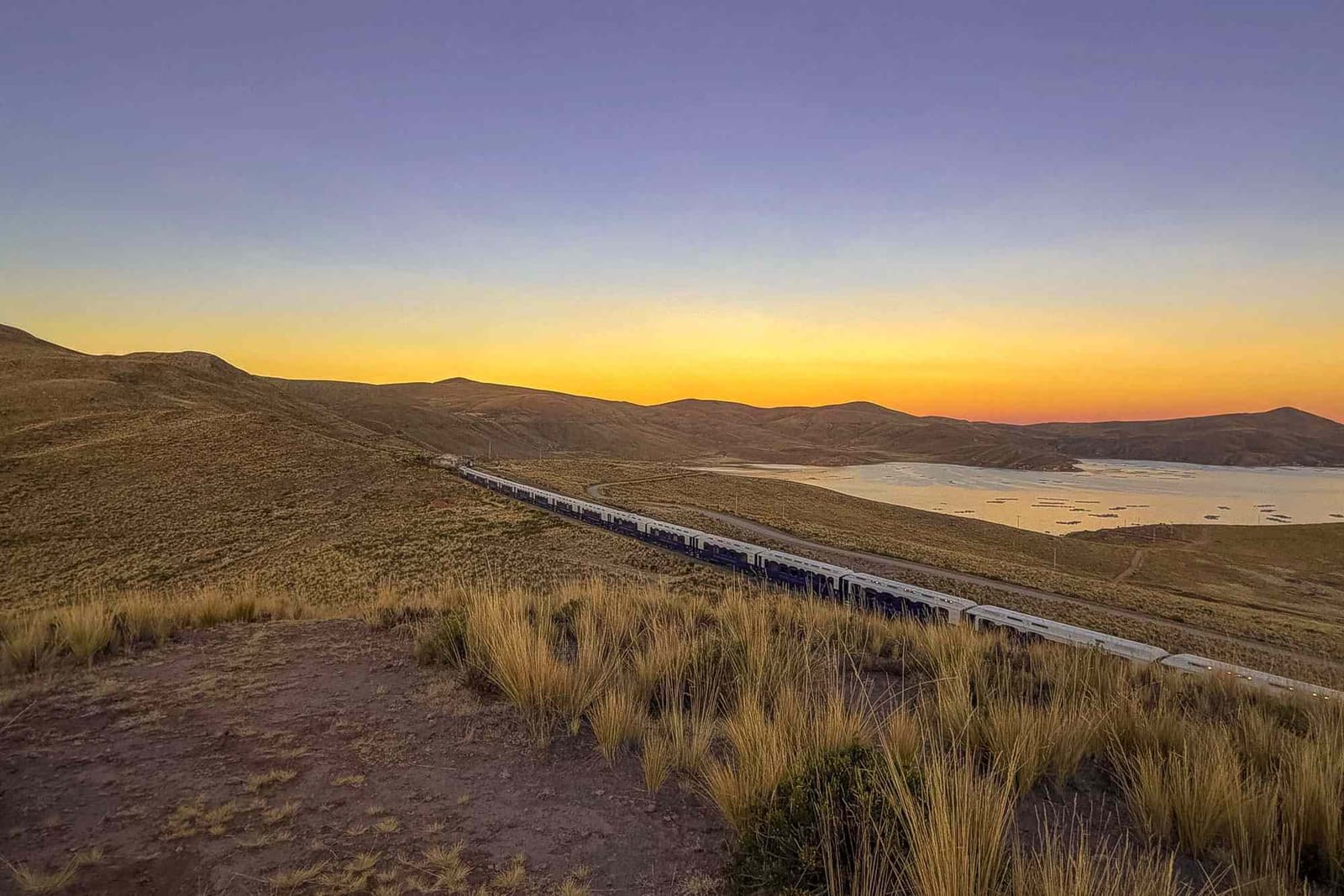
Where the Rails Meet the Sky
The first thing you notice is the light - thin, crystalline, unfiltered by the density of sea-level air. Through panoramic windows that frame the Andes like moving paintings, the sun strikes at angles that seem to illuminate the very bones of the earth. This is not a journey measured in mere miles or hours. It is a passage through altitude, through history, through landscapes that have shaped civilizations and humbled empires.
Belmond's Andean Explorer has recently been recognized as the premier rail journey in the world, a distinction that speaks not only to the engineering feat of traversing some of South America's most challenging terrain but to the philosophy embedded in every polished surface and carefully chosen ingredient aboard. At Global Chic Voyage, we've watched luxury rail travel evolve from nostalgic recreation to genuine cultural immersion, and this particular train represents the pinnacle of that evolution.
The Architecture of Altitude
The carriages themselves are studies in restraint and warmth. Where many contemporary luxury conveyances lean into maximalist opulence, the Andean Explorer adopts a different vocabulary - one that acknowledges its surroundings rather than competing with them. Natural alpaca textiles in earth tones line the cabins. Wood paneling recalls the colonial architecture of Cusco without mimicking it slavishly. The design invites the landscape in while providing refuge from the elements that make high-altitude travel so demanding.
Each sleeping cabin becomes a private observatory. The beds are positioned to maximize views during both waking hours and those liminal moments before sleep, when the Altiplano stretches into darkness punctuated only by distant fires and the impossible density of stars at twelve thousand feet. The en-suite facilities are compact but thoughtfully appointed, acknowledging the engineering constraints of moving hospitality through mountain passes while refusing to compromise on comfort.
What strikes us most is the silence between stations. Modern rail travel, even in its luxury iterations, often fills every moment with programmed entertainment or ambient noise. Here, the train allows for contemplation. The rhythmic percussion of wheels on rails becomes meditative rather than intrusive, a heartbeat syncing with the slow reveal of geography outside.
Cuisine at the Edge of Oxygen
The dining experience aboard the Andean Explorer confronts a challenge unique to high-altitude cooking: ingredients behave differently when water boils at lower temperatures and rising dough struggles against atmospheric pressure. The culinary team has turned these constraints into a celebration of Peruvian biodiversity and indigenous foodways.
Quinoa appears not as the global superfood cliché but in its dozens of regional varieties, each with distinct texture and mineral notes. Potatoes - of which Peru cultivates thousands of cultivars - arrive in preparations that range from the ancient to the avant-garde. Lake trout from Titicaca, alpaca tenderloin from highland herds, and Amazonian fruits that have traveled from lower elevations appear across multi-course menus that change with the landscape visible through the dining car's windows.
The wine selection leans heavily on high-altitude Argentine Malbecs and emerging Bolivian vintages, bottles that understand the terrain in a way sea-level viticulture cannot. There is a thoughtfulness to the pairings that goes beyond conventional sommelier wisdom - an acknowledgment that taste itself shifts with oxygen levels and that dehydration at altitude makes certain flavor profiles more appealing than others.
Between formal meals, the observation car serves coca tea and pisco-based cocktails, both functional adaptations to elevation and cultural signifiers. The coca leaf, revered in Andean tradition and essential for altitude acclimatization, becomes a through-line in the beverage program - a reminder that luxury here cannot be imported wholesale but must negotiate with place.
Itineraries That Honor Depth Over Distance
The routes offered by the Andean Explorer resist the temptation to maximize geography. Rather than racing between iconic destinations, the itineraries build in extended stops that allow for genuine engagement with communities and ecosystems that exist far from conventional tourism circuits.
One route traces the path from Cusco to Lake Titicaca, pausing at the plateau of La Raya where the train reaches its highest elevation. Passengers disembark not for a photo opportunity but for a guided walk across the puna grasslands, where vicuñas graze and the horizon seems to curve more noticeably than at lower altitudes. Local weavers demonstrate textile techniques that predate the Inca, their fingers working wool with a speed and precision that speaks to generations of inherited knowledge.
Another itinerary extends to Arequipa, the white city built from volcanic sillar stone, allowing time to explore colonial monasteries and sample the region's distinctive rocoto relleno and chupe de camarones. These excursions are led by guides who possess not just historical knowledge but personal connections to the places they interpret - a crucial distinction that elevates cultural exchange above mere tourism.
The train itself becomes part of the destination during these pauses. While passengers explore, the crew refreshes cabins, adjusts menus based on local market availability, and maintains the mechanical systems that allow this mobile hotel to function in conditions that would ground lesser operations.
The Ecology of Luxury in Fragile Terrain
Operating a luxury rail service through one of the world's most ecologically sensitive regions carries responsibilities that extend beyond carbon offsetting and waste management, though the Andean Explorer addresses both. The more complex challenge lies in modeling a form of tourism that benefits local economies without destabilizing them, that celebrates indigenous cultures without commodifying them, and that allows travelers to witness fragile ecosystems without degrading them through presence alone.
The train's employment practices prioritize local hiring, particularly for roles that require cultural interpretation and landscape knowledge. Provisions are sourced through cooperatives that ensure fair compensation for farmers and artisans. Excursion fees include contributions to community development funds managed by residents rather than external NGOs.
These practices are not advertised prominently in marketing materials - a refreshing restraint in an era when sustainability credentials are often performed more enthusiastically than practiced. The approach suggests a maturity in luxury travel, an understanding that true responsibility is integrated into operations rather than appended as an amenity.
What This Recognition Signals
The acknowledgment of the Andean Explorer as the world's foremost rail journey marks a broader shift in how we conceptualize luxury travel. For decades, the benchmark for excellence in this category has been European routes - the Venice Simplon-Orient-Express, the Royal Scotsman, the Glacier Express - all magnificent in their own right but operating within relatively stable, heavily touristed landscapes.
This new recognition suggests that the frontier of meaningful luxury has moved to places where infrastructure is harder won, where cultural negotiation is more complex, and where the landscapes themselves demand humility from those who traverse them. It is a validation of travel that requires more from its participants than passive consumption - travel that asks you to adjust your breathing, to recalibrate your expectations, to sit with discomfort alongside wonder.
At Global Chic Voyage, we find ourselves increasingly drawn to experiences that cannot be easily replicated, that resist the homogenization that has smoothed so many luxury offerings into interchangeable packages. The Andean Explorer succeeds precisely because it could not exist anywhere else. Its excellence is inseparable from the specific challenges and gifts of its geography.
The View from the Observation Car
As afternoon light angles across the Altiplano and the train curves toward its evening stop, passengers gather in the observation car - a space that has become, over the course of the journey, something like a temporary community. Conversations have deepened beyond the usual traveler small talk. The shared experience of altitude, of landscape on this scale, of meals taken together while the world scrolls past, creates a camaraderie that feels earned rather than manufactured.
Outside, a shepherd guides a flock of alpacas across a slope so steep it seems to defy both gravity and agricultural logic. The animals move with the confidence of creatures born to thin air, their fiber catching the light in shades that range from cream to charcoal. Someone raises a camera, then lowers it, recognizing perhaps that some moments resist capture, that the gap between experience and documentation can be too wide to bridge without diminishing both.
The train will arrive at its destination in a few hours. Passengers will disembark, disperse to hotels or onward flights, carry home photographs and stories and perhaps a deeper appreciation for landscapes that exist at the margins of habitability. But the journey itself - the particular alchemy of movement and stillness, luxury and austerity, comfort and challenge - will remain aboard these carriages, waiting to unfold again for the next group willing to climb toward the sky.
Photo: Susmita Baral / Travel + Leisure
Spot something wrong? Email editors@globalchicvoyage.com. We log every correction publicly.
RELATED
SEE ALL →
8 Aug 2026 / 5 min
8 Aug 2026 / 5 min
8 Aug 2026 / 5 min

7 Aug 2026 / 5 min