
When a Historic Vineyard Decides to Bottle Its Own Legend
For generations, Monte Rosso supplied grapes to Sonoma's finest producers. Now, the Moon Mountain estate has turned the page — and collectors are already taking notice.
VJ
15 Jun 2026 · 5 MIN READ · UPDATED 17 AUG 2026
The Vineyard That Waited
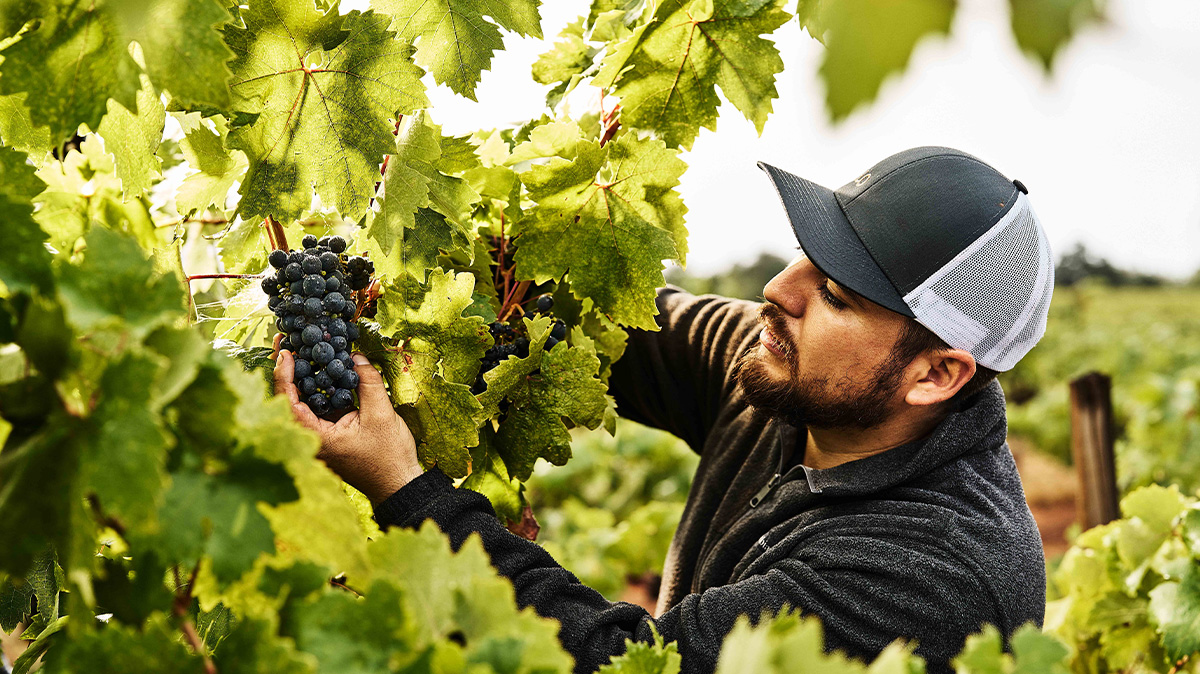
There is a certain patience required in winemaking — the kind that measures time not in quarters or fiscal years but in decades, in the slow accumulation of root systems threading through volcanic rock, in the quiet confidence that comes from knowing your land has already proven itself. For more than a century, the vines at Monte Rosso in Sonoma's Moon Mountain District have done precisely that, their fruit finding its way into bottles bearing other names, other stories. Louis M. Martini, Carlisle, Bedrock Wine Company, Robert Biale Vineyards — these are the estates that have long understood what Monte Rosso's terroir can yield.
But now, after all this time, the vineyard has chosen to speak for itself.
The first wines released under the Monte Rosso Estate label arrived quietly, almost without fanfare, yet they have already begun to appear in the cellars of serious collectors and on the lists of restaurants where sommeliers understand the weight of provenance. Four expressions: a Sémillon, a Zinfandel field blend, a Bordeaux-style red, and a single-block Cabernet Sauvignon. Each one a statement of place, each one a reflection of what happens when a site this storied finally decides to tell its own story.
At Global Chic Voyage, we have watched vineyards evolve, seen properties change hands, witnessed the slow maturation of winemaking philosophies. What strikes us about Monte Rosso's debut is not merely the quality of the wines — though that is undeniable — but the deliberateness with which they have been conceived. This is not a vanity project. It is a reckoning with heritage.
The Tuscan Connection
Bernardino Sani, the winemaker entrusted with shepherding these inaugural releases, divides his time between two estates that share more than a passing resemblance. One is Argiano, in Montalcino, where Sangiovese vines cling to Tuscan hillsides. The other is Monte Rosso, perched above the San Pablo Bay in Sonoma. The landscapes, he notes, carry a similar beauty — vineyards set against dramatic topography, a sense of place that announces itself before you even taste the wine.
Both properties, he explains, are rooted in tradition, in the kind of continuity that only comes from respecting what came before. At Monte Rosso, that respect manifests in decisions both large and small: the choice to preserve ancient blocks rather than replant them, the willingness to work with vines that carry naturally occurring viruses — quirks that would send many modern viticulturists scrambling for solutions. Here, those quirks are considered assets.
The viruses, for instance, slow the ripening process slightly. In a warmer climate, this can be a gift, allowing the fruit to achieve phenolic maturity without racing toward overripeness. The result, Sani observes, is a more elegant, refined style of Cabernet Sauvignon, one that privileges freshness and balance over sheer power.
Los Niños and the Patience of Old Vines
The crown jewel of the inaugural releases is the Los Niños Cabernet Sauvignon, drawn from a block planted in 1940. At just under four acres, this parcel is believed to be the oldest continually producing Cabernet Sauvignon vineyard in California. The vines were put in the ground by Louis M. Martini himself, back when the Moon Mountain District was still a frontier of sorts, its potential understood by only a handful of growers.
Sani calls Los Niños the "grand cru" of Monte Rosso, and it is easy to see why. The block enjoys an exceptional exposure overlooking the bay, where cool breezes temper the heat of long summer afternoons. The soils are volcanic, fractured and mineral-rich, the kind that force vines to dig deep and work hard for their nourishment. The fruit that emerges from this struggle is concentrated, yes, but also remarkably expressive, carrying layers of complexity that unfold slowly in the glass.
The 2023 vintage, from which all four releases were drawn, was marked by an extended, gentle ripening season. Patience in the vineyard, Sani says, was rewarded. For Los Niños, that patience translated into a late harvest, high concentration, and the kind of vibrant acidity that suggests this wine will age gracefully for decades.
A Bordeaux Blend That Changed Its Mind
Estate director Diego Del Pino had envisioned a traditional Bordeaux-style blend, Cabernet Sauvignon-led, structured and serious. He gave Sani carte blanche to select from any block in the vineyard, to craft the best possible expression of that vision. But when the two men stood in the barrel room at Louis M. Martini, tasting through samples from a prior vintage, something shifted.
They worked their way through several Cabernet Sauvignons, each one showing promise. Then Sani drew a sample from a Cabernet Franc barrel. He paused, inhaled, looked at Del Pino. "This is the star," he said.
The wine that emerged from that moment became the Impression, a Cabernet Franc-dominant blend that also includes Cabernet Sauvignon and Malbec. It is not what Del Pino had originally imagined, but it is, perhaps, what the vineyard wanted to say. The Cabernet Franc achieved superb phenolic ripeness in 2023, developing aromatic complexity without the green, herbaceous notes that can sometimes plague the variety. The result is a wine that feels both structured and perfumed, serious yet inviting.
The Soul of the Estate
Zinfandel does not often occupy the same rarefied air as Cabernet Sauvignon in the hierarchy of luxury wine, but at Monte Rosso, it is foundational. The estate holds roughly forty acres of ancient Zinfandel vines, many of them interplanted with Carignan, Alicante Bouschet, and Grand Noir — a practice common in the late nineteenth and early twentieth centuries, when growers valued diversity and resilience over monoculture.
The Essence, a field blend drawn from the two blocks with the most interplanted varieties, is named for what Del Pino considers the soul of Monte Rosso. The varieties are harvested and fermented together, a method that encourages natural integration and adds layers of complexity. The wine is Zinfandel-heavy, but it is not a typical Zinfandel — it carries an energy, a tension, that speaks to the diversity of its origins.
For Del Pino, these historic Zinfandel blocks are what put Monte Rosso on the map. They are a link to a different era of California winemaking, one less concerned with varietal purity and more attuned to the rhythms of the land.
The Case for Sémillon
White wines often play a supporting role in conversations about collectible California bottlings, but Monte Rosso's Sémillon deserves a different kind of attention. Drawn from vines planted in 1886, it is among the oldest Sémillon plantings in the state, a rarity in a region that has largely moved on from the variety.
Sani works with the Sémillon in a reductive style, limiting oxygen exposure to preserve its natural high acidity. The goal is not immediate gratification but longevity. While the 2023 vintage is rich and broad enough to enjoy now, Sani believes its ideal drinking window will open five to fifteen years after release, as it develops the kind of honeyed complexity that aged Sémillon can achieve.
At Rania, a Michelin-starred restaurant in Washington, D.C., director of operations Hamid Khalili has placed the Sémillon on the list, pairing it with dishes like Hokkaido scallops in Mangalorean curry. He appreciates its texture and minerality, qualities that complement the spice and richness of the cuisine. But what truly captures his guests' attention, he notes, is the heritage — the idea that they are drinking from vines that predate the modern wine industry, that have survived phylloxera, Prohibition, and countless shifts in fashion.
Volcanic Soils and Coastal Breezes
The Moon Mountain District is defined by its volcanic origins, the remnants of ancient eruptions that left behind fractured soils rich in minerals. At Monte Rosso, those soils are paired with an exposure that captures ample sunshine while benefiting from the cooling influence of San Pablo Bay. The interplay between warmth and coolness, between volcanic intensity and maritime restraint, is what gives the vineyard its personality.
Del Pino speaks of that personality with the kind of reverence usually reserved for the great estates of Europe. And indeed, there is something European in the approach here — a willingness to let the site lead, to make winemaking decisions that honor the vineyard's character rather than impose a predetermined style.
This is not a vineyard that shouts. It does not need to. Its reputation was built over generations, through the wines that others made from its fruit. Now, with its own label, Monte Rosso has simply chosen to make that reputation explicit.
The Collectors Take Notice
John Phillips, a collector based in Bentonville, Arkansas, heard about the Monte Rosso releases through a friend connected to the Gallo Luxury Group. His cellar already includes bottles from Heitz Cellars, Tor, Dominus, Pahlmeyer — the kind of names that define serious California wine collecting. He purchased two dozen bottles, mainly the Cabernet Sauvignon, but also examples of each expression, including the Sémillon, which his wife favored.
Phillips had been buying wines from Louis M. Martini's Monte Rosso Vineyard bottlings for years, appreciating the old-vine character. When the opportunity arose to acquire proprietary bottlings from the estate itself, he did not hesitate.
This is the kind of response that vineyards dream of — not just sales, but recognition from those who understand what they are looking at, who can place these wines in the broader context of California's winemaking history.
What Comes Next
The release of these four wines marks the beginning of a new chapter for Monte Rosso, but it is a chapter written in ink that has been drying for more than a century. The vines are old, the soils are ancient, the site has proven itself again and again. What remains to be seen is how the estate will continue to interpret its own legacy, how it will balance the weight of history with the demands of a market that is always looking forward.
At Global Chic Voyage, we are drawn to estates that understand this tension, that can honor tradition without becoming prisoners to it. Monte Rosso's debut suggests that the vineyard has found that balance, that it knows when to defer to the past and when to assert its own vision.
The wines themselves — structured yet elegant, powerful yet restrained — speak to a philosophy that values complexity over simplicity, patience over immediacy. They are wines that ask to be considered, not merely consumed. And in a landscape crowded with new releases and marketing narratives, that kind of quiet confidence is rare.
For those who have followed Monte Rosso's story through the bottles of other producers, these releases offer a new perspective, a chance to hear the vineyard speak in its own voice. For those encountering the estate for the first time, they are an invitation to understand what a century of accumulated knowledge, rooted in volcanic soil and shaped by coastal breezes, can taste like.
Either way, the wait was worth it.
Spot something wrong? Email editors@globalchicvoyage.com. We log every correction publicly.
RELATED
SEE ALL →
7 Aug 2026 / 5 min
30 Jul 2026 / 5 min
30 Jul 2026 / 5 min
29 Jul 2026 / 5 min