
When A Netflix Chef Takes The Helm: A Voyage Of French Refinement Aboard Genting Dream
c
DL
9 May 2026 · 5 MIN READ · UPDATED 17 AUG 2026
A Stage Set Upon Water
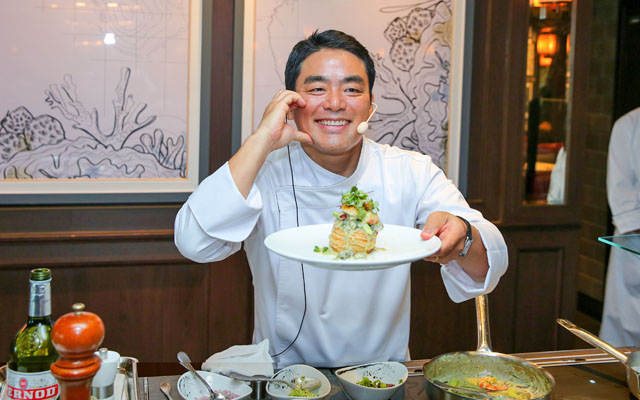
The South China Sea stretches wide and blue between Singapore and Melaka, a corridor once navigated by spice traders and colonial fleets. Today, the same waters carry a different kind of cargo: culinary theatre. Aboard Genting Dream, a ship celebrating its tenth year at sea, passengers gather not for conquest but for a five-course French menu designed by a Korean chef who learned his craft in the kitchens of Paris. Chef Tommie Lee—better known to Netflix audiences as "Chef French Papa" from Culinary Class Wars—stands at a demonstration counter, his hands moving with the practiced ease of someone who has made thousands of vol-au-vent shells. The scent of butter and garlic drifts through the dining room. Outside, the Strait of Malacca glides past, indifferent and eternal.
This is not the first time Genting Dream has played host to celebrity chefs, but Lee's collaboration feels different. It is quieter, more intimate—a celebration not of spectacle but of technique. The menu, available exclusively at Bistro by Reinhard Mammes from early May through July 2026, is a study in classical French cooking: escargot, bouillabaisse, veal tenderloin with foie gras. These are dishes that demand patience, precision, and a certain reverence for tradition. They are also dishes rarely encountered at sea, where kitchens must contend with rolling waves and limited storage.
The Menu: Five Courses, One Philosophy
The meal begins with an escargot vol-au-vent, a dish that could easily serve as a litmus test for any French kitchen. The pastry shell arrives golden and crisp, filled with tender snails bathed in a roux-based sauce enriched with mushrooms. Lee demonstrates the roux technique live, whisking flour into butter with a steady hand, explaining how the ratio must be exact—too much flour and the sauce becomes gluey; too little and it won't thicken. It is a small moment, but it speaks to the philosophy underpinning the entire menu: mastery lies in the fundamentals.
The second course shifts gears. Prosciutto and mesclun salad arrive dressed with shaved Parmesan, Kalamata olives, and a lemon vinaigrette that cuts through the richness of the first dish. Paired with Bottega Rosé Gold Spumante—a sparkling wine with floral and fruity notes—the salad feels like a palate cleanser, a breath of air before the heavier courses to come.
Then comes the bouillabaisse maison, a dish that originates in the port city of Marseille and carries with it the weight of maritime history. The broth, infused with saffron, is brimming with mussels and fish, each piece of seafood cooked just to the point of tenderness. It is the heartiest course, and it pairs beautifully with Moët & Chandon Brut Impérial, the bubbles lifting the richness of the broth. In many ways, bouillabaisse is the perfect dish for a cruise—a reminder that French cuisine, like Asian cooking, has always been shaped by proximity to water.
The fourth course is where the menu reaches its apex: slow-roasted veal tenderloin, accompanied by a foie gras and truffle roulade, green pea mash, roasted carrot purée, and a port wine sauce. The veal is tender, almost yielding, with a depth of flavor that speaks to careful sourcing and patient cooking. The sauce—velvety, dark, faintly sweet—brings the elements together. A glass of Barton & Guestier Saint-Émilion Bordeaux, with its notes of plum and oak, elevates the dish further. It is the kind of course that makes you slow down, that demands attention.
The meal concludes with a chocolate mousse topped with dulce de leche espuma—a milk jam made by slowly heating sugar and milk, a technique more common in Latin America than France but fitting here. The mousse is light, airy, almost ethereal. Paired with Canella Bellini Fruit Blend Spumante Brut, though the dessert stands well on its own, it offers a gentle close to a meal that began with butter and garlic and ended with cocoa and caramel.
The Man Behind the Menu
What distinguishes this collaboration from other celebrity chef ventures is Lee himself. During an informal session with invited guests, he speaks openly about his culinary journey—how he trained in France, how he came to embrace French technique while maintaining his Korean identity, how he sees cooking not as a performance but as a form of communication. There is no bravado here, no theatrics. Just a quiet passion for craft.
Lee's personality—genuine, humble, deeply committed—comes through in the dishes as much as in person. The escargot is not trying to be trendy; the veal is not plated for Instagram. These are dishes that trust in their own integrity, that believe flavor and technique are enough. In an era when dining experiences often prioritize novelty over substance, Lee's menu feels almost radical in its classicism.
Why It Matters
Cruise dining has long been a paradox. Ships offer abundance—buffets, multiple restaurants, 24-hour room service—but often at the cost of depth. Kitchens must serve thousands of guests daily, and the result is frequently a compromise: competent but unremarkable food, designed to offend no one and delight few. Collaborations like this one signal a shift. Passengers are no longer content with volume; they want curation, intention, a sense that someone has thought carefully about what appears on their plate.
Lee's menu is also a reminder that culinary borders are more porous than we often assume. A Korean chef trained in France, cooking on a ship that sails between Singapore and Malaysia, for an audience of Asian and international travelers—this is the reality of modern gastronomy. Technique transcends geography. A well-made roux is a well-made roux, whether it's prepared in Lyon or the Strait of Malacca.
For Genting Dream, the collaboration marks a milestone. A decade at sea is no small achievement, and the ship has chosen to celebrate not with fireworks but with escargot and veal tenderloin. It is a choice that speaks to confidence—a belief that its guests will appreciate the gesture, that they will recognize the care embedded in each course.
The Closing Note
As the ship returns to Singapore, the dining room empties slowly. Passengers linger over coffee, reluctant to leave. Outside, the lights of the port begin to appear, a constellation of commerce and arrival. Chef Lee's menu will continue through early July, giving more guests the chance to experience this rare convergence of craft and setting. But for those who sailed on this particular voyage, the memory will remain: the taste of saffron and seafood, the tenderness of veal, the quiet satisfaction of a meal that asked nothing more than to be savored.
In the end, that may be the greatest luxury of all—not abundance, but attention. Not spectacle, but care. Not speed, but the willingness to slow down long enough to taste the difference.
Spot something wrong? Email editors@globalchicvoyage.com. We log every correction publicly.
RELATED
SEE ALL →
16 Jul 2026 / 5 min
14 Jul 2026 / 5 min
12 Jun 2026 / 5 min
22 May 2026 / 5 min