
When the Suite Dream Fades: Two Hyatt Properties Step Back from Upgrade Rewards
As Alila Napa Valley and Grand Hyatt Grand Cayman quietly close the door on suite upgrade awards, the calculus of loyalty shifts for travelers who've banked on those certificates
ML
9 Jul 2026 · 5 MIN READ · UPDATED 17 AUG 2026
The Promise of the Suite
There's a particular thrill in walking past the standard rooms, past the deluxe doubles, and into a suite you didn't pay for. Multi-room spreads. Views that stretch across wine country or turquoise coastline. Wet bars, separate living areas, sometimes even a butler. For members of World of Hyatt who've racked up enough nights and points to earn suite upgrade certificates, this is the payoff: the ability to book a base room and ascend, at no extra charge, into accommodations that might otherwise run three or four times the nightly rate.
At Global Chic Voyage, we've watched these upgrade instruments become one of the most coveted currencies in the loyalty ecosystem. They turn a $600 booking into a $2,500 experience, and they do it silently, elegantly, without the friction of negotiation or the lottery of operational upgrades at check-in. But that currency, like any other, is only as good as the properties willing to accept it.
And two prominent Hyatt hotels have just stopped taking it.
Two Doors Close
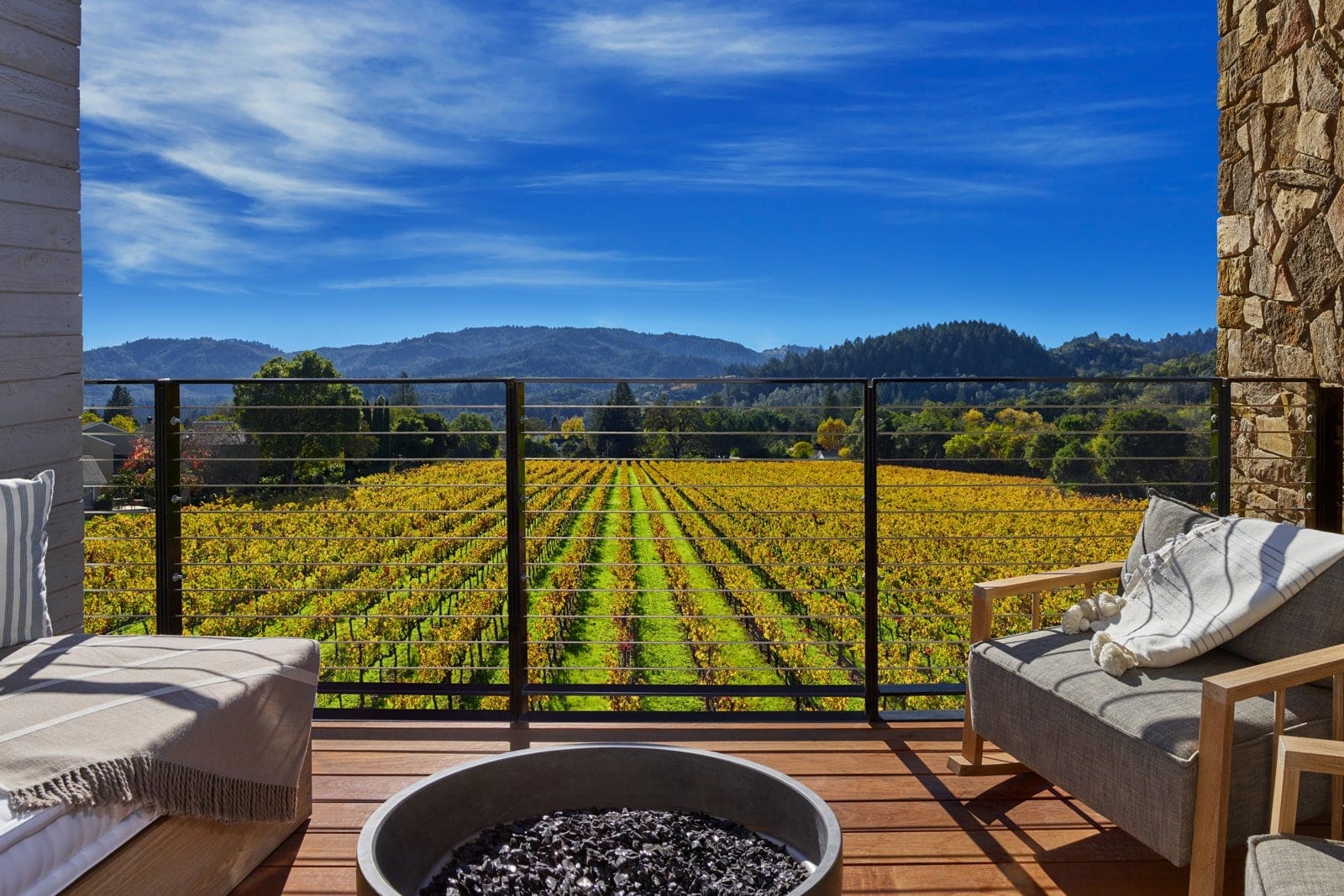
Alila Napa Valley, nestled in Northern California's wine country near St. Helena, has removed itself from the suite upgrade program. The property, a Category 8 hotel in Hyatt's tier system, is marking its fifth year of operation with a year-long waiver of resort fees, according to Hyatt. Yet that gesture of generosity comes alongside a quieter retreat: suite upgrade awards are no longer valid.
Summer rates at Alila Napa illustrate the stakes. Standard accommodations hover around $917 per night, while suites climb to approximately $2,738. That gap, over $1,800 a night, is precisely the value a suite upgrade certificate used to bridge.
The second property to step back is Grand Hyatt Grand Cayman, also classified as Category 8. The hotel is slated to begin welcoming guests at the end of October this year. Reservations are open, but suite upgrade certificates will not be honored. Here, too, the arithmetic is stark: standard rooms start near $676, while suites open at $2,942.
Both properties sit at the higher end of Hyatt's portfolio, both command premium rates, and both have now concluded that the cost of honoring suite upgrades outweighs the benefit of rewarding loyal members with them.
The Expanding Exclusion List
Hyatt has never promised universal participation. Buried in the program's terms and conditions is an appendix that lists properties opting out of certain loyalty benefits, suite upgrades among them. That list has been growing, and not just at the margins.
The trend reflects a tension that has sharpened in recent years. Loyalty programs were built in an era when empty rooms were a greater threat than full ones, when airlines and hotels alike had inventory to burn and little to lose by rewarding frequent travelers with perks that cost little in hard dollars. Suite upgrades, in particular, seemed like a win for everyone: the guest enjoyed an elevated experience, the hotel filled premium space that might otherwise sit vacant, and the brand deepened emotional loyalty.
But the calculus has shifted. Demand for luxury travel has surged, particularly in sought-after destinations like Napa Valley and the Cayman Islands. Premium suites, once difficult to sell at top dollar, now move briskly. In that environment, honoring a suite upgrade certificate means forgoing revenue that could be captured from a guest willing to pay full freight. For properties operating at or near capacity, the opportunity cost is real.
What It Means for the Loyal Traveler
For World of Hyatt members, the erosion is more than financial. Loyalty programs are, at their core, psychological contracts. Members commit time, money, and preference to a brand in exchange for recognition and reward. Suite upgrade certificates are among the most tangible expressions of that exchange. They are earned through accumulating qualifying nights, through choosing Hyatt over competitors, through a sustained pattern of patronage.
When a property withdraws from that contract, even if the fine print permits it, the signal is clear: your loyalty is valued, but not enough to override revenue optimization.
This doesn't mean suite upgrades are disappearing across the board. Thousands of Hyatt properties worldwide continue to honor them. But the growing list of exclusions clusters in exactly the places where travelers most want to use them: high-demand, high-cost destinations where the value of the upgrade is greatest.
The result is a narrowing of options. Members who've strategically accumulated certificates with specific properties in mind may find themselves needing to recalibrate. The dream suite in wine country or the oceanfront spread in Grand Cayman becomes unavailable not because inventory is lacking, but because the business decision has been made to reserve it for paying guests.
Revenue Management Meets Loyalty
The shift also reflects the maturation of revenue management systems within the hospitality industry. Hotels have become extraordinarily sophisticated at forecasting demand, segmenting inventory, and pricing dynamically. Suite upgrade awards, by their nature, sit outside that optimization. They're binary: either the suite is available for an upgrade, or it isn't. And when revenue managers see strong forward bookings for premium inventory, the calculus tips toward restricting upgrades.
This is not unique to Hyatt. Across the industry, we've observed loyalty benefits being trimmed, restructured, or fenced in ways that protect revenue. Breakfast inclusions become category-specific. Lounge access gets tiered. Upgrade windows shrink. Each change, taken individually, might seem minor. Collectively, they represent a recalibration of the loyalty value proposition.
What makes the suite upgrade cuts particularly visible is their concentration at flagship properties. Alila Napa Valley is not a mid-tier select-service hotel. Grand Hyatt Grand Cayman is not a secondary market property. These are destinations in their own right, the kinds of places that loyalty members aspire to visit, and the kinds of experiences that justify the effort of earning elite status in the first place.
The Path Forward
For travelers navigating this landscape, the lesson is one of vigilance. Program terms shift. Property participation changes. The suite upgrade that was available last year may not be available next year, or even next month. Checking the exclusion list before committing to a booking is now a necessary step, not an optional one.
There is also a broader question about what loyalty means in an era when demand is strong enough that brands can afford to be selective about which perks they honor and where. If the most desirable properties are the least likely to participate in the most valuable benefits, the incentive structure begins to hollow out. Members may still earn certificates, but if they can't use them where they most want to, the motivational power weakens.
At the same time, it's worth acknowledging that no loyalty program operates in a vacuum. Hyatt, like every hotel company, answers to ownership groups, franchise partners, and shareholders. Individual properties have their own P&L pressures. The decision to stop honoring suite upgrades is rarely capricious; it's usually a response to real market conditions.
Still, perception matters. And the perception, fairly or not, is that the most loyal guests are being asked to absorb the cost of strong demand, while the benefits they've earned are quietly curtailed.
A Narrowing Window
The suite, after all, is more than just extra square footage. It's a marker of arrival, a tangible reward for the nights spent in airport hotels and conference-center properties, for the loyalty points accumulated over years of travel. When that reward becomes harder to claim, the emotional contract frays.
Alila Napa Valley and Grand Hyatt Grand Cayman are just two properties. But they're emblematic of a broader drift. As luxury travel continues to command premium pricing, and as revenue management grows ever more precise, the space for loyalty rewards at the top end of the market is contracting.
For World of Hyatt members, the message is clear: enjoy those suite upgrades while you can, and where you can. The window is narrowing.
Photo: Hyatt
Spot something wrong? Email editors@globalchicvoyage.com. We log every correction publicly.
RELATED
SEE ALL →
10 Jul 2026 / 5 min
9 Jul 2026 / 5 min
8 Aug 2026 / 5 min
18 Jul 2026 / 5 min