
Where Beauty Speaks: The World's Most Enchanting Cities to Wander
From hidden corners of Europe to Asia's timeless capitals, we trace the urban landscapes that stop travelers in their tracks
SI
23 Jul 2026 · 5 MIN READ · UPDATED 17 AUG 2026
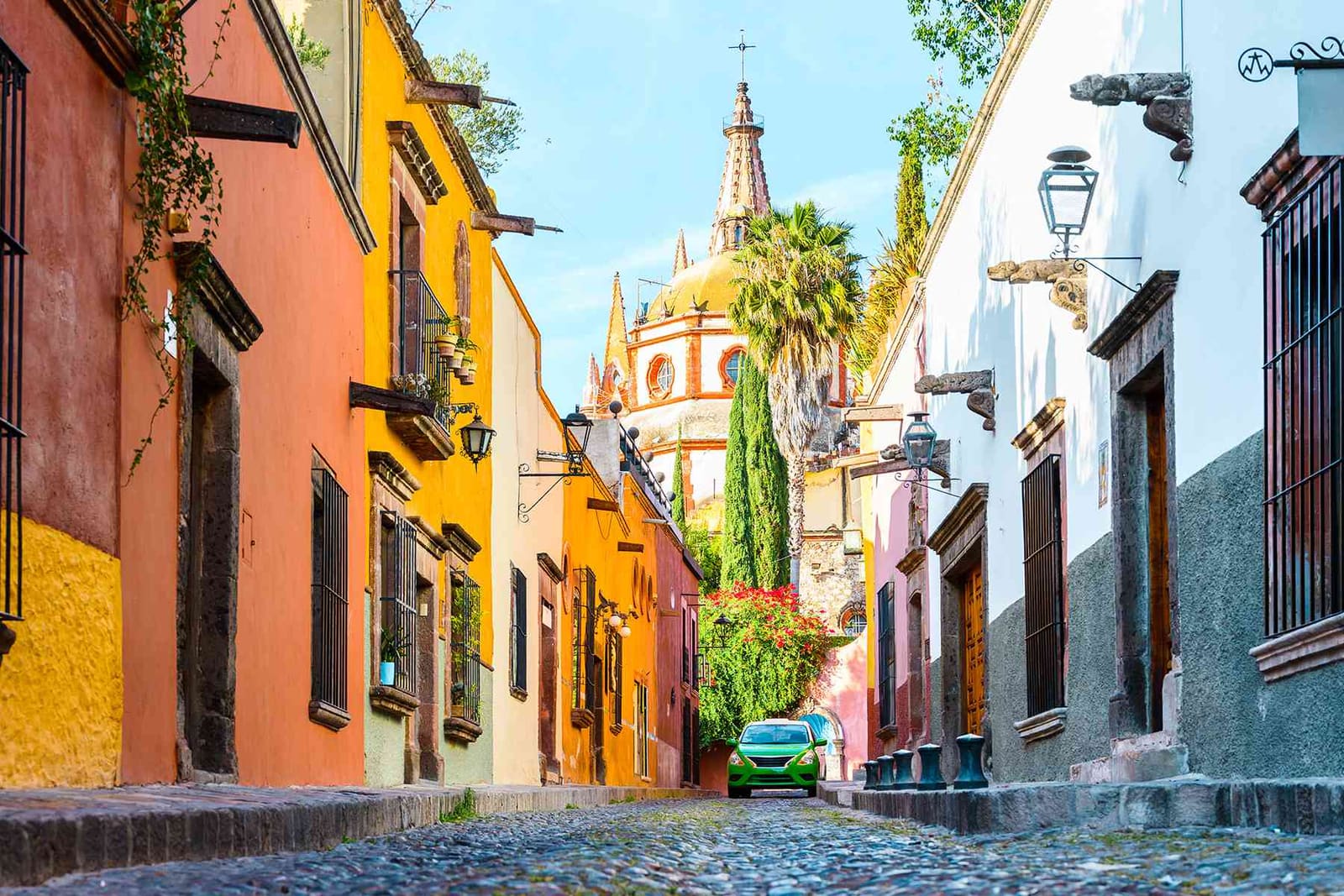
When a City Becomes a Portrait
There is a moment, usually at dawn or just before the streetlights flicker on, when a city reveals itself not as infrastructure but as theater. The light catches a colonnade just so. A bridge arches over water that mirrors the sky. The facades lean in, whispering histories you can almost touch. At Global Chic Voyage, we've spent years chasing these moments, returning to certain streets and squares the way one returns to a beloved painting, finding new details in the composition each time.
Beauty in a city is never accidental. It is the accumulation of centuries of craft, the negotiation between human ambition and natural topography, the residue of culture layered like sediment. Some cities wear their beauty boldly, in grand boulevards and monumental skylines. Others hide it in courtyards, in the way morning mist clings to a canal, in the rhythm of terracotta rooftops cascading down a hillside. What follows is not a ranking but a collection of places where beauty is not an attraction but the atmosphere itself.
The Poetry of Water and Stone
Venice remains the most improbable city we know. Built on wooden pilings driven into a lagoon, it defies logic and gravity alike. Here, beauty is inseparable from fragility. The play of light on the Grand Canal at sunset, the narrow calli that open suddenly onto sun-drenched campos, the Gothic and Byzantine facades reflected in water that serves as both street and mirror, all of it exists in a state of elegant precarity. We have walked Venice in every season, and each time the city reconfigures itself, the same stones and water composing an entirely new mood.
Amsterdam offers a different aquatic grace. Its concentric canals, dug in the seventeenth century during the Dutch Golden Age, create a geometry of bridges and gabled houses that feels both orderly and intimate. In spring, when the lime trees leaf out and the light stretches long into the evening, the city takes on a luminous quality, as if the water itself were generating light. The beauty here is democratic, woven into residential streets and everyday corners rather than reserved for monuments.
Mountains as Backdrop, Culture as Foreground
Certain cities are beautiful because they sit in conversation with landscape. Cape Town sprawls beneath Table Mountain, the flat summit a constant presence, grounding the city's cosmopolitan energy in geological time. The pastel houses of Bo-Kaap climb the lower slopes, their colors vivid against the grey-green fynbos. From the waterfront to the vineyards that edge the urban fringe, the city moves between worlds, European and African, contemporary and historical, mountain and sea.
Kyoto's beauty is quieter, more composed. The city was Japan's imperial capital for more than a millennium, and that history lives in its temples, gardens, and machiya townhouses. Walk through the Arashiyama bamboo grove at first light, when the stalks creak and sway in near silence, or visit Kinkaku-ji, the Golden Pavilion, its gilded upper stories reflected in the still pond below. Here, beauty is a practice, something tended and refined over generations, rooted in principles of asymmetry, restraint, and deep attention to seasonal change.
The Baroque and the Bohemian
Prague survived the twentieth century with its architectural fabric largely intact, a rare gift in Central Europe. The result is a city that feels like a walk through time, from the Gothic spires of Old Town to the Art Nouveau flourishes of the Municipal House. Charles Bridge, lined with Baroque statues darkened by age, spans the Vltava River, connecting the castle district with the medieval core. In the blue hour, when the gas lamps flicker on and the castle glows amber on its hill, the city assumes an almost otherworldly quality, as if it might dissolve back into legend.
Paris, by contrast, wears its beauty with confidence. Haussmann's nineteenth-century redesign gave the city its famous boulevards, its uniform cream-stone facades, its long perspectives punctuated by monuments. Yet the real charm lies in the details: the wrought-iron balconies, the zinc-topped bars, the way the Seine curves through the city like a question mark. We have found Paris most beautiful not from the top of the Eiffel Tower but from a bench in the Jardin du Luxembourg on an October afternoon, watching the light shift through the chestnut trees.
Color, Light, and the Southern Palette
The cities of the Mediterranean coast understand color in ways northern cities do not. In Lisbon, azulejo tiles clad entire buildings in blue and white, their patterns catching the sharp Atlantic light. The city climbs seven hills, its streets steep and sinuous, opening onto miradouros, viewpoints where the whole tableau, red rooftops, the Tagus River, the distant bridge, spreads out like a promise. Trams rattle past, their yellow carriages adding punctuation to the scene.
Marrakech layers color differently. The medina is a labyrinth of ochre and terracotta, punctuated by the vivid textiles of the souks, indigo, saffron, rose. The Majorelle Garden offers a startling contrast, its walls painted a cobalt blue so intense it seems to vibrate against the green of the palms and bamboo. The city's beauty is sensory and immersive, built from light, shadow, scent, and the intricate geometry of Islamic design.
The New World, Old Souls
Not all beautiful cities are ancient. San Francisco's beauty is topographic and accidental, a city of hills and fog where Victorian houses painted in candy colors march down steep streets toward the bay. The Golden Gate Bridge, rust-red against the grey Pacific, has become iconic precisely because it harmonizes with rather than dominates the landscape. There is something poignant about San Francisco's beauty, a sense of impermanence heightened by the fog that rolls in each evening, erasing the skyline.
Buenos Aires borrows its architecture from Europe but infuses it with a distinctly South American energy. The neoclassical facades of Recoleta, the brightly painted zinc houses of La Boca, the wide avenues lined with jacaranda trees that bloom purple each November, these elements combine into a city that feels both familiar and utterly itself. We have spent long afternoons in its cafes, watching porteños navigate their city with a blend of elegance and nonchalance that seems woven into the streets themselves.
Where We Return
Beauty, in the end, is not just about what a city looks like but how it feels to move through it. The cities we return to are those that offer not just visual pleasure but a sense of coherence, a feeling that every element, the architecture, the light, the rhythm of daily life, belongs to a larger composition. They are places where beauty is not an amenity but the very substance of urban life, shaping how people gather, how they move, how they understand their place in the world.
These cities remind us that beauty is not frivolous. It is a form of generosity, a way of making space not just livable but meaningful. In an age of rapid development and homogenizing globalization, the cities that preserve and cultivate beauty offer something increasingly rare: a sense of place that cannot be replicated, a visual and emotional landscape that exists nowhere else. That, more than any single monument or view, is what makes them worth the journey.
Credit: Marco Bottigelli / Getty Images
Spot something wrong? Email editors@globalchicvoyage.com. We log every correction publicly.
RELATED
SEE ALL →
18 Jun 2026 / 5 min
6 Jul 2026 / 5 min
30 Jul 2026 / 5 min

27 Jul 2026 / 5 min