
The Quiet Transformation of Sicily's Traveler Appeal
From mountain-perched villages to baroque cities alive with markets, Italy's largest island is finally stepping into its own as a destination of depth and complexity.
SI
6 Jul 2026 · 5 MIN READ · UPDATED 17 AUG 2026
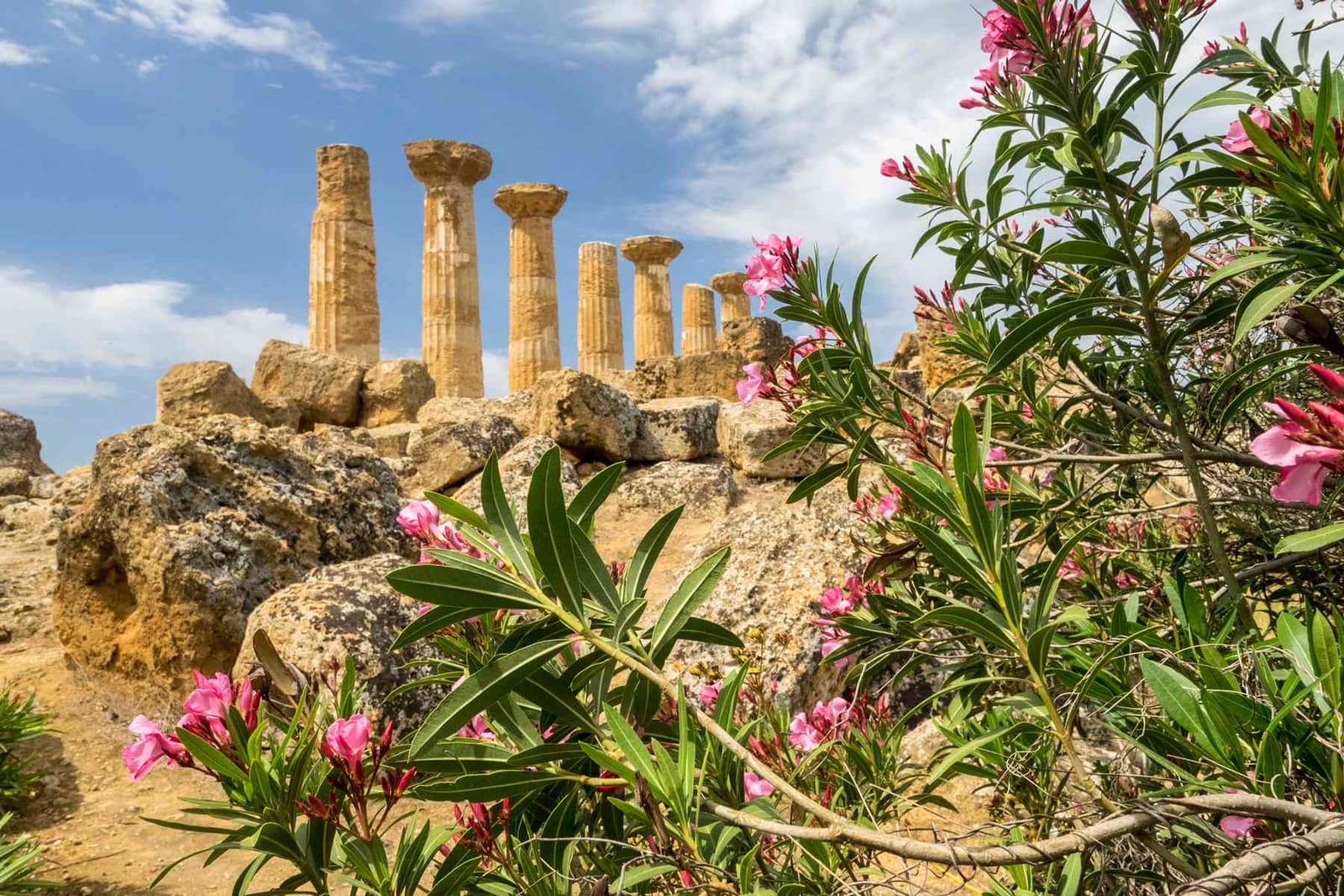
A Mediterranean Island Finally Center Stage
There is a particular quality to early-morning light in Palermo, the way it slants through narrow streets built by Normans atop Arab foundations, illuminating layers of history that refuse to be disentangled. For decades, travelers treated Sicily as an afterthought, a footnote to Rome or Florence, a place to visit if time allowed. That calculus has shifted. The island now draws visitors who arrive with intention, seeking not a checkbox on the Italian itinerary but a place that resists easy categorization.
At Global Chic Voyage, we've watched this transformation unfold across multiple seasons. The change is not about infrastructure booms or aggressive tourism campaigns. It is subtler: a growing recognition that Sicily operates according to its own logic, shaped by millennia of conquest, migration, and reinvention. The island's appeal lies precisely in its refusal to conform to the polished ease of northern Italian cities. Here, beauty arrives entangled with grit, and luxury means something different than it does in Milan.
Palermo: A Capital of Accumulation
Palermo does not reveal itself quickly. The capital is a palimpsest, each era leaving traces that subsequent rulers chose to incorporate rather than erase. Byzantine mosaics coexist with Moorish arches; Norman cathedrals stand beside baroque palazzi. The Ballarò market, one of the city's oldest, operates as it has for centuries, vendors calling out prices for swordfish and blood oranges while tourists navigate the sensory overload.
What makes Palermo compelling is its resistance to gentrification's smoothing hand. Restoration projects proceed slowly, unevenly. Entire neighborhoods remain works in progress, their crumbling facades concealing renovated interiors where young chefs experiment with recipes their grandmothers would not recognize. This duality, this refusal to choose between preservation and evolution, defines the city's current moment.
The food culture alone warrants extended exploration. Street food here is not a trend but a living tradition: arancini stuffed with ragù, panelle fried to order, sfincione sold from carts. High-end restaurants have emerged, certainly, but they succeed by honoring rather than abandoning these foundations. The best meals we've had in Palermo involved no reservations, just conversations with locals about where they eat when no one is watching.
Taormina: Elevation as Strategy
If Palermo sprawls and accumulates, Taormina distills. Perched on a clifftop overlooking the Ionian Sea, the town has long attracted visitors drawn to its improbable setting. The ancient Greek theater, carved into rock in the third century BCE, frames Mount Etna in the distance, a view so perfectly composed it verges on the theatrical.
Taormina's transformation into a refined destination began over a century ago, when northern European travelers seeking winter sun discovered its microclimate and dramatic topography. That legacy persists. The hotels here understand luxury as a matter of vantage point and discretion. Terraces extend over precipitous drops; rooms open to views that render decoration superfluous.
Yet Taormina also illustrates the tensions inherent in tourism-driven economies. The historic center caters almost exclusively to visitors, its shops and restaurants calibrated to transient tastes. Authenticity becomes a performance, carefully staged. This is not necessarily a criticism, it is simply the bargain struck when a small town becomes an icon. The question is whether the exchange feels equitable, and in Taormina's case, the answer depends largely on when you visit. Off-season, the town exhales, and something closer to local life becomes visible.
The Volcanic Constant
Mount Etna dominates Sicily's eastern skyline, a reminder that this island exists on geological time as much as historical time. Europe's most active volcano shapes not only the landscape but the psyche of those who live in its shadow. Vineyards creep up its slopes, their vines rooted in volcanic soil that imparts a mineral intensity to the wines. Sicilian winemakers have spent the past two decades reclaiming indigenous varietals, Nerello Mascalese chief among them, and the results challenge assumptions about what Italian wine can be.
Visiting Etna requires humility. The mountain dictates terms. Trails close without warning; weather shifts in minutes. Guided excursions to the summit craters offer access, but the experience is less about conquest than witness. You stand at the edge of something indifferent to human presence, a force that has buried towns and redrawn coastlines. It recalibrates perspective.
The villages on Etna's flanks, places like Randazzo and Linguaglossa, operate with a pragmatism born of living alongside unpredictability. Architecture here is functional, built to be rebuilt. The local cuisine incorporates volcanic bounty: pistachios from Bronte, honey infused with wildflowers that bloom in lava fields, cheeses from sheep that graze on mineral-rich grasses. This is terroir in its most literal sense, flavor shaped by geology.
Beyond the Obvious Itinerary
Sicily rewards those who venture beyond the established circuit. The baroque towns of the southeast, Noto, Ragusa, Modica, rebuilt after a catastrophic earthquake in 1693, offer a different aesthetic: honey-colored stone, exuberant facades, staircases that seem designed for grand entrances. These are UNESCO World Heritage sites, yet they remain surprisingly uncrowded, perhaps because they require effort to reach.
The western coast presents another Sicily entirely. Trapani and Marsala, towns shaped by salt production and wine trade, feel more connected to North Africa than to Rome. The food reflects this: couscous appears on menus, a legacy of Tunisian migration. The salt pans near Trapani, geometric pools reflecting sky and sun, produce fleur de sel harvested by hand. Watching workers rake salt into mounds at sunset, you glimpse an industry unchanged for centuries, economically marginal but culturally indelible.
Sicily's interior, often bypassed entirely, holds its own fascinations. Hill towns like Enna and Caltagirone cling to improbable perches, their populations dwindling but their identities intact. These are not easy places to visit, transportation is limited, English less common, but they offer something increasingly rare: a sense of discovery unmediated by tourism infrastructure.
The Complications of Arrival
To write honestly about Sicily requires acknowledging its complications. This is not a destination that has solved the tensions between development and preservation, between welcoming outsiders and maintaining local culture. Infrastructure remains uneven. Public transportation requires patience. The Mafia's influence, though diminished, has not vanished, and its legacy shapes everything from construction timelines to political dynamics.
Yet these frictions are part of what makes Sicily compelling. The island has not been smoothed into an easily consumable experience. It demands engagement, flexibility, a willingness to accept that not everything will function as expected. For travelers accustomed to seamless logistics, this can be jarring. For those seeking something more textured, it is precisely the point.
Why Now
Sicily's moment, if it can be called that, stems from several converging factors. Direct flights from major European and North American cities have increased access. A younger generation of Sicilians, many educated abroad, have returned with ideas about how to reframe the island's identity without erasing its complexity. Agriturismo properties and boutique hotels have proliferated, offering accommodations that split the difference between rustic and refined.
More broadly, there is a growing appetite among travelers for destinations that resist easy categorization, places where luxury does not mean insulation from local reality. Sicily delivers on that promise. You can stay in a restored masseria, dine on Michelin-starred cuisine, and still find yourself navigating chaotic markets or deciphering hand-scrawled menus. The contrasts are not incidental; they are the substance of the experience.
What Remains
On our most recent visit, we spent an afternoon in Syracuse, wandering the island of Ortigia, the ancient heart of the city. The cathedral there, built into a Greek temple, its Doric columns still visible in the walls, encapsulates Sicily's layered identity. Nothing here gets discarded entirely. Each era adapts what came before, adding rather than replacing.
This is what Sicily offers: not a single story but a palimpsest, not a static museum but a living negotiation between past and present. It is an island that has been conquered, occupied, and reinvented so many times that it has learned to absorb influence without surrendering identity. For travelers willing to engage with that complexity, willing to trade convenience for depth, Sicily has become what it always should have been: not a footnote to Italy, but a destination in its own right, demanding to be understood on its own terms.
Photo: Terry Eggers / Getty Images
Spot something wrong? Email editors@globalchicvoyage.com. We log every correction publicly.
RELATED
SEE ALL →
23 Jul 2026 / 5 min
8 Aug 2026 / 5 min
7 Aug 2026 / 5 min
31 Jul 2026 / 5 min