
Where New York's Summer Tables Are Taking Us This Year
From seafood in industrial Brooklyn to theatrical Punjabi warmth in NoMad, the city's newest dining rooms prove that atmosphere and ambition can live side by side.
ML
16 Jun 2026 · 5 MIN READ · UPDATED 17 AUG 2026
The Weather and the Windows
The first warm Saturday arrived without warning, the kind that sends every New Yorker scrambling for a table by an open window. We found ourselves tucked into a corner booth at a new pub-style spot in the West Village, the kind of place where dark wood meets navy upholstery and the chalkboard promises whatever came in that morning. My companion leaned back, surveyed the room - clients in linen, oyster shells accumulating, Guinness settling in its glass - and said it felt like what beach towns promise but rarely deliver. Not the Hamptons as they are, but as we imagine them: effortless, briny, sun-dappled, alive.
At Global Chic Voyage, we have watched New York's dining landscape shift season by season, the hype machine churning, reservations becoming a blood sport, and the genuinely compelling often buried beneath noise. This summer, though, a handful of openings have earned their buzz not through marketing theatrics but through something quieter and more lasting: a clear sense of self. These are rooms that know what they want to be, and kitchens confident enough to let ingredients speak without shouting.
What follows is not a checklist of every new door that swung open in recent months, but a considered selection - the places we have returned to, the menus we find ourselves thinking about days later, the dining rooms that feel less like destinations and more like discoveries.
The Pub That Feels Like a Shack
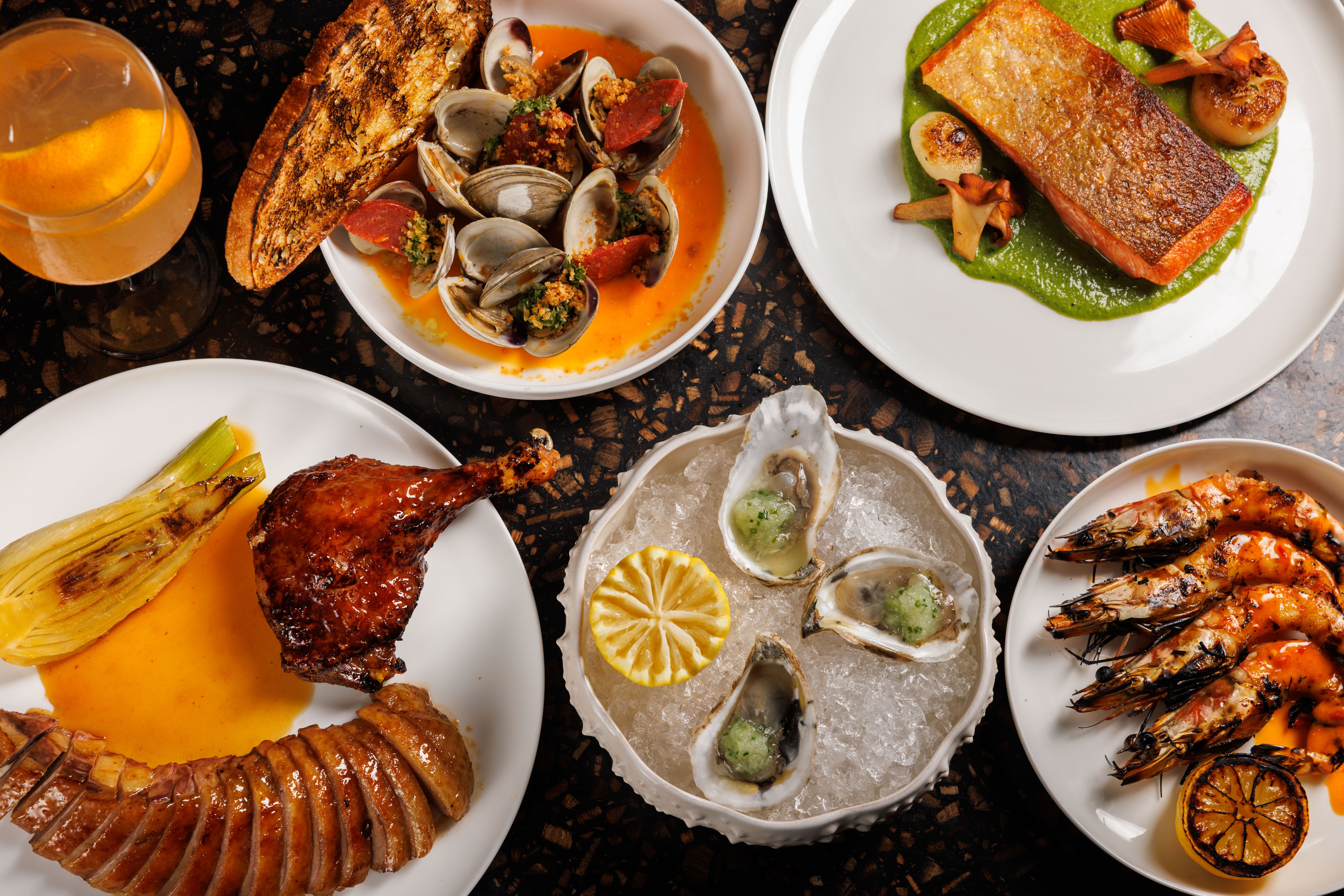
Dean's, the latest from a team known for their work on King, occupies a peculiar and wonderful niche: British seafood sensibility transplanted into Village soil. The space leans nautical without tipping into kitsch - think shipwright's workshop rather than souvenir shop - and the menu follows suit. Oysters arrive cold and clean, fish and chips manage to be both crisp and tender, and scallops bathed in malt vinegar carry that perfect saline punch.
The stargazy pie, when it appears as a special, is the kind of dish that tests your commitment to culinary adventure. A mackerel head and tail emerge from buttery crust, eyes milky and unblinking, but beneath that dramatic presentation lies something far more comforting: essentially a chowder encased in pastry, rich and warming and not remotely intimidating once you get past the optics. It is also substantial enough that pacing becomes essential if you intend to work through multiple pours of what may be the city's best Guinness outside of an Irish pub.
The genius of Dean's is how it adapts to season and mood. On that first warm afternoon it felt like a shore-side escape; come winter, those same dark woods and hearty pies will offer a different kind of refuge. The menu remains rooted in what the day brings, which means variability but also the thrill of not quite knowing what the chalkboard will promise.
Descent and Ascent at Oyatte
Some dining experiences unfold horizontally, course after course at a single table. Oyatte, the Murray Hill debut from chef Hasung Lee, structures its eight-course journey vertically, beginning in a subterranean lounge that feels like a French farmhouse cellar reimagined by someone with impeccable minimalist instincts. Ebony paneling, wildflowers in unconventional arrangements, club chairs that swallow you whole. Here, root vegetables and fermented elements take center stage: a carrot preparation shaped like a donut, radish pickled and layered over crème fraîche, pork and radish tarte tatin perched on shortbread that somehow recalls braised beef and childhood kitchens.
The upstairs dining room offers a study in contrasts - whites, beiges, a zen restraint that lets the food command attention. Here the menu shifts toward land and sea: charred scallop, smoked quail, a spring green porridge blanketed in black truffle shavings. Lee's resume spans Napa Valley, Copenhagen, and Manhattan's most exacting kitchens, and the influences show not as a patchwork but as a coherent voice. Ingredients come from Crown Daisy Farm upstate, and the farm-to-table ethos feels genuine rather than performative.
The restaurant's name translates to "plum blossom," and there is something of that flower's quiet unfolding in how the meal progresses. Nothing announces itself too loudly; instead, each dish reveals its complexity slowly, rewarding attention. It is theatrical without being showy, playful without sacrificing precision.
Malaysian Flavors Find Their Footing
Greenpoint's Kelang arrives at a moment when New York's Southeast Asian dining scene has deepened considerably, yet Malaysian cuisine remained underrepresented. The space itself - jade walls, red fringed lanterns, an open kitchen that lets you watch the choreography - strikes that increasingly rare balance of casual enough for Tuesday but compelling enough for occasions.
The paratha has become something of a signature, and deservedly so. It arrives looking deceptively simple but unfolds into a layered experience: red lentil dhal, straciatella, herb salad, sambal oil, each element distinct yet harmonious. The charred cabbage, dressed in achat butter and chili, hides sweet bursts of pineapple among the leaves and cashew cream. Both dishes demonstrate restraint - bold flavors, yes, but never overwhelming, always balanced.
Larger plates hold their own. The rendang, built around smoked oxtail with lime leaf and kerisik, delivers deep umami satisfaction. Wide rice noodles stir-fried with clams and crowned with an egg yolk offer the kind of comfort that makes you understand why certain dishes become staples. The menu may read expensive to anyone familiar with Malaysian street food pricing, but in the context of New York's flavor-to-dollar calculus, it holds up well.
Minor operational hiccups - a few dishes unavailable even at early seatings - suggest the kitchen is still finding its rhythm. But the fundamentals are strong, and the space invites lingering in a way that suggests Kelang will grow into something enduring rather than merely trendy.
A Dinner Party in NoMad
Walking into Ambassadors Clubhouse feels less like arriving at a restaurant and more like being welcomed into someone's exceptionally well-appointed home, assuming that someone has a taste for Mughal miniatures, gilded surfaces, and a bar that could anchor a small museum. The space glitters without feeling gaudy, and the energy - Punjabi pop carrying across the room, conversations overlapping - has the warmth of genuine hospitality.
The food centers classic Punjabi preparations with contemporary flourishes. Taro tokri arrives as a revelation for anyone skeptical of chicken in chaat form: tangy, sweet, fresh, the mint cutting through richness. Dishes come on engraved silver thali, which feels appropriate given the regal presentation of something like the Ranjit Shahi lobster, drenched in red curry and finished with gold leaf, looking every bit as opulent as it sounds. The flavors underneath the visual drama are deeply familiar in the best way - that old-school butter chicken warmth, rich and comforting and exactly what you did not know you needed.
The lamb biryani becomes the dish you return to even after declaring yourself finished, long-grain basmati carrying that distinctive almond aroma that transports. The Tandoori Margarita works better than it has any right to, the pineapple element providing just the right counterpoint. Skinny paan offers a perfect close, though the extensive bar menu suggests reasons to return beyond the food alone.
Industrial Chic Meets Serious Seafood
Zoli occupies a stretch of East Williamsburg that some might describe charitably as "up-and-coming" and others might note sits near a superfund site and a welding shop. This is Brooklyn in its most honest form, and the restaurant embraces rather than apologizes for its context. The space soars - ceilings impossibly high, fish tanks that shift from transparent to opaque with the push of a button, an industrial beauty that feels entirely of its place.
The menu, from a chef whose previous work earned a devoted following, divides into categories that encourage exploration: raw, small seafood, leafy, slightly larger, largest. This structure invites composition rather than the tyranny of appetizer-entrée-dessert. Scallops in brown butter, their reproductive gland left attached for extra succulence, demonstrate a willingness to honor the whole ingredient. Pickled mackerel topped with elderflower achieves that delicate sweet-acid balance that makes you slow down and pay attention. Surf clams chopped with Serrano chili and peanuts offer textural contrast and heat.
While the menu includes showier options - bison flank, whole bass - the quieter fish preparations shine brightest. Blackened tilefish over tomatillo puree arrives simple and impeccably fresh, the kind of dish that requires a skilled hand precisely because there is nowhere to hide. Desserts maintain the same thoughtful balance, whether burnt Basque cheesecake or madeleines with house-made ice cream.
The design elements - those shifting fish tanks, the cathedral ceiling - could overwhelm, but instead they frame the food rather than competing with it. Zoli understands that atmosphere and substance need not be mutually exclusive.
What Endures Beyond the Buzz
New York's dining scene operates in cycles: the new becomes essential becomes passé, often within months. Reservations grow impossible, social media declares victory or defeat, and the discourse moves on. What separates a flash from a fixture is harder to quantify but unmistakable in practice. It lives in whether you find yourself returning not because you should but because you want to. Whether the kitchen maintains its standards when the initial spotlight fades. Whether the hospitality feels genuine on a random Tuesday in February.
These summer openings - a Village pub, a Murray Hill tasting-menu experience, Malaysian cooking in Greenpoint, Punjabi warmth in NoMad, industrial-chic seafood in Brooklyn - share certain qualities beyond their newness. They know what they are. They execute with confidence. They create spaces that enhance rather than distract from what arrives on the plate. And they remind us that even in a city saturated with dining options, there remains room for places that do something well and mean it.
The hype will fade, as it always does. The question, as ever, is what remains when it does.
Spot something wrong? Email editors@globalchicvoyage.com. We log every correction publicly.
RELATED
SEE ALL →
7 Aug 2026 / 5 min
30 Jul 2026 / 5 min
30 Jul 2026 / 5 min
29 Jul 2026 / 5 min