
Where Sand Meets Story: Finding Hawaii's Most Soulful Shores
Beyond the postcard clichés, the archipelago's coastlines reveal quiet corners and dramatic vistas that ask you to slow down and listen.
SI
7 Jul 2026 · 5 MIN READ · UPDATED 17 AUG 2026
The Shoreline as Teacher
There is a moment, usually in the late afternoon when the trade winds soften and the light turns amber, when a Hawaiian beach stops being scenery and becomes something closer to conversation. You notice the way black lava meets white coral sand in a clean line, or how the reef breaks reveal themselves in bands of turquoise and navy, or the particular silence that follows a wave's retreat. At Global Chic Voyage, we've spent years returning to these islands, not to count beaches but to understand them, to learn which ones offer solitude versus spectacle, which reward early risers, which belong to families, and which ask to be approached alone.
The challenge is not finding a beautiful beach in Hawaii. The challenge is choosing among abundance, discerning which stretch of sand aligns with the traveler you are on this particular trip. The archipelago contains multitudes: protected bays where children can wade safely, surf breaks that have shaped entire subcultures, hidden coves accessible only by kayak or trail, and urban strands where the city hum never quite fades. What follows is not an exhaustive catalog but a curated guide to the shores that have left the deepest impressions on us, the ones we measure other coastlines against.
The North Shore's Theater of Waves
Winter transforms Oahu's North Shore into an amphitheater. Swells generated thousands of miles away in the North Pacific arrive here with ceremonial force, building into waves that can reach thirty feet or more. Sunset Beach and the Banzai Pipeline become stages for the world's most accomplished surfers, but they are equally compelling for those content to watch from the sand. There is a meditative quality to observing this scale of water, the way each set approaches with its own rhythm, the way the reef channels and focuses the energy.
Come summer, the same coastline turns docile. The waves flatten, the water clears to gin transparency, and snorkeling becomes feasible along the very reefs that produce winter's thunder. This seasonal duality makes the North Shore a study in impermanence, a reminder that place is never static. We recommend visiting in the shoulder seasons, late October or early April, when the transformation is underway and you can sense both personalities at once.
Sanctuaries of Hanauma Bay and Molokini Crater
Some beaches function primarily as gateways to what lies beneath. Hanauma Bay, a volcanic crater breached by the sea on Oahu's southeastern coast, operates as both marine sanctuary and outdoor classroom. The bay's protected status has allowed fish populations to flourish, and the required orientation video before entry, while seemingly bureaucratic, serves an important pedagogical function. Snorkelers here swim among species that have learned humans pose no threat, allowing for encounters that feel less like observation and more like coexistence.
Molokini Crater off Maui's coast takes this concept further, existing as a partially submerged caldera whose crescent shape creates a natural aquarium. Visibility often exceeds one hundred feet, and the site's protection since the 1970s has preserved coral formations and pelagic fish populations increasingly rare elsewhere. Access requires a boat, which adds a layer of intentionality to the visit. These are not beaches for idle afternoons but destinations for the deliberately curious, for travelers who understand that luxury sometimes means immersion rather than comfort.
The Drama of Napali and Polihale
Kauai's northwestern coastline refuses easy access. The Napali Coast's seventeen miles of fluted cliffs, sea caves, and isolated beaches can be approached only by helicopter, boat, or the eleven-mile Kalalau Trail, one of the most demanding day hikes in the islands. The beaches here, Kalalau and Honopu among them, exist in near-total seclusion, backed by valleys that once sustained Hawaiian communities but now return to forest. Landing by kayak on Kalalau Beach after hours of paddling produces a particular satisfaction, the kind that comes from earning arrival rather than purchasing it.
At the island's western terminus, Polihale Beach stretches for miles, a vast expanse of sand dunes and powerful shore break where the reef ends and the open Pacific begins. The drive requires a four-wheel-drive vehicle and patience with washboard roads, but this friction filters visitors, and you will often find yourself alone with the late sun painting the Napali ridges in relief. The beach feels elemental, stripped of amenities and pretense, a place where the island's geology remains visible and unmediated.
Black Sand and Green: Hawaii's Volcanic Palette
The Big Island's youth, geologically speaking, produces beaches unlike anywhere else in the archipelago. Punaluu Beach's black sand, formed from basalt shattered by waves and time, absorbs heat and provides nesting habitat for endangered green sea turtles. Watching these ancient reptiles haul themselves onto shore to bask creates a connection to deep time, to processes operating on scales that dwarf human concerns.
Papakolea Beach, one of only four green sand beaches on earth, derives its olive tint from olivine crystals, a mineral component of the volcanic cinder cone that forms the bay. Reaching it requires a three-mile hike along the coast or a bumpy shuttle ride, and the beach itself is small, often windy, and not particularly conducive to swimming. Yet its rarity and the dramatic contrast of green sand against blue water and red cliffs create a visual experience that justifies the effort. These beaches ask you to value the unusual over the comfortable, the geologically significant over the Instagram-perfect.
Urban Shores: Waikiki's Unsung Virtues
It has become fashionable among a certain kind of traveler to dismiss Waikiki, to treat its density and development as antithetical to authentic Hawaiian experience. This is both snobbish and shortsighted. Waikiki Beach, particularly the stretch fronting the Royal Hawaiian and Moana Surfrider hotels, offers something increasingly rare: an urban beach that functions beautifully as public space. Locals surf here before work, families claim patches of sand on weekends, and the infrastructure, from lifeguard coverage to showers to accessibility features, represents a century of refinement.
The beach's crescent shape and offshore reef create gentle, consistent waves ideal for beginners, and the density of surf schools and outrigger canoe operators means instruction is always available. Duke Kahanamoku, the Olympic swimmer and surfing ambassador who introduced the sport to the world, learned here, and his legacy persists in the water's democratic accessibility. There is value in beaches that serve communities rather than merely attracting tourists, and Waikiki, for all its commercialization, remains fundamentally both.
The Upcountry Exception: Maui's Makena and Wailea
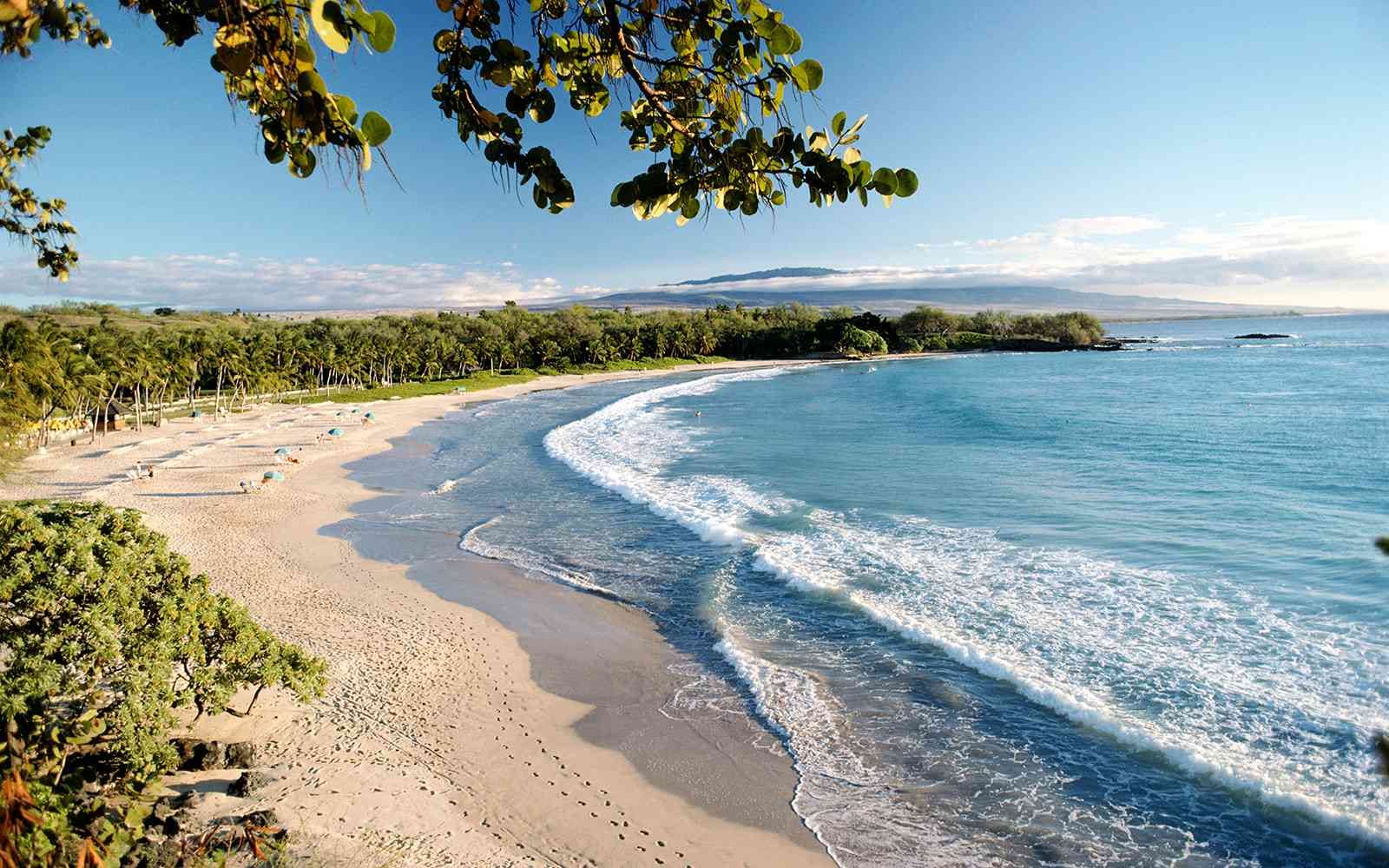
Maui's southwestern coast transitions from the manicured resort beaches of Wailea to the wilder expanses of Makena, and within this gradient lie beaches calibrated to different moods. Wailea Beach, fronting the Grand Wailea and Four Seasons resorts, delivers the platonic ideal of a luxury beach experience: attentive service, pristine sand, calm water, and infrastructure that anticipates needs before they arise. This is not a criticism; there are moments when ease is exactly what travel requires.
Two miles south, Big Beach at Makena State Park offers a counterpoint: a broad, undeveloped strand backed by kiawe trees where the shore break can be punishing and the afternoon winds reliably strong. The beach's scale and lack of development attract a different crowd, one content with portable shade and coolers, and the contrast between Wailea's orchestration and Makena's improvisation illustrates the range Hawaii accommodates. We find ourselves drawn to the transition zones, the beaches between categories, where both impulses coexist.
Lanikai and Kailua: The Windward Ideal
If a committee set out to design the perfect beach, they might produce something resembling Lanikai. Protected by a barrier reef, graced with powder-fine sand, framed by the Mokulua Islands offshore, and backed by some of Oahu's most expensive real estate, Lanikai exists as a kind of platonic form. The water is swimmable year-round, the snorkeling is decent though not exceptional, and the kayak journey to the Mokulua seabird sanctuaries makes for an achievable adventure.
Adjacent Kailua Beach extends the experience at larger scale, with more public access and amenities. Both beaches benefit from their Windward location, which receives less development pressure than the leeward coasts and maintains a residential rather than resort character. Parking can be challenging, a deliberate constraint that prevents overcrowding, and the early morning hours before the trade winds strengthen offer the calmest conditions. These beaches represent a particular Hawaiian ideal: beauty that remains embedded in community rather than extracted for exclusive use.
Choosing Your Shore
The question we hear most often is not where Hawaii's best beaches are but which beach is best for the asker. The answer depends entirely on what you seek. Are you chasing solitude or community? Do you want to swim, surf, snorkel, or simply sit? Do you value ease of access or the satisfaction of effort? Are you traveling with children, and if so, what ages? Do you want to witness marine life, dramatic geology, or the intersection of culture and coast?
At Global Chic Voyage, we've come to understand that Hawaii's beaches are best approached not as a ranked list but as a spectrum of possibility. The islands offer enough variety that you can spend a week visiting a different beach each day and experience entirely different relationships with the ocean. The beaches we return to are rarely the most famous or the most photographed but the ones that matched our state of mind when we arrived, that offered what we needed rather than what we expected. In this sense, the best beach in Hawaii is always the one that meets you where you are.
Photo: Getty Images
Spot something wrong? Email editors@globalchicvoyage.com. We log every correction publicly.
RELATED
SEE ALL →
21 Jul 2026 / 5 min
27 Jun 2026 / 5 min
30 Jul 2026 / 5 min
27 Jul 2026 / 5 min