
Where the Sea Meets the Table: Choosing a Cruise for the Way You Eat
As culinary ambition rises aboard the world's finest ships, discerning travelers now weigh menus as carefully as itineraries
SI
19 Jul 2026 · 5 MIN READ · UPDATED 17 AUG 2026
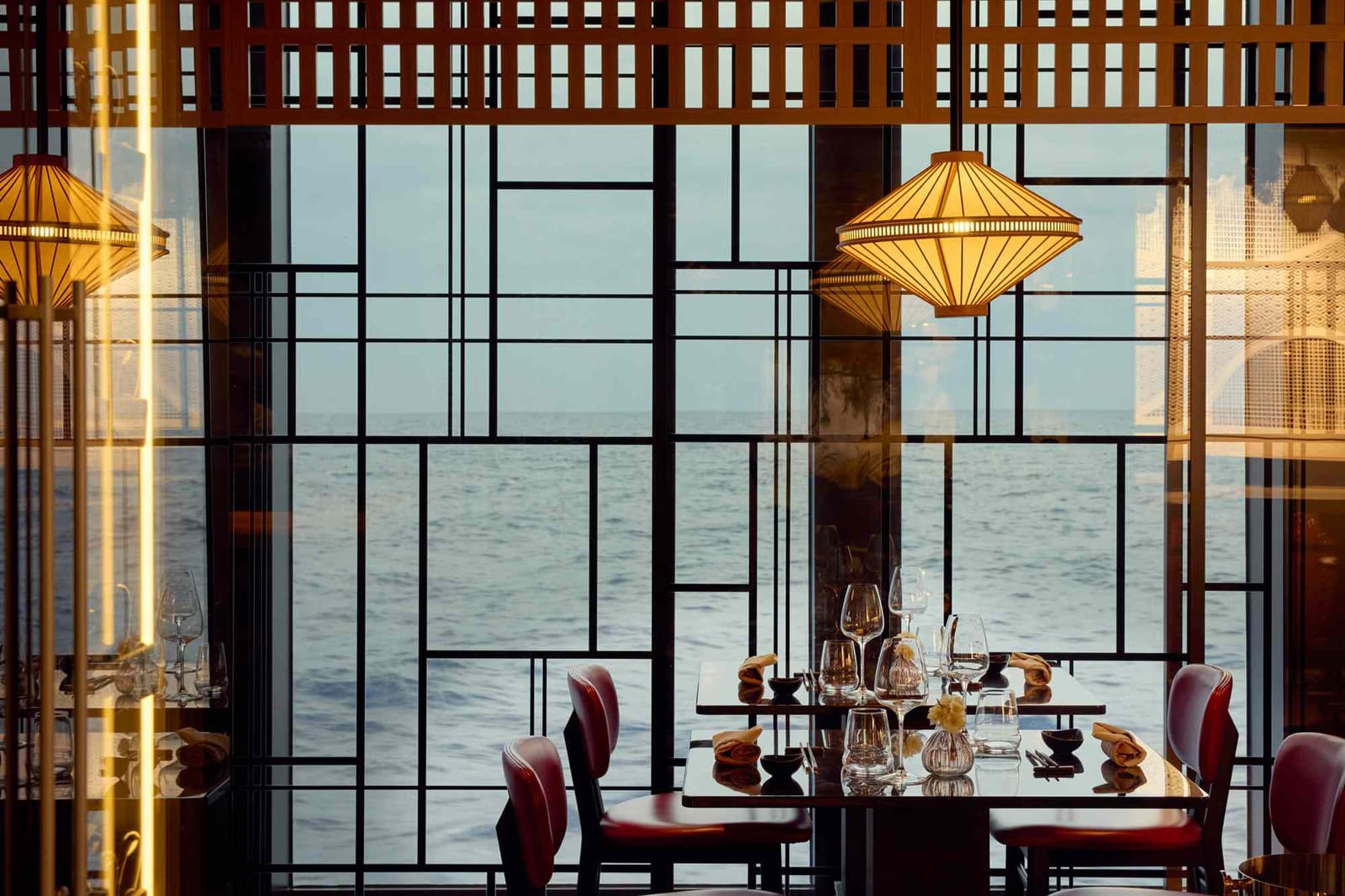
The Quiet Revolution in Galley and Dining Room
There is a particular kind of evening we've come to treasure at Global Chic Voyage: the moment when a meal served thousands of miles from land feels more rooted in place than anything you might encounter in a hotel dining room. It happens on certain ships, in certain dining rooms, when the kitchen has sourced its fish from the morning's port market and the sommelier has paired it with a wine from a hillside you passed that afternoon. It is not theatre. It is a kind of attention, a seriousness about the table that has quietly reshaped the luxury cruise industry over the past decade.
The old jokes about mediocre buffet lines and uninspired Continental menus have grown stale not because they were never true, but because a handful of cruise lines decided to stop tolerating them. Today, the most thoughtful operators treat their galleys the way serious hoteliers treat their kitchens: as laboratories of regional flavor, as stages for collaboration with acclaimed chefs, and as spaces where sourcing, seasonality, and craft matter as much as they do in any Michelin-starred establishment on land.
The Lines That Take the Table Seriously
At Global Chic Voyage, we've watched a distinct tier of cruise brands emerge, lines that have made gastronomy not an amenity but a philosophy. These are the operators whose culinary directors hold the same sway as their naval architects, whose itineraries are planned in part around market days and harvest seasons, whose wine cellars rival those of Relais & Châteaux properties.
What separates these lines is not simply the presence of a celebrity chef partnership or a white-tablecloth restaurant. It is the depth of the commitment: the decision to bring aboard artisanal producers, to train galley teams in techniques that take time, to design menus that reflect the regions a ship is actually traversing rather than a generic idea of "international cuisine." It is the willingness to serve fewer guests per seating, to invest in better ingredients, to let meals unfold at a pace that respects both the kitchen and the diner.
This shift has been uneven. Many mass-market lines have added upcharge steakhouses and sushi counters without rethinking their broader culinary culture. But among the luxury and expedition operators, the transformation has been profound. The ships we return to are those where the galley feels like an extension of the destination, where a meal becomes a form of cultural immersion rather than a pause between excursions.
Sourcing, Seasonality, and the Galley as Workshop
One of the most telling markers of a food-forward cruise line is its approach to sourcing. The best operators have abandoned the industrial supply chains that once defined shipboard dining, opting instead for regional partnerships that mirror the farm-to-table ethos of contemporary land-based restaurants. This is not a simple logistical pivot. It requires advance planning, relationships with local fishmongers and farmers, and a willingness to let menus shift based on what is actually available in port.
We've seen this play out in striking ways: a Mediterranean cruise where the evening menu featured olive oil pressed in the Peloponnese that morning, a Baltic sailing where the fish course came from a cooperative in a Swedish fishing village, a Southeast Asian itinerary where the galley team shopped alongside passengers in a Hanoi market. These are not gimmicks. They are expressions of a belief that the table should be as connected to place as the shore excursions.
Seasonality, too, has become a guiding principle. The lines that excel in this space design their menus to reflect not only the regions they visit but the time of year. Spring sailings in the Aegean might emphasize wild greens and young lamb. Autumn voyages in New England lean into harvest vegetables and shellfish. This attention to the calendar is rare in an industry where menus have historically been static, designed months in advance and replicated across fleets.
The Role of the Chef and the Dining Room as Stage
Celebrity chef partnerships have become common in the cruise industry, but the most successful collaborations go beyond branding. The lines that stand out are those where chefs are granted genuine creative control, where they spend time aboard developing menus and training galley staff, where their influence extends beyond a single specialty restaurant to the ship's entire culinary program.
We've dined in rooms where the chef's hand is evident in every course, where the techniques and flavor profiles reflect a coherent vision rather than a collection of crowd-pleasers. These are the dining rooms where the kitchen is confident enough to serve dishes that require explanation, that challenge expectations, that trust the diner to be curious rather than cautious.
The physical design of dining spaces has evolved in tandem. The best ships have moved away from the grand, impersonal dining halls of an earlier era, creating instead a variety of smaller, more intimate venues. There are open kitchens where you can watch the line work, chef's tables where courses arrive directly from the galley, wine cellars converted into private dining rooms. The architecture of these spaces reflects a broader shift: the meal is no longer an interlude but an event, deserving of the same attention as a performance or a lecture.
Wine Cellars, Sommeliers, and the Beverage Program
A serious culinary program demands a serious beverage program, and the lines that excel in food have invested accordingly. The best ships now carry wine lists that rival those of top urban restaurants, with deep selections from both classic regions and emerging producers. These are not the token lists of mass-market lines, heavy on familiar labels and light on complexity. They are curated collections, often numbering in the hundreds of bins, chosen to complement specific menus and itineraries.
The role of the sommelier has grown in importance as well. On the ships we most admire, sommeliers are visible, approachable figures, leading tastings, offering pairing advice, and educating passengers about the regions they are visiting. Some lines have introduced wine-focused voyages, where vineyard visits are paired with onboard tastings and dinners featuring the estates' own bottles. This integration of the beverage program into the broader cultural and culinary experience marks a maturation of the industry, a recognition that wine is not an add-on but a central element of the table.
The Expedition Kitchen and the Challenge of Remote Dining
Nowhere is the culinary challenge more acute than aboard expedition ships, those smaller vessels that venture into polar waters, remote Pacific islands, and other regions far from reliable supply chains. Yet some of the most memorable meals we've encountered have been served in these unlikely settings, where galley teams work under constraints that would defeat lesser operations.
The best expedition lines have turned limitation into opportunity. Unable to rely on frequent provisioning, they emphasize preservation techniques: curing, smoking, fermenting. They collaborate with researchers and naturalists to incorporate foraged ingredients, seaweeds and berries and herbs that reflect the ecosystems passengers are exploring. They design menus that tell the story of the regions they visit, using food as a form of interpretation.
These are not the elaborate, multi-course productions of traditional luxury liners. They are simpler, more focused meals, where the quality of a single ingredient, the precision of a technique, or the resonance of a dish with its surroundings becomes the point. In their own way, they represent the purest expression of the philosophy that now animates the best shipboard dining: that food should be a bridge between passenger and place, that the table is a site of learning and connection, that eating well is inseparable from traveling well.
The Future of the Floating Table
As we look ahead, the trajectory seems clear. The lines that have committed to culinary excellence are deepening that commitment, investing in training programs for galley staff, expanding their networks of artisanal suppliers, and experimenting with new formats and cuisines. The gap between these operators and the rest of the industry is widening, creating a bifurcated market where the quality of the dining experience has become one of the primary factors distinguishing luxury from mass-market offerings.
This evolution reflects broader changes in how affluent travelers think about food. For a generation that has grown up with farmers' markets, chef-driven restaurants, and a heightened awareness of sourcing and sustainability, the old model of shipboard dining, generic and disconnected from place, is simply no longer acceptable. The cruise lines that have recognized this shift, that have rebuilt their culinary programs from the galley up, are the ones now defining the future of the industry.
At Global Chic Voyage, we've always believed that the quality of a journey is inseparable from the quality of its meals. The ships we recommend are those where the table is treated with the same care as the itinerary, where the galley is as important as the bridge, where eating is understood not as a necessity but as one of the great pleasures and privileges of travel. In an industry still shaking off old stereotypes, these are the lines proving that the sea can be as fine a place to dine as anywhere on earth.
Photo: Explora Journeys
Spot something wrong? Email editors@globalchicvoyage.com. We log every correction publicly.
RELATED
SEE ALL →
31 Jul 2026 / 5 min
21 Jul 2026 / 5 min

18 Jul 2026 / 5 min
14 Jul 2026 / 5 min