
A Hotel Trades Its Party Dress for Pearls on Miami Beach
When the W South Beach reopens in 2027 as a Waldorf Astoria, it will swap its bold lifestyle aesthetic for timeless elegance - a transformation that says as much about luxury hospitality's shifting currents as it does about one storied address.
ML
8 Jul 2026 · 5 MIN READ · UPDATED 17 AUG 2026
The Art of Reinvention
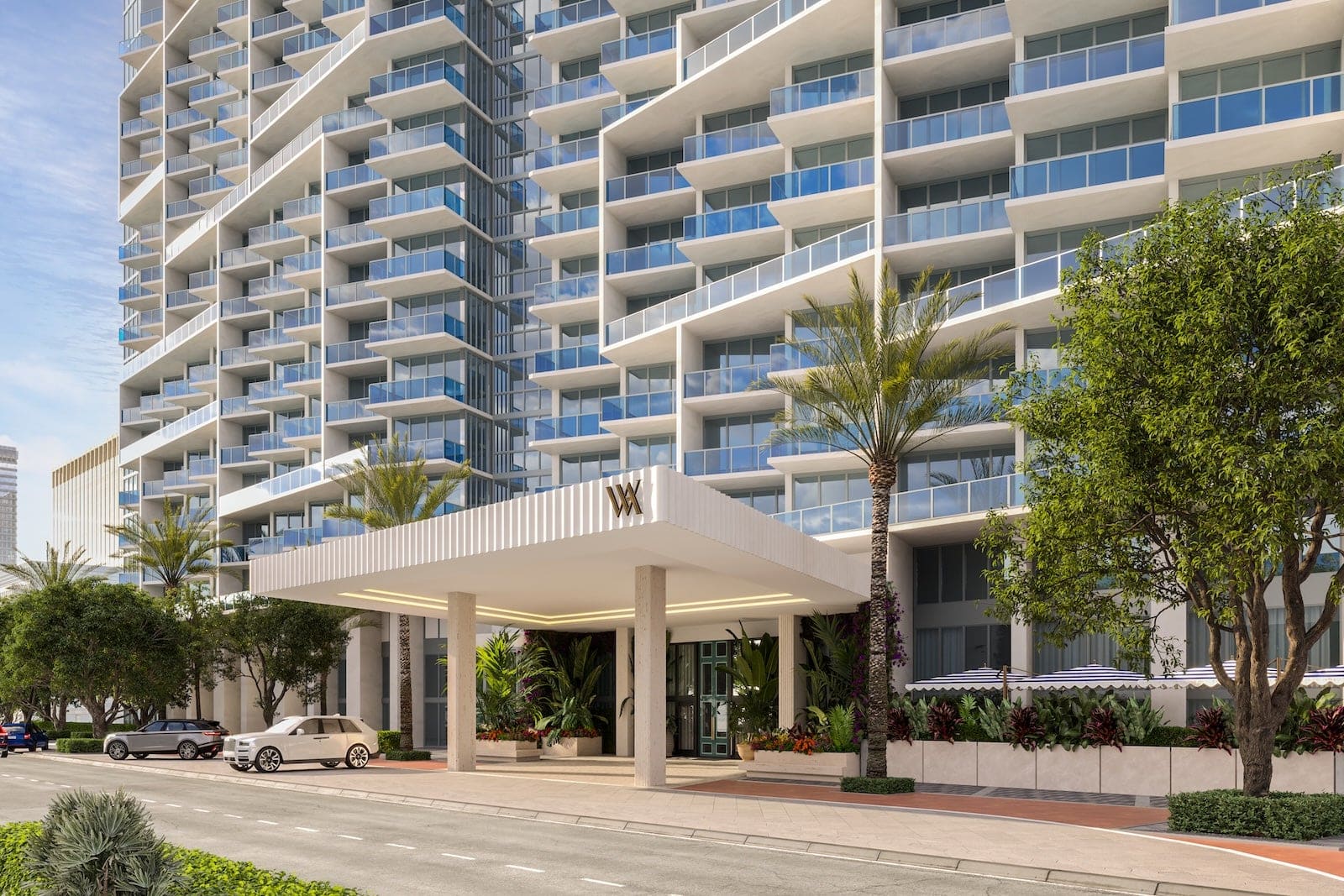
Stand on Collins Avenue at dusk, when the light turns golden and forgiving, and you can almost see the ghosts of every era Miami Beach has cycled through: the Deco optimism of the thirties, the neon exuberance of the eighties, the millennial maximalism that followed. Hotels here have always been shape-shifters, responding to the tides of taste with fresh paint, new names, and the promise of something just discovered. This summer, one of the strip's most recognizable addresses will close its doors and begin a transformation so complete that it will emerge not simply renovated but reborn - a shift from bold modernism to old-world refinement that feels less like an update and more like a costume change.
The property in question has operated under the W banner since 2009, a tenure marked by vivid interiors, a lifestyle-driven guest experience, and the kind of poolside energy that made it a fixture on South Beach's social circuit. Now it will trade that identity for something quieter, more composed. According to Hilton, the 348-room resort will undergo what the company describes as a meticulous renovation and repositioning before reopening in winter 2027 as the Waldorf Astoria Miami Beach - the brand's first presence in this market.
A Study in Contrasts
At Global Chic Voyage, we've watched brands pivot before, but few transformations hinge on such a clear tonal shift. The W ethos has always leaned into color, daring, and a certain restless energy - design language rooted in nightlife, contemporary art, and the idea that a hotel lobby should feel more like a living room at three in the morning. Waldorf Astoria, by contrast, trades in a different vocabulary: hushed elegance, considered service, interiors that whisper rather than shout. Both approaches have their devotees, and both can thrive on a stretch of sand as eclectic as Collins Avenue. But the choice to move from one to the other suggests a recalibration of ambition.
The property last underwent a significant refresh in 2020, when it received a thirty-million-dollar renovation, according to Hilton. That investment, substantial by most measures, will now be layered over with a head-to-toe redesign. Every guest room and suite will be reimagined, with a particular emphasis on ocean-view balconies - those rare, salt-aired perches that justify the premium South Beach commands. The lobby will be reconfigured, and in its place will rise Peacock Alley, the signature lounge and all-day dining concept that has become a hallmark of Waldorf properties worldwide. The food and beverage program will be rebuilt from the ground up, the spa re-curated, the pool amenities updated, and the event spaces - critical revenue drivers in a market thick with weddings and corporate gatherings - renewed.
What Elegance Means Now
Dino Michael, senior vice president and category head for Hilton's luxury portfolio, framed the project in terms of place and spirit. Miami Beach, he noted, possesses a quality the world recognizes instantly: dynamic, expressive, sunlit, full of life. The new hotel, he suggested, will channel that energy through a lens of timeless elegance, creating an experience that feels deeply personal and entirely rooted in its surroundings.
It is marketing language, to be sure, but it also hints at a broader question luxury hospitality is grappling with: how to honor a destination's character without mimicking its loudest notes. South Beach has long been a stage for extroversion, a place where architecture competes for attention and nightlife spills onto the sand. A Waldorf Astoria here will need to find a way to be of this place without being overtaken by it - to offer refuge without feeling removed, sophistication without snobbery.
The challenge, and the opportunity, lies in threading that needle. We have seen other heritage luxury brands attempt similar entries into high-energy markets - properties that aim to be sanctuaries amid the noise, offering a counterpoint rather than a chorus. When it works, the result is a kind of graceful contrast: a place where guests can step off the boulevard and into something slower, more refined, yet still unmistakably connected to the locale. When it does not, the hotel risks feeling marooned, a formal gesture in a casual landscape.
The Logistics of Transformation
Reservations at the property currently extend only through mid-July this year, signaling an imminent closure for construction. The timeline Hilton has outlined points to an opening in the early months of 2027, though precise dates have not been confirmed. For travelers holding future bookings, the prudent course is to contact the hotel directly and explore alternative arrangements - whether that means rebooking at another property in the portfolio or waiting to reserve once the Waldorf Astoria opens its reservation system.
The mechanics of such a transition are not trivial. Staff will need to be retrained, service standards recalibrated, supply chains adjusted to accommodate a different tier of amenity and expectation. The physical work - rewiring, replumbing, re-surfacing - will take months, but the cultural shift may take longer still. A hotel's identity is not just a matter of decor; it is encoded in the gestures of its team, the rhythm of its days, the unspoken agreements between guest and host. To move from one brand ethos to another is to relearn a language.
A Bellwether for the Market
Miami Beach has always been a testing ground for hospitality concepts, a place where brands come to prove themselves or reinvent their narratives. The decision to reposition this particular asset under the Waldorf Astoria flag suggests confidence not only in the property's bones but in the market's appetite for a certain kind of luxury - one less focused on spectacle and more attuned to subtlety, craft, and the quiet pleasures of exceptional service.
It also reflects a broader trend we have been tracking: the resurgence of classic luxury brands in markets once dominated by lifestyle and boutique concepts. As travelers seek respite from overstimulation, as the novelty of bold design and DJ-driven pool scenes fades into familiarity, there is renewed interest in experiences that feel anchored, assured, and enduring. The Waldorf Astoria name carries that weight - a legacy stretching back more than a century, associations with state dinners and ballroom elegance, a promise of a certain kind of grace.
Whether that promise will resonate on Collins Avenue remains to be seen. But the bet Hilton is making is clear: that there is room, even in a place as kinetic as South Beach, for a hotel that chooses restraint over exuberance, that offers not the loudest party but the most considered pause.
Looking Ahead
As construction fences go up and the last guests check out of what was once the W South Beach, the property will enter a liminal state - no longer one thing, not yet another. It is a vulnerable moment for any hotel, a period when identity is suspended and the future exists only in renderings and press releases. But it is also a moment rich with possibility.
When the doors open again in 2027, the question will not be whether the hotel is beautiful - Miami Beach does not lack for beauty - but whether it has found a way to be both of its place and apart from it, to honor the energy of the destination while offering something the neighborhood does not already have in abundance. If it succeeds, the Waldorf Astoria Miami Beach will become more than a rebranded property; it will be a reminder that reinvention, done thoughtfully, is not an erasure but an evolution. And that even on a street as restless as Collins Avenue, there is a place for a hotel that knows how to stand still.
Hilton
Spot something wrong? Email editors@globalchicvoyage.com. We log every correction publicly.
RELATED
SEE ALL →
30 Jul 2026 / 5 min
30 Jul 2026 / 5 min
27 Jul 2026 / 5 min
22 Jul 2026 / 5 min