
A Slow Railway Through the Maritime Alps
The Train des Merveilles winds from the Mediterranean coast into forgotten French mountain villages, where stone and sky meet at the threshold of wonder.
SI
6 Jul 2026 · 5 MIN READ · UPDATED 17 AUG 2026
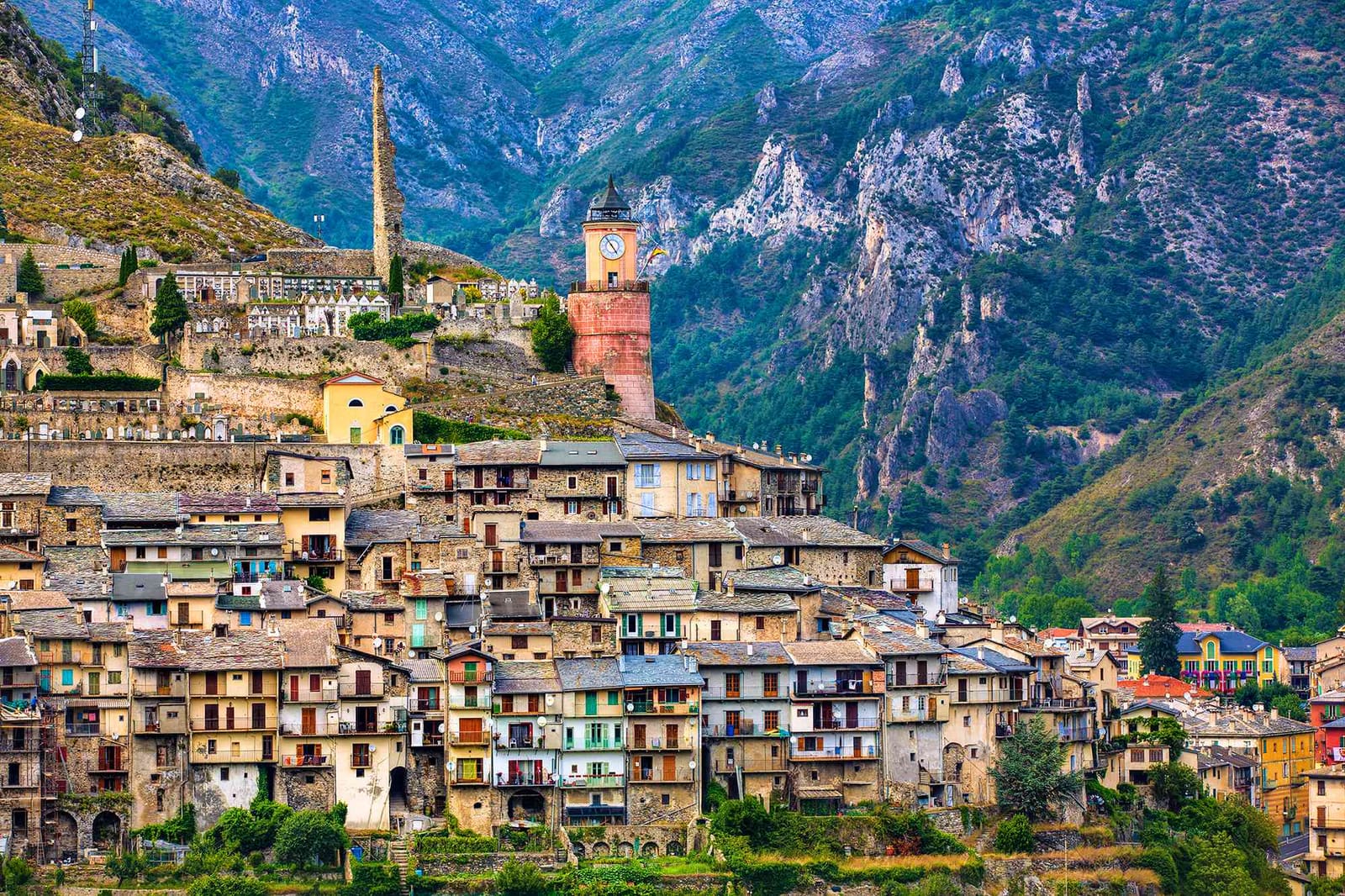
The Threshold Between Coast and Summit
There is a particular quality to the light that falls through a train window as the track begins to climb. Not the flat glare of coastal noon, but something softer, angled, filtered through pine and the first whispers of altitude. The Train des Merveilles departs from Nice, but within minutes the azure sprawl of the Mediterranean becomes memory, replaced by the ascending folds of the Maritime Alps, where villages appear as if they've grown directly from the limestone beneath them.
At Global Chic Voyage, we've long held that the most revealing journeys are those that unfold at a pace slow enough to notice the shift in vegetation, the change in roof tiles, the way a language softens or sharpens as you move through terrain. This is not high-speed rail. This is something older, more deliberate, a route that was carved through rock and over gorges not for efficiency but for connection, linking the French Riviera to the alpine hinterlands that have, for centuries, lived just beyond the reach of the coast's glittering distractions.
A Route Built for Wonder, Not Speed
The railway itself is a feat of late-nineteenth-century ambition. Tunnels bore through mountainsides; viaducts span ravines where rivers run cold and fast. The engineering is audacious, yet it recedes into the landscape rather than dominating it. What remains visible is the terrain: terraced hillsides, chestnut forests, stone hamlets where shutters are painted the muted blues and ochres of Provence, though here, at elevation, the palette is quieter, less insistent.
The train pauses at villages that exist in a state of suspension between eras. Sospel, with its medieval toll bridge spanning the Bévéra River, feels like a place where time has pooled rather than flowed. Breil-sur-Roya, tucked into a valley where the mountains press close, offers glimpses of baroque chapels and the kind of cafés where the menu has not changed in decades, not out of stubbornness but because there is no need. Further along, Tende perches near the Italian border, its narrow streets climbing steeply from the station, the air thinned by altitude and scented with woodsmoke.
The Landscape as Narrative
What distinguishes this journey is not simply the destinations but the manner in which they are revealed. The train does not rush. It follows the contours of the Roya Valley, a geography shaped by water and stone, where human habitation has always been a negotiation with verticality. Villages cling to slopes; roads switchback in ways that defy straight lines. From the train, you see what cannot be seen from a car: the full sweep of a valley, the way a village fits into its hollow, the patterns of cultivation that speak to generations of careful tending.
There are moments, rounding certain bends, when the train seems to hover above the valley floor, suspended between earth and sky. The Roya River glints below, a ribbon of silver against dark rock. Above, the peaks of the Mercantour National Park rise in jagged silhouette, still snow-capped well into spring. This is a landscape that rewards attention, that unfolds in layers the longer you look.
Villages That Remember
The mountain villages served by the Train des Merveilles exist in quiet defiance of the coastal tourism economy that dominates the region below. They are not undiscovered, nor are they untouched. But they operate on a different rhythm. In Saorge, a village that seems to defy gravity as it clings to a cliffside, the monastery of Our Lady of Miracles overlooks terraced olive groves that have been tended for centuries. The architecture here is Ligurian in influence, with tall, narrow houses painted in warm earth tones, their facades weathered by wind and time.
In Fontan, the station itself is a piece of Belle Époque charm, its wrought-iron detailing and tiled roof a reminder of an era when rail travel was an event, not merely transit. The villages along this route have not been preserved as museums; they are lived in, worked in, their stone streets echoing with the sound of daily life. Yet there is a quality to them that feels removed from the frenetic energy of the coast, a sense that here, in these high valleys, the essential rhythms of life have remained largely unchanged.
The Archaeology of Landscape
Beyond Tende, for those who continue to the terminus at Saint-Dalmas-de-Tende, the landscape opens into something more austere. The trees thin; the rock becomes more exposed. This is the approach to the Vallée des Merveilles, a high alpine valley where Bronze Age peoples carved thousands of petroglyphs into the stone, images of cattle and weapons and human figures, a record of lives lived at the edge of subsistence and mystery.
The valley itself is accessible only on foot, a deliberate hike into terrain where the air is thin and the silence profound. But even from the train, there is a sense of approaching something ancient, a landscape that has been witness to human passage for millennia. The petroglyphs are not visible from the rails, but their presence informs the journey, a reminder that these mountains have always been more than scenery, that they hold stories written in stone.
The Return Descent
The descent back toward the coast is a reversal of the ascent, but it does not feel redundant. The light changes; shadows fall differently. What was on the left is now on the right. The villages, seen from a new angle, reveal different facets: a bell tower that was hidden on the way up, a terrace garden that catches the afternoon sun. The train retraces its path, but the journey is not the same.
By the time the Mediterranean reappears, a blue expanse framed by the final tunnel's mouth, the shift is palpable. The coast, with its palms and promenades, its yachts and beaches, feels almost improbable after the stone and silence of the mountains. Yet the two are linked, not just by rail but by a deeper geography, a reminder that even the most glamorous stretches of coastline are backed by hinterlands that have their own histories, their own ways of being.
Why We Return to Slow Routes
At Global Chic Voyage, we find ourselves drawn repeatedly to journeys that resist the logic of efficiency. The Train des Merveilles is not the fastest way to reach the Maritime Alps, nor is it the most direct. But it is the most revealing. It offers a perspective that cannot be replicated by car or by air, a chance to see how a landscape unfolds when you move through it at a human pace, when you allow the journey itself to become the destination.
In an era when travel often collapses into a series of endpoints, routes like this remind us that the space between departure and arrival holds its own value. The train does not simply deliver you to a village; it shows you how that village relates to its valley, how the valley opens into mountains, how the mountains frame the sky. It is, in the truest sense, a train of wonders, not because of any single spectacle, but because of the accumulation of small revelations that occur when you slow down long enough to notice them.
Photo: Rolf St / Getty Images
Spot something wrong? Email editors@globalchicvoyage.com. We log every correction publicly.
RELATED
SEE ALL →
27 Jul 2026 / 5 min
27 Jul 2026 / 5 min
27 Jul 2026 / 5 min
24 Jul 2026 / 5 min