
Levanto Offers the Ligurian Coast Without the Crush
Why this lived-in beach town has become our preferred escape from Milan, and a smarter base for exploring Cinque Terre.
SI
27 Jul 2026 · 5 MIN READ · UPDATED 17 AUG 2026
A Beach Town That Breathes
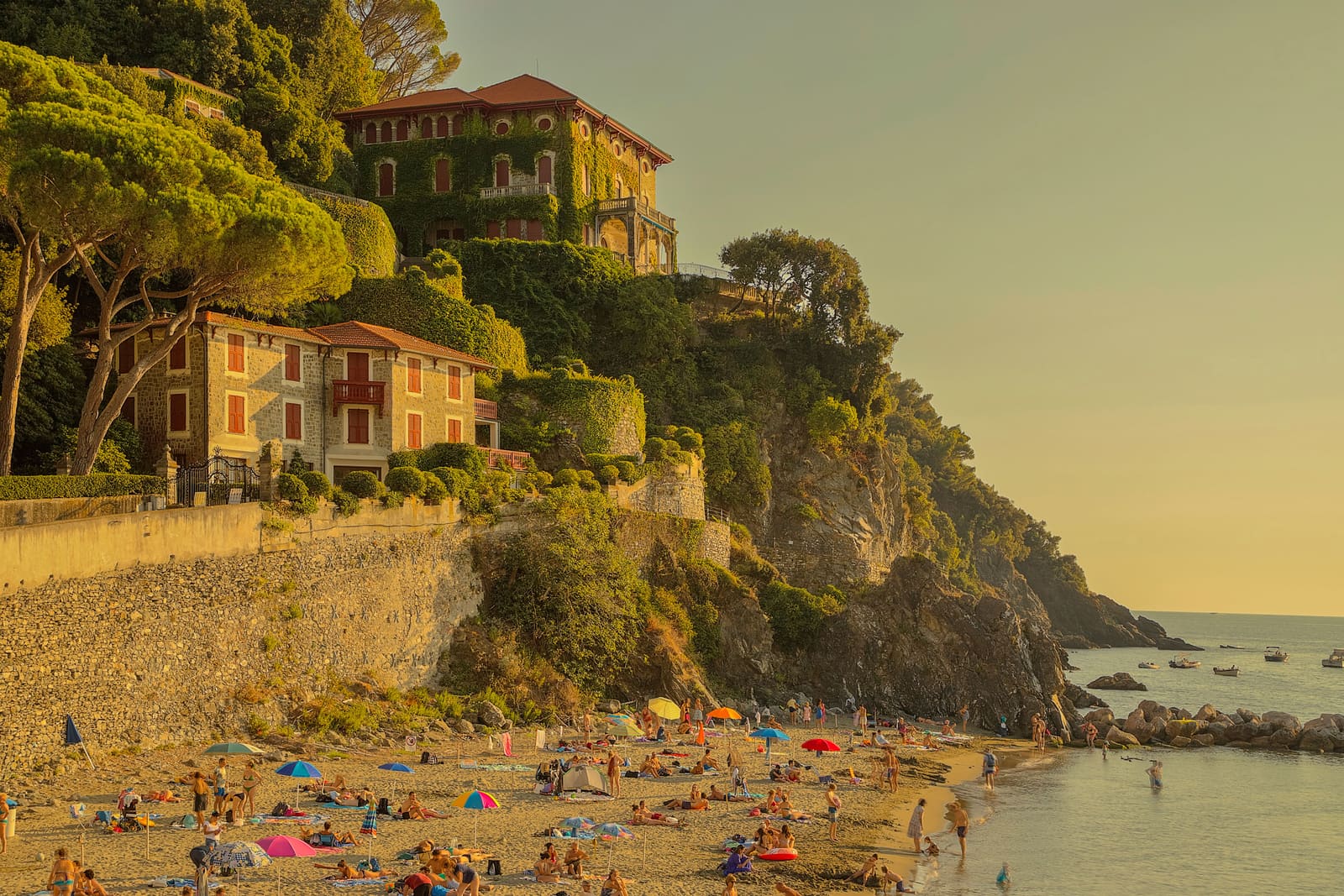
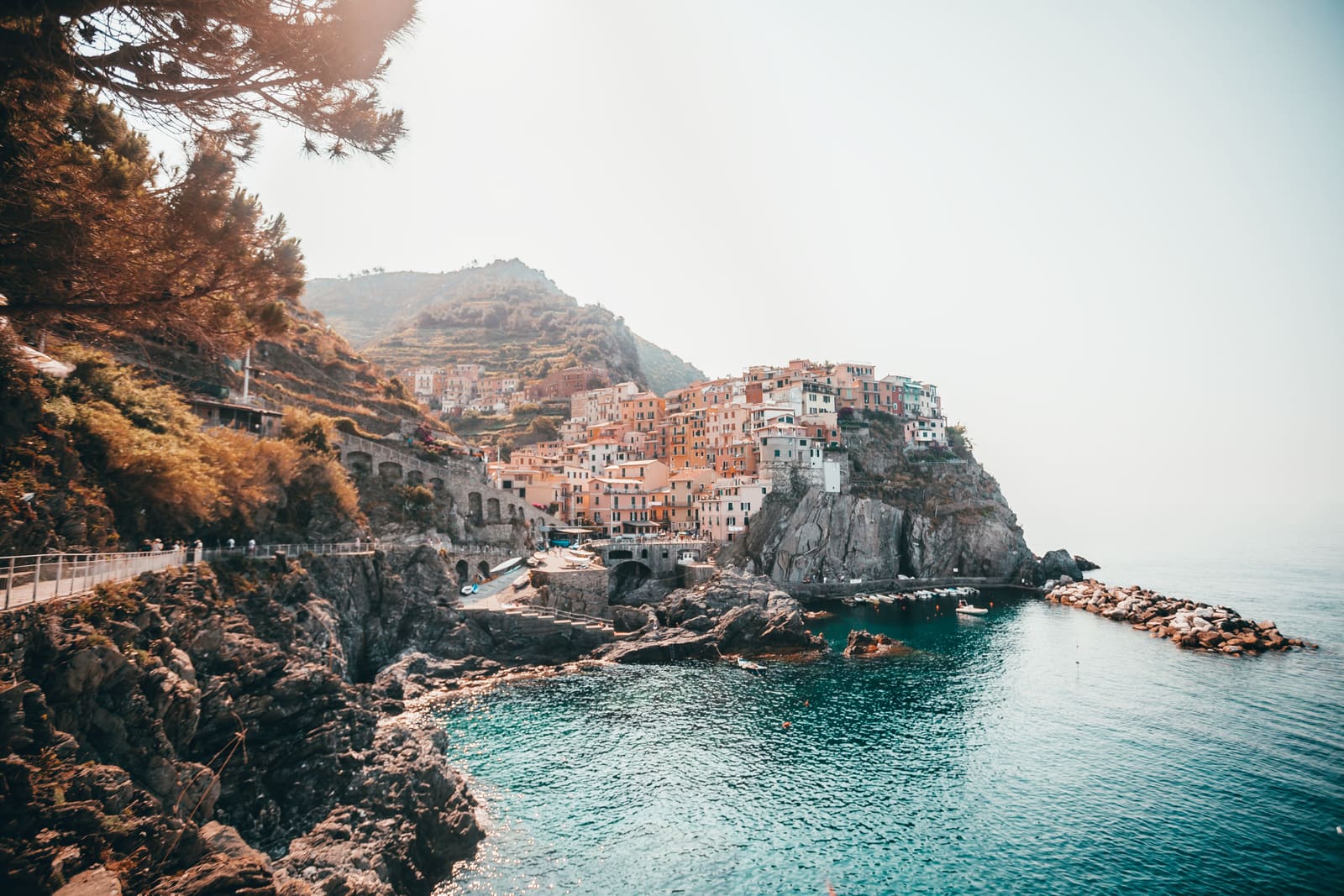
The first time we arrived in Levanto, the train doors opened onto something unexpected: space. Not the compressed verticality of Cinque Terre's fishing villages, where stone houses climb cliffs in pastel stacks, but a town that sprawls comfortably along a broad gulf, its kilometer-long shoreline backed by palm trees and the kind of Belle Époque architecture that suggests a different era of travel entirely. The Villa Agnelli, draped in bougainvillea, once hosted the FIAT family each summer. Now it anchors a promenade where the pace is unhurried, the beachgoers mostly Italian, and the sand, surprisingly, is actual sand.
At Global Chic Voyage, we've watched Cinque Terre buckle under its own fame. The five villages now absorb roughly four million visitors each year, a figure that strains medieval streets never designed for such volume. Levanto, five minutes northwest by train, offers a different proposition: a lived-in town of around 5,000 residents where tourism is secondary to daily life, where the covered market on Via XXV Aprile still serves locals first, and where you can secure a table at dinner without advance choreography.
This is not about discovering an unknown corner of Italy. Levanto has long served as a base for travelers visiting Cinque Terre, but its role has shifted. As the villages themselves become increasingly difficult to navigate during high season, Levanto has evolved from waypoint to destination, a place that rewards staying put as much as venturing out.
The Geography of Relief
What distinguishes Levanto from its more famous neighbors is not just population size but physical layout. The same steep, vine-covered hills that define the Ligurian coast surround the historic center here, but the town itself unfolds horizontally rather than vertically. There is room to move, to cycle, to sit at a café without feeling you're occupying contested real estate.
The beach reinforces this sense of abundance. Unlike the pebbly coves of Riomaggiore or Manarola, Levanto's shoreline is sandy and long, divided between private beach clubs and generous public stretches. On a July morning, you can still find space to lay a towel. The water is the same luminous turquoise, but the experience feels fundamentally different when you're not navigating crowds to reach it.
Medieval architecture survives throughout the town. The 13th-century Gothic Church of Sant'Andrea rises near the center, while the Castello di San Giorgio commands a low hill above the old quarter. The Loggia Comunale, a 16th-century reconstruction of a medieval merchants' hall, has been recognized by UNESCO as a Monument Witness to a Culture of Peace; inside, a 15th-century fresco from the original structure remains visible. These landmarks exist within the rhythm of daily life rather than as stops on a tour.
The Texture of Daily Commerce
The historic center reveals itself through narrow caruggi, the Ligurian term for the alleys that weave between pastel buildings decorated with trompe-l'œil details. These passages open periodically onto small piazzas, each anchored by a bakery or alimentari, the neighborhood grocers that stock local olive oil, preserved anchovies, and wheels of aged cheese from the valleys inland.
At PAT Bakery, near the Loggia, the counter is typically piled with gattafin, Levanto's signature fritter, a savory pocket of fried dough filled with greens and cheese. It's the kind of local specialty that hasn't migrated onto Instagram but remains central to the town's culinary identity. The covered market, a short walk away, operates on a rhythm dictated by fishing boats and harvest schedules rather than tourist traffic. Stalls overflow with wild herbs foraged from the hills, fish pulled from the water that morning, and vegetables grown on the terraced plots that climb the slopes behind town.
This infrastructure of daily commerce is what gives Levanto its particular character. You're not watching a performance of Italian coastal life; you're moving through it, buying focaccia from a shop that's been run by the same family for decades, overhearing conversations in rapid Ligurian dialect, learning which stalls at the market offer the best pesto ingredients.
The Converted Railway and What Lies Beyond
At the northwestern edge of town, a former railway tunnel has been transformed into a walking and cycling route that connects Levanto with the smaller villages of Bonassola and Framura. Much of the path remains covered, which keeps it cool even in summer, though periodic openings frame views of the sea below. The route is flat, easy, and quietly spectacular, the kind of infrastructure project that prioritizes local quality of life over tourist spectacle but benefits both.
Framura, at the far end, is even smaller than Levanto, its tiny harbor overlooked by L'Agave, a restaurant housed in the former station building. The kitchen works with seafood landed at the port and herbs gathered from the surrounding hillsides, and the wine list focuses exclusively on Ligurian producers. It's the sort of meal that reminds you how much regional cuisine depends on proximity, on ingredients that travel meters rather than kilometers.
Back in Levanto, the same philosophy informs places like Gelateria Basilico e Limone, where the gelato is made with milk from the nearby Val di Vara and flavors reference the Ligurian landscape: basil and lemon, pesto, chinotto from Savona. These are not novelty flavors but translations of the regional palate into frozen form, and the shop has earned a reputation as one of the Riviera's finest gelaterie.
Pesto, Heroic Viticulture, and the Question of Terroir
The Romano family has been producing fresh pesto in Levanto since 1976, and they now offer a one-hour workshop on the traditional mortar-and-pestle method. The technique is more exacting than it appears: the order in which ingredients are added, the angle of the pestle, the rhythm of the grinding all affect the final emulsion. The workshop concludes with a tasting paired with Vermentino, the white wine that dominates Ligurian production, and an assortment of the family's prepared pestos.
This attention to craft extends into the surrounding hills, where viticulture is often described as "heroic" because of the extreme conditions. At Cà du Ferrà, a small winery in Bonassola, the vineyards cling to steep terraces above the sea, accessible only on foot, worked entirely by hand. Owners Davide Zoppi and Giuseppe Luciano Aieta lead visits that include a tour of the winery, tastings of their wines paired with local cheeses and charcuterie, and a discussion of the challenges inherent in maintaining these ancient terraces. The experience, available by reservation, lasts roughly 90 minutes to two hours and is offered in English, Italian, and French.
What both experiences illuminate is the relationship between landscape and flavor in Liguria, where geography dictates not just what can be grown but how it must be grown. The steep slopes, the maritime climate, the thin soil all shape the final product in ways that are impossible to replicate elsewhere.
Cinque Terre Without the Card
Levanto's proximity to Cinque Terre remains one of its practical advantages. Intercity trains from Milan stop here before continuing to Monterosso, eliminating the need for regional connections. The Cinque Terre Express, the local train that links the five villages, departs from Levanto every few minutes during high season, and the journey to Monterosso takes five minutes. A seasonal ferry service also makes select calls in Levanto, offering an alternative approach by water.
The trail from Levanto to Monterosso begins outside the boundaries of Cinque Terre National Park, which means it doesn't require the Cinque Terre Trekking Card that's mandatory for the park's official trails. The route is less trafficked as a result, winding through olive groves and pine forests before climbing to Punta Mesco, the promontory that offers the only vantage point from which all five villages are visible simultaneously. It's a perspective that reorients your understanding of the coast, revealing the villages not as isolated jewels but as points along a continuous ribbon of settlement.
From Punta Mesco, the trail descends into Monterosso, where you can catch the train back to Levanto or continue deeper into Cinque Terre. But increasingly, we find ourselves choosing to return the way we came, back to the town where the rhythm is slower, the streets wider, and the experience less mediated by the machinery of mass tourism.
Where the Riviera Pauses
Levanto has its share of three-star hotels that serve their purpose efficiently, but two properties stand out for offering something more considered. Oasi Eco Boutique Hotel, a five-minute walk from the beach, is family-run and features 14 individually designed rooms where warm wood tones meet vibrant accent colors and contemporary design. Some rooms include private balconies; others open directly onto the garden. The breakfast spread emphasizes Ligurian focaccia, eggs made to order, and a selection of sweet and savory items sourced locally.
Villa Valentina, set in the hills just outside town, is surrounded by olive groves and gardens. The nine rooms and suites evoke a refined Ligurian country house, with whitewashed beamed ceilings, painted wooden furniture, and French doors that open onto the landscape. Breakfast is homemade, and the property provides a complimentary shuttle and bicycles for reaching town.
Both properties understand that accommodation in a place like Levanto should enhance rather than compete with the town itself. They offer comfort and character without demanding to be the center of your stay.
The Case for Staying
Levanto is not short on activity. There are surf schools, paddleboarding, kayaking, sailing, bike rentals, and multiple hiking trails that branch into the hills behind town. But the town's real appeal lies in its capacity to slow you down. Evenings here follow a predictable, pleasurable rhythm: an aperitivo at a café facing the sea, dinner at a trattoria where the menu changes with the catch, a walk along the promenade as the light fades.
Focacceria Domè, on Via Dante Alighieri, serves some of the finest focaccia in Liguria, including the cheese-filled Recco style that's a regional specialty. The shop maintains an extensive selection throughout the day, making it ideal for a quick meal or provisions for the beach. Expect a line at lunch, which is the surest sign of quality.
What Levanto offers, ultimately, is a version of the Ligurian coast that still functions as a place rather than a product. The medieval remnants, the Belle Époque villas, the sandy beach, the covered market are all here not because they've been preserved for visitors but because they remain integral to the town's daily life. You can visit Cinque Terre from here, and you should. But you may find yourself spending more time in Levanto than you planned, drawn back by the rare luxury of space, by the pleasure of a town that hasn't yet been forced to choose between residents and tourists, by the simple fact that you can still hear yourself think.
Credit: Getty Images
Spot something wrong? Email editors@globalchicvoyage.com. We log every correction publicly.
RELATED
SEE ALL →
27 Jul 2026 / 5 min
27 Jul 2026 / 5 min
2 Jul 2026 / 5 min
8 Aug 2026 / 5 min