
How Vietnam's Largest Resort Chain Is Rewriting the Rules of Distribution in Asia
As Vinpearl inks partnerships with four major platforms, a new model emerges for integrated hospitality ecosystems seeking global reach
SI
9 Jun 2026 · 5 MIN READ · UPDATED 17 AUG 2026
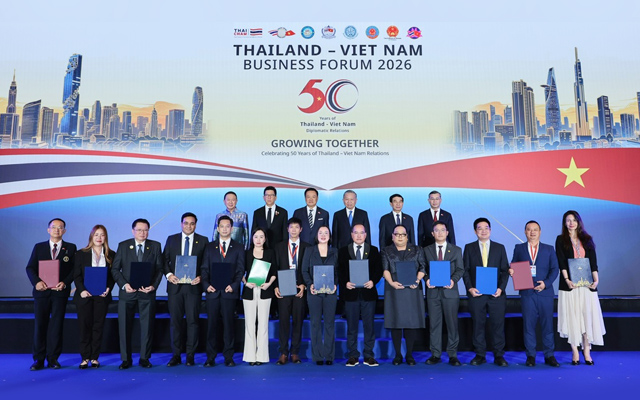
The Handshake Economy
There's a particular kind of photograph that emerges from state visits: rows of suited executives, documents spread across mahogany tables, flags arranged symmetrically in the background. Between late May and early June, as Vietnamese officials traveled through Bangkok, Singapore, and Manila, one such series of images appeared—but the story they tell extends far beyond diplomatic protocol.
At Global Chic Voyage, we've watched Vietnam's hospitality sector mature over the past decade, moving from a destination of inherited colonial charm and backpacker beaches to something more deliberate, more architecturally confident, more systematically ambitious. The recent agreements between Vinpearl—the country's largest integrated resort operator—and four distribution platforms represent not merely expansion, but a fundamental rethinking of how vertically integrated hospitality ecosystems access international markets.
Four Doors, One Strategy
The partnerships themselves read like a deliberate mapping of Asia's travel infrastructure. Through Agoda, Vinpearl gains distribution across Southeast Asia, India, the Middle East, and Australia—markets where online travel agencies have replaced traditional tour operators as primary booking channels. The agreement extends beyond accommodation to encompass VinWonders, the company's theme park and attraction portfolio, recognizing that modern travelers increasingly book experiences rather than merely rooms.
The collaboration with AirAsia Move reflects a different logic: the integration of flights, hotels, and attractions within a single booking flow. For Vinpearl properties in Phu Quoc, Nha Trang, and Danang-Hoi An, this means appearing not as a separate search result but as a seamless component of the travel itinerary—the hospitality equivalent of one-click purchasing.
In Singapore, agreements with BeMyGuest and GlobalTix target experience distribution specifically, focusing on attractions rather than accommodation. These platforms operate in the space between traditional tour operators and DIY travel, curating activities for travelers who want guidance without rigidity. For VinWonders products, the partnerships open channels into China and India—markets where group leisure travel remains culturally normative even as booking mechanisms digitize.
What unites these four agreements is a recognition that distribution has fragmented. The era of relying on a single global distribution system or a handful of wholesale partners has ended; in its place, a portfolio approach that matches different platforms to different traveler segments and booking behaviors.
The Vertical Integration Advantage
Vinpearl's structure—owning not just hotels but also theme parks, cable cars, safari parks, and water parks across multiple destinations—creates both opportunity and complexity in distribution. Traditional resort operators can list rooms on an OTA and call it a day. But when your product includes accommodation, attractions, dining, and entertainment across an interconnected ecosystem, the booking experience becomes more intricate.
The company's approach suggests a solution: rather than forcing this complexity onto a single platform, distribute different components through channels optimized for each. Accommodation flows through Agoda's hotel-focused infrastructure. Bundled itineraries route through AirAsia Move's flight-plus-hotel engine. Standalone experiences list on BeMyGuest and GlobalTix's activity marketplaces. The guest experience remains integrated, but the distribution pathway flexes to match how different travelers actually search and book.
This model may prove instructive for other vertically integrated resort operators, particularly in Asia where large-scale mixed-use tourism developments have become increasingly common. The question is less whether to embrace multi-channel distribution—that ship has sailed—and more how to orchestrate it without fragmenting the brand experience or creating operational chaos on the ground.
Vietnam's Tourism Infrastructure Play
These partnerships arrived as part of state visits, and that timing is not incidental. Vietnam's government has made tourism development a national priority, setting ambitious targets for international arrivals that require not just building hotels but ensuring those hotels can reach global markets. Vinpearl, as a domestic operator with international ambitions, becomes both beneficiary and instrument of this strategy.
We've seen this pattern before in other Asian markets: Singapore's integrated resorts, Thailand's tourism-focused soft power initiatives, Malaysia's MICE infrastructure investments. What distinguishes Vietnam's current moment is the emphasis on digital distribution partnerships rather than traditional marketing campaigns. The recognition seems to be that in 2026, access to booking platforms matters more than glossy brochures.
For travelers, this manifests as increased visibility. Vinpearl properties and VinWonders attractions that might previously have required direct booking or working through local tour operators now appear in the same search results as Marriotts and Hiltons, Disneylands and Universal Studios. This democratization of distribution levels the playing field—though whether it leads to commodification or differentiation depends on how distinctive the underlying product remains.
Why It Matters
The broader implication extends beyond one company's distribution strategy. As Asia's hospitality landscape continues to evolve, we're seeing a divergence between two models: the global chain approach of standardized products distributed through established channels, and the integrated ecosystem approach of destination-specific experiences distributed through multiple specialized platforms.
Vinpearl's recent partnerships suggest the second model may be gaining traction, particularly in markets where domestic capital has built large-scale tourism infrastructure and now seeks international reach without sacrificing local character. The challenge lies in maintaining operational coherence while distributing through fragmented channels—ensuring that a guest who books a Nha Trang resort through Agoda and a VinWonders pass through BeMyGuest experiences them as connected rather than separate purchases.
This matters for travelers because it shapes what becomes visible, what becomes bookable, what becomes imaginable as a travel experience. Distribution partnerships don't just move existing products to new audiences; they influence which products get built, which destinations receive investment, which forms of tourism become economically viable.
The Long Game
Sitting in a resort in Phu Quoc last autumn, watching families queue for the cable car to Hon Thom Island, we wondered how many had booked directly versus through third-party platforms, and whether it mattered. The experience was the same—the glass-bottomed cable car, the white-sand beach, the theme park rides—but the pathway to that experience, the moment of decision and payment, had multiplied.
Vinpearl's strategy suggests that in mature digital markets, distribution is no longer a single channel but an orchestrated ecosystem. The four partnerships announced in May represent not a pivot but an intensification—a recognition that reaching global travelers in 2026 requires being present across the fractured landscape of how people actually plan and book trips.
For Vietnam's tourism sector, these agreements may mark a turning point: the moment when domestic operators stopped relying on location and price as their primary advantages and began competing on distribution sophistication. Whether other regional players follow this model, or whether it remains specific to vertically integrated ecosystems like Vinpearl's, will shape Asia's hospitality landscape for years to come.
What's certain is that the handshakes in Bangkok and Singapore, the documents signed under flags and cameras, represent more than diplomatic theater. They're the visible manifestation of a quieter transformation in how destinations access global markets—and how travelers access destinations.
Spot something wrong? Email editors@globalchicvoyage.com. We log every correction publicly.
RELATED
SEE ALL →
9 Jul 2026 / 5 min

8 Aug 2026 / 5 min

8 Aug 2026 / 5 min
7 Aug 2026 / 5 min