
The Geography of Enchantment: Where Wonder Still Lives
From ancient stone circles to landscapes that defy explanation, the places that continue to stir something primal in us.
SI
7 Aug 2026 · 5 MIN READ · UPDATED 17 AUG 2026
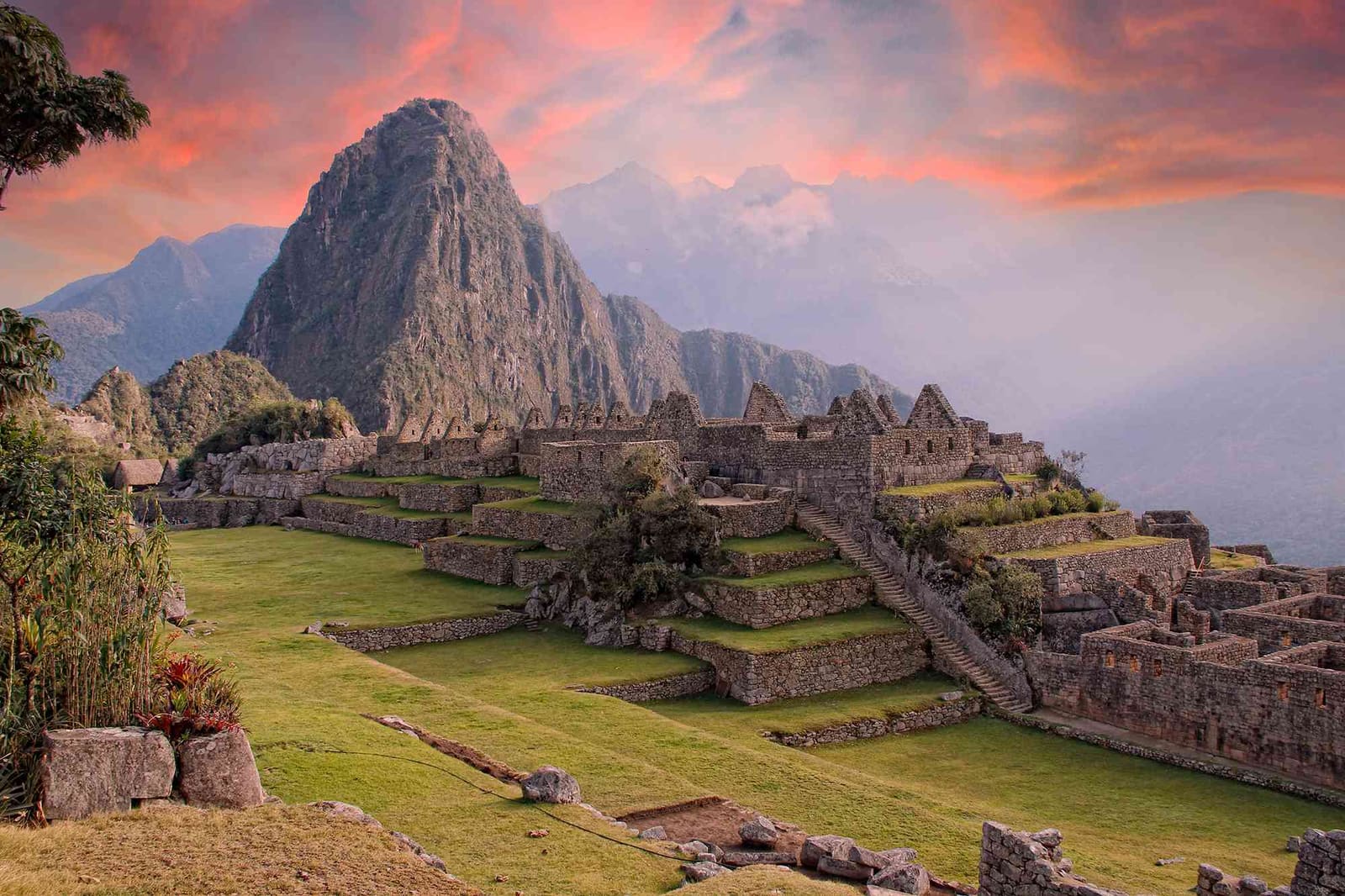
The Alchemy of Place
There's a moment, just before sunrise at certain latitudes, when the world suspends itself between darkness and definition. The air tastes different. Your skin registers a frequency you can't quite name. You stand still, and the place does something to you that a photograph will never capture, that language struggles to hold.
At Global Chic Voyage, we've spent years chasing this sensation across continents. Not the manufactured enchantment of themed resorts or Instagram-optimized viewpoints, but the raw, inexplicable magnetism of places that seem to operate under different physical laws. The destinations that make rationalists reach for poetry. The landscapes that ancient peoples marked as sacred, long before tourism boards existed to commodify wonder.
What we've learned is this: magic, in the geographic sense, isn't arbitrary. It concentrates in specific topographies, at the intersection of natural drama and human mythology, where geology and story have been colliding for millennia.
When Stone Remembers
The most potent examples often involve ruins, those places where ambition met eternity and lost, leaving behind questions carved in stone. Ancient architectural complexes possess a particular kind of gravity. They remind us that civilizations rose to extraordinary heights of sophistication, then vanished so completely that even their names were forgotten for centuries.
Walking through structures built by hands that turned to dust three thousand years ago does something to your sense of time. The scale alone, the precision of massive blocks fitted without mortar, the astronomical alignments that demonstrate knowledge we're only now beginning to reconstruct. These aren't merely tourist sites. They're arguments in stone against our contemporary arrogance, evidence that wonder isn't a modern invention.
The way light moves through these spaces matters. The angle of winter solstice sun hitting a specific altar. The acoustic properties of a chamber that amplify a whisper into something that sounds like prophecy. Ancient builders understood theatricality, the staging of transcendence. They knew how to make a place feel charged with meaning.
Landscapes That Shouldn't Exist
Then there are the geological anomalies, places where nature seems to have been experimenting with possibility. Forests where trees grow in impossible configurations. Coastlines carved into cathedrals by millennia of wave action. Mountain ranges that look like the spine of a sleeping god.
These landscapes trigger something pre-verbal in us. Our ancestors survived by reading terrain, by understanding which places offered shelter and which promised danger. Certain formations still speak that old language. A slot canyon where light turns liquid. A volcanic lake the color of turquoise jewelry. These aren't just beautiful, they're other. They make you aware of the planet as a living, inventive thing.
Water amplifies the effect. The way it pools in ancient calderas, impossibly blue. The way it carves through limestone, creating underground rivers that flow through cathedral-scale caverns. Waterfalls that drop so far the water turns to mist before landing. We're drawn to water not just for survival but for the way it transforms light, the way it sounds, the negative ions it throws into the air that actually alter brain chemistry.
The Architecture of Belief
Sacred sites occupy their own category. Pilgrimage destinations where millions of footsteps have worn grooves into stone. Mountain monasteries clinging to cliff faces that seem designed to test faith. Temple complexes where every surface is carved with stories, where the air is thick with centuries of incense and prayer.
What makes these places magnetic isn't necessarily the belief system they represent. It's the accumulated human longing they've absorbed. Intention, repeated over centuries, seems to change the texture of a place. Whether you subscribe to any particular cosmology, you can feel the weight of all that hope and devotion. The architecture serves as a container for something invisible but palpable.
Modern secular visitors often report unexpected emotional responses in these spaces. Tears without clear cause. A sudden sense of scale, of being part of something vast and continuous. The buildings themselves are designed to produce these effects, using proportion, light, sound, and procession to move people from ordinary consciousness into something more receptive, more open.
Where Myth Still Walks
The most enchanted destinations tend to be places where local mythology remains alive, where stories aren't museum pieces but living frameworks for understanding place. Islands where every rock formation has a name and a tale. Valleys where specific trees are still honored. Mountains considered too sacred to climb, their summits left to the divine and the snow.
These aren't quaint superstitions. They represent a different relationship with landscape, one that acknowledges mystery, that doesn't require everything to be mapped, measured, and monetized. In an age of exhaustive documentation, there's something profoundly refreshing about places that refuse complete legibility, that maintain zones of unknowing.
The destinations that feel most magical are often those where this older sensibility persists beneath the surface of modernity. Where tourism exists but hasn't entirely displaced local cosmology. Where guides can explain both the geological formation and the story of the god who sleeps inside the mountain, and neither explanation cancels the other out.
The Pursuit of Awe
What we're really talking about when we discuss magical destinations is the human need for awe. Not the performative gasp of social media amazement, but the genuine article: the experience of encountering something so vast or beautiful or strange that your normal categories break down. Awe is what happens when reality exceeds your capacity to quickly process it.
Research confirms what travelers have always known intuitively: experiences of awe have measurable effects. They shift perspective, reduce self-focus, increase generosity and creativity. They're psychologically and even physically beneficial. The destinations that reliably produce this state aren't random. They share certain characteristics: scale that humbles, beauty that arrests, age that puts human timelines in perspective, strangeness that disrupts assumptions.
At Global Chic Voyage, we've noticed that the pursuit of these experiences is intensifying. As daily life becomes more mediated, more algorithmic, more predictable, the hunger for places that feel genuinely different grows sharper. Travelers aren't just collecting destinations. They're seeking encounters with the numinous, with whatever lies beyond the screen, beyond the quantified self, beyond the relentless optimization of modern existence.
Enchantment as Resistance
There's a political dimension to seeking out magical places, though it's rarely acknowledged. To prioritize wonder is to resist a worldview that insists everything can and should be explained, commodified, and controlled. To stand in a landscape that makes you feel small is to reject the narcissism that late capitalism encourages. To spend time in places that have survived for millennia is to adopt a longer view than quarterly earnings reports allow.
The destinations that feel most magical are often those under threat. Climate change altering ecosystems. Over-tourism eroding the very qualities that drew visitors. Development pressuring sacred sites. Part of what we feel in these places might be a kind of anticipatory grief, an awareness that this particular configuration of beauty and meaning is fragile, possibly temporary.
Which makes the experience more urgent, not less. To witness enchantment, to let it work on you, to return changed: this is the real luxury travel offers. Not comfort or status, but transformation. Not escape from reality, but a more vivid encounter with it.
Mapping the Ineffable
Can you rank magic? Quantify the unquantifiable? There's something absurd about the attempt, something that misses the point entirely. Yet we persist in making lists, declaring winners, as if wonder were a competitive sport. Perhaps what we're really seeking is permission. An authoritative voice telling us: yes, this place is worth the journey. Yes, you'll find what you're looking for there.
The truth is more democratic and more personal. A place that transforms one traveler might leave another unmoved. Magic is partly in the destination, partly in what you bring to it. Timing matters. Weather matters. Your state of mind, your companions, the book you happened to read the night before - all of it shapes the encounter.
Still, certain places appear on everyone's list. The ancient wonders that have been drawing pilgrims and travelers for centuries. The natural cathedrals that need no marketing. These are the destinations that have proven themselves across cultures and eras, that continue to deliver that otherworldly feeling reliably enough to build an entire travel industry around them.
What unites them isn't geography or climate or even beauty in the conventional sense. It's a quality of presence, of thereness. They feel more real than real, more saturated with meaning. They remind us that the world is larger and stranger and more beautiful than our daily routines suggest. And in an age of diminishment, when so much feels exhausted and depleted, that reminder might be the most valuable thing travel can offer.
Credit: Unaihuizi / Getty Images
Spot something wrong? Email editors@globalchicvoyage.com. We log every correction publicly.
RELATED
SEE ALL →
17 Jul 2026 / 5 min
8 Aug 2026 / 5 min

31 Jul 2026 / 5 min
30 Jul 2026 / 5 min