
Where the Sun Never Seems to Set: Málaga's Gift of Light
On the Andalusian coast, one Spanish city bathes in more than 3,000 hours of sunshine each year - and it changes everything about how you travel.
SI
8 Aug 2026 · 5 MIN READ · UPDATED 17 AUG 2026
A City Built for the Sun
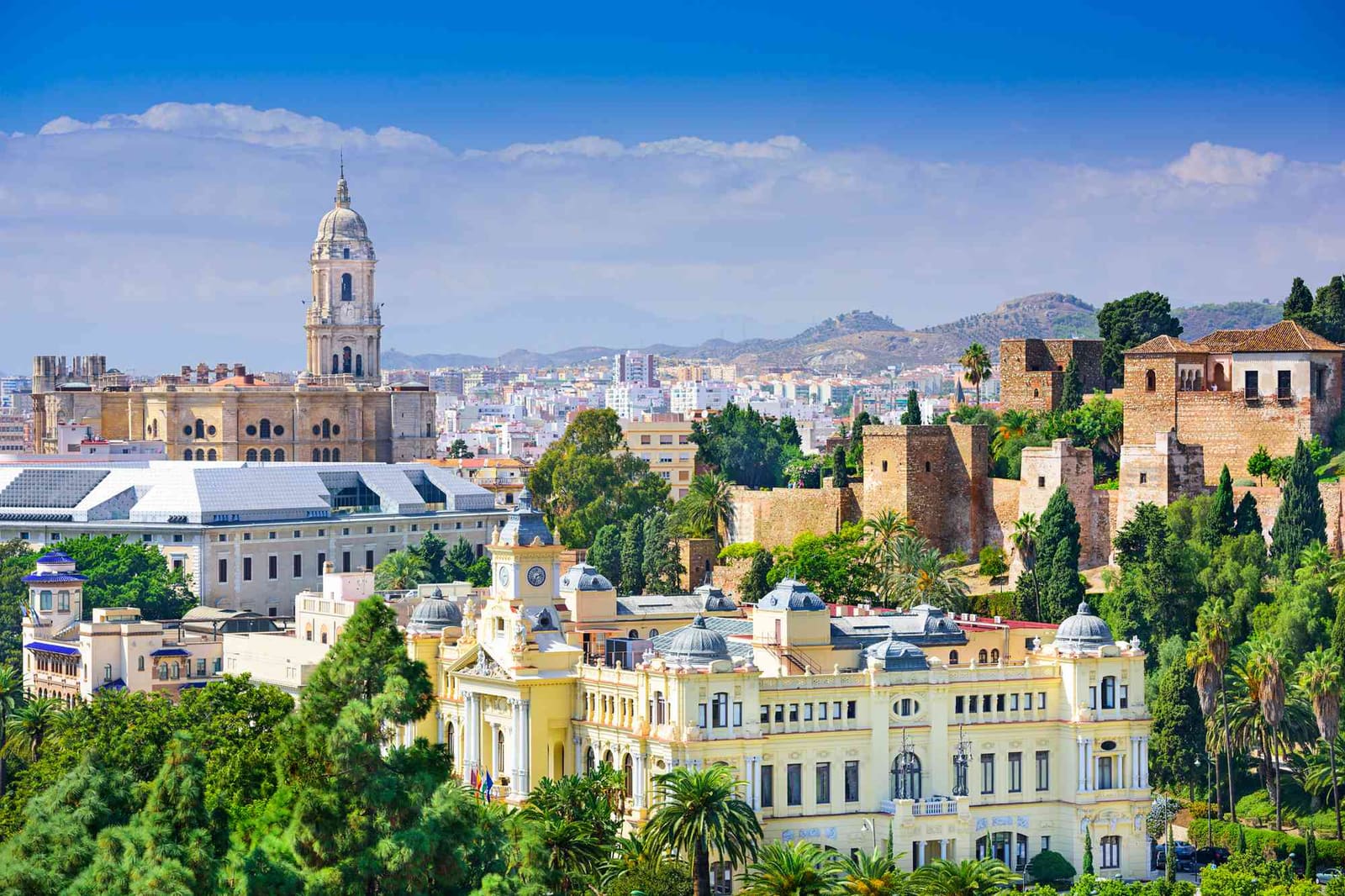
The first thing you notice in Málaga is not the Picasso Museum or the Moorish fortifications climbing the hillside. It is the light. Sharp, unforgiving, and constant, it floods the Plaza de la Constitución by mid-morning and lingers on whitewashed facades well into the evening. This is a city that sees more than 3,000 hours of sunshine each year, a figure that places it at the top of Europe's luminosity rankings and fundamentally alters the architecture, the pace of life, and the way travelers move through its streets.
At Global Chic Voyage, we have returned to Málaga in different seasons and found the same truth: the sun is the city's defining feature, more than its Costa del Sol beaches or its reinvention as a cultural hub. It dictates when shops close, when restaurants open their terraces, and when locals retreat indoors. To visit Málaga without accounting for its relentless brightness is to misunderstand the destination entirely.
The Geography of Brightness
Málaga sits on the southern edge of the Iberian Peninsula, sheltered by mountains that block Atlantic weather systems and trap Mediterranean warmth. The result is a microclimate that delivers clear skies on days when rain soaks Seville or clouds hang over Granada. The city's position at latitude 36 degrees north, roughly parallel to Tunisia, ensures long daylight hours even in winter, when northern Europe slips into grey twilight by mid-afternoon.
This geography has consequences. The vegetation is North African in character: date palms, agaves, and bougainvillea that thrive in heat and drought. The architecture responds with thick walls, small windows, and interior courtyards designed to create shade and circulate air. The traditional siesta is not laziness but survival, a recognition that the hours between two and five in the afternoon are best spent away from direct sun.
For travelers, this means rethinking the rhythm of a day. Morning explorations should begin early, before the light becomes punishing. The Alcazaba, Málaga's Moorish fortress, is best visited at nine, when its gardens are still cool and the views over the port are softened by haze. By noon, the smart move is to follow local custom: retreat to a shaded plaza, order a tinto de verano, and wait.
How Light Shapes the Urban Fabric
The cities we have loved most deeply are those that respond honestly to their climate, and Málaga does this with a clarity born of necessity. The historic center is a warren of narrow lanes engineered to block midday sun, their buildings leaning close enough that laundry strung between balconies barely stirs. The newer Muelle Uno waterfront district, by contrast, embraces exposure: wide promenades, reflective surfaces, and palm-lined boulevards that would be unbearable in a cloudier city but here feel appropriate, even exhilarating.
Public space is calibrated for shade. The city's parks plant trees with dense canopies, jacarandas and ficus that create rooms of coolness within the heat. Plaza de la Merced, where Picasso was born, is ringed by cafés whose awnings extend almost to the street, carving out zones where you can sit for hours without moving into direct light. This is urban design as climate strategy, and it works.
The light also affects color. Málaga's buildings are overwhelmingly white, a practical choice that reflects heat but also creates a visual uniformity that can feel austere to visitors expecting the terracotta warmth of Tuscany or the pastel charm of Lisbon. Against the hard blue of the sky, the effect is almost abstract, a study in contrast that photographers chase and that painters, including the young Picasso, absorbed into their palettes.
The Rituals of a Sun-Drenched Life
To spend time in Málaga is to observe how a culture adapts to abundance. The evening paseo, the slow collective stroll through the city center, begins only after the sun has lost its intensity, around eight or nine. Dinner reservations are rarely before ten. Beach clubs along La Malagueta stay open until the early hours, their terraces packed with families and couples who have spent the day indoors and now emerge to claim the night.
This inversion of the northern European schedule can disorient travelers accustomed to early dinners and quiet evenings. But it is also liberating. The knowledge that daylight will linger until well past nine in summer allows for a different kind of exploration, one that folds rest and activity into a longer, more elastic day. You can visit the Carmen Thyssen Museum in the cool of late afternoon, then walk to the old fishermen's quarter of El Palo for grilled sardines as the sun finally sets over the Mediterranean.
The sun also enables a particular kind of outdoor culture that thrives here more than in other Spanish cities. Rooftop bars are everywhere, not as novelty but as standard. Chiringuitos, the beach shacks serving fried fish and cold beer, operate year-round because the weather permits it. Even in January, when northern Europe is frozen, Málaga's terraces are full, their patrons in light jackets but otherwise comfortable, soaking up winter sun that feels like a gift.
The Economics of Endless Summer
Málaga's sunshine is not just a climatic fact; it is an economic engine. The city has leveraged its weather to become one of Spain's fastest-growing destinations, attracting retirees, digital nomads, and tourists who might once have chosen the Canary Islands or the Algarve. The airport, Spain's fourth busiest, handles more than 20 million passengers annually, many of them drawn by the promise of reliable warmth.
This has brought investment but also tension. The historic center, once sleepy and neglected, is now crowded with vacation rentals and boutique hotels. Locals complain about rising rents and the erosion of neighborhood character, familiar grievances in cities that have traded authenticity for tourism revenue. The sun, in this sense, is both asset and liability, the very thing that makes Málaga desirable and the catalyst for its transformation.
Yet the city has managed its growth with more care than some coastal neighbors. Málaga has invested in cultural infrastructure, opening museums dedicated to Picasso, Russian art, and contemporary glass. It has preserved its food markets, including the Mercado Central de Atarazanas, where vendors still sell the morning's catch and produce from nearby farms. The balance is imperfect, but the intent is clear: to remain a place where people live, not just visit.
What the Light Demands of Travelers
Visiting Málaga requires preparation that goes beyond the usual travel logistics. Sunscreen is essential, not optional, especially in summer when UV levels peak and shade is scarce outside the old quarter. A wide-brimmed hat, sunglasses, and light, breathable clothing are not fashion choices but practical necessities. We have learned, through trial and error, that synthetic fabrics trap heat and that linen, despite its tendency to wrinkle, is the only sensible option.
Hydration becomes a constant concern. The dry heat is deceptive; you can walk for hours without noticing how much moisture you are losing until dizziness sets in. Carry water, and drink it. The ubiquitous horchata stands and juice bars are not indulgences but survival strategies.
The light also affects photography. The midday sun washes out color and flattens depth, making even dramatic architecture look bland. The golden hours, just after sunrise and before sunset, are brief but spectacular, casting long shadows and warming the white buildings to amber. If you are serious about capturing Málaga, plan your days around these windows.
Why Málaga Matters Beyond the Weather
It would be easy to reduce Málaga to a datapoint, a city that wins the sunshine sweepstakes and offers little else. But that would miss the deeper story. Málaga's light is not just a tourist draw; it is a shaping force that has influenced centuries of architecture, agriculture, and daily life. It has made the city a crossroads for cultures that thrive in warmth - Phoenicians, Romans, Moors - and it continues to attract people seeking not just a vacation but a different relationship with the outdoors, with time, with the rhythms of a day.
The cities we return to are rarely the ones with the most monuments or the best restaurants. They are the ones that feel coherent, where climate and culture align in ways that seem inevitable. Málaga is such a place. Its brightness is not an accident or a marketing slogan but the organizing principle around which everything else revolves. To walk its streets in August, when the heat is nearly unbearable, or in February, when northern Europe is still dark, is to understand how much the sun can shape a place and the people who live there.
For travelers seeking warmth, reliability, and a city that has learned to live gracefully with abundance, Málaga offers something rare: a destination where the weather is not just backdrop but character, as essential to the experience as any museum or meal. Pack your SPF, adjust your schedule, and prepare to see Europe's brightest city on its own terms.
Credit: Sean Pavone / Getty Images
Spot something wrong? Email editors@globalchicvoyage.com. We log every correction publicly.
RELATED
SEE ALL →
17 Jul 2026 / 5 min
9 Jul 2026 / 5 min
25 Jul 2026 / 5 min
7 Aug 2026 / 5 min