
Seven Ways to Live the Odyssey Beyond the Screen
Greece's islands and coastlines offer travelers a chance to walk in the footsteps of Homer's hero, where ancient myth still shapes daily life
SI
22 Jul 2026 · 5 MIN READ · UPDATED 17 AUG 2026
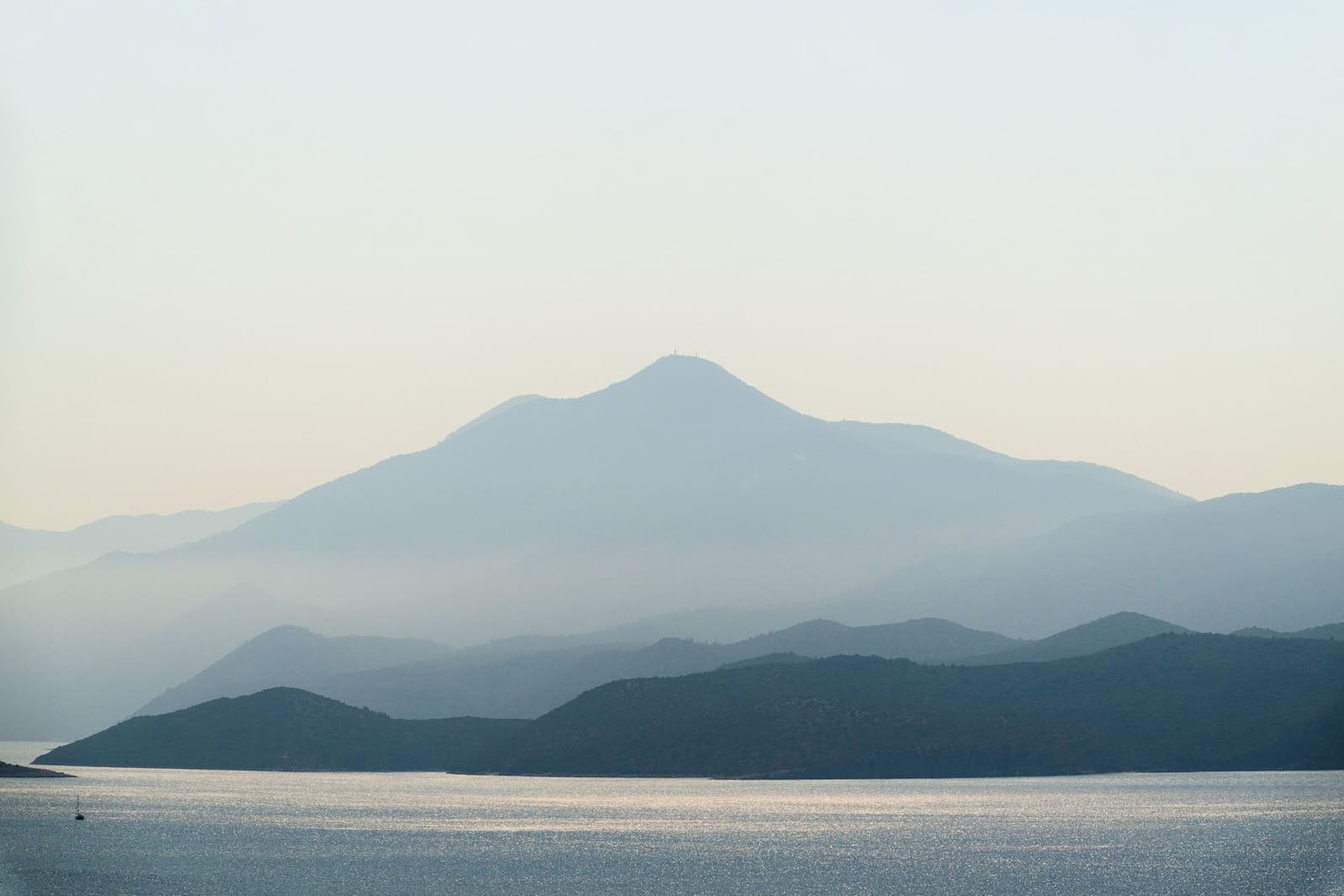
The Living Epic
Picture a neighbor leaving wild greens on your doorstep without announcement, or a stranger stopping to help when your car breaks down on a dusty island road. In Greece, these small gestures carry the same spirit that Homer wove into his epic more than two and a half millennia ago: xenia, the sacred art of hospitality, and the quiet understanding that we are all travelers in need of kindness.
At Global Chic Voyage, we've watched how certain destinations become inseparable from the stories told about them. Greece is unusual in this regard. The Odyssey is not merely set here; it lives here, embedded in the rhythm of Easter homecomings, in the way families press homemade raki and pastries into the hands of departing relatives, in the collective memory of hardship and displacement that shaped the modern nation. The poem's central obsession with nostos, that untranslatable longing for home and belonging, remains woven into the fabric of Greek life.
With renewed interest in Homer's hero, travelers are naturally drawn to the most obvious landmarks. But the real journey into the world of the Odyssey requires something quieter: a willingness to move slowly, to listen, and to encounter the epic not as a checklist of filming locations but as a lens through which to understand a place and its people.
Walking Through Words
There is something profoundly Greek about the idea of philosophy as a walking practice. Socrates and Aristotle understood that movement and thought are companions, that the body's rhythm can open the mind to deeper questions. In the olive groves of Messenia, this ancient tradition has been revived in the form of guided walks led by classical scholars who use the landscape itself as a text.
As you move through dappled light and the scent of wild herbs, the conversation turns to heroism, resilience, and that elusive concept of nostos. What does it mean to belong somewhere? How do we understand identity when we are far from home? The Odyssey becomes not a relic but a living inquiry, its questions as urgent now as they were in the eighth century BC.
Messenia holds a special place in the narrative. This is where Telemachus, Odysseus's son, traveled in search of news about his missing father, and the region's archaeological richness reflects its centrality to the Mycenaean world that inspired Homer. The resort destination of Costa Navarino has embraced this heritage, offering philosophy walks alongside spa treatments rooted in ancient wellness traditions. The juxtaposition is deliberate: luxury grounded in place, comfort that does not erase context.
An Island Crowned with Forests
Ithaca announces itself through Odysseus's own words: a rugged island crowned with Mount Neriton, covered in waving forests. Modern Ithaca remains faithful to that description, its steep hillsides thick with green, its coastline jagged and dramatic. This is the island where Penelope waited, where the hero's palace once stood, and where travelers today can trace the geography of myth with surprising precision.
In the village of Stavros, Italian architect Bruno Mazzali created a detailed model of Odysseus's palace, a work of scholarly imagination that helps visitors visualize the epic's domestic heart. Nearby, the archaeological museum holds a clay mask inscribed with a prayer to Odysseus, a tangible link between ancient worship and literary fame. Further afield, a hike up to Homer's School leads to a monumental sanctuary that some archaeologists believe may be the actual site of the palace itself.
Whether or not the identification is correct matters less than the experience of moving through landscape that has been imagined and re-imagined for thousands of years. Ithaca History Tours offers eight-hour guided explorations of these sites, and the island's capital, Vathy, provides a base in the form of Perantzada Hotel 1811, a boutique property set in a renovated nineteenth-century mansion.
Rowing Toward Myth
The Odyssey is, above all, a story of the sea. Odysseus and his crew navigate by stars and instinct, encountering islands that shift between the real and the fantastical. To understand the epic's geography, you need to spend time on the water, feeling the wind and watching how coastlines change as you approach.
Sailing trips through the Ionian Islands offer exactly this perspective. Unlike cruises that treat islands as brief stops, a hands-on sailing journey allows you to experience the rhythm of ancient travel: the long stretches of open water, the relief of landfall, the way each harbor has its own character. SailTies offers a ten-day trip called The Odyssey Return, departing from Kefalonia and calling at Ithaca, Paxos, and Corfu. Participants help with the sailing, learning the physical work that underpins every voyage.
For those who prefer a more refined approach, Sunsail provides a similar route from Lefkas with greater comfort. Either way, the experience transforms the epic from a linear narrative into something spatial and embodied. You begin to understand why Homer spent so much time describing arrivals and departures, why harbors mattered, why the sea was both highway and hazard.
Messenia's Hidden Layers
Filming locations rarely tell the whole story. Messenia's role in the Odyssey is substantial: this is the kingdom of Nestor, the wise elder who advises Telemachus, and the region's Bronze Age palace offers one of the best-preserved Mycenaean sites in Greece. The palace includes a clay bath where, according to tradition, Telemachus was anointed with oil before continuing his journey to Sparta.
Nearby, the tholos tombs reveal the burial practices of the Mycenaean elite, the very people whose lives and deeds filtered into Homer's poetry. Voidokilia Bay, with its perfect horseshoe curve and turquoise water, is both a swimming destination and a mythological site: Nestor's Cave, perched above the bay, served as the setting for Odysseus's encounter with the Cyclops in certain retellings.
The town of Pylos, where Telemachus landed, retains its maritime character. Karalis Beach Hotel sits directly on the waterfront, offering a base that feels connected to the epic's seafaring world. The hotel's modest scale and beachfront location create an intimacy that larger resorts cannot match.
Kefalonia's Theatrical Landscape
Kefalonia has long been proposed as an alternative site for Ithaca, a theory based on its importance as a Mycenaean center and its dramatic topography. Whether or not the identification holds, the island's Bronze Age tombs and mountain-backed bays certainly evoke the world Homer describes.
The Odysseus Theme Park, sprawling across thirty acres of forest near the coastal village of Sami, takes a playful approach to myth. Visitors walk through trails that recreate key episodes: meeting the Cyclops, resisting the Sirens, witnessing Odysseus's return in disguise. It is unabashedly theatrical, designed for families, and refreshingly free of academic solemnity.
After the theme park, the island's natural wonders provide a different kind of wonder. Melissani Cave's underground lake, lit by shafts of sunlight, feels like a setting Homer might have invented. The fishing village of Agia Efimia, on the island's eastern coast, offers quiet and the adults-only Odyssey Boutique Hotel, a property that understands the value of stillness after adventure.
The Patience of the Loom
Penelope's weaving is one of the Odyssey's most famous images: the queen working at her loom by day, unraveling her progress by night to delay choosing a new husband. The scene represents cunning, patience, and the domestic counterpart to Odysseus's physical trials. It also reflects a real tradition.
Messenia has a long history of weaving, and Kalamata, the region's capital, was once a major center for silk production. The techniques used in the nineteenth century echo those of the ancient world, including the vertical warp-weighted loom that Penelope would have used.
Costa Navarino's "Penelope's Heritage" workshop invites participants to learn traditional weaving while discussing the themes of loyalty and resilience that the craft embodies in the epic. It is a rare opportunity to engage with myth through making, to understand how repetitive, meditative work can become a form of resistance and endurance.
Scheria's Green Refuge
Toward the end of his journey, Odysseus washes ashore on Scheria, the island of the Phaeacians, where he is discovered by the princess Nausicaa. She feeds him, clothes him, and guides him toward her father's palace. The episode is a study in hospitality and the redemptive power of kindness after suffering.
Corfu is widely identified as Scheria, and the island's lush landscape and excellent harbors fit Homer's description. Paleokastritsa, on the western coast, is traditionally considered the site where Odysseus came ashore. The area's rugged cliffs and sheltered bays retain a sense of sanctuary, a place where the battered traveler might finally rest.
In the hillside village of Kinopiastes, the family-run taverna Tripa has been serving grilled meats, fresh octopus, and sheep's cheese for more than a century. The menu mirrors the feasts described in the Odyssey: simple, abundant, rooted in the land and sea. Akrotiri Beach Resort & Spa, overlooking Paleokastritsa's bays, offers a more polished version of the same refuge, a place to sleep soundly after long days of exploration.
Homecoming
The Odyssey ends with Odysseus reclaiming his home, reuniting with Penelope, and restoring order to his household. But the epic's final lines are ambiguous, hinting at future travels, at the impossibility of truly settling after so much wandering. Greece, in this sense, offers both arrival and departure. It is a place where you can trace the contours of an ancient story and also discover that the story has no fixed borders, that it spills into the present in unexpected ways.
At Global Chic Voyage, we believe the best journeys are those that change how you see. Greece, approached through the Odyssey, does exactly this. It asks you to slow down, to notice the gestures of kindness, to understand resilience not as a dramatic triumph but as the quiet work of return, of rebuilding, of weaving and unweaving until the pattern is right.
Photo: Getty Images
Spot something wrong? Email editors@globalchicvoyage.com. We log every correction publicly.
RELATED
SEE ALL →
23 Jul 2026 / 5 min
31 Jul 2026 / 5 min
29 Jul 2026 / 5 min
8 Jul 2026 / 5 min