
The Colonial City Where Cobblestones Meet Contemporary Art
San Miguel de Allende has claimed the top spot in the 2026 World's Best Awards, a recognition that speaks to its rare alchemy of preserved heritage and evolving creative energy.
SI
8 Jul 2026 · 5 MIN READ · UPDATED 17 AUG 2026
A City Built on Layers
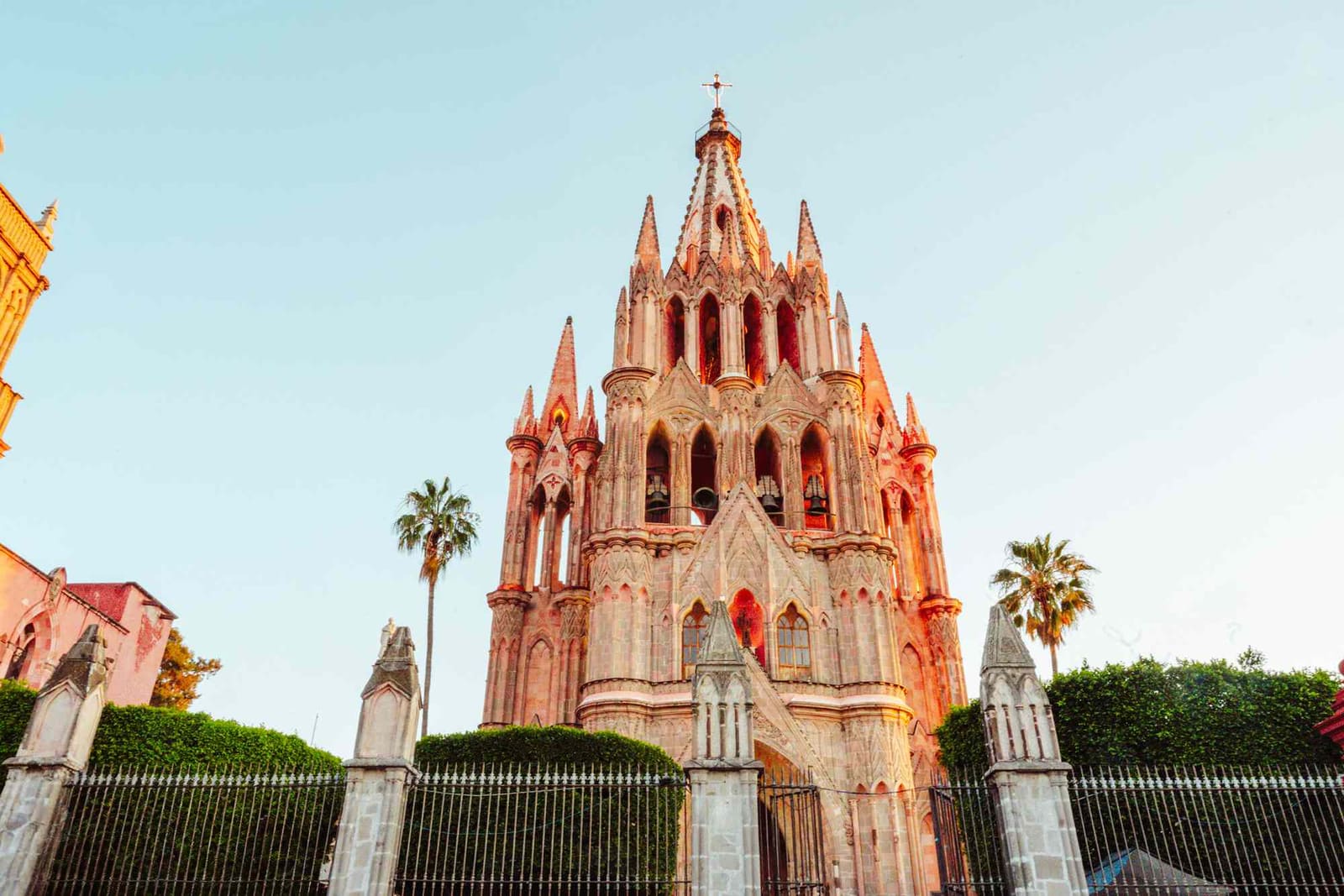
There is a particular quality of light in San Miguel de Allende that photographers spend entire afternoons chasing. It slants across baroque facades in shades of terracotta and ochre, pools in cobblestone hollows worn smooth by centuries of footfall, and catches the edges of wrought-iron balconies where bougainvillea spills in violent purples and magentas. This is a city that rewards slow movement, where the act of getting lost becomes less frustration than method.
The recognition in the 2026 World's Best Awards marks a culmination of years during which San Miguel has quietly refined an identity that resists easy categorization. At Global Chic Voyage, we've watched this central Mexican city evolve from a destination known primarily to art students and retirees into something more textured: a place where contemporary galleries occupy colonial casas, where traditional cantinas sit next door to natural wine bars, where the rhythm of daily life still follows the bells of the Parroquia de San Miguel Arcángel yet accommodates a population increasingly international in composition.
The Architecture of Memory
Walking the city's historic center is to move through an open-air archive of Spanish colonial ambition. The streets themselves dictate pace; cobblestones demand attention, forbid hurry. Buildings lean into one another with the intimacy of structures that have settled into their foundations over four centuries, their walls thick enough to hold the cool of morning well into afternoon.
What distinguishes San Miguel from other preserved colonial cities is not merely the integrity of its architecture but the way that architecture continues to function. These are not museum pieces cordoned behind velvet ropes. Homes built in the 1700s now house working studios where contemporary artists grapple with questions of identity and displacement. Courtyards designed around colonial-era fountains serve as event spaces for experimental theater and avant-garde fashion shows. The preservation here is active rather than static, a living negotiation between what was and what is becoming.
The Parroquia, with its neo-Gothic towers rising improbably above the main plaza, stands as the city's most recognizable landmark. Its presence anchors the centro histórico, a visual punctuation mark visible from nearly every vantage point within the colonial core. But it is in the side streets radiating outward that San Miguel's character truly reveals itself: in the sudden courtyard gardens glimpsed through half-open doors, in the ceramic tile work that transforms ordinary stairwells into chromatic events, in the way afternoon shadows carve geometry across plastered walls.
Tables Set for Discovery
The culinary landscape in San Miguel reflects the city's broader cultural synthesis. Traditional Mexican cooking techniques passed down through generations coexist with experimental approaches brought by chefs trained in kitchens from Copenhagen to Lima. Market stalls in Mercado Ignacio Ramírez overflow with produce that dictates the rhythm of menus across the city: squash blossoms in summer, fresh corn for tamales during harvest season, the particular variety of chile that each vendor insists is superior.
At street level, taquerías still operate according to decades-old recipes, their offerings unchanged and uncompromising. A few blocks away, tasting menus unfold across multiple courses that might pair mole negro with locally foraged mushrooms, or reinterpret the classic chiles en nogada through the lens of modernist technique. What matters is not the approach but the integrity of execution, the respect for ingredient and tradition even as those traditions are questioned and reconfigured.
Wine culture has taken root with surprising depth. Natural wine bars have proliferated in recent years, their shelves stocked with bottles from small Mexican producers working in Valle de Guadalupe and beyond. The city's altitude and climate prove conducive to the kind of unhurried evenings where a single bottle can stretch across hours of conversation, where the European café tradition merges with Mexican conviviality into something distinctly local.
Creative Infrastructure
San Miguel's reputation as an arts destination was built methodically over decades, beginning with the establishment of institutions like Instituto Allende and Bellas Artes in the mid-twentieth century. These schools attracted waves of students, many of whom never left, establishing studios and galleries that formed the foundation of a creative economy now central to the city's identity.
The contemporary art scene has evolved well beyond the tourist-oriented folk art that still dominates certain corners of the centro. Galleries like Fábrica La Aurora, housed in a repurposed textile factory, showcase work that engages with conceptual rigor and formal experimentation. Artist residencies bring international practitioners who collaborate with local craftspeople, producing work that exists in the productive tension between tradition and innovation.
Street art and public installations have become increasingly prominent, transforming previously overlooked walls and plazas into sites of visual dialogue. The annual Festival de Música de Cámara draws classical musicians of international caliber, while smaller venues host everything from flamenco to electronic music. This is a city with the infrastructure to support sustained creative practice: studio space remains relatively affordable, community exists in density, and there is an audience genuinely engaged with artistic inquiry rather than merely consuming it as spectacle.
The Question of Belonging
San Miguel's transformation has not occurred without friction. The influx of foreign residents and investment has driven real estate prices upward, creating tensions around affordability and displacement. The city's success as a destination has brought the inevitable pressures of tourism: overcrowding during high season, the proliferation of businesses catering primarily to visitors, the risk that what makes a place distinctive becomes commodified into easily digestible experience.
Yet there remains a sense that San Miguel has managed its growth with more intentionality than many comparable cities. Strict preservation ordinances limit architectural changes within the historic center. Local festivals and traditions continue with vitality, sustained by communities for whom these are not performances but living practice. The city's identity remains genuinely hybrid rather than simply overlaid with international gloss.
What emerges is a destination that rewards engagement over passive consumption. This is not a place to check items off a list but rather a city that reveals itself gradually, through repeated visits and sustained attention. The cobblestones and colonial facades provide the setting, but it is the contemporary life unfolding within and around them that gives San Miguel its particular resonance.
Light Fading Across Stone
Late afternoon in San Miguel holds a specific quality. The day's heat begins to dissipate, pulled upward into the high-altitude atmosphere. Cafés fill with a mix of locals and long-term residents, conversations flowing in Spanish and English and occasionally other languages entirely. The church bells mark the hour, as they have for centuries, but the life of the city continues in patterns both ancient and entirely new.
The recognition as a top destination in the 2026 World's Best Awards will likely bring increased attention, with all the complications that entails. But San Miguel has navigated waves of discovery before. Its appeal lies not in pristine isolation but in its capacity to absorb influence while maintaining essential character, to welcome the new without erasing the foundational. In an era when many cities feel increasingly interchangeable, San Miguel offers something increasingly rare: a sense of place so particular it cannot be replicated, only experienced directly, on its own terms, at its own deliberate pace.
Photo: Taylor McIntyre / Travel + Leisure
Spot something wrong? Email editors@globalchicvoyage.com. We log every correction publicly.
RELATED
SEE ALL →
22 Jun 2026 / 5 min
10 Jul 2026 / 5 min
31 Jul 2026 / 5 min
29 Jul 2026 / 5 min