
Six Senses Kyoto Unveils Summer Package Built Around Micro-Seasonal Dining and Sound Healing
The property's new 'Kyoto Celebration' bundles kaiseki-inspired meals, afternoon tea, and wellness rituals into a single-night retreat available through September
YN
9 Jun 2026 · 5 MIN READ · UPDATED 17 AUG 2026
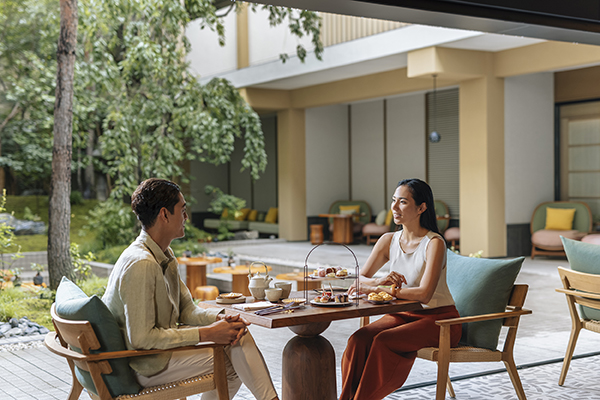
The Sound of a Bell in Late Afternoon
The courtyard at Six Senses Kyoto fills with cicada hum by mid-June — a seasonal marker as reliable as any on the traditional koyomi calendar. It's the kind of acoustic detail that matters in a city where temporal precision has always been measured in seasonal shifts rather than clock hands. This summer, the property has introduced a package that operates on a similar logic: experiences compressed into a single overnight stay, structured around the principle of shun — the fleeting peak of seasonal ingredients.
According to Six Senses, the 'Kyoto Celebration' promotion bundles breakfast, a four-course micro-seasonal dinner, afternoon tea for two, a 60-minute group sound-healing session, and a signature aroma gift into a one-night deluxe-room booking. Valid for reservations and stays through September 30, the offer represents a curated compression of the brand's wellness architecture — distilling multi-day retreat formats into an accelerated format that acknowledges the reality of shorter urban itineraries.
Micro-Seasonality as Structural Principle
The four-course dinner at Sekki — the property's signature restaurant — is framed around what Six Senses describes as a "micro-seasonal" approach. In Kyoto, this isn't marketing language; it's culinary orthodoxy. The city's kaiseki tradition divides the year into 72 five-day micro-seasons, each with its own ingredient hierarchy and preparation logic. Summer bamboo shoots arrive in early June; ayu sweetfish peak by mid-July; Kamo eggplant reaches ideal density in August.
At Global Chic Voyage, we've watched Western wellness brands attempt to graft seasonal eating onto properties where climate permits year-round tomatoes. Kyoto offers no such latitude. The dinner menu here shifts not monthly but weekly, tracking what's available within a 50-kilometer radius. It's a constraint that forces chefs into a different kind of creativity — one governed by availability rather than aspiration.
Breakfast at Sekki follows a parallel structure: miso varieties rotate based on fermentation timelines, tofu is made in-house daily, and rice comes from single-origin harvests in neighboring Shiga Prefecture. The meal functions less as a buffet amenity and more as an extension of the micro-seasonal logic that governs the entire stay.
Afternoon Tea as Cultural Translation
The inclusion of afternoon tea for two in the package is worth examining. In a city where the tea ceremony operates as both art form and philosophical system, the Western ritual of tiered pastries and clotted cream requires careful negotiation. Six Senses Kyoto's version incorporates wagashi — traditional Japanese sweets — alongside scones, using seasonal ingredients like yuzu, matcha from Uji, and kuromame black soybeans.
It's a hybrid format that reflects the property's broader positioning: a wellness brand with roots in Thailand operating in a city where wellness has been codified for centuries through Zen practice, onsen culture, and temple cuisine. The afternoon tea becomes a kind of cultural bridge — Western in structure, Japanese in ingredient sourcing and presentation aesthetics.
The pairing with the sound-healing session is deliberate. Both experiences occupy the late-afternoon window when energy traditionally dips in Kyoto's humid summer climate. The sound journey uses Tibetan singing bowls, gongs, and other resonant instruments in a group format — a contemporary wellness practice that echoes the meditative function of temple bells heard throughout the city at dawn and dusk.
Why This Format Matters
The single-night package structure is significant in a market where luxury wellness has increasingly moved toward week-long immersions and multi-day detox protocols. Six Senses Kyoto's offer acknowledges a different traveler profile: one who may be spending three nights in the city as part of a broader Japan itinerary and wants a concentrated wellness experience without committing to a full retreat timeline.
It also reflects Kyoto's own spatial logic. The city rewards slowness, but it's geographically compact. Major temples, gardens, and cultural sites are accessible within short taxi rides or brief train journeys. A single-night stay with curated on-property experiences allows visitors to balance cultural exploration with wellness rituals — spending mornings at Kinkaku-ji or Fushimi Inari, returning for afternoon tea and evening sound healing.
The signature aroma gift — a curated scent designed to extend the sensory experience beyond the stay — functions as a kind of olfactory souvenir. It's a small detail, but one that aligns with Japanese gift-giving culture, where omiyage (souvenirs) serve as tokens of experience rather than mere objects.
Seasonality as Constraint and Opportunity
The September 30 cutoff is not arbitrary. It marks the end of summer on the traditional calendar and the beginning of aki — autumn — when ingredient hierarchies shift entirely. Chestnuts replace bamboo shoots; matsutake mushrooms arrive; persimmons ripen. The micro-seasonal dinner menu that works in July becomes obsolete by October.
This temporal constraint is both limitation and marketing advantage. It creates urgency without relying on artificial scarcity — the offer expires because the season itself expires. In a city where cherry blossom viewing has been ritualized for over a millennium, visitors understand the value of experiences tethered to specific windows of time.
For Six Senses, the package also serves as a testing ground. Single-night wellness formats are rare in the brand's portfolio, which typically emphasizes longer stays. If the Kyoto model proves viable, it offers a template for other urban properties where guest patterns skew toward shorter itineraries but wellness expectations remain high.
The Larger Context
Kyoto's luxury hotel market has become increasingly competitive in recent years, with openings from Aman, Ace Hotel, and others adding inventory in a city that until recently had limited five-star options. Six Senses Kyoto — which opened in 2023 — occupies a former elementary school building, a adaptive-reuse project that preserved the structure's mid-century bones while introducing the brand's wellness infrastructure.
The property's challenge has been differentiation in a market where cultural authenticity is both expectation and competitive baseline. Every luxury hotel in Kyoto offers some version of tea ceremony access, kaiseki dining, and onsen facilities. The 'Kyoto Celebration' package attempts to distinguish itself through curation and compression — not by offering more experiences, but by organizing them into a coherent narrative arc that unfolds over 24 hours.
Whether that's sufficient depends partly on how visitors engage with the concept of micro-seasonality. For guests accustomed to year-round menu availability, the constraints of shun may feel limiting. For those who recognize seasonal eating as a form of culinary discipline — one that prizes peak flavor over constant choice — the format offers something closer to immersion.
The sound-healing component, meanwhile, positions the property within the broader wellness-hospitality convergence that has accelerated post-pandemic. Group sessions lower the cost and logistical complexity compared to private treatments while maintaining the communal aspect that characterizes many traditional Japanese wellness practices, from onsen bathing to temple meditation.
Looking Ahead
As summer deepens and cicada song intensifies, the package will face its real test: whether single-night guests feel the experience justifies the compression, or whether the format feels rushed against Kyoto's slower temporal rhythms. The city has always rewarded visitors who move at a deliberate pace — who spend an hour watching light shift across a raked gravel garden, or who return to the same tea house multiple times to notice subtle seasonal variations.
Six Senses Kyoto's bet is that wellness can be similarly compressed without losing coherence — that a curated 24-hour sequence of meals, rituals, and sensory experiences can function as a complete narrative rather than a truncated retreat. It's an experiment in hospitality pacing, one that may signal how luxury wellness adapts to urban contexts where time is the ultimate constraint and seasonality remains the most reliable organizing principle.
Spot something wrong? Email editors@globalchicvoyage.com. We log every correction publicly.
RELATED
SEE ALL →
3 Jul 2026 / 5 min

8 Aug 2026 / 5 min
8 Aug 2026 / 5 min
8 Aug 2026 / 5 min