
Stone and Reverie: Why France's Châteaux Still Define Romance
From the Loire Valley to forgotten corners of the countryside, these fortresses and palaces offer more than history - they hold the keys to understanding French notions of beauty, power, and the good life.
CG
13 Jul 2026 · 5 MIN READ · UPDATED 17 AUG 2026
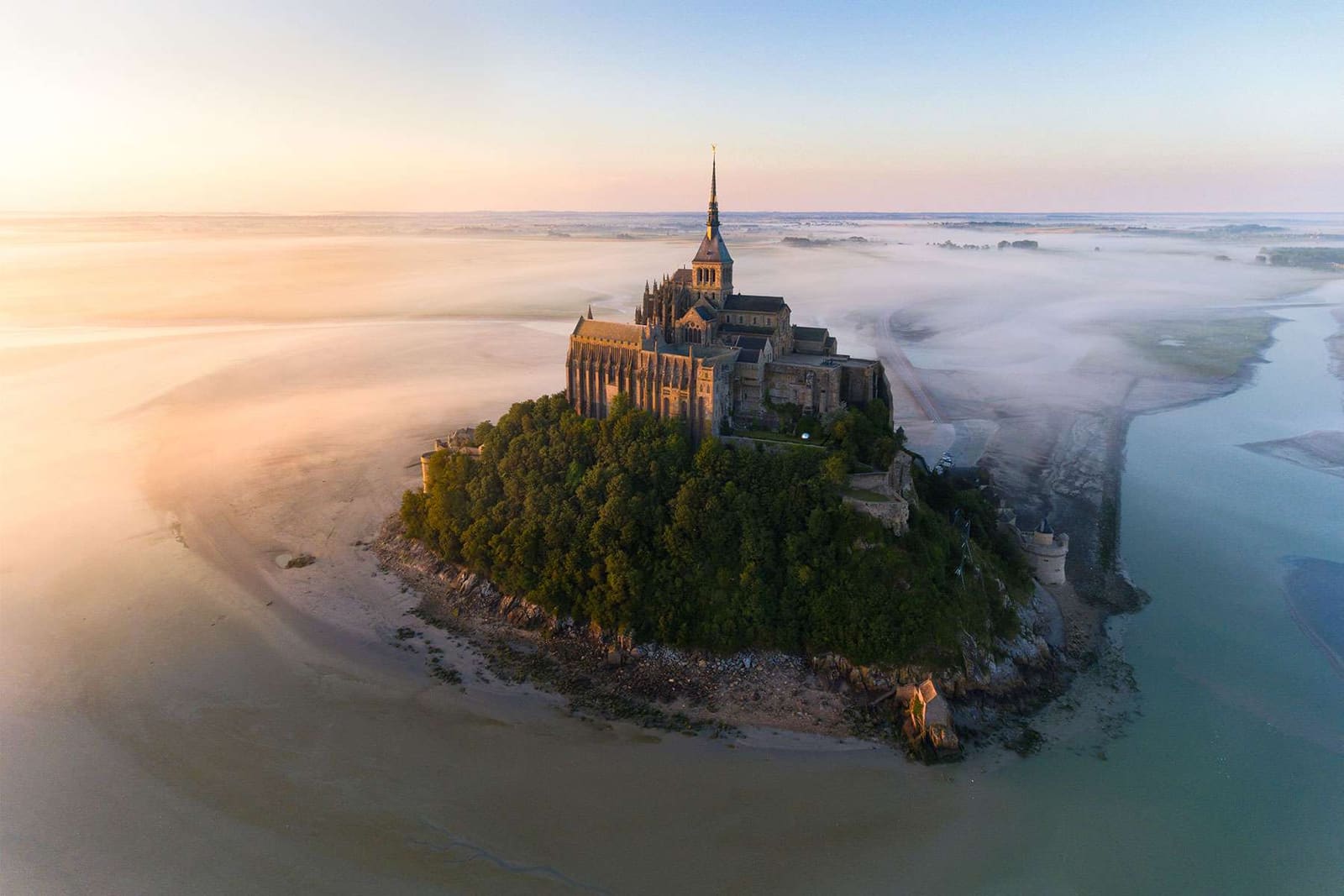
A Country Built on Towers and Dreams
There is a particular quality to the light that falls across the Loire Valley in late afternoon, the way it softens the limestone facades of châteaux until they seem to float above their moats like vessels suspended between earth and imagination. At Global Chic Voyage, we've returned to these estates season after season, not simply to tick landmarks off a list but to understand what they reveal about the French approach to beauty - a philosophy that treats architecture as theater, landscape as canvas, and the past as a constant, living presence.
France claims more than forty thousand châteaux within its borders, structures that range from modest manor houses to sprawling Renaissance palaces. Yet a dozen or so have transcended their original functions as fortresses or royal retreats to become something else entirely: archetypes of a certain kind of European grace, blueprints for how we imagine fairy tales should look when rendered in stone and glass. To visit them is to step into a continuum where medieval military strategy, Renaissance humanism, and Enlightenment elegance exist in conversation, each wing and garden a chapter in a story still being written.
The Architecture of Ambition
Consider Chambord, that impossible confection of turrets and double-helix staircases rising from a hunting estate in the heart of a forest. Built under François I in the early sixteenth century, the château was never intended as a practical residence - its four hundred rooms remained largely unfurnished even during royal visits - but as a declaration of what French craftsmanship could achieve when unconstrained by pragmatism. The roofline alone, a forest of chimneys and dormers that some attribute to Leonardo da Vinci's influence, speaks to an aesthetic that valued spectacle as much as shelter.
This impulse - to build not merely for defense or comfort but for the sheer pleasure of architectural expression - defines the châteaux that have endured in our collective imagination. Chenonceau, arching gracefully across the River Cher on a bridge designed as a gallery, served as both fortress and pleasure palace, its history shaped by a succession of formidable women who transformed military architecture into something approaching poetry. The gallery spanning the water, added by Catherine de' Medici in the mid-1500s, turned a strategic river crossing into a space for dancing and banquets, a gesture that prioritized beauty over fortification in an era still marked by conflict.
Landscapes as Extensions of Power
The châteaux do not stand in isolation. Their gardens - geometric parterres, reflecting pools, allées of clipped linden trees - are as essential to their identity as the buildings themselves. At Versailles, André Le Nôtre's gardens extend the palace's authority over nature, imposing rational order on thousands of acres with a precision that mirrors Louis XIV's centralized vision of monarchy. The message is clear: a ruler capable of commanding such perfect symmetry in the natural world possesses comparable dominion over the political realm.
Yet not all château gardens speak the same language. Villandry, reconstructed in the early twentieth century from Renaissance plans, treats horticulture as ornamental art, its potagers arranged in patterns that recall medieval tapestries. Here, cabbages and leeks become elements of design as carefully considered as any marble sculpture. The effect is softer than Versailles, more intimate - a reminder that French garden philosophy encompasses both the grand gesture and the meticulous detail, the public spectacle and the private retreat.
The Women Who Shaped Stone
History has a habit of crediting kings and architects while overlooking the women who often determined how these spaces were actually lived in and reshaped. Diane de Poitiers, mistress to Henri II, received Chenonceau as a gift and transformed it into one of the era's most sophisticated estates, commissioning gardens that rivaled those of the royal court. When Henri died, his widow Catherine de' Medici promptly reclaimed the property and added her own architectural flourishes, including the bridge gallery that remains the château's most recognizable feature.
This pattern repeats across the Loire and beyond. Louise de Lorraine, Catherine de Rohan, Madame Dupin - each left her mark on estates that official histories often frame as monuments to male ambition. Their contributions were rarely military or dynastic; instead, they focused on refinement, on the creation of spaces where art, music, and intellectual exchange could flourish. In doing so, they helped define what a château could be beyond fortress or hunting lodge: a laboratory for a certain kind of cultivated life.
Fortresses That Learned to Dance
The earlier châteaux, structures like Angers or Carcassonne, make no pretense about their origins. These are fortifications first, their massive walls and defensive towers designed to withstand siege warfare. Yet even these martial structures evolved over centuries, gaining residential wings and decorative elements that softened their military severity. The transformation reflects broader shifts in European power - as centralized monarchies reduced the need for private armies, the nobility redirected their resources toward comfort and display.
This architectural evolution mirrors a cultural one. The châteaux that capture contemporary imagination are those that managed the transition from fortress to palace most gracefully, structures that retained the romantic silhouette of medieval defense while embracing Renaissance ideals of proportion and light. Azay-le-Rideau, rising from an island in the Indre River, achieves this balance perfectly: its turrets and machicolations recall an earlier age of warfare, but its symmetrical facade and generous windows announce unmistakably that this is a dwelling meant for pleasure, not combat.
Preservation and Its Discontents
Many of France's most celebrated châteaux now function as museums, their rooms carefully restored to specific historical moments and opened to a steady stream of visitors. This preservation comes with costs that extend beyond the financial. A château frozen in time, its furniture roped off and its gardens maintained by state employees, tells a different story than one that continues to evolve as a lived-in space.
Yet some estates have found ways to remain dynamic. Several châteaux in private hands operate as luxury hotels or event venues, their owners navigating the tension between conservation and commercial viability. Others host contemporary art installations that create deliberate friction with their historical settings. These interventions - a Jeff Koons sculpture in the gardens of Versailles, a Daniel Buren installation at Chambord - provoke debate about whether such juxtapositions honor or diminish the original architecture. The answer likely depends on whether you view these structures as sacred relics or as participants in an ongoing conversation about beauty and power.
What the Stones Remember
To walk through these châteaux with attention is to encounter layers of history that no single narrative can contain. A Renaissance facade may conceal medieval foundations; a Baroque chapel might adjoin rooms redecorated in the eighteenth century. Revolutions, wars, and changing tastes have left their marks, creating palimpsests where different eras remain visible simultaneously.
This temporal complexity is part of their appeal. Unlike purpose-built museums or modern reconstructions, the châteaux offer no simplified storyline, no single interpretation. They are messy, contradictory, shaped by royal ambition and aristocratic rivalry, by artistic innovation and political upheaval. They remind us that the past is not a static repository of facts but a contested space, constantly being reinterpreted by each generation that encounters it.
The Enduring Pull of Towers and Moats
Why do these structures continue to exercise such hold on our imagination? Perhaps because they offer a vision of beauty that feels increasingly remote from contemporary experience - spaces designed not for efficiency or profit but for delight, for the pleasure of proportion and ornament and the play of light on water. In an age of algorithmic optimization and utilitarian architecture, the châteaux stand as monuments to a different set of values, one that measured success not in productivity but in the creation of spaces worthy of memory.
At Global Chic Voyage, we've noticed that travelers return from these estates changed in subtle ways, their sense of what architecture can accomplish quietly recalibrated. They speak not just of the famous rooms and gardens but of unexpected moments: the view from a lesser-known tower, the texture of centuries-old stone beneath their fingers, the realization that these places were built by people who believed their work might outlast empires. In that belief, ambitious and perhaps naive, lies something worth remembering - a conviction that beauty, carefully made, can be a form of resistance against forgetting, a way of insisting that some things should endure simply because they are worth preserving.
The châteaux of France are not fairy tales, though they may look the part in certain light. They are arguments in stone about what matters, about how we choose to inhabit the world and what we hope to leave behind. That conversation, begun centuries ago by kings and masons and visionary women, continues in every visitor who pauses before a perfect facade or wanders through a geometric garden and wonders what it might mean to build with such confidence in the value of beauty itself.
Photo: Mathieu Rivrin / Getty Images
Spot something wrong? Email editors@globalchicvoyage.com. We log every correction publicly.
RELATED
SEE ALL →
20 Jul 2026 / 5 min
13 Jul 2026 / 5 min
4 Feb 2026 / 5 min

31 Jul 2026 / 5 min