
The Case for Compact Elegance at Sea
A new Italian superyacht proves that restraint can be more seductive than scale, marrying generous volume with thoughtful design in a 38-meter hull.
VJ
23 Jul 2026 · 5 MIN READ · UPDATED 17 AUG 2026
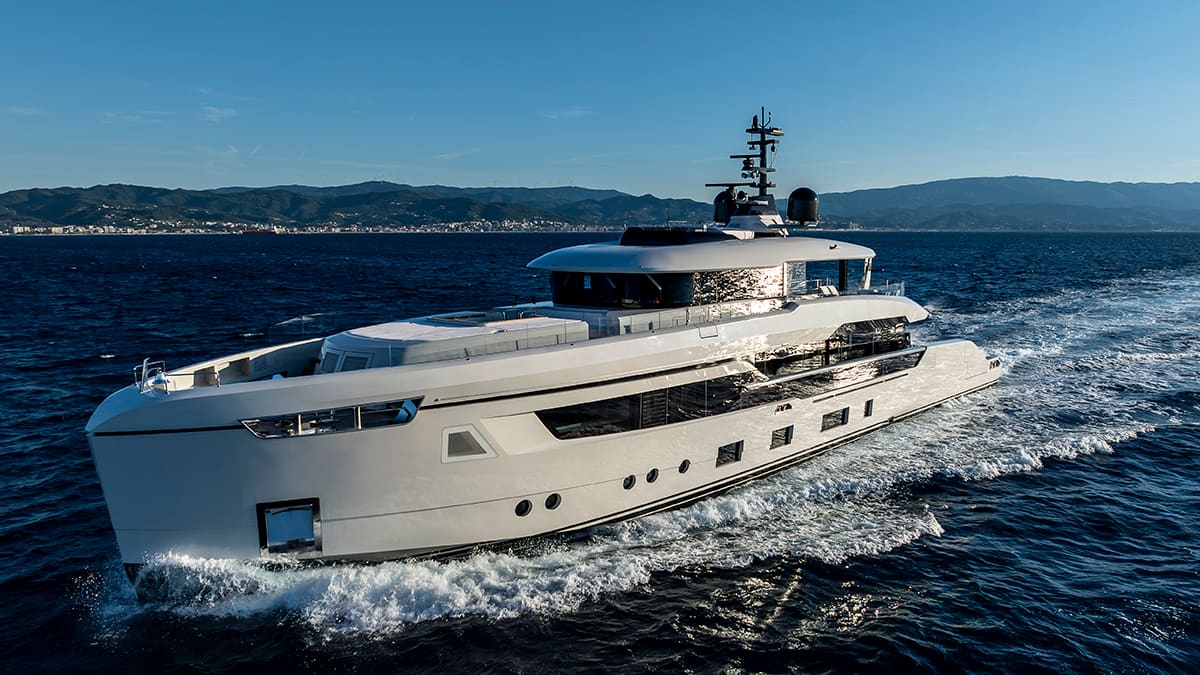
The Allure of the Intimate Scale
There is a moment, when stepping aboard certain vessels, when you realize that grandeur has less to do with length and everything to do with proportion. The newest addition to Columbus Yachts' Atlantique series occupies that sweet spot, a 38-meter study in restraint that refuses to apologize for its relative compactness. At Global Chic Voyage, we've watched the superyacht world chase ever-larger hulls, yet this Italian yard's latest launch reminds us that intelligence in design often whispers rather than shouts.
Principessa Capricciosa, as the vessel is named, emerged from the Palumbo Superyachts family in March, though her interiors remained shrouded until recent weeks. With an interior volume just shy of 300 gross tons, she represents the smallest model in a five-yacht series, yet her spatial generosity belies her modest beam. The philosophy here is not minimalism for its own sake but rather an interrogation of what luxury truly requires: not endless square footage but considered architecture, lower operational drag, and the kind of range that permits genuine exploration without the environmental toll of her larger siblings.
Lines That Recall Another Era
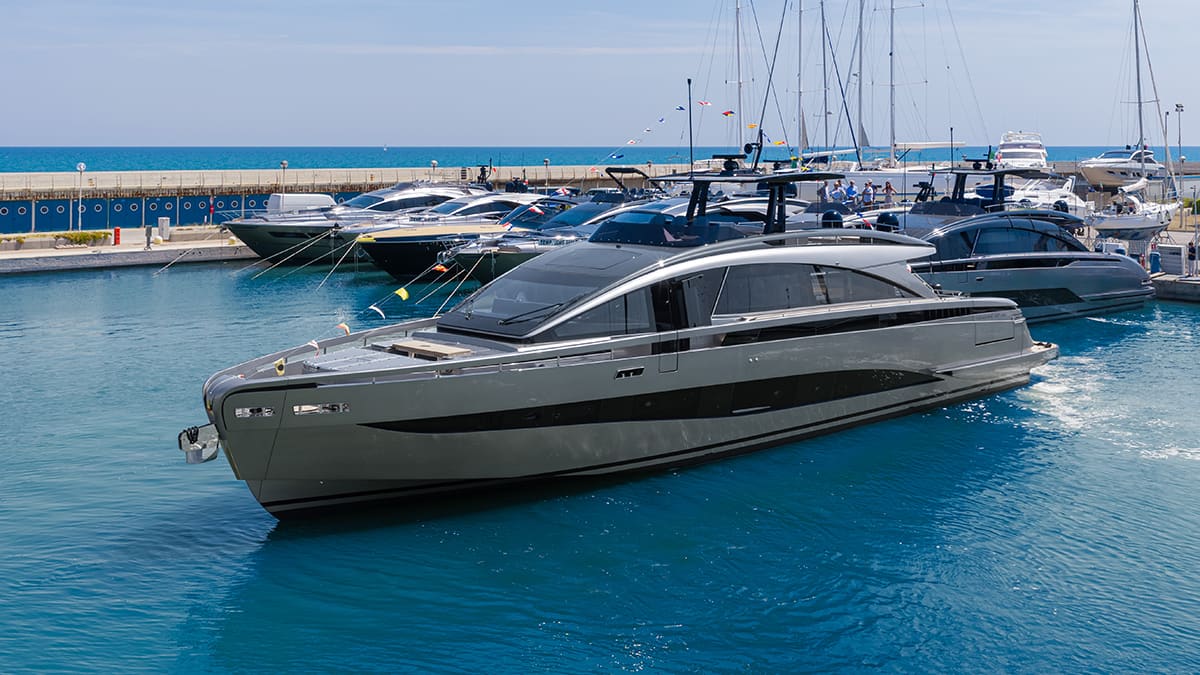
Milanese studio Hot Lab, tasked with both exterior styling and interior concept, has drawn from the vocabulary of classic sailing yachts. The aluminum hull carries a vertical bow that slices cleanly into the water, while the superstructure maintains a low, sporty profile. What catches the eye, however, is the recessed stern, a gesture that feels both contemporary and referential, as though the designers had studied the aft lines of mid-century racing yachts and translated them into modern composite and metal.
The result is a silhouette that reads as purposeful rather than ostentatious. There are no exaggerated overhangs, no jarring cantilevers. Instead, the vessel's proportions suggest movement even at anchor, a quality that has become rare in an industry increasingly enamored with floating villas. Hot Lab's interiors continue this thread, favoring clean surfaces and natural light over the baroque embellishments that have dominated recent yacht design.
A Main Deck That Understands Hierarchy
Step through the main deck lobby and the spatial logic becomes immediately apparent. The salon stretches forward, benefiting from hull-wide glazing that blurs the boundary between interior and sea. The galley, fully equipped yet discreetly positioned, serves both formal dining and casual service without intruding on guest circulation. Every overhead speaker is by Bowers & Wilkins, integrated into a Sonos ecosystem that allows for whole-vessel audio control, a detail that speaks to the owner's likely expectations around ambient sound quality.
But it is the full-beam owner's suite that anchors this deck, both literally and experientially. Walk-in wardrobe, en suite finished in marble, a dedicated gym, and a private terrace that folds out over the water. This is not merely a cabin but a floating apartment, one that prioritizes morning light and the kind of privacy that becomes increasingly precious aboard smaller yachts, where guest and owner zones can easily blur.
Below Deck, a Study in Colorway and Craft
The lower deck accommodates four guest cabins, each rendered in a distinct palette. Two cabins feature twin beds that convert into doubles, supplemented by Pullman berths for flexibility. Twelve guests can sleep comfortably across five cabins total, a generous count for a vessel of this length. Each cabin's en suite showcases marble detailing, and the custom finishes, executed by the yard's in-house team alongside Names by Francesco Rogantin, reveal a commitment to tactile variation. No two spaces feel identical, yet the overall aesthetic remains cohesive, a balance that requires discipline.
Six crew are housed in four additional cabins on this deck, a ratio that ensures attentive service without overcrowding the vessel's operational heart. The separation of guest and crew circulation is clean, another marker of thoughtful naval architecture.
Upper Realms for Dining and Repose
The upper deck divides its real estate between indoor and outdoor dining zones, an alfresco lounge, and a swimming pool whose perimeter doubles as a sun pad. The wheelhouse sits forward, offering commanding sightlines. Higher still, the sundeck provides a secondary helm station and generous sunbathing area, spaces that feel expansive despite the yacht's overall footprint.
Descend to the aft cockpit and the spatial ingenuity becomes even more apparent. Two fold-down balconies extend the living area over the water, while a large lounge and bespoke cocktail bar, finished with mirrored surfaces, anchor the social zone. A starboard garage houses a 16-foot tender, a personal watercraft, and additional equipment, while a compartment beneath the aft staircase stows Seabobs. This is the kind of storage choreography that separates competent design from exceptional design: every piece of equipment has a home, and none of it clutters the guest experience.
Performance Without Pretense
Twin 2,000-horsepower MAN engines drive a semi-planing hull, according to Columbus Yachts, delivering a top speed of 20 knots and a cruising speed just over 17 knots. These figures position the vessel firmly in the realm of comfortable passage-making rather than high-speed transit. The hull form prioritizes efficiency and stability, virtues that matter more on extended voyages than headline-grabbing sprint speeds.
The smaller displacement and lower power requirements translate directly into reduced fuel consumption and a lighter carbon footprint, considerations that are no longer optional in conversations around yacht ownership. The Atlantique 38's design brief explicitly embraced lower operational costs, and the engineering choices reflect that priority. This is not a vessel for owners who measure status in horsepower but for those who value autonomy, range, and the ability to slip into smaller anchorages without logistical drama.
What This Shift Signals
At Global Chic Voyage, we've observed a quiet but growing appetite for yachts that do more with less, vessels that prioritize intelligence over spectacle. Principessa Capricciosa will make her public debut at the Cannes Yachting Festival in early September, followed by an appearance at the Monaco Yacht Show later that month. These are stages typically dominated by 60-meter-plus megayachts, yet the Atlantique 38's presence in that context feels less like an outlier and more like a harbinger.
The industry has long equated luxury with scale, but the most compelling vessels we've encountered in recent years have been those that interrogate that assumption. Smaller hulls demand smarter architecture. They force designers to eliminate redundancy, to question every square meter. The result, when done well, is not compromise but clarity. Principessa Capricciosa suggests that the future of superyacht design may lie not in endless expansion but in the kind of refinement that comes only from constraint.
Credit: Columbus Yachts
Spot something wrong? Email editors@globalchicvoyage.com. We log every correction publicly.
RELATED
SEE ALL →
22 Jul 2026 / 5 min
16 Jul 2026 / 5 min
17 Jun 2026 / 5 min
14 Jul 2026 / 5 min