
The Slow Charm of Mérida's Pastel Streets
How Yucatán's capital offers a different kind of Mexican grace - one built on plazas, quietude, and the warmth of strangers who become neighbors.
SI
10 Jul 2026 · 5 MIN READ · UPDATED 17 AUG 2026
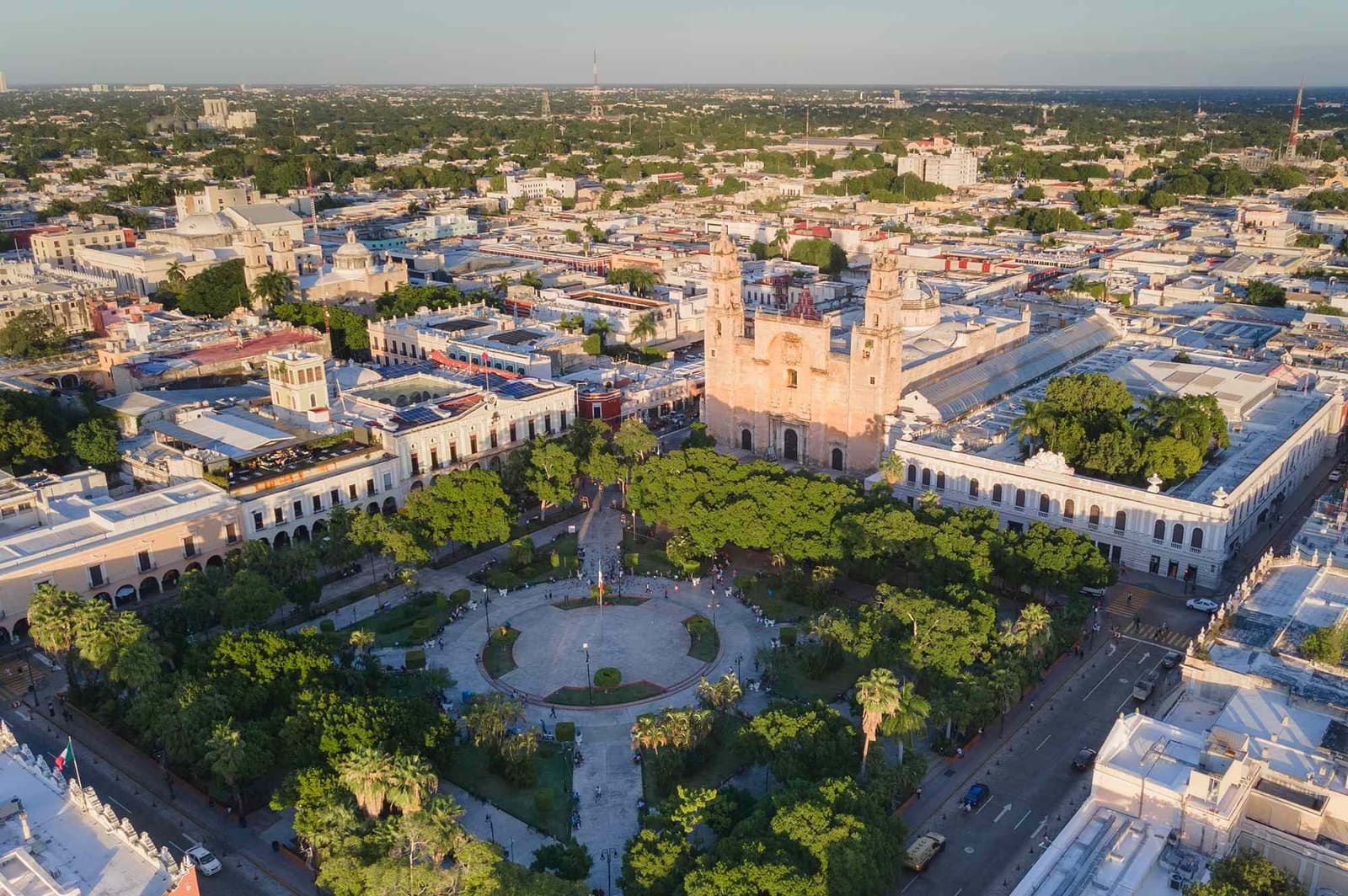
A Different Threshold
There is a particular quality to the light in Mérida just before dusk, when the heat finally relents and the pastel facades along Paseo de Montejo take on a softness that feels almost confessional. It was during one of these moments, sitting at the edge of Parque de Santa Lucía with a lukewarm cerveza and the sound of trova musicians warming up behind me, that I understood why this city had quietly dismantled every preconception I had carried with me across the border.
At Global Chic Voyage, we have spent years documenting Mexico's extremes - the glittering resort corridors of Los Cabos, the bohemian magnetism of Tulum, the high-altitude drama of Mexico City. But Mérida, the capital of Yucatán, offers something rarer: a sense of unhurried grace. It does not announce itself. It does not perform. It simply exists, with a confidence so deeply rooted in centuries of Mayan and colonial history that it has no need to prove anything to anyone.
This is not a city that seduces through spectacle. It seduces through repetition - the daily rhythms of plaza life, the architecture that refuses ostentation, the way residents greet you on the street not because they want something, but because they genuinely see you. For travelers who have grown weary of Mexico's more transactional destinations, Mérida arrives as a kind of antidote.
The Architecture of Restraint
The colonial center unfolds in a grid of wide streets lined with single-story houses painted in shades of ochre, mint, and faded rose. These are not the saturated hues of tourist brochures but the muted tones of a city that has been lived in, deeply and continuously, for generations. Wooden doors, many of them original, open directly onto the sidewalk; through iron grilles you catch glimpses of interior courtyards where potted palms and rocking chairs suggest lives conducted at a different tempo.
The grand mansions along Paseo de Montejo - built during the henequen boom of the late nineteenth century - speak to a different ambition. Here, Yucatecan wealth expressed itself through French neoclassical flourishes and Italian marble, a colonial elite looking toward Europe even as it extracted fortune from the land. Today, many of these estates house museums, galleries, and boutique hotels. Walking this boulevard at midday, beneath the shade of enormous laurel trees, you feel the weight of that history without being crushed by it. The city has metabolized its past.
What strikes you most is the absence of visual noise. Mérida has resisted the impulse to overlay its colonial bones with contemporary clutter. There are no high-rises puncturing the skyline, no neon sprawl. The result is a cityscape that feels coherent, legible, almost novelistic in its consistency.
Plaza Culture as Social Infrastructure
In Mérida, the plaza is not an amenity - it is the organizing principle of urban life. Parque de Santa Lucía, Plaza Grande, Parque de Santiago: each serves as a kind of outdoor living room, where residents converge not for events but simply to exist together. On Sunday evenings, families spread blankets on the grass in Plaza Grande, children chase pigeons, elderly couples claim their usual benches. There is no program, no ticketed attraction. The attraction is the gathering itself.
We have observed this phenomenon in other Latin American cities, but rarely with such ease. In Mérida, the plazas are not contested spaces or tourist set pieces. They belong, unambiguously, to the people who live here. Visitors are welcomed into this rhythm, invited to sit, to watch, to slow down. It is a form of hospitality that does not require language - a silent contract that says, you are allowed to be still here.
The trova performances at Parque de Santa Lucía every Thursday evening have become something of an institution. Musicians in guayaberas and Panama hats perform boleros and ballads under the arcade, their voices carrying across the square. Locals arrive early to claim chairs; tourists wander in, tentative at first, then settle as the music works its quiet magic. There is no cover charge, no velvet rope. The performance is an offering, and the audience's presence is the only payment required.
The Warmth That Cannot Be Manufactured
Much is made, in travel writing, of "authentic" experiences - a term so overused it has lost most of its meaning. But there is something undeniably genuine about the way Meridanos engage with strangers. Shopkeepers greet you as you pass, not with a sales pitch but with a simple "buenas tardes." Neighbors pause to chat on street corners, unhurried, as if time were not a scarce resource but something to be spent generously.
This quality is difficult to quantify, but it fundamentally alters the texture of a visit. You are not a tourist being tolerated; you are a guest being acknowledged. The distinction matters. In a city like Mérida, where tourism has grown steadily but has not yet overwhelmed local life, there remains space for these small, unscripted exchanges. They accumulate over days, shifting your relationship to the place from transactional to something closer to participatory.
We spoke with several long-term expats - North Americans and Europeans who had come for a season and stayed for years - and the word that recurred in their accounts was "community." Mérida, they said, makes it easy to belong. The city's scale is manageable, its social fabric intact. You shop at the same market, frequent the same cafés, recognize faces. Within weeks, you are woven into the pattern.
A Culinary Identity Rooted in Place
Yucatecan cuisine stands apart from the rest of Mexico, shaped by Mayan ingredients and techniques that predate the Spanish conquest. In Mérida's mercados and neighborhood cocinas económicas, this culinary heritage is not preserved as museum piece but practiced daily. Cochinita pibil - pork marinated in achiote and bitter orange, slow-roasted in banana leaves - is a staple, not a novelty. Panuchos, salbutes, papadzules: these are the foods that sustain local life, served without fanfare at plastic tables under fluorescent lights.
The city's fine-dining scene has begun to attract international attention, with chefs reinterpreting traditional recipes through contemporary techniques. But even in these elevated settings, there is a humility, a groundedness that reflects Mérida's broader ethos. The food is never about spectacle; it is about flavor, history, and the integrity of ingredients sourced from nearby milpas and coastal waters.
At the markets - Mercado Lucas de Gálvez, Mercado de Santiago - you witness the supply chain in its most elemental form. Vendors sell bundles of epazote and chaya, pyramids of habaneros, fresh masa ground from heirloom corn. The air smells of lime and charcoal smoke. To eat in Mérida is to taste a region, not a brand.
The Slow Conversion
There are cities that announce their greatness immediately, that overwhelm with first impressions. Mérida is not one of them. Its appeal is cumulative, earned through days of wandering, through repeated encounters with its unhurried rhythms and unassuming beauty. It asks you to adjust your pace, to notice small things - the way shadows fall across a courtyard at noon, the sound of a street vendor's call, the particular shade of blue on a doorframe.
For travelers who have grown skeptical of Mexico's more commercialized corners, or who have never felt the pull of the country at all, Mérida offers a different entry point. It is Mexico at its most self-possessed, a city that has retained its identity not by resisting change but by absorbing it slowly, on its own terms. The hotels we have returned to here are small, often family-run, their lobbies opening onto gardens where breakfast is served beneath mango trees. The experience is intimate, domestic, rooted in a specific place rather than a globalized idea of luxury.
What Mérida teaches, if you stay long enough to listen, is that a city's greatest asset is not what it offers tourists but what it offers its own residents - and whether it is generous enough to let visitors into that life, even briefly. Here, the invitation is extended without hesitation. The plazas remain open, the streets walkable, the community intact. You arrive as a stranger, and if you are paying attention, you leave as something slightly different: a witness, perhaps, to a way of living that has become rare in our accelerated world.
The Invitation to Return
On my last evening, I walked the length of Paseo de Montejo as the sun dropped behind the laurel canopy. The mansions glowed in the golden hour, their facades softened by time and weather. Families cycled past on rented bikes, children perched in baskets, laughing. A couple sat on a bench, holding hands, saying nothing. The scene was so ordinary, so unremarkable, that it felt revolutionary.
Mérida does not ask to be loved loudly. It does not demand superlatives or Instagram posts. It simply invites you to sit down, to slow your breath, to notice the quality of the light. And if you accept that invitation - if you allow the city to work its quiet alchemy - you may find that what you are falling for is not just Mérida, but a version of travel itself that you thought had disappeared: patient, humble, and profoundly human.
Photo: Itzel Garrido / Travel + Leisure
Spot something wrong? Email editors@globalchicvoyage.com. We log every correction publicly.
RELATED
SEE ALL →
22 Jun 2026 / 5 min
8 Jul 2026 / 5 min
31 Jul 2026 / 5 min
27 Jul 2026 / 5 min