
The Quiet Morning Before Saint-Tropez Wakes
A journalist returns to the Riviera's most seductive village for the third summer running, finding that its pull lies not in the superyachts or the scene, but in something harder to name.
SI
7 Jul 2026 · 5 MIN READ · UPDATED 17 AUG 2026
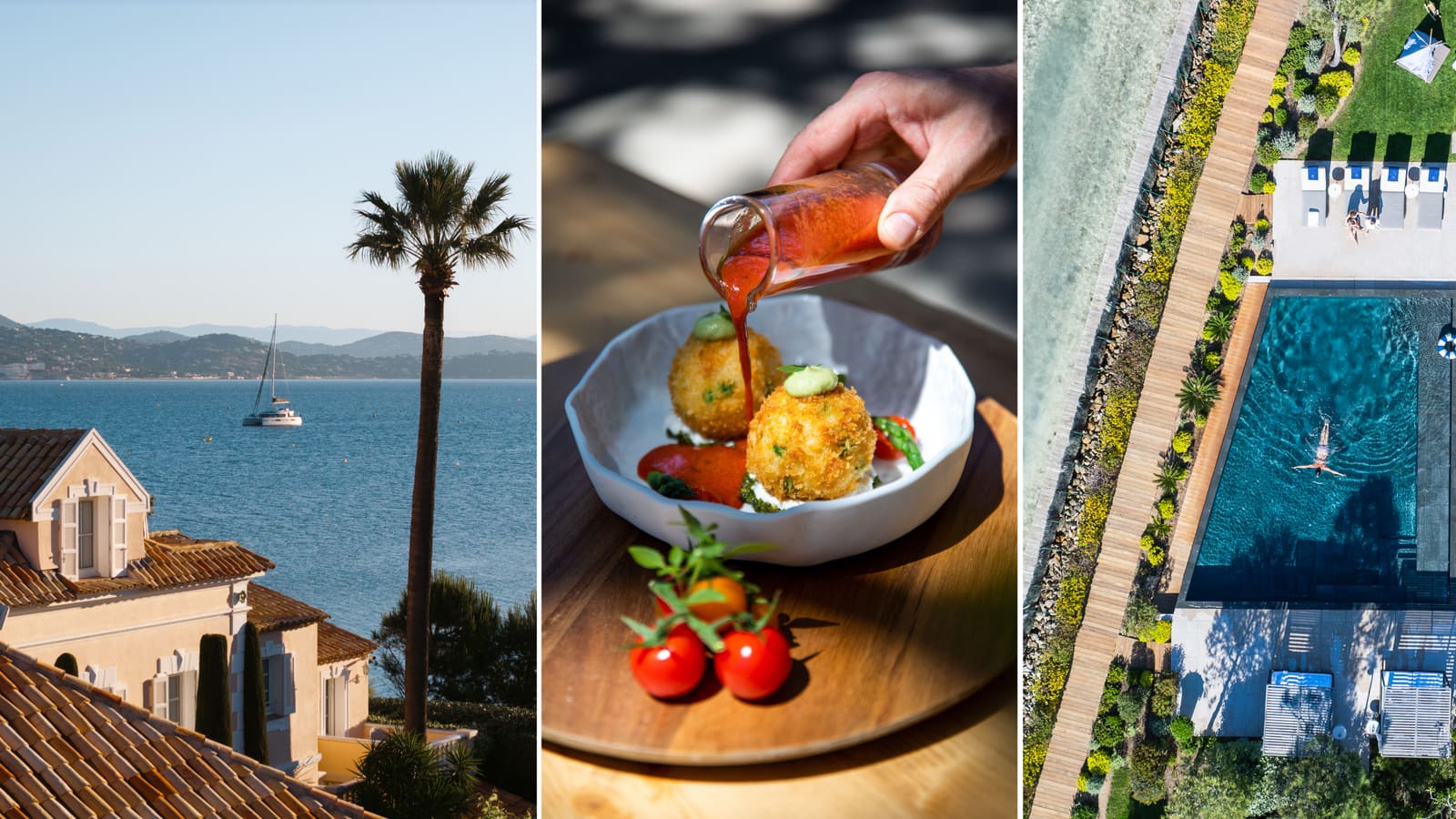
A Peninsula That Refuses to Explain Itself
There is a moment, usually around seven in the morning, when the port still smells faintly of diesel and last night's rosé, and the only sound is the slap of water against hulls. The pastel facades along the quay have not yet begun to shimmer in the heat. The superyachts are silent. This is the Saint-Tropez that does not appear in anyone's Instagram grid, the one that predates Brigitte Bardot and will outlast whatever comes next.
At Global Chic Voyage, we have watched this village on the Côte d'Azur cycle through waves of fame and reinvention for decades. It earned its "billionaire's playground" moniker honestly, with over six miles of white sand, rolling hills dense with Tropezian pine, and a concentration of wealth that would make Monte Carlo blush. But the magnetism of the place, the thing that pulls certain travelers back summer after summer, has less to do with exclusivity than with a quality of light, a tempo, a hospitality that feels less transactional than most resort towns at this altitude of luxury.
The village first rose to international attention in 1956, when And God Created Woman turned a sleepy Provençal fishing outpost into a symbol of post-war European hedonism. That film's legacy persists, but so does the older architecture beneath it: the narrow lanes of La Ponche, the weekly market at Place des Lices, the ochre tiles and wrought-iron balconies that belong to another century entirely.
This summer, the peninsula faces a new influx of attention. Production crews have descended on Airelles Château de la Messardière and Hôtel Martinez in nearby Cannes to film the fourth season of a certain HBO series known for turning sleepy resorts into pilgrimage sites. Whether Saint-Tropez needs more visitors is debatable. Whether it can absorb them without losing what makes it singular is the more interesting question.
Eating as Theatre, and Also as Discipline
The line between dining and performance has always been thin here. At Nikki Beach Restaurant and Beach Club, the sushi boat arrives like a small yacht in its own right, flanked by freshly caught fish displayed on ice and a signature chicken satay that has survived two decades of menu evolution. This year, the property introduced a Magnum ice cream dipping bar and a pop-up collaboration with Maurice Sfez Café, the Parisian roastery whose pastries have developed a cult following. The additions run through July and August, timed to the peak weeks when the poolside DJ sets blur into early evening and no one is entirely sure what meal they are eating anymore.
For those who prefer their people-watching with a side of history, Sénéquier remains the daytime anchor of the port. Its bright red terrace has been a fixture since 1887, and the parade of faces, outfits, and overheard conversations has not diminished in interest. A few blocks inland, Skybar at Hôtel Byblos offers a more elevated vantage: a rooftop that debuted last season with sweeping views of the bay, a caviar service that does not apologize for itself, and sunsets that justify the cocktail prices.
Beefbar at Hôtel Lou Pinet takes a quieter approach. The Wagyu selection is handled with the seriousness it deserves, and the soufflé dessert, which arrives inflated and trembling, is one of those rare dishes that tastes exactly as good as it looks. The restaurant sits within a private garden thick with jasmine and roses, a setting that feels more like a dinner party at a friend's villa than a hotel dining room.
The Strand at AREV has become one of the season's most discussed openings. Chefs Manon Santini and Rocco Seminara work an elegant alfresco terrace beneath olive trees, turning out Mediterranean dishes that change with what the market offers. In early June, Monsieur Dior opened under the direction of three-Michelin-starred chef Mauro Colagreco, bringing the aesthetic codes of the fashion house into a lush garden setting. The menu is Mediterranean but shaped by Colagreco's sensibility, which tends toward the precise and the seasonal in equal measure.
At the apex of the peninsula's gastronomic ambition sits La Vague d'Or, the three-Michelin-starred restaurant at Cheval Blanc. The kitchen has also earned five toques and a 19 out of 20 rating from Gault & Millau, distinctions that reflect not just technical skill but a deep engagement with Provençal ingredients and traditions. A meal here is an investment, but it is also a reminder of what fine dining can be when it is tethered to place rather than trend.
Japanese Fusion, Tropezian Context
Saint-Tropez has developed an unexpected fluency in Japanese cuisine over the past few years, and the results range from the theatrical to the contemplative. Matsuhisa, located inside Château de la Messardière, brings chef Nobuyuki Matsuhisa's signature style to the hilltop palace that will soon be recognizable to a much wider audience. For those priced out of a suite but still curious about the property, a dinner reservation offers a legitimate point of entry.
La Muña occupies the rooftop of La Réserve Ramatuelle, where the omakase format unfolds against views that stretch across the bay and out toward the horizon. The open kitchen allows diners to watch the progression of each course, a kind of culinary transparency that suits the setting. Zuma at Hôtel Byblos offers a more urban energy, with contemporary Japanese dishes, a cocktail program that rewards exploration, and an ambiance that leans into the sexy and the social. The Saint-Tropez location opened in 2025 and has quickly become a fixture in the heart of town.
Kinugawa Ramatuelle takes a different approach, setting its Japanese-Mediterranean fusion menu in an open-air garden that feels transportive despite being only a short drive from Pampelonne. The restaurant leans into a Tokyo spirit while acknowledging its Provençal context, and the DJ sets that begin after dark turn dinner into something closer to a nightclub warm-up.
The Ritual of the Tarte Tropézienne
No consideration of the local food culture would be complete without addressing the tarte tropézienne, the cream-filled brioche that has been a symbol of the village since 1955. La Tarte Tropézienne remains the original bakery, but interpretations have proliferated. Le Club 55 adds fresh strawberries and raspberries to its version, a summer flourish that feels right on a beach club terrace. The Strand offers a more architectural take, with Bourbon vanilla ice cream at the center and a note of orange blossom that lingers.
For those who prefer their dessert in cone form, Barbarac is the local gelato shop where the cookies and yaourt framboise flavors have earned a loyal following. This July, a new pop-up from chef Cyril Lignac will open in the port, offering gelato and sorbet that will almost certainly inspire lines.
Where to Sleep, and Why It Matters
Accommodations in Saint-Tropez range from small Airbnbs tucked into the Old Town to sprawling five-star properties that hold the French government's "Palace" distinction. The choice of where to stay shapes the experience in ways that go beyond thread count.
For travelers seeking proximity to the port and the ability to walk through the narrow lanes of La Ponche after dinner, rentals near Place des Lices or Port de Saint-Tropez offer the most flexibility. Those prioritizing beach club access will want to base themselves in Pampelonne, where the morning commute is measured in footsteps rather than car rides. Ramatuelle, perched in the hills above the coast, provides a slower pace and vineyard views, though it requires a willingness to drive when the action calls.
La Réserve Ramatuelle is one of the properties we return to when the goal is discretion and uncompromising service. The five-star hotel holds Palace status and sits high above the town, with 27 suites and 13 private villas, each staffed individually. The views extend across the bay, and the sense of remove from the bustle below is absolute, even though Pampelonne is only a few minutes by car.
AREV opened two years ago and has already earned a Michelin Key, a recognition of its ability to redefine the five-star category with a younger energy and a retro-nautical aesthetic. The property is known for its playful amenities, including a "French fry butler" that sounds gimmicky until you experience it, at which point it becomes essential.
Hôtel Lou Pinet occupies the quieter end of the spectrum, a boutique property surrounded by a private garden of jasmine, roses, and Mediterranean plants. By the end of this year, it will be certified as a Green Key sustainable hotel, a designation that reflects a broader shift in how luxury is defined. Villa Marie, hidden in the pine-covered hills of Ramatuelle, channels Old Hollywood with gold-accented headboards, shell-adorned mirrors, and baroque furnishings that feel collected rather than ordered from a catalogue.
Cheval Blanc remains the ultimate splurge, the only five-star property in Saint-Tropez to sit directly on the beach. The LVMH-owned hotel has 32 rooms and one private villa, all set on Plage de la Bouillabaisse. It is home to La Vague d'Or and the more relaxed La Terrasse, where lunch by the water is a study in understated luxury. Hôtel Byblos, another Palace-rated property, reopened for the 2026 season after a makeover of several rooms, the fitness center, and the spa. The service here has a warmth that borders on familial, a quality that keeps certain guests returning year after year.
For those who want to be within walking distance of the harbor, Hôtel de Paris sits just two minutes from the port and steps from the Chanel storefront that appears in every Saint-Tropez postcard. Its suspended outdoor pool is one of the more striking architectural features in town. Hôtel La Ponche, a 10-minute walk away, is the most cinematic option on the peninsula. Set directly on La Ponche beach, the hotel has a Nouvelle Vague pedigree: Louis de Funès filmed here, and the rooms carry the names of past guests like Françoise Sagan and Romy Schneider. The interiors lean into vintage glamour with wrought-iron beds, ochre Provençal tiles, and midcentury furnishings that feel preserved rather than reproduced.
And then there is Airelles Château de la Messardière, the hilltop palace with 86 rooms set across 32 acres of pine parkland above Pampelonne. This summer, it doubles as the filming location for the fourth season of The White Lotus, a fact that will make it both more desirable and more difficult to book in the months ahead.
Beach Clubs as Laboratories of Leisure
The beach clubs of Pampelonne have become their own category of destination, each with a distinct personality and a different theory of how a summer day should unfold.
Nikki Beach opened here in 2002, when Naomi Campbell hosted her birthday party and instituted an all-white dress code that became a brand signature. The club preserved the natural land rather than clearing it, creating a setting that feels more like a garden party than a typical beach operation. The pool is the center of gravity, with DJ sets that attract a crowd that understands the assignment.
Shellona arrived from St. Barts with a music-forward philosophy and has not looked back. This season, the club is hosting more than 90 DJ sets between late May and the end of August, featuring names like Solomun, Black Coffee, Peggy Gou, Adriatique, Rüfüs Du Sol, and Diplo. It is the closest thing Saint-Tropez has to Ibiza, and the energy reflects that ambition.
Bagatelle is where lunch becomes performance art. The second seating is legendary, complete with Champagne bottle shows, sparklers, and dancing between tables before the afternoon is even technically over. Loulou Ramatuelle channels the French Riviera of the 1950s with whitewashed timber, boat-sail canopies, and lemon-dressed tables. The atmosphere is effortlessly casual until around four in the afternoon, when the barefoot dancing begins and the elegance gives way to something looser.
Casa Amor, reinvented by Dolce & Gabbana, brings a couture-chic aesthetic to the sand. The menu emphasizes fire-grilled meats and globally inspired sharing plates, and the design codes of the fashion house are evident in every detail, from the table settings to the staff uniforms.
The Rosé Question
To visit Saint-Tropez and not drink rosé would be a kind of refusal, a rejection of the local liturgy. The wine is produced in vineyards that climb the hills surrounding the village, and it appears on every terrace, every beach club menu, every sunset toast. The best bottles are pale, almost translucent, with a minerality that comes from the limestone soils and the proximity to the sea. They are meant to be drunk cold, quickly, and often, ideally while watching the light change over the water.
What Comes Next
Saint-Tropez has survived waves of fame before. It absorbed the 1950s film crews, the 1960s jet set, the 1980s nightclub era, and the 2000s arrival of the Russian oligarchs. It will absorb this next influx as well, though not without friction. The village has always been a study in contrasts: the fishermen's cottages pressed up against the superyachts, the weekly market coexisting with the Chanel boutique, the quiet mornings before the chaos begins.
The question is not whether Saint-Tropez will change, but whether it will retain the qualities that make it worth returning to. The hospitality that feels personal rather than scripted. The beaches that still offer pockets of tranquility. The sense that beneath the performance and the excess, there is a real place with a real history, one that predates the cameras and will outlast them.
For now, the peninsula remains what it has always been: a village pretending to be a playground, a playground pretending to be a village, and somewhere in between, a place where the light hits the water in a way that makes you understand why people keep coming back.
Photo: Nikki Beach
Spot something wrong? Email editors@globalchicvoyage.com. We log every correction publicly.
RELATED
SEE ALL →
10 Jul 2026 / 5 min
7 Aug 2026 / 5 min
27 Jul 2026 / 5 min
13 Jul 2026 / 5 min