
When Florence Meets Madison Square: Felice's Largest New York Dining Room Yet
Inside a neo-Gothic tower overlooking Fifth Avenue, the family-run Tuscan brand unfolds its most ambitious canvas to date
SI
15 Jul 2026 · 5 MIN READ · UPDATED 17 AUG 2026
A Corner Where Light Tells Time
There is a moment, sometime after three in the afternoon, when the sun slides through the west-facing windows of Felice Flatiron and turns the entire dining room amber. The pale linen on the tables glows. The timber millwork warms. The marble bar catches the light and holds it. It is the kind of thing you notice only if you have stayed long enough to watch a room change moods, which is precisely what this space invites you to do.
At Global Chic Voyage, we have watched Felice grow from a single Upper East Side address into a small constellation of fourteen restaurants spanning New York, Connecticut and Florida. But this latest opening, tucked into the ground floor of a 21-storey neo-Gothic structure completed in 1912, feels different. It is not just larger. It is more deliberate, more theatrical, more willing to let architecture do the work that elsewhere might fall to décor.
The location itself is a gift. Fifth Avenue meets 26th Street beside Madison Square Park, and the building occupies the apex of that intersection. Windows wrap three sides of the dining room, flooding the space with shifting daylight and connecting diners to the rhythm of the street below. Inside, 18-foot ceilings create a sense of volume rare in Manhattan restaurants, where most rooms feel carved out of something else. Here, the space breathes.
Tuscany by Way of Florence, Built in New York
Bonetti/Kozerski Architecture, a local studio with a knack for balancing warmth and formality, designed the interior. According to Enrico Bonetti, co-founder of the firm, the brief was to create something that felt instantly familiar yet elevated in every detail, marrying Tuscan materials with New York energy. The result is a room that reads as both stage set and living space, grand without tipping into stiffness.
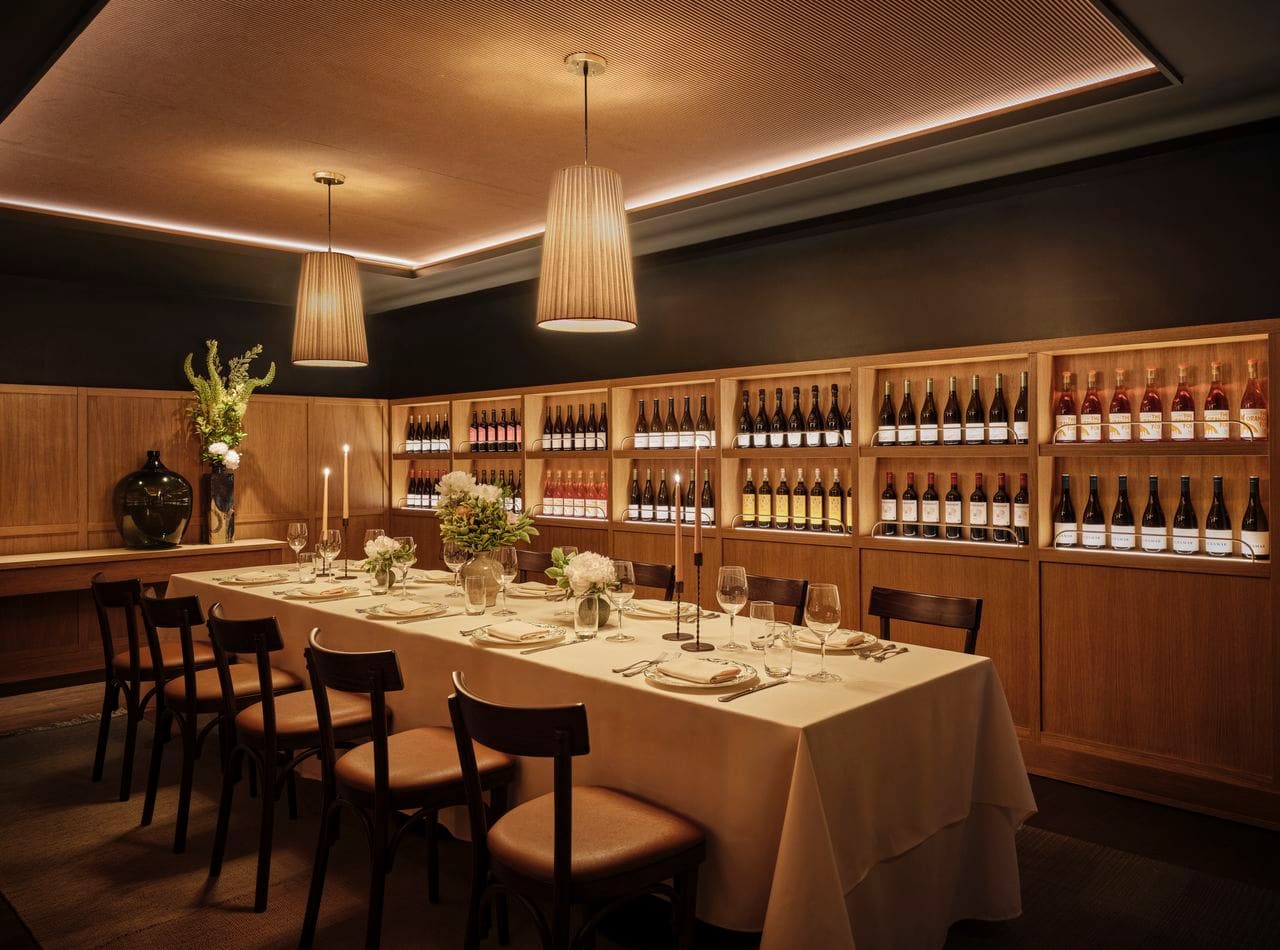
The millwork is custom Italian oak, crafted in Florence and shipped across the Atlantic. The terracotta flooring comes from Chianti, its earthy red-orange underfoot anchoring the palette. Deep red blinds soften the light when the sun becomes too insistent. Leather seating in shades of caramel and tobacco lines the banquettes. Pendant lamps hang low, casting pools of warmth over each table. And then there is the wine wall, a 30-foot-tall illuminated display that functions as both storage and sculpture, a glowing spine that runs the length of the room.
At the center of it all sits the bar, the largest Felice has built to date. Wrapped in Grigio Versilia marble and designed to serve as the social anchor of the restaurant, it is where the room's energy collects and radiates outward. It is also where the dolce vita spirit of the menu finds its most literal expression, in a cocktail program that leans hard into aperitivo culture.
A Menu That Knows What It Is
Felice has never pretended to reinvent Italian dining. Its strength lies in knowing its lane and staying in it: seasonal ingredients, regional Tuscan recipes, signature pastas, dishes built for sharing. The Flatiron menu hews to that template but introduces a few new gestures. The Il Toscano Plate rotates through salumi, pecorino, olives and crostini, a composition that changes with the seasons. A tableside tiramisu cart adds a touch of old-school tableside theater. An interactive amaro station invites diners to explore bitter Italian liqueurs as digestifs, a nod to a tradition that has never quite taken hold in American dining rooms but deserves to.
The wine list, as always, does heavy lifting. The by-the-glass selection champions small producers, with Italian bottles forming the core but Spain, California and other regions represented. A dedicated section titled "Back to Natural" showcases low-intervention wines, skin-contact whites and minimal-sulfite reds that speak to a growing appetite for wines that taste of place rather than process.
The cocktail menu leans into nostalgia and novelty in equal measure. The Dirty Martini Spritz is exactly what it sounds like, and somehow it works. Aperitivo drinks arrive in jewel tones, bitter and bright. The nightcap menu runs from Amaro Shakerato to Affogato Martini, blurring the line between dessert and drink in ways that feel indulgent without being cloying.
Dining Rooms That Earn Their Scale
It is easy for a large dining room to feel empty, or worse, impersonal. Size without intimacy becomes a liability, a space that swallows conversation and leaves diners feeling like extras in someone else's production. Felice Flatiron avoids that trap by layering in texture, varying ceiling heights where possible, and using the bar as a visual anchor that draws the eye and organizes the space.
The neo-Gothic bones of the building help. High ceilings and tall windows create a sense of grandeur that does not need to be manufactured. The design team wisely chose not to fight that scale but to work with it, selecting materials that feel substantial enough to hold their own against the volume. The result is a room that feels both generous and contained, a place where you can sit alone with a book and a glass of wine at four in the afternoon or gather a table of eight for a long dinner that stretches past midnight.
What strikes us most about the space is how it resists the urge to be too many things at once. It is not trying to be a club, or a lounge, or a café. It is a restaurant, full stop. And in a city where dining rooms increasingly feel like they are auditioning for a second life as event spaces or Instagram backdrops, that clarity of purpose is quietly radical.
The Long View on Hospitality
Felice has been open in New York for nearly two decades now, long enough to have earned a kind of institutional trust. It is the place you take out-of-town guests who want Italian food without fuss, the place you return to when you need something reliable. The Flatiron location does not upend that reputation. Instead, it expands it, offering a version of Felice that can accommodate larger groups, longer meals, and a broader slice of the day.
The all-day dining model is baked into the design. Breakfast service, if and when it arrives, would feel natural here. Afternoon light makes the room ideal for a late lunch that drifts into early evening. And as the sun sets and the interior lighting takes over, the space shifts again, becoming something more intimate, more nocturnal, more suited to slow dinners and lingering conversations.
At Global Chic Voyage, we have long believed that the best dining rooms are the ones that age well, that reveal themselves slowly over multiple visits. Felice Flatiron has that quality. It is a room you will want to return to, not because it demands your attention with novelty or spectacle, but because it offers something harder to find: a sense of place that feels earned, materials that reward close looking, and a scale that invites you to settle in and stay awhile.
The Tuscan warmth is there, in the terracotta and the oak and the deep reds. But so is the New York energy, in the windows that open onto Fifth Avenue, the bar that hums with conversation, the light that changes by the hour. It is a room that understands that luxury, in the end, is not about excess. It is about time, and space, and the freedom to linger.
Photo: Thomas Loof
Spot something wrong? Email editors@globalchicvoyage.com. We log every correction publicly.
RELATED
SEE ALL →
9 Jul 2026 / 5 min
30 Jul 2026 / 5 min
23 Jul 2026 / 5 min
7 Aug 2026 / 5 min